Harper Lee
Lee published one novel, then nothing for fifty-five years — until a second manuscript surfaced in a safe-deposit box when she was 88. She died the following February. Her will went under seal in an Alabama probate court, and a newspaper had to sue to read it. What it revealed was a trust nobody can read at all.
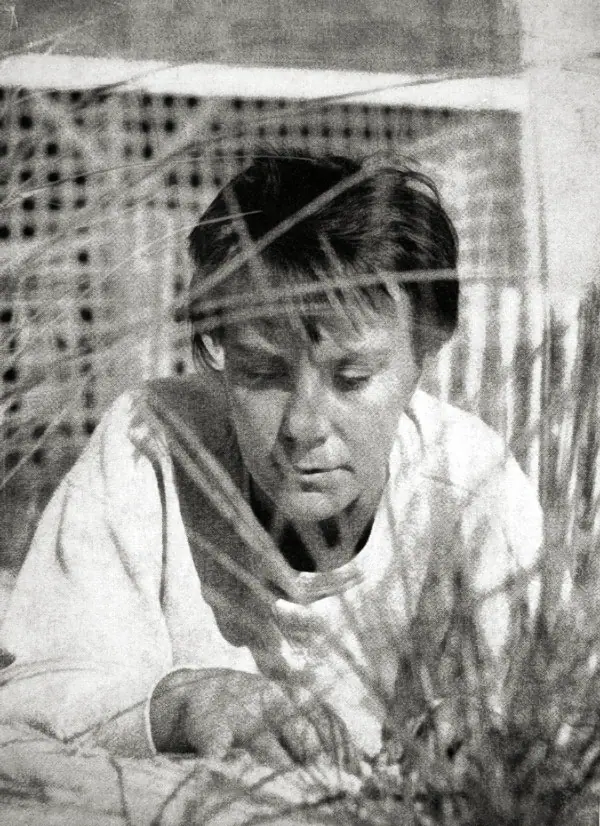
Nelle Harper Lee published To Kill a Mockingbird in 1960 and then, for fifty-five years, published nothing else. She gave almost no interviews. Her older sister Alice Finch Lee — an Alabama lawyer who passed the bar in 1943, practised in Monroeville until she retired at 100, and handled her sister's affairs — was the person who said no to everybody on her behalf.
Alice died on November 17, 2014, aged 103.
Less than three months later, in February 2015, publishers announced a second Harper Lee novel. Go Set a Watchman was published on July 14, 2015, and became Amazon's most pre-ordered book since the last Harry Potter.
Lee died in her sleep in Monroeville on February 19, 2016, at 89. Her will was filed with the local probate court and placed under seal. It stayed sealed for two years.
What was in the safe-deposit box
Tonja B. Carter had worked in Alice Lee's law office and became Harper Lee's attorney. Writing in The Wall Street Journal in July 2015, Carter gave her own account of the discovery: after an initial meeting in 2011 to appraise Lee's assets, she re-examined the safe-deposit box in 2014 and found the manuscript of Go Set a Watchman.
The announcement drew immediate questions, and it is important to be precise about who said what.
Marja Mills, a journalist who had lived next door to the Lees and written a book about them, described Lee as being in a wheelchair in an assisted-living facility, nearly deaf and nearly blind, with her visitors controlled. A reverend who knew her had reported similar circumstances as early as 2011, including memory loss. Those accounts raised the question of whether Lee, at 88, had genuinely consented to publication.
Wayne Flynt, the historian who later delivered her eulogy, told the Associated Press that claims she was being exploited were, in his word, bunk, and that she was fully capable of consenting.
In February 2015 the Alabama Department of Human Resources opened an investigation into whether Lee was competent to authorise publication. Investigators interviewed her. By April 2015 the investigation was closed: the allegations of coercion and elder abuse were found unfounded, and the finding was that Lee was in control of the decision. Some of her friends publicly disagreed with that conclusion. No court has ever found otherwise, and no one has ever been found to have done anything improper.
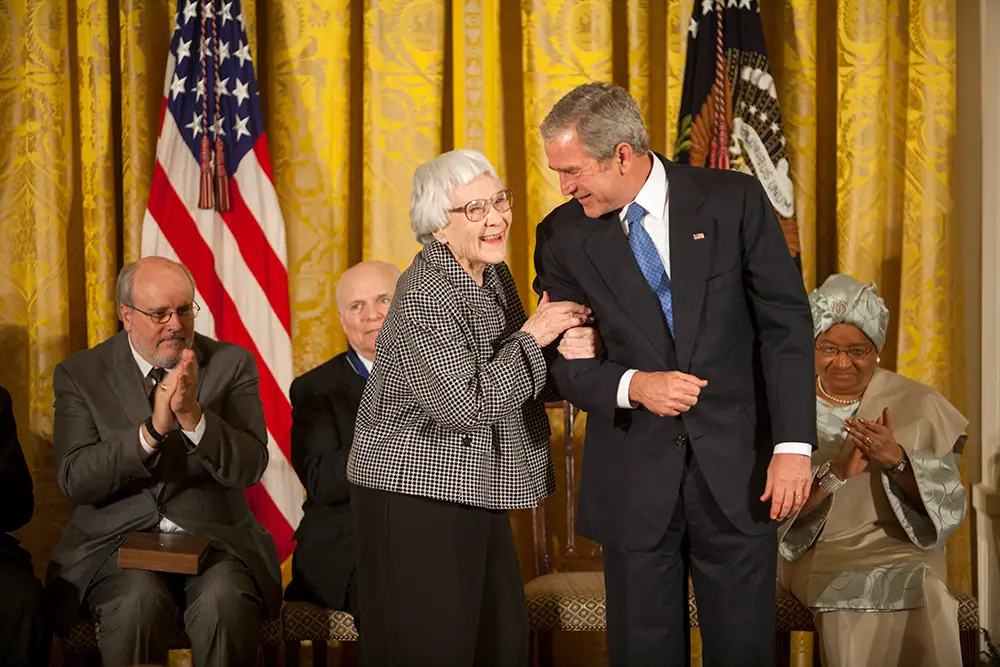
A newspaper had to sue
After Lee's death, The New York Times filed suit. Its argument was not complicated: a will filed in an Alabama probate court is part of the public record, and sealing it required justification the public had never been given.
The paper won. The will was unsealed in 2018, and the Times reported on it on February 27, 2018.
The document underneath the seal turned out to be almost entirely uninformative. Lee's will left the bulk of her assets to a trust she had formed in 2011 — the same year the safe-deposit box was first appraised. Trusts are private instruments. They are not filed with a court. The will's job was to move everything into a document that nobody outside it will ever read.
The Times headline said the will added mystery rather than removing it, and that is exactly right as a matter of estate mechanics. A pour-over will is a receipt, not a plan. It tells you the plan exists and where it went. It does not tell you what it says.
Two ways to keep an estate quiet, and only one of them works
There are exactly two routes to privacy in a death, and they are not equally good.
Ask a court to seal the file. This is adversarial, discretionary, reversible, and newsworthy. It requires a judge's findings, it can be challenged by anyone with standing — including a newspaper — and losing the challenge produces a headline far larger than the one you were avoiding. It is also, by design, hard: the presumption of public access to court records exists for the benefit of heirs and creditors, not journalists.
Or move the assets out of probate before you die. A funded revocable trust is never filed anywhere. There is no docket, no petition, no order, and nothing for a newspaper to move to unseal, because there is no court file to open. The trustee answers to the beneficiaries, and to no one else.
Harper Lee's estate ended up using both. Only the second one held.
Timeline
- 1960To Kill a Mockingbird is published, with a portrait of Lee by Truman Capote on the dust jacket.
- 1943–2011Alice Finch Lee practises law in Monroeville, handles her sister's affairs, and retires at 100 as Alabama's oldest practising lawyer.
- 2011Lee forms the trust that will eventually receive the bulk of her estate. Per Tonja Carter's later account, an initial appraisal of Lee's assets takes place in the same year. By this point Lee is reported to be living in an assisted-living facility.
- 2014Carter re-examines the safe-deposit box and finds the manuscript of Go Set a Watchman. Alice Lee dies on November 17 at 103.
- Feb 2015The second novel is announced. The Alabama Department of Human Resources opens an investigation into whether Lee was competent to authorise publication.
- Apr 2015The investigation closes. The coercion and elder-abuse allegations are found unfounded; the finding is that Lee controlled the decision. Some of her friends publicly disagree.
- Jul 14, 2015Go Set a Watchman is published by HarperCollins and Heinemann. It is Amazon's most pre-ordered book since 2007.
- Feb 19, 2016Lee dies in her sleep in Monroeville at 89. Her will is filed with the probate court and placed under seal.
- 2018The New York Times sues, arguing an Alabama probate file is a public record. The will is unsealed. It leaves the bulk of the estate to the 2011 trust, whose terms remain private.
What actually went wrong
- The will was sealed instead of the assets being moved earlier. Sealing invites a challenge and guarantees a second news cycle when the challenge succeeds. Funding a trust in life produces no cycle at all.
- A very old client, a very large decision, and one adviser. Nothing improper was ever found. But when an 88-year-old author's major publishing decision runs through a single professional after the death of the family member who previously handled everything, the questions arrive whether or not there is an answer to them.
- No public, contemporaneous record of consent. A short recorded or witnessed statement from Lee herself, made at the time of the publication decision, would have ended the argument before a state agency had to open a file.
- Privacy planned late. The 2011 trust did most of the work. What did not get done was the rest of it — enough assets left in her own name that a probate had to be opened at all, and a will that therefore had to be filed.
Would it have gone that way in Florida?
The will would have been public within days — sealing it is very hard here. The trust would never have been filed at all.
Florida draws the privacy line in a place that surprises people, and it is worth learning exactly where.
The will becomes public, fast. Fla. Stat. §732.901 requires the custodian of a will to deposit it with the clerk of the court within 10 days after learning the testator has died. If the custodian does not, any interested person can petition to compel production — and a custodian who refuses without just cause is personally liable for the petitioner's costs, damages, and attorney's fees. Once deposited, the will is a court record, and Florida court records are presumptively open under Art. I, §24 of the Florida Constitution. Sealing one requires a judge to make specific written findings under Fla. R. Jud. Admin. 2.420, and “the family would prefer privacy” is not among the recognised grounds.
The inventory, on the other hand, is confidential by statute. This is the part almost nobody knows. §733.604(1) provides that an inventory filed with the clerk — initial, amended, or supplementary — is confidential and exempt from Florida's public-records law and from Art. I, §24. It is available to the personal representative, that person's attorney, interested persons as defined in §731.201, and anyone a court lets in for good cause. So in Florida a reporter can read who inherits, but not what there was.
And the trust is not filed anywhere. A Florida revocable trust is a private contract. No court sees it unless someone sues. Under §736.0813 the trustee owes a duty to keep the qualified beneficiaries reasonably informed and to provide accountings — to them, not to the public. That is the whole privacy mechanism, and it costs nothing to use.
The honest caveats. First, privacy depends on funding, not drafting. Assets still titled in your own name at death go through probate no matter how good the trust is, which is why a pour-over will exists — and why that will gets filed and read. Second, litigation punctures everything: the moment a beneficiary sues a trustee, the trust terms go into a public court file. Third, a Florida trust that is fighting about its own terms may end up in the same file as everything else.
There is also a capacity point sitting underneath this case. If a Florida challenger showed that a substantial beneficiary in a confidential relationship with the decedent was active in procuring an instrument, §733.107(2) would shift the burden of proof to that beneficiary to disprove undue influence — one of the most challenger-friendly rules in the country. It never applied here, because nothing was ever contested in court and no finding of any kind was made.
The practical instruction: if privacy matters to you, retitle the assets into the trust while you are alive, and keep the pour-over will boring. Then, separately, if a big decision is made late in life — a publication, a sale, a gift — create a contemporaneous record of your own consent. It is the cheapest insurance in estate planning, and it is only available before the fact.
What people ask us about this.
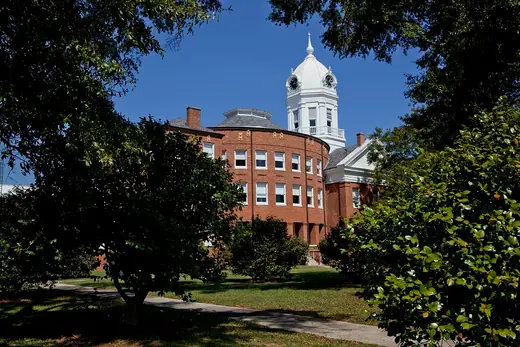
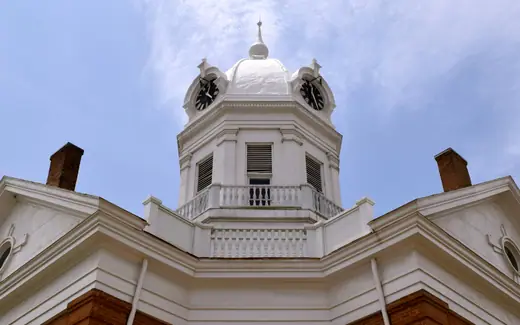
Further reading
Third-party sites. Not ours, not endorsed, not kept current by us — just the places worth going next.
Sources
- Harper Lee's will, unsealed, only adds more mystery to her life — The New York Times, Feb 27, 2018
- How I found the Harper Lee manuscript — The Wall Street Journal, July 12, 2015
- Harper Lee, 'To Kill a Mockingbird' author, dead at 89 — CNN, Feb 19, 2016
- Alice Lee, sister of Mockingbird author, dies at 103 — NPR, Nov 19, 2014
- Harper Lee — Wikipedia
- Go Set a Watchman — Wikipedia
- Fla. Stat. §733.604 — Inventory; confidentiality — The Florida Senate
- Fla. Stat. §732.901 — Production of wills — The Florida Senate
If this is your situation
Free 30-minute consult. Plain English. No pressure.
Nearly every case in this archive turned on something ordinary — an unwitnessed page, a stale beneficiary line, a document nobody could find. Those are cheap to fix while you're alive and expensive to fix afterward.