Osho / Rajneesh
A movement bought 64,229 acres of Oregon for $5.75 million and sold the ranch six years later for less. The harder asset was the name. In 2009 the US Trademark Trial and Appeal Board cancelled the OSHO registrations as generic — the word had become the movement, and a movement is not a brand.
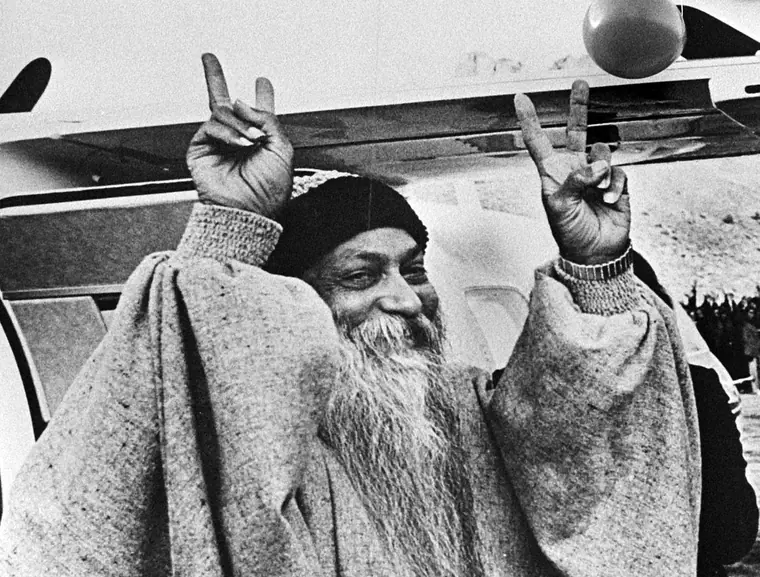
This page is about assets and title. It describes what property was bought and sold, what intellectual property was registered and cancelled, and what courts and tribunals have decided. It takes no position on anyone's beliefs, and it repeats no allegation as fact.
Rajneesh — who asked from late 1988 to be called Osho — died on January 19, 1990, in Pune, India, at 58. He left behind a movement, a very large body of recorded discourses, and a naming problem that has generated litigation on three continents for thirty-six years.
The physical assets came first and went fastest. On June 13, 1981, the movement bought the Big Muddy Ranch — 64,229 acres across Wasco and Jefferson counties, Oregon — for $5.75 million, and built the city of Rajneeshpuram on it. The commune collapsed in 1985. Rajneesh entered an Alford plea to immigration charges before Judge Edward Leavy in Portland on November 8, 1985, drew a suspended sentence, $400,000 in fines and costs, and deportation. Separately, his former secretary and others were prosecuted for offences including a 1984 salmonella contamination that sickened 751 people.
The ranch was bought by Dennis Washington's construction firm in 1991 for $3.65 million — roughly $2.1 million less than the movement paid a decade earlier. Washington donated it to Young Life in 1997; it has operated since 1999 as the Washington Family Ranch, a Christian youth camp.
January 13, 2009: OSHO is generic
Osho International Foundation (OIF), based in Zurich, holds and licenses the intellectual property. In the United States it registered OSHO as a trademark for goods and services connected to meditation and the teachings.
Osho Friends International petitioned to cancel. On January 13, 2009, the Trademark Trial and Appeal Board granted the cancellation petition and sustained the oppositions. The Board's reasoning is the whole lesson: the primary significance of OSHO to the public is the movement and its meditative techniques, not the source of any particular product. A word that names the thing itself cannot be owned as a mark for that thing.
The registrations for OSHO standing alone were cancelled, along with applications for a series of OSHO-formative marks. The decision was appealed and the appeal was later withdrawn, which made the Board's order final.
Europe went the other way. In 2017 the General Court of the European Union at Luxembourg upheld OIF's EU trademark against a challenge brought by Osho Lotus Commune of Cologne. The same word is a valid registered mark in one jurisdiction and a cancelled generic term in another — which is not a contradiction so much as a demonstration that trademark rights are territorial and evidence-driven, and that a global movement produces different records in different markets.
- Genericness is about the public's understanding, not the owner's intention. A mark that becomes the name of the category dies as a mark.
- Success is the risk factor. The more completely a name comes to stand for a movement, a technique, or a product type, the weaker it is as a trademark.
- Territory matters. A cancellation in the US did not affect the EU registration, and vice versa.
- Copyright is the more durable asset. It attaches automatically, lasts for decades after death, and does not evaporate because the public adopted the name.
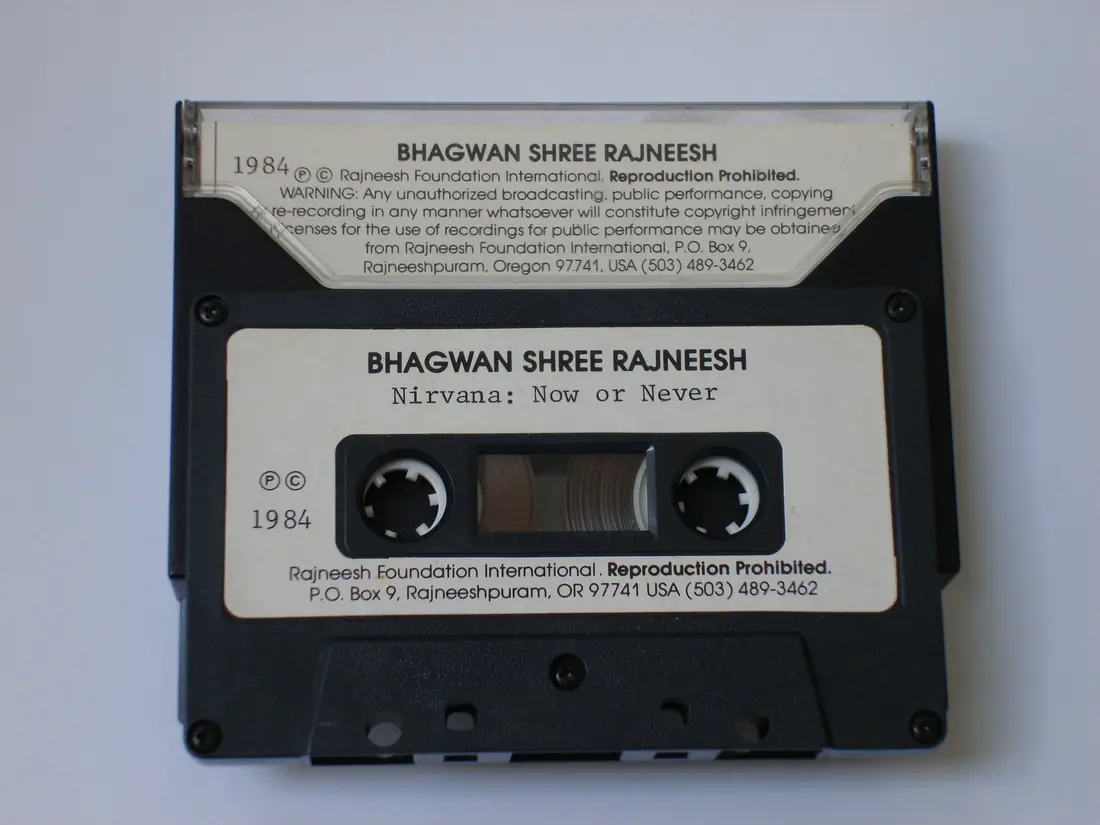
Fifty-six works and a Netflix series
The recordings and photographs are the estate's real economic engine, and OIF has litigated to protect them.
In January 2019, OIF and filmmaker Michael Hilow sued Netflix, the directors of Wild Wild Country, and its producers in the US District Court for the Central District of California, case 2:19-cv-00753. The complaint alleged that at least 56 works owned by the foundation had been used in the series and its marketing without a licence, after a 2015 licensing discussion. The case was dismissed on February 5, 2020. Netflix subsequently added credits acknowledging the foundation's photographic and film material.
A dismissal following a resolution is not a court finding on the merits, and nothing in this account should be read as one. What it does show is that the copyright portfolio, unlike the trademark, has been enforceable enough to bring a major streaming platform to the table.
A will, three graphologists, and no original
The unresolved question is the foundational one: what instrument, if any, transferred the intellectual property to the foundation?
Former trustees have alleged, in a writ petition filed in the Bombay High Court in June 2013 and in an FIR lodged with Pune police in December 2013 under the Indian Penal Code provisions on forgery, that a will bearing Osho's signature was not genuine. Reporting indicates the Bombay High Court directed police to obtain a handwriting expert's report from the state Criminal Investigation Department, criticised the pace of the investigation, and later sought a report on efforts to obtain the will from Spain. The Enforcement Directorate was reported to be examining allegations of funds being moved out of India.
These are allegations. No court has found that any document is a forgery, and no one has been convicted. The people involved are living, and this archive assigns them verbs and not motives.
The evidentiary obstacle reported in the case is worth every reader's attention, because it has nothing to do with India and everything to do with wills. The documents in the proceeding were photocopies. Reporting indicates that three privately retained graphologists concluded the signature was not genuine, that the court required corroboration by a government examiner, and that the first government examiner engaged declined to form an opinion because only copies were available. As of August 2026 this archive found no report that the question has been resolved.
Timeline
- Jun 13, 1981The movement buys the 64,229-acre Big Muddy Ranch in Oregon for $5.75 million and builds Rajneeshpuram on it.
- 1984A salmonella contamination in The Dalles sickens 751 people. Prosecutions follow against the former secretary and others.
- Nov 8, 1985Rajneesh enters an Alford plea to immigration charges in Portland, receives a suspended sentence, $400,000 in fines and costs, and is deported.
- Jan 19, 1990Osho dies in Pune, India, at 58.
- 1991The Oregon ranch is sold to Dennis Washington's construction firm for $3.65 million — about $2.1 million less than the 1981 price.
- 1997–1999Washington donates the ranch to Young Life; it reopens as the Washington Family Ranch youth camp.
- Jan 13, 2009The TTAB cancels the OSHO registrations as generic in Osho Friends International v. Osho International Foundation. The appeal is later withdrawn and the order becomes final.
- 2013Former trustees file a writ petition in the Bombay High Court in June and an FIR with Pune police in December, alleging that a will bearing Osho's signature is not genuine. No finding has been reported.
- 2017The General Court of the European Union upholds Osho International Foundation's EU trademark against a challenge by Osho Lotus Commune of Cologne.
- Jan 2019 – Feb 5, 2020Osho International Foundation sues Netflix and the makers of Wild Wild Country in the Central District of California over 56 works. The case is dismissed; credits are added.
What actually went wrong
- A name that grew into a category. By the time OIF sought to enforce OSHO as a mark in the United States, the public understood the word to mean the movement and its techniques. The TTAB cancelled the registrations as generic on January 13, 2009.
- No undisputed original of the operative document. A dispute in which the parties argue over photocopies is a dispute that can run for a decade without an answer, because the physical original is where the evidence lives.
- Assets across jurisdictions with no single governing plan. Property in Oregon, a foundation in Switzerland, an ashram in India, marks registered on both sides of the Atlantic. Each jurisdiction applies its own law to the piece inside its borders, and the results diverge.
- Rights that were never recorded during life. Copyright assignments can be signed, dated, witnessed, and recorded with the US Copyright Office while the author is alive. Everything left to be established after death is established by litigation.
- A real-estate purchase sized to a plan rather than to a market. 64,229 acres of central Oregon bought for $5.75 million in 1981 resold for $3.65 million in 1991. Illiquid assets bought at the top of an institution's enthusiasm are sold at the bottom of it.
Would it have gone that way in Florida?
Florida would have resolved the document question years faster — and would probably have refused to admit a will that exists only as a photocopy.
Take the two hard problems in turn. Florida has a clean answer for each.
The missing original. Florida requires the original will. Where it cannot be produced, Fla. Stat. §733.207 governs: any interested person may establish the full and precise terms of a lost or destroyed will and offer it for probate, but the content must be proved by two disinterested witnesses, or, if a correct copy is provided, by one disinterested witness. Note who the burden sits on — the proponent, not the objector. And Florida layers a further obstacle on top: where a will was last known to be in the testator's possession and cannot be found at death, courts presume the testator destroyed it with intent to revoke. The proponent has to overcome that presumption before §733.207 even helps.
Applied to a dispute over a photocopy with a contested signature, that framework is unforgiving in a useful way. A proponent who cannot produce the original and cannot produce a disinterested witness to the execution does not get the will admitted. There is no ten-year investigation, because the burden allocation ends the matter early.
The execution itself. §732.502 requires the testator to sign at the end, in the presence of two attesting witnesses, each signing in the testator's presence and in the presence of each other. Those two witnesses are not decoration. They are the people a court calls when the signature is questioned, which is precisely the evidence the Indian proceeding was reported to lack. Florida also allows a self-proving affidavit under §732.503, and a properly self-proved will is admitted without any witness having to be located decades later. It is the single cheapest insurance in estate planning.
If pressure rather than forgery were alleged, the analysis is §732.5165 — a will procured by fraud, duress, mistake, or undue influence is void as to the part so procured — and §733.107(2), which makes the presumption of undue influence shift the burden of proof onto a substantial beneficiary who was in a confidential relationship and active in procuring the document. That test is indifferent to whether the beneficiary is a foundation, a company, or a person.
On the name and likeness, Florida has its own rule that the trademark fight never reaches. §540.08 protects a person's name, portrait, photograph, or likeness against commercial use without consent, and subsection (5) extends that protection for 40 years after death. Consent after death may be given by a person or entity authorised in writing to license the commercial use — which is exactly the sort of authorisation that should be signed during life and recorded, rather than reconstructed later.
Practical instruction, and it fits on an index card. Keep the signed original will in one known place and tell your personal representative where it is. Use a self-proving affidavit. If you own copyrights, sign and record assignments during your lifetime with the US Copyright Office. If your name has commercial value, sign a written authorisation naming who may license it after your death. Every one of those steps takes an afternoon and removes an entire category of litigation.
What people ask us about this.
Further reading
Third-party sites. Not ours, not endorsed, not kept current by us — just the places worth going next.
Sources
- Rajneesh — Wikipedia
- After careful meditation, TTAB finds OSHO generic — The TTABlog, Jan 2009
- Is OSHO a trademark — Osho Friends to the rescue — SpicyIP, Aug 2009
- Osho International Foundation copyright infringement case with Netflix resolved — Osho Times
- Osho will case: Bombay High Court slams Pune police for delay in probe — DNA India
- Bombay High Court seeks report on steps to get Osho's will from Spain — DNA India
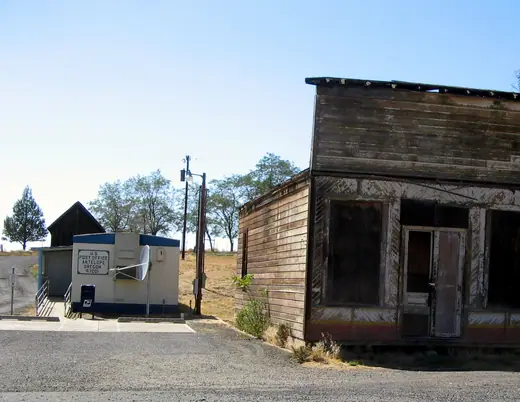
- City of Antelope and Muddy Ranch — The Oregon Encyclopedia
- Fla. Stat. §733.207 — Establishment and probate of lost or destroyed will — The Florida Senate
- Fla. Stat. §540.08 — Unauthorized publication of name or likeness — The Florida Senate
If this is your situation
Free 30-minute consult. Plain English. No pressure.
Nearly every case in this archive turned on something ordinary — an unwitnessed page, a stale beneficiary line, a document nobody could find. Those are cheap to fix while you're alive and expensive to fix afterward.