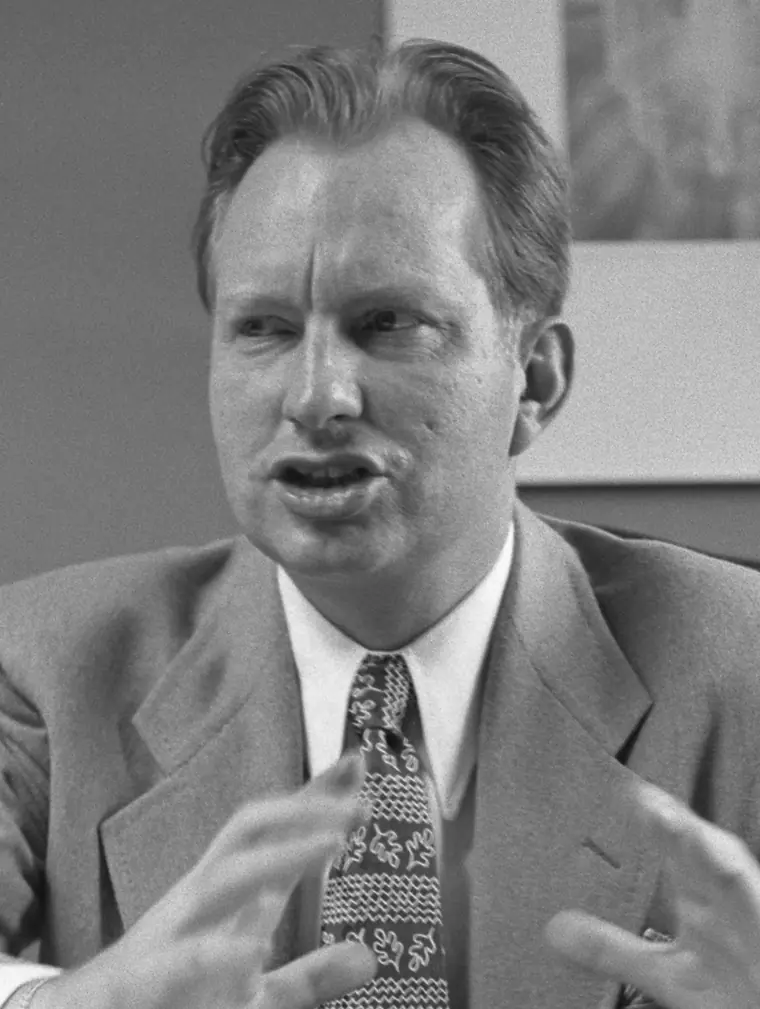
L. Ron Hubbard
Hubbard signed a new will the day before he died in 1986. About $25 million of a roughly $26 million estate was intellectual property, and the plan routed it through a family trust into religious corporations — one of which the government would not recognise as tax-exempt until 1993.
This page is about estate mechanics. It describes what documents were signed, what entities received what property, and what courts and agencies decided. It does not evaluate anyone's beliefs, and none of the analysis below would change if the recipient organisations were a university, a hospital, or a foundation.
L. Ron Hubbard died on January 24, 1986, in a motor home on a ranch outside Creston, in San Luis Obispo County, California. He was 74. The county coroner recorded the cause as a cerebrovascular accident following a stroke about a week earlier.
He left a will dated January 23, 1986 — the day before he died. It was signed, dated, and marked with his inked thumbprint. It directed that no autopsy be performed, on religious grounds. It provided for members of his family and, in a revision from an earlier version, provided more to them than the prior document had.
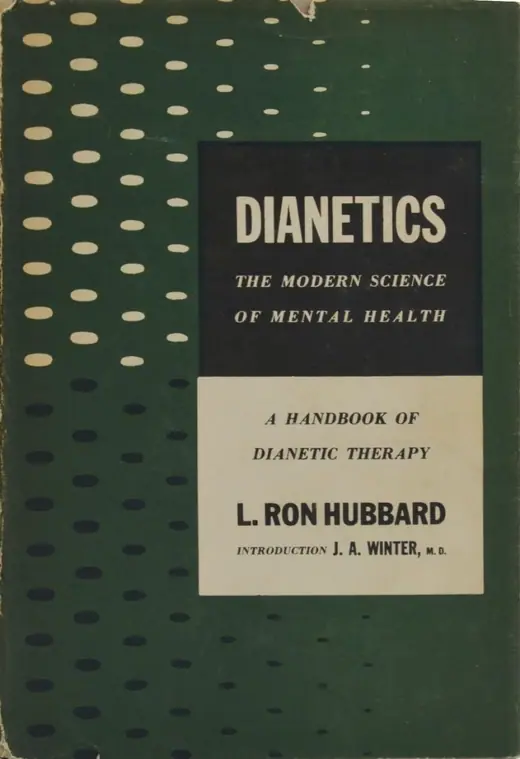
The interesting part is the balance sheet. Reporting on the estate filings put its value at roughly $26 million, of which about $25 million was copyright and trademark. Hubbard was one of the most prolific pulp and science-fiction writers of the twentieth century and the author of Dianetics, published in May 1950. What he actually owned when he died was, overwhelmingly, a library and a set of marks.
Two corporations, built four years early
The architecture was not improvised at the deathbed. Two entities were created in 1982, four years before Hubbard died.
Religious Technology Center (RTC) obtained the trademarks in May 1982, by an assignment agreement with Hubbard himself. That is an inter vivos transfer — it happened in his lifetime, and the marks were therefore never estate property at all.
Church of Spiritual Technology (CST) was incorporated in California on May 27, 1982. Its stated function is to own the copyrights in Hubbard's works and to license their use. Author Services Inc., a Los Angeles literary agency, handled the commercial side of the writing.
The will worked through a trust — Author's Family Trust-B — with Norman Starkey named as trustee. The trust was the intermediate holder: literary property passed to it, and from it the copyrights went on to CST. The 160-acre Creston property followed the same pattern, passing to Starkey in February 1986 and to CST in 1993.
- Trademarks — 1982, by lifetime assignment to RTC. Outside the estate entirely.
- Copyrights — by will, into Author's Family Trust-B, then to CST. Inside the estate, and therefore inside probate.
- Real property — to the trustee in 1986, to CST in 1993. The seven-year lag is the tax story, below.
- Family — provided for by trust, in amounts not made public.
Splitting marks from copyrights across two organisations, with an agency in between, is an unusual arrangement for a private author and an ordinary one for an institution. It is also the reason the estate itself closed relatively quietly while the tax question ran for another seven years.
A son, a receivership petition, and a settlement
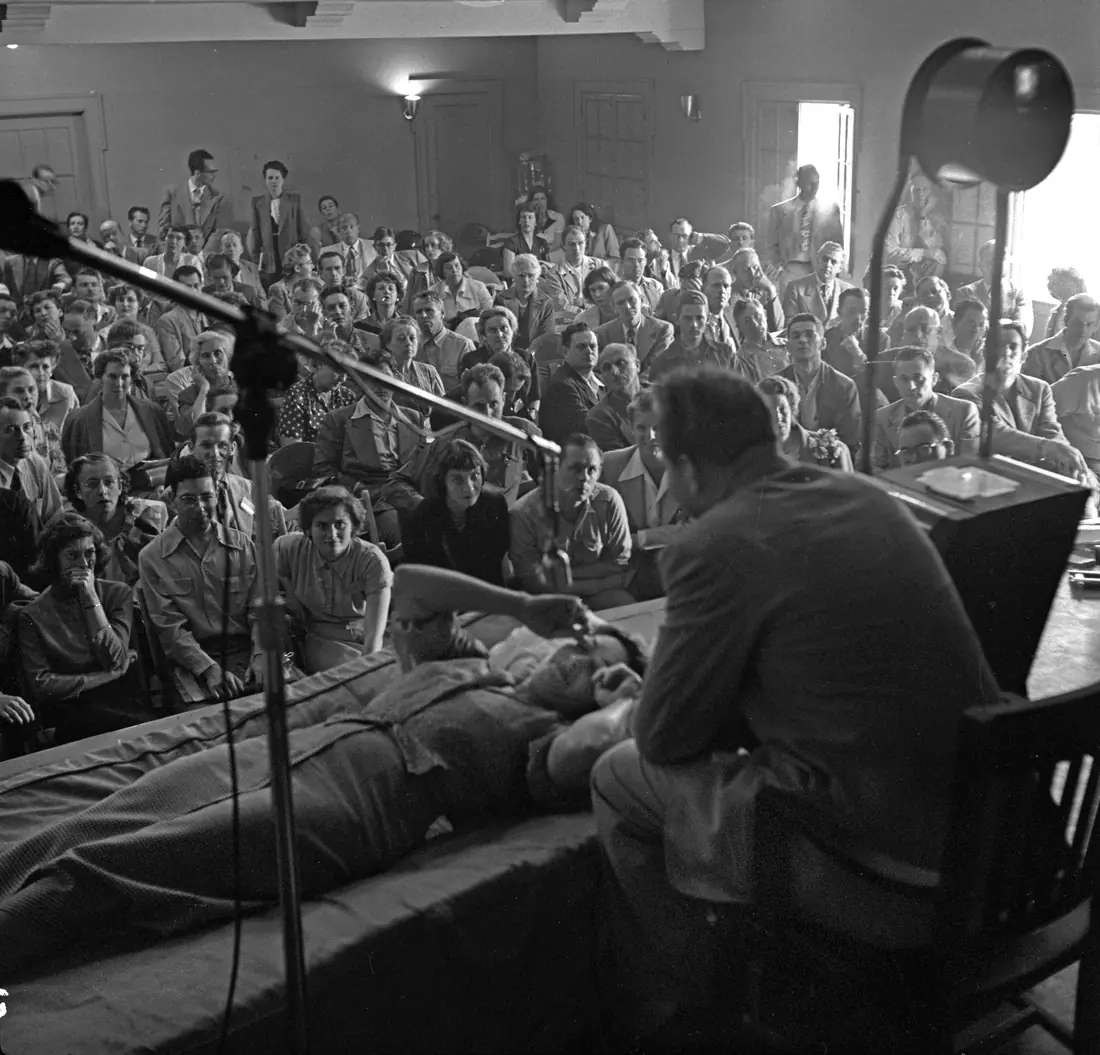
Hubbard's eldest son, Ronald DeWolf (born L. Ron Hubbard Jr.), had already been to court before his father died. On November 6, 1982, DeWolf filed in Riverside County Superior Court seeking control of his father's affairs, on the theory that Hubbard was either dead or incompetent. Hubbard was neither. The petition was resolved against DeWolf on summary judgment in June 1983; a document and a specimen produced during the proceeding established that Hubbard was alive.
After the death in 1986, DeWolf challenged the will. That dispute ended in a financial settlement, the amount of which was not made public, with DeWolf agreeing not to comment further. He died in 1991.
No court found that the will was invalid. No court found undue influence. Those two sentences belong here as prominently as the fact that the will was signed the day before death.
1992: denied. 1993: recognised.
The entity holding the copyrights spent years trying to establish that it was exempt from federal income tax under IRC §501(c)(3).
It lost. In Church of Spiritual Technology v. United States, No. 581-88T, the United States Claims Court issued an opinion on June 29, 1992 dismissing the suit. Judge Bruggink found that CST had not shown it was operated exclusively for exempt purposes, and concluded that the organisation had been founded primarily to obtain exempt status serving the financial goals of other, non-exempt entities. The court also pointed to what it described as the commercial character of much of the activity and the difficulty of following the money through the structure.
Fourteen months later the result reversed by a different route. In 1993 the Internal Revenue Service entered a closing agreement with the Church of Scientology and affiliated organisations, recognising exemption across a large group of related entities — reporting has put the number at roughly 150 — and receiving a payment of $12.5 million covering income, payroll, and estate tax liabilities for periods before 1993. The church side dropped its litigation against the agency. CST filed its exemption application on August 18, 1993, and was recognised on October 1, 1993.
The agreement's terms were confidential. They became public only when the document was leaked to the Wall Street Journal on December 30, 1997.
Timeline
- May 1950Dianetics is published. It becomes the core literary asset of the estate Hubbard leaves 36 years later.
- May 1982Hubbard assigns the trademarks to Religious Technology Center by agreement during his lifetime — putting them outside his estate.
- May 27, 1982Church of Spiritual Technology is incorporated in California to hold the copyrights and license their use.
- Nov 6, 1982Ronald DeWolf files in Riverside County Superior Court seeking control of his father's affairs, alleging Hubbard is dead or incompetent.
- Jun 1983DeWolf's petition is resolved against him on summary judgment. Hubbard is alive.
- Jan 23, 1986Hubbard signs a will, thumbprinted, providing for family members and directing that no autopsy be performed.
- Jan 24, 1986Hubbard dies at Creston, California. Estate filings put the estate at roughly $26M, about $25M of it copyright and trademark.
- Jun 29, 1992The US Claims Court dismisses Church of Spiritual Technology v. United States, No. 581-88T, rejecting the entity's claim to §501(c)(3) exemption.
- Oct 1, 1993Following a closing agreement with the IRS — $12.5M paid, litigation dropped, roughly 150 related entities covered — CST is recognised as exempt. The Creston property is transferred to it the same year.
What actually went wrong
- A will signed the day before death. Nothing about that is unlawful, and nothing about it was set aside here. But it guarantees the question gets asked, and it converts an otherwise ordinary document into an invitation to litigate.
- Two transfer routes for one body of work. Trademarks moved by lifetime assignment in 1982; copyrights moved by will in 1986. The second route runs through probate, is public, and is contestable. The first is neither.
- A beneficiary whose tax status was unresolved. The organisation designated to receive the copyrights was still litigating its exemption six years after the death, and lost at the trial level in 1992.
- No public accounting for the family provisions. Amounts left to family members were not made public, which is a legitimate privacy choice and also removes the single fact most likely to end a contest before it starts.
- A prior court fight already on the record. A relative who has litigated over your competence during your life will litigate over your will after it. Planning that ignores that history is planning with the risk file closed.
Would it have gone that way in Florida?
Same structure, easier statute — Florida's trust code is explicit that religion is a charitable purpose, and its cy pres rule catches the gift if the recipient fails.
Nothing in the Hubbard plan would have been unlawful in Florida, and one part of it would have been easier to build here.
Start with the charitable purpose. Fla. Stat. §736.0405(1) provides that a trust may be created for charitable purposes and that those purposes include, expressly, the advancement of arts, sciences, education, or religion. Florida does not ask whether a court likes the religion, and it does not rank one against another. It asks only whether the purpose falls in the statutory list. A trust to preserve and license an author's works for a religious organisation is a charitable trust under that section, full stop.
Section §736.0405(2) does the salvage work Nobel's will needed: if the terms of a charitable trust do not identify a particular purpose or beneficiary, the court may select one, consistent with the settlor's intent so far as it can be found. And §736.0405(3) says the settlor has standing to enforce the trust — a point that matters more than it sounds, because charitable trusts otherwise have no private beneficiary to police them.
Now the part that would have absorbed the 1986-to-1993 problem. Fla. Stat. §736.0413 — cy pres — provides that where a particular charitable purpose becomes unlawful, impracticable, impossible to achieve, or wasteful, a court may modify or terminate the trust and direct the property in a manner consistent with the settlor's charitable purposes. A settlor, a trustee, or any qualified beneficiary can start the proceeding. If a Florida testator directs copyrights to a designated organisation and that organisation cannot take them — dissolved, disqualified, never properly formed — the gift does not fall back into intestacy. A court redirects it. That is a materially better outcome than the alternative, which is the residuary clause fighting the heirs.
On the deathbed will, Florida is stricter about form and no softer on substance. §732.502 requires the testator to sign at the end, in the presence of two attesting witnesses, who sign in the testator's presence and in each other's presence. Florida will honour a will executed in another state if it was valid where signed — but never a holographic will, and never a nuncupative one, even if the state of signing would. A thumbprint plus a signature satisfies nothing on its own; the witnesses are the requirement.
And if a family member alleged pressure, §732.5165 makes a will void to the extent it was procured by fraud, duress, mistake, or undue influence, and §733.107(2) shifts the burden of proof — not merely production — to a substantial beneficiary who was in a confidential relationship with the decedent and active in procuring the will. That is the same analysis this archive applies to a nurse, a business partner, or a nephew. It is organisation-neutral by design.
Practical instruction. If your plan sends assets to an institution — of any kind — do three things: name the exact legal entity and its federal tax identification number, add an alternate charitable recipient in case the first cannot take, and confirm in writing that the entity is currently recognised under §501(c)(3) before the document is signed rather than after. And if intellectual property is the asset, transfer it during your lifetime by written assignment, recorded with the Copyright Office and the USPTO, so it never has to travel through probate at all.
What people ask us about this.
Further reading
Third-party sites. Not ours, not endorsed, not kept current by us — just the places worth going next.
Sources
- L. Ron Hubbard's last refuge — New Times San Luis Obispo
- L. Ron Hubbard — Wikipedia
- Church of Spiritual Technology — Wikipedia
- Church of Spiritual Technology v. United States, No. 581-88T (Cl. Ct. Jun. 29, 1992) — US Claims Court, opinion text
- Tax status of Scientology in the United States — Wikipedia
- Scientologists' deal with IRS: $12.5 million — The Seattle Times, Dec 1997
- Ronald DeWolf — Wikipedia
- Fla. Stat. §736.0405 — Charitable purposes; enforcement — The Florida Senate
- Fla. Stat. §736.0413 — Cy pres — The Florida Senate
If this is your situation
Free 30-minute consult. Plain English. No pressure.
Nearly every case in this archive turned on something ordinary — an unwitnessed page, a stale beneficiary line, a document nobody could find. Those are cheap to fix while you're alive and expensive to fix afterward.