Nina Wang
She spent a decade in court proving that a will benefiting somebody else was forged. She won. Then she died, and a one-page document appeared leaving her multi-billion-dollar estate to her feng shui consultant — and Hong Kong's courts spent six more years deciding it was forged too.
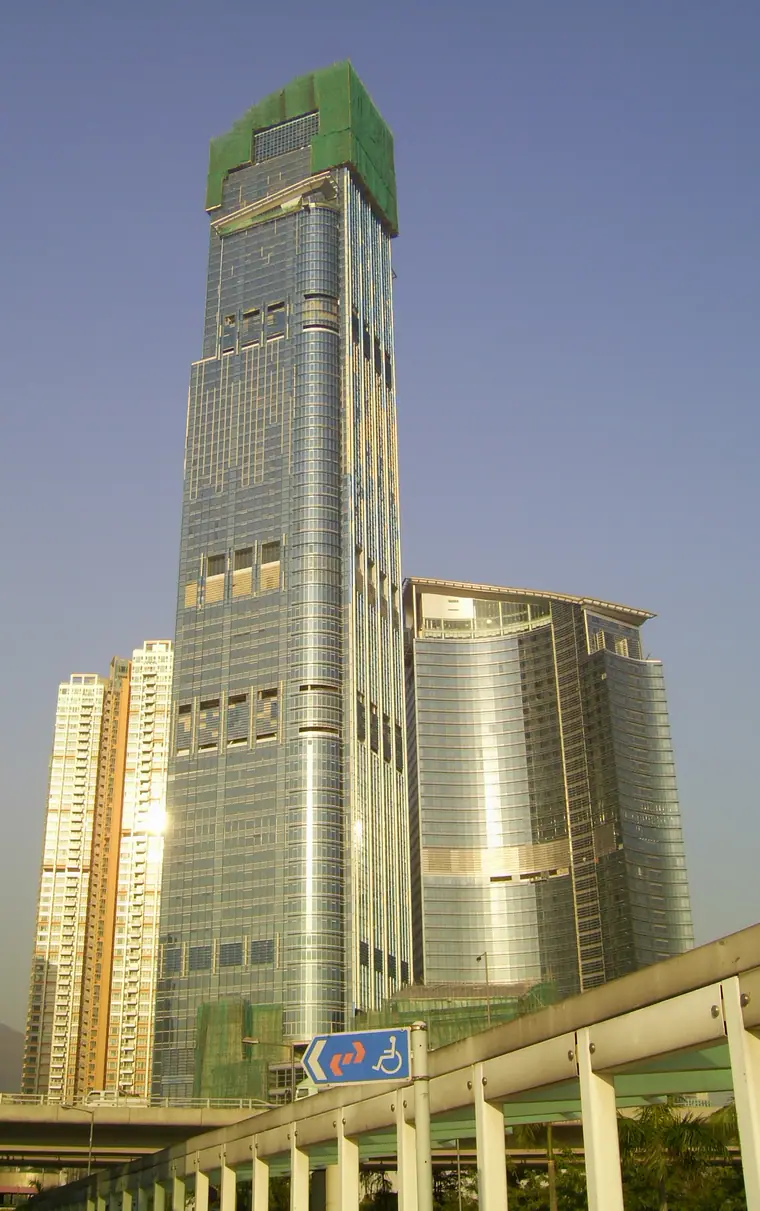
Nina Wang chaired Chinachem, one of Hong Kong's largest property developers, and was for years the richest woman in Asia. Forbes put her fortune at roughly US$4.2 billion at her death on April 3, 2007. She wore pigtails and mini-skirts into her sixties and was known in the Hong Kong press as Siu Tim Tim — Little Sweetie.
She had already fought and won one of the longest will contests in the territory's history. Her husband, Teddy Wang, was kidnapped in 1990 and never found; he was declared dead in 1999. A will dated 1990 left everything to Nina. Her father-in-law Wang Din-shin contested it, and in November 2002 the Court of First Instance held that the 1990 will was a forgery.
She appealed. On September 16, 2005, the Court of Final Appeal reversed, and the estate came to her.
So Nina Wang spent the better part of a decade in litigation over whether a will was genuine, and won. Eighteen months later she was dead, and the identical question was asked about her own.
2002 to the foundation, 2006 to the consultant
Wang's will dated July 28, 2002 left her estate to the Chinachem Charitable Foundation, directing that it fund medical, educational, and charitable purposes — including, in terms that became famous, a supervisory body involving the United Nations and the Chinese government, and the establishment of a prize on the model of the Nobel.
Days after her funeral, a second document surfaced. Dated 2006, it left the entire estate to Chan Chun-chuen — then known as Tony Chan, later Peter Chan — a former bartender turned feng shui consultant who had advised her for years.
Two wills. One charity, one individual. Hong Kong probate law, like Florida's, resolves that by asking a narrow question first: was the later document validly executed and genuine? Everything else waits behind that.
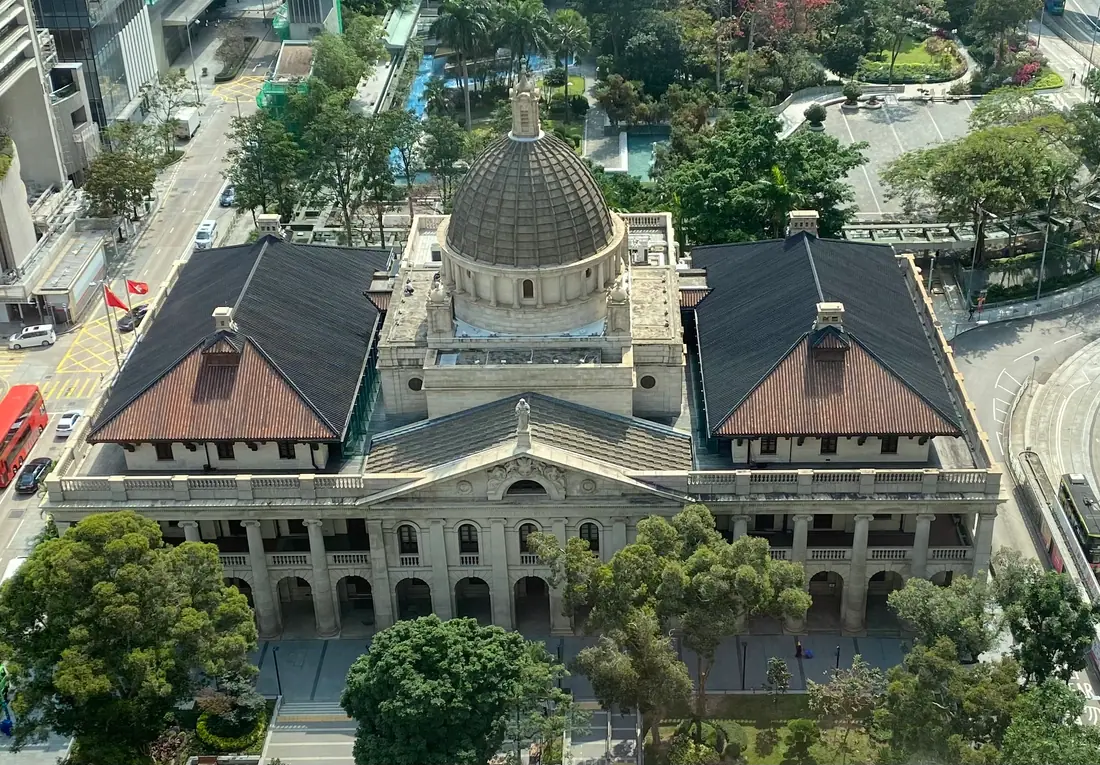
February 2, 2010: “a highly skilled simulation”
The probate action was tried in the Court of First Instance before Mr Justice Johnson Lam. Chan gave evidence that he and Wang had been secretly involved for years, and the court accepted that they had had a relationship.
It did not accept the will. On February 2, 2010, Lam held that Wang's signature on the 2006 document was “a highly skilled simulation” — that is, a forgery — and that her estate passed under the 2002 will to the Chinachem Charitable Foundation. Of Chan's evidence, the judgment recorded that the court did not find him a credible witness and that in many respects his evidence was tailored to suit his convenience.
Hong Kong police arrested Chan the following day. He was released on HK$5 million bail.
Convicted, and imprisoned
The prosecution charged forgery and using a false instrument. In July 2013, a jury in the Court of First Instance convicted Chan on both counts.
Mr Justice Andrew Macrae sentenced him to 12 years on each count, to run concurrently. In sentencing, the judge described the conduct as shameless and extremely greedy and called Chan a charlatan, noting that he had already received well over HK$3 billion from Wang during her lifetime and stating that he had not been content with that.
An application for leave to appeal the conviction was refused; a further application was rejected in October 2015. The conviction stands.
State that plainly, because it is genuinely rare. In the overwhelming majority of will contests in the overwhelming majority of jurisdictions, an allegation of forgery ends in a settlement, a withdrawal, or a finding that the evidence is insufficient. Here a court found the document forged, and a jury found the man who produced it guilty of forging it.
Winning the case is not the same as ending it
The 2002 will left the estate to the Chinachem Charitable Foundation. That sounds like an ending. It was not.
The next question was whether the Foundation received the estate as an outright gift or as a trustee bound by the will's stated purposes. On May 18, 2015 — eight years after her death — the Court of Final Appeal held that the Foundation takes as trustee, not as absolute owner, and directed that a scheme be settled with the Secretary for Justice to give effect to the will's charitable objects, including the supervisory arrangement and the prize.
Litigation over the administration of the estate continued for years afterward. An estate of that size, left to a purpose rather than to people, does not resolve on the day the forgery case ends. It resolves when somebody agrees on what the words in the will actually require.
Timeline
- 1990Teddy Wang, Nina Wang's husband, is kidnapped and never found. A will dated 1990 leaves his estate to Nina.
- 1999Teddy Wang is declared dead. His father, Wang Din-shin, contests the 1990 will.
- Nov 2002The Court of First Instance holds the 1990 will a forgery and awards the estate to Wang Din-shin.
- Jul 28, 2002Nina Wang executes a will leaving her estate to the Chinachem Charitable Foundation for charitable purposes.
- Sep 16, 2005The Court of Final Appeal reverses, and Teddy Wang's estate passes to Nina.
- Apr 3, 2007Nina Wang dies. Days later a document dated 2006 surfaces, leaving her entire estate to feng shui consultant Chan Chun-chuen.
- Feb 2, 2010Mr Justice Johnson Lam holds the 2006 will forged — the signature “a highly skilled simulation” — and upholds the 2002 will. Chan is arrested the next day.
- Jul 2013A Court of First Instance jury convicts Chan of forgery and using a false instrument. Mr Justice Andrew Macrae sentences him to 12 years on each count, concurrent.
- Oct 2015A further appeal application is rejected; the conviction stands.
- May 18, 2015The Court of Final Appeal holds the Chinachem Charitable Foundation takes the estate as trustee, not absolute owner, and directs a scheme with the Secretary for Justice.
What actually went wrong
- A one-sided later will, produced after the funeral, by its sole beneficiary. Every element of that sentence is a red flag on its own. Together they are the classic forged-will fact pattern, and courts have seen it often enough to know the shape.
- Enormous undocumented lifetime gifts. The sentencing judge referred to well over HK$3 billion received during her lifetime. Where a person has already been given a fortune with no contemporaneous record of why, a document giving them the rest is read against that background.
- No neutral professional in the room. A will of this magnitude, executed without an independent solicitor, without a file note, and without disinterested witnesses, has nothing to authenticate it except the signature — which is exactly what was challenged.
- A charitable gift written as an aspiration rather than a mechanism. The 2002 will named grand purposes and named no trustee scheme to deliver them. That ambiguity cost another five years and a trip to the Court of Final Appeal after the forgery case was over.
- Nobody deposited the will. The 2006 document did not surface until after the funeral. A will nobody can find, or that appears only once the estate is open, invites the question of where it has been.
Would it have gone that way in Florida?
Same result, faster. A one-page will benefiting the person who produced it would face Florida's execution formalities, the undue-influence presumption, and a burden that shifts onto the beneficiary.
Start with formalities, because in Florida they do most of the work before anyone reaches the handwriting experts.
Fla. Stat. §732.502 requires that a will be signed by the testator at the end, in the presence of two attesting witnesses, who must sign in the presence of the testator and of each other. Florida is strict about this and does not have a general harmless-error escape hatch for a document that misses the requirement. Florida never accepts an unwitnessed handwritten will, no matter how clearly it is in the testator's own hand — §732.502(2) honours out-of-state wills but expressly excludes holographic and nuncupative ones.
So the first Florida question is not whether the signature is genuine. It is: who are the two witnesses, and what do they say? Two identified attesting witnesses convert a forgery case into a perjury case, and prosecutors are much better staffed for that than probate litigants are for handwriting analysis. Under §733.107, the proponent of a will bears the initial burden of establishing prima facie its formal execution and attestation; a document with no credible attestation does not get off the ground.
Second, the substantive rule. §732.5165 makes a will void where its execution was procured by fraud, duress, mistake, or undue influence. Forgery is not merely a defect in form here; it is a ground for voiding.
Third, and decisively, the burden. Florida's presumption of undue influence arises under In re Estate of Carpenter, 253 So. 2d 697 (Fla. 1971), where a substantial beneficiary who occupied a confidential relationship with the decedent was active in procuring the will — with active procurement measured by factors including presence at execution, recommending the attorney, knowing the contents beforehand, instructing the drafter, securing the witnesses, and safekeeping the document afterward. And §733.107(2) makes that presumption one that shifts the burden of proof, not merely the burden of producing evidence. An adviser who produced a will naming himself as sole beneficiary would, in a Florida courtroom, be required to prove the absence of undue influence.
Two honest caveats. A long personal relationship is not disqualifying — Florida has no rule against leaving your estate to a partner, an adviser, or anyone else, and courts are not in the business of grading affections. And §732.517 makes no-contest clauses unenforceable, which cuts both ways: a challenger risks nothing by asking, so a genuine beneficiary of an unusual will should expect to have to defend it.
The practical instruction, and it is unromantic. Sign in front of two witnesses and a notary, use the self-proving affidavit under §732.503, and deposit the original with the clerk of court — §732.901 requires the custodian to do so within 10 days of learning of a death anyway. A self-proved will is admitted without dragging witnesses into court, and a will already on file with the clerk cannot be the document that mysteriously appears after the funeral.
What people ask us about this.

Further reading
Third-party sites. Not ours, not endorsed, not kept current by us — just the places worth going next.
Sources
- Peter Chan guilty of forging will of late tycoon Nina Wang — South China Morning Post, Jul 2013
- Peter Chan gets 12 years' jail for forging late tycoon Nina Wang's will — South China Morning Post, Jul 2013
- Feng shui master jailed over late Hong Kong tycoon's will — CNN, Jul 5 2013
- Hong Kong jails tycoon's lover for forgery — Al Jazeera, Jul 5 2013
- Feng shui guru remains guilty of forging the will of Asia's richest woman after failed appeal application — Hong Kong Free Press, Oct 30 2015
- Court rules Nina Wang intended her foundation to hold fortune as a trustee, not beneficiary — South China Morning Post, May 2015
- LCQ21: Administration of the estate of the late Mrs Nina Wang — Hong Kong SAR Government / Department of Justice, Feb 2023
- Fla. Stat. §733.107 — Burden of proof in proceedings contesting validity of will — The Florida Senate
If this is your situation
Free 30-minute consult. Plain English. No pressure.
Nearly every case in this archive turned on something ordinary — an unwitnessed page, a stale beneficiary line, a document nobody could find. Those are cheap to fix while you're alive and expensive to fix afterward.