Napoleon Bonaparte
Dying on a rock in the South Atlantic, Napoleon wrote out a will in his own hand naming 97 legatees, added codicils for a week, and left money to a man acquitted of shooting at the Duke of Wellington. His burial wish took nineteen years to honour.
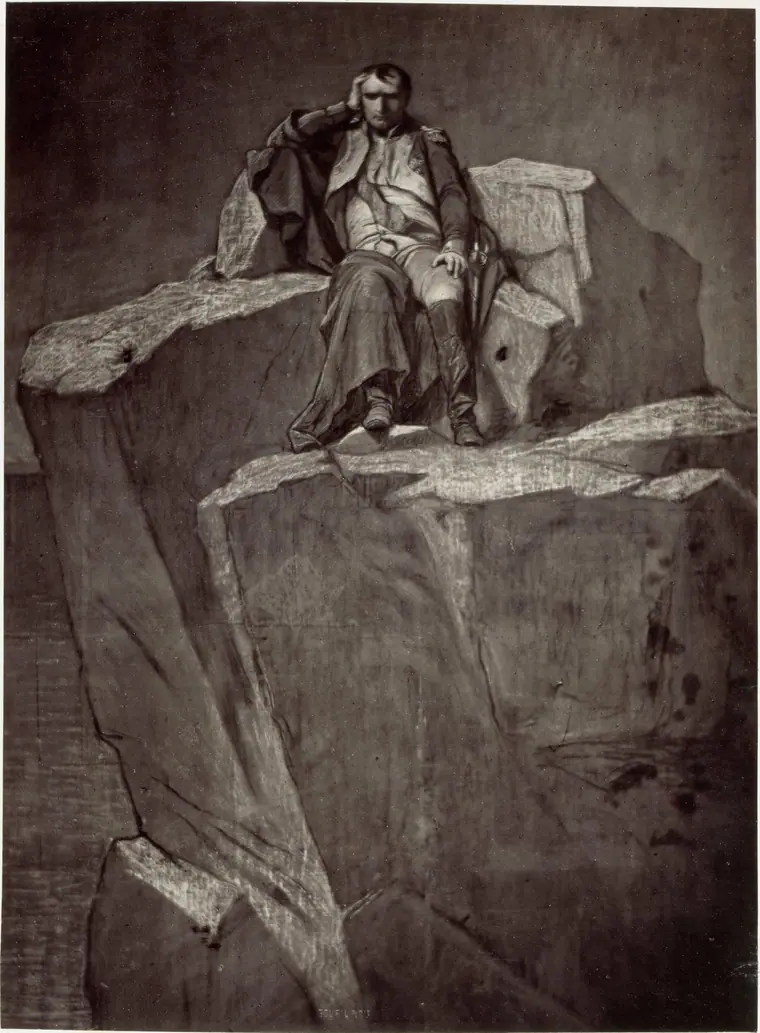
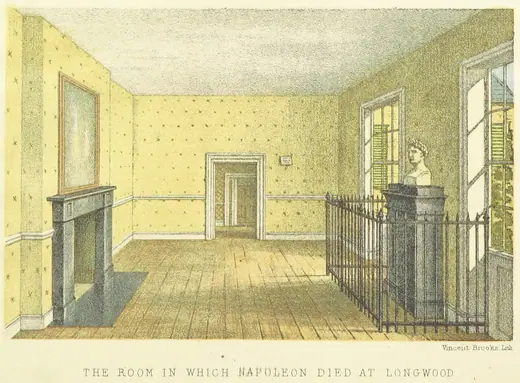
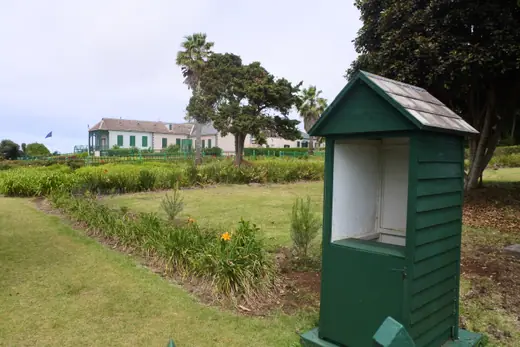
Napoleon Bonaparte had been on Saint Helena for five and a half years — a volcanic island in the South Atlantic, 1,200 miles from anywhere, under British guard at a damp house called Longwood. By April 1821 he was confined to bed. On April 15 he wrote out his will in his own hand, and over the following eleven days he added a series of codicils.
The document is not a lawyer's work and does not pretend to be. It opens with a declaration of faith, moves to a sentence that would define the next two decades of French politics — that his ashes should rest on the banks of the Seine, in the midst of the French people whom he had loved so well — and then states, flatly, that he was dying prematurely, assassinated by the English oligarchy.
After the politics comes the accounting. Napoleon named 97 legatees. Household servants, generals, the men who had followed him into exile, veterans of his campaigns. He directed that half of his private domain go to the surviving officers and soldiers of the French army who had fought from 1792 to 1815, and he put the value of that domain at more than 200 million francs.
Eleven days of amendments, including one act of spite
Napoleon kept amending. The codicils ran from April 16 to April 26, 1821, adding legacies, distributing personal effects, and settling scores.
The most famous entry is in the fourth codicil, and it is the reason the will was still causing diplomatic irritation in the 1850s. Napoleon left 10,000 francs to Marie André Cantillon, a former sub-lieutenant who had been prosecuted for firing a pistol at the Duke of Wellington in Paris on February 11, 1818, and acquitted at trial in May 1819. The clause said so explicitly, and added that Cantillon had had as much right to shoot Wellington as Wellington's side had had to send Napoleon to perish on the rock of Saint Helena.
Wellington's own recorded assessment was that the bequest was the greatest blot on Napoleon's character. Cantillon received only part of the money, in instalments between 1823 and 1826. His widow petitioned for the balance under Napoleon III; a commission refused in 1855; a press report the same year said the sum had been paid with interest; and in February 1858 the matter was raised in the House of Commons. A single line in a dying man's codicil generated a parliamentary question thirty-seven years later.
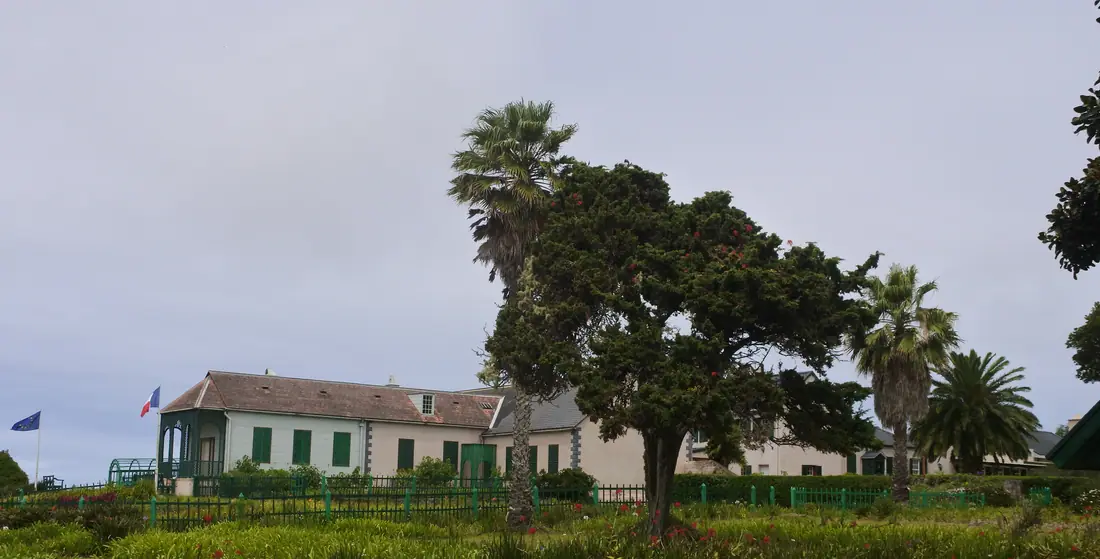
Nineteen years to move a body
Napoleon died on May 5, 1821, and was buried on Saint Helena. The clearest instruction in his will — the one about the Seine — was the one the executors had no power to carry out, because the decision belonged to the British government.
Bertrand and Montholon wrote to the King of England on September 21, 1821, formally claiming the body on the authority of the will. Nothing happened. Napoleon stayed on the island for nineteen years.
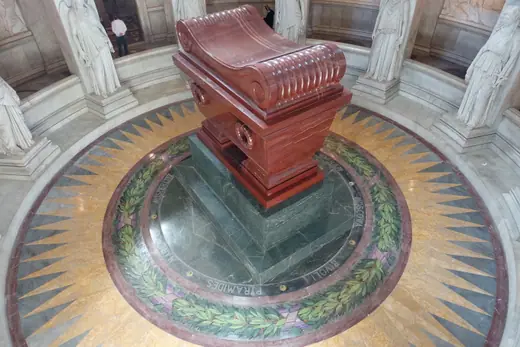
In 1840 the British government agreed to release the remains. A French expedition sailed, exhumed the body, and returned it to Paris, where on December 15, 1840 a state funeral drew a crowd estimated at between 700,000 and a million people. The remains were placed at Les Invalides; the great porphyry sarcophagus in the crypt beneath the dome was not completed until 1861, under Napoleon III.
So the wish was honoured — forty years after it was written, by the nephew of the man who wrote it, at the discretion of a foreign government. A direction about your own body is the one clause in a will that depends entirely on someone else agreeing to follow it.
The document became the asset
The original will, in Napoleon's famously difficult handwriting, is held in the Archives nationales in France. It is a state document now, not an estate document.
The market for the rest is brisk. In November 2013 a contemporary copy of the will — written out by an adviser, not by Napoleon — sold at Drouot in Paris for €357,000 (about $483,000), against an estimate of €120,000. The document is worth several times the individual legacies it directs.
There is a small irony at the centre of this case that is worth stating plainly. Napoleon's will was valid in France because a holographic will — one written, dated, and signed entirely in the testator's own hand, with no witnesses and no other formality — is expressly permitted by article 970 of the French Civil Code. That code is the Code Napoléon, promulgated in 1804. He drafted the rule that saved his own will seventeen years before he needed it.
Timeline
- Feb 11, 1818Marie André Cantillon fires a pistol at the Duke of Wellington in Paris. He is acquitted at trial in May 1819.
- Apr 15, 1821At Longwood on Saint Helena, Napoleon writes his will in his own hand, naming 97 legatees and asking that his ashes rest on the banks of the Seine.
- Apr 16–26, 1821Napoleon adds codicils. The fourth includes 10,000 francs to Cantillon, expressly for the attempt on Wellington.
- May 5, 1821Napoleon dies at Longwood, aged 51. He is buried on the island.
- Sep 21, 1821Bertrand and Montholon write to the King of England claiming the body under the terms of the will. No release follows.
- Dec 15, 1840After the British government agrees to release the remains, Napoleon is given a state funeral in Paris. Crowd estimates run from 700,000 to a million.
- 1823–1858Cantillon receives part of his legacy in instalments between 1823 and 1826. His widow later petitions for the balance, and in February 1858 the legacy is raised as a question in the House of Commons — thirty-seven years after the codicil was written.
- 1861The porphyry sarcophagus at Les Invalides is completed under Napoleon III.
- Nov 6, 2013A contemporary copy of the will, in an adviser's hand, sells at Drouot in Paris for €357,000 against a €120,000 estimate. The original is in the Archives nationales.
What actually went wrong
- A bequest of assets the estate did not hold. Napoleon valued his private domain at more than 200 million francs and directed half of it to army veterans. Much of that consisted of claims against a state that had no intention of paying. Directing a claim is not the same as leaving money.
- Ninety-seven legatees and no funding priority. With that many gifts and an estate that could not satisfy them, the document needed an order of abatement — who gets paid first when there is not enough. It did not have one, which is why legacies were paid in fragments over decades.
- A burial instruction the executors could not perform. The one clause everyone remembers required the consent of a foreign government. Nineteen years passed before it was obtained.
- Codicils written across eleven days. Amendments added daily to a document already in effect, by a dying man, in a location no lawyer could reach. The Cantillon clause alone kept the estate in the news for two generations.
Would it have gone that way in Florida?
It would be void in Florida. Every word of it — because no one witnessed it.
This is the cleanest answer in the archive. Florida does not recognise holographic wills. Not for residents, and not for anyone else.
Fla. Stat. §732.502(1) requires that a will be in writing, signed by the testator at the end, and signed by two attesting witnesses in the presence of the testator and of each other. A document written entirely in the testator's own hand satisfies none of that if nobody witnessed it, and Florida law is unusually blunt about the consequence: it is not a will.
The natural objection is that Napoleon was not a Floridian, and that Florida honours wills validly executed elsewhere. It does — with one carve-out aimed squarely at this. §732.502(2) provides that a will executed by a nonresident is valid in Florida if it was valid where executed — other than a holographic or nuncupative will. And the statute closes the obvious workaround: a will in the testator's own handwriting that was executed with two witnesses is not treated as holographic at all. Handwriting is not the problem. Missing witnesses is the problem.
The irony is worth sitting with. Napoleon's will was unimpeachable in France because article 970 of the French Civil Code — the Code Napoléon, promulgated under his own name in 1804 — validates a will written, dated, and signed entirely by the testator's hand, subject to no other form. France still allows it. So do more than half the American states. Florida is one of the jurisdictions that flatly does not, and a perfectly genuine handwritten will, signed and dated and unquestionably authentic, is simply void here. Every year Florida estates pass by intestacy because someone wrote out their wishes by hand and never had two people watch them sign.
On the burial direction, Florida is far more helpful than 1821 Britain was. §497.005 defines the “legally authorized person” who controls the disposition of remains, and it puts the decedent's own written directions first in the ranking — ahead of a spouse, ahead of children, ahead of everyone. Napoleon's instruction about the Seine would be binding in Florida to the extent the estate could fund it, rather than a request awaiting a foreign minister's mood. The practical caveat is that the will is often the wrong place for it: wills are frequently not read until after the funeral. Put the instruction in a separate signed writing that the family has in hand on day one.
One more Florida point on the Cantillon clause. Florida does not police a testator's reasons for an outright gift, however distasteful — testamentary freedom includes the freedom to be ungracious. The limit that does exist is §732.802, which bars a person who unlawfully and intentionally kills the decedent from taking any benefit from that death. Napoleon's legatee had been acquitted, and the target was not the testator, so the statute would not reach him.
The instruction, and it is the shortest one in the archive: get two witnesses. A handwritten will costs nothing to make valid in Florida — sign it in front of two adults who then sign it themselves. Without them, the most sincere document in the world is a piece of paper.
What people ask us about this.
Further reading
Third-party sites. Not ours, not endorsed, not kept current by us — just the places worth going next.
Sources
- Death of Napoleon — Wikipedia
- Napoleon's Will — Wikisource
- Marie André Cantillon — Wikipedia
- Will of Napoleon I — Legacy to Cantillon — Hansard, House of Commons, February 12, 1858
- Napoleon Bonaparte's will fetches twice expected price at Paris auction — CBS News, November 2013
- Article 970 of the French Civil Code — French Business Law
- Fla. Stat. §732.502 — Execution of wills — The Florida Senate
- Fla. Stat. §732.802 — Killer not entitled to receive property — The Florida Senate
If this is your situation
Free 30-minute consult. Plain English. No pressure.
Nearly every case in this archive turned on something ordinary — an unwitnessed page, a stale beneficiary line, a document nobody could find. Those are cheap to fix while you're alive and expensive to fix afterward.