J.D. Salinger
Salinger published nothing after 1965 and sued the people who tried to publish him anyway. He wrote for another forty-five years regardless. The copyrights went into a trust before he died, and the trustees have spent sixteen years doing what he did — saying no, on his behalf, with legal authority to keep saying it.
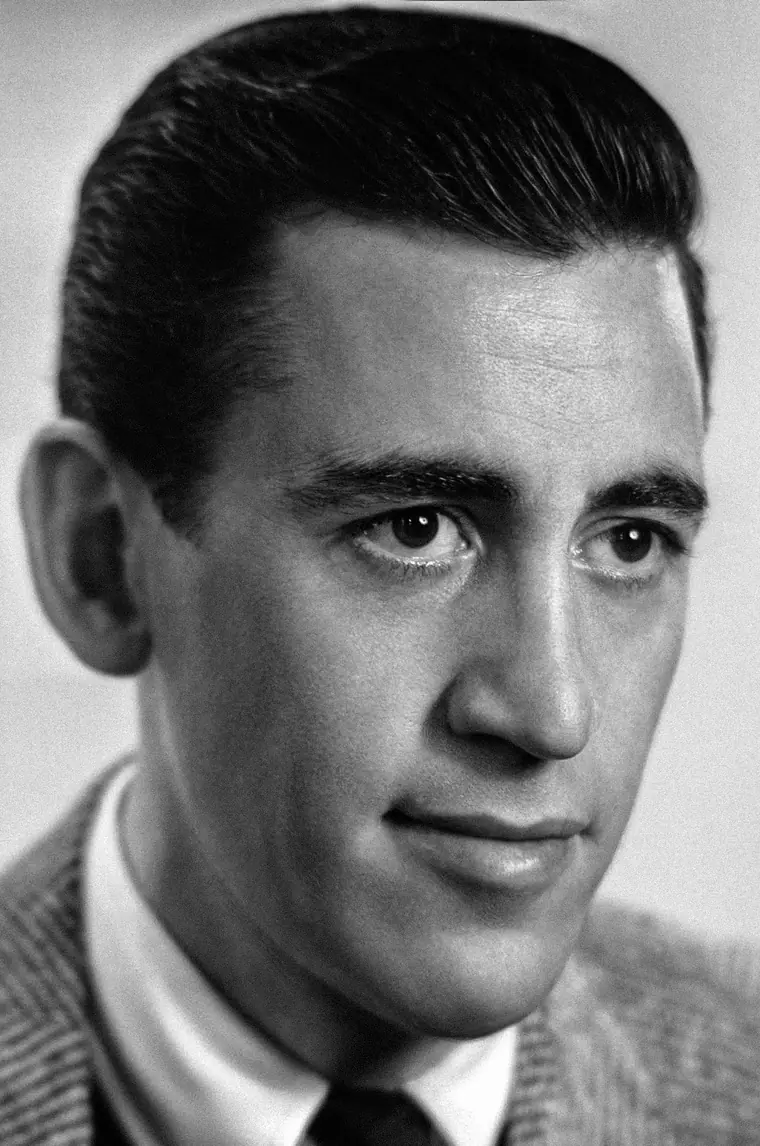
Most estate-control stories in this archive are about somebody who did not plan. This one is the opposite. J.D. Salinger spent half a century building the machinery to control his own work after he was dead, and then he died, and the machinery worked.
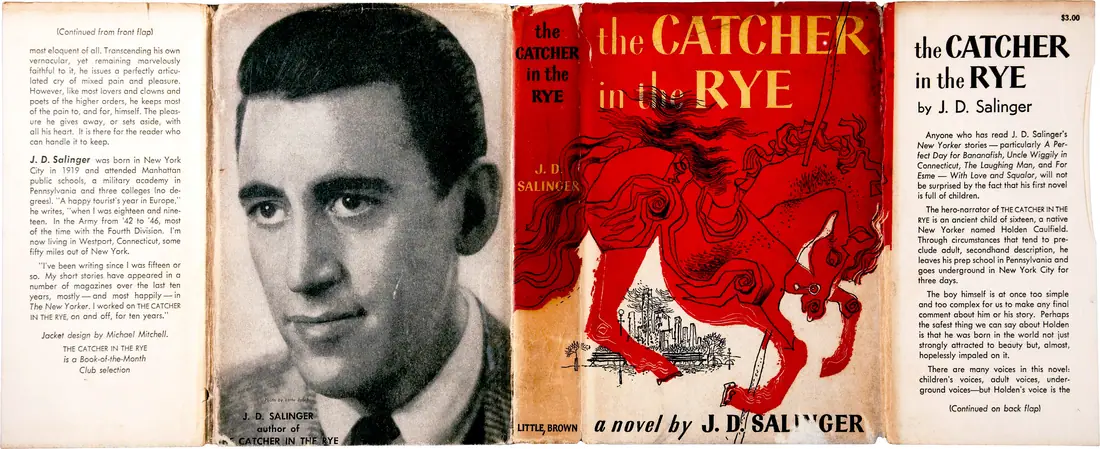
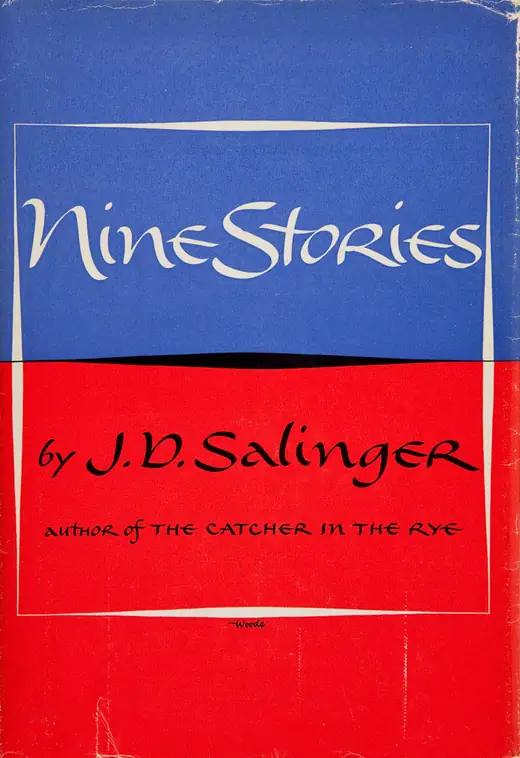
He published The Catcher in the Rye in 1951, Nine Stories in 1953, and two more books after that. His last published work, the story Hapworth 16, 1924, appeared in The New Yorker in 1965. He then lived another forty-five years in Cornish, New Hampshire, writing — by every account, including his family's — continuously, and publishing nothing.
He died at home on January 27, 2010, at 91.
The interesting question is not why he stopped. It is what he did with the legal instruments so that the silence would survive him.
Two lawsuits, forty years apart
Salinger's posthumous position was tested twice while he was alive, and both results are still load-bearing.
In 1986, the biographer Ian Hamilton and Random House produced J.D. Salinger: A Writing Life, drawing on unpublished letters Salinger had written between 1939 and 1961 and which recipients had donated to university libraries. Salinger, who had told Hamilton he preferred not to be biographised in his lifetime, registered 79 of the letters for copyright and sued.
The Second Circuit ruled for him in January 1987. Salinger v. Random House, 811 F.2d 90, held that an author has the right to control the expressive content of unpublished writings for the copyright term, and that this right ordinarily prevails over a fair-use defence. The court ordered a preliminary injunction against publication of the biography in its existing form. That case is why the physical letters belonging to a library, and the right to quote them, are two different things.
In 2009, a Swedish writer, Fredrik Colting, published 60 Years Later: Coming Through the Rye, featuring an elderly Holden Caulfield. Salinger sued. The Southern District of New York enjoined US publication; the Second Circuit vacated the injunction and remanded under the eBay v. MercExchange standard.
Salinger died while that case was pending. The trust continued it. In late 2011 the parties settled: Colting agreed not to publish or distribute the book in the US or Canada until The Catcher in the Rye enters the public domain, and not to use the litigation to promote it.
A blanket assignment, and two trustees
The instrument that carries all of this is the J.D. Salinger Literary Trust. Reporting and legal scholarship describe a blanket copyright assignment from Salinger to the trust made shortly before his death — meaning the copyrights left his personal ownership and became trust property while he was alive.
That single move does most of the work. Assets in a funded trust do not pass through probate. They are not inventoried in a public court file. They do not require a judge's involvement to be administered. The trust simply keeps operating on the day after the death, with the same authority it had the day before.
The trust is controlled by his widow, Colleen O'Neill, and his son, Matt Salinger, who also served as executors of his estate.
What they have done with it is consistent. They have declined to authorise republication of early stories Matt Salinger has described as youthful exercises. They pursued the Colting settlement. They have asserted that stories in the US public domain may still be protected abroad — a position that produced litigation in 2015 with a Memphis publisher over foreign licensing of three early stories, and an order from a Berlin court restricting German sale.
And they have not published the unpublished work. In 2019 Matt Salinger told interviewers that everything his father wrote would at some point be shared, and that the family was working through it as fast as they could. As of August 2026, none of it has appeared; recent reporting indicates the transcription work is described as close to complete.
What a trust cannot hold on to
Perpetual control has a ceiling, and it is worth stating plainly because it surprises people who build these structures.
Copyright expires. The Catcher in the Rye, published in 1951 with its copyright renewed, runs 95 years from publication under current US law — which is why the Colting settlement is written to end when the book enters the public domain rather than never. Every literary trust is a wasting asset on a fixed clock.
Federal termination rights sit above the trust. Under US copyright law, an author's surviving spouse and children hold statutory rights to terminate certain grants and licences after set periods, and those rights operate notwithstanding any agreement to the contrary. An author cannot draft around them. A trust can hold copyrights; it cannot cancel the family's federal right to claw back grants.
And beneficiaries can rewrite the deal. In most states, including Florida, an irrevocable trust can be modified after the settlor's death by unanimous agreement of the trustee and the qualified beneficiaries. Control after death is durable in proportion to how many people have to agree — which is an argument for small boards and clear standards, not for longer documents.
Timeline
- 1951The Catcher in the Rye is published, with a Lotte Jacobi portrait on the dust jacket. Salinger later has the photograph removed from subsequent printings.
- 1965Hapworth 16, 1924 appears in The New Yorker. It is the last work Salinger publishes.
- 1986Salinger learns that Ian Hamilton's biography quotes unpublished letters held by university libraries. He registers 79 letters for copyright and sues Random House.
- Jan 1987Salinger v. Random House, 811 F.2d 90 (2d Cir.): an author's right to control the expressive content of unpublished writings ordinarily defeats a fair-use defence. Injunction ordered.
- Shortly before 2010A blanket assignment moves Salinger's copyrights to the J.D. Salinger Literary Trust.
- 2009Salinger sues Fredrik Colting over 60 Years Later: Coming Through the Rye. The district court enjoins US publication; the Second Circuit vacates and remands.
- Jan 27, 2010Salinger dies at home in Cornish, New Hampshire, at 91. Colleen O'Neill and Matt Salinger serve as executors and control the trust.
- Dec 2011The Colting case settles: no US or Canadian publication until The Catcher in the Rye enters the public domain.
- 2015Litigation with a Memphis publisher over foreign licensing of three early US-public-domain stories; a Berlin court restricts German sale.
- Aug 2019The four books are released as e-books for the first time. Matt Salinger says all of his father's writing will eventually be shared.
- Aug 2026No posthumous work has been published. Reporting describes the transcription work as close to complete.
What actually went wrong
- Nothing, structurally — and that is the point. Sixteen years on there is no public inventory, no removal petition, no reported family litigation over the manuscripts. Compare that to the estates in this archive that ended in court within months.
- The exposure was always the letters, not the books. Salinger's own correspondence, sitting in third-party archives, was the one asset he did not physically hold. He had to litigate to protect it. Anyone with a paper trail in other people's hands has the same problem.
- Perpetual control is a promise nobody can fully keep. Copyright terms end. Federal termination rights cannot be waived. Beneficiaries can modify a trust by unanimous consent. A settlor buys decades, not eternity.
- Silence has an administrative cost. Someone has to answer every request, defend every foreign claim, and decide, repeatedly, to keep doing nothing. That is a real fiduciary job, and it needs to be funded and staffed like one.
Would it have gone that way in Florida?
Same result, and Florida is one of the better places to build it. A funded revocable trust keeps the whole thing out of the public record and can run for up to 1,000 years.
Salinger's plan is the plan a Florida lawyer would draw for a client who wants control rather than distribution. The pieces are all here.
Fund the trust during life. The blanket assignment is the critical step, and it is the one people skip. Property titled in a Florida revocable trust before death does not pass through probate: no inventory filed with a clerk, no notice to creditors listing the assets, no public docket in which a reporter can read what the estate contains. Property still in your own name at death does — and a Florida probate file is a public record.
Then make it last. Under Fla. Stat. §689.225, Florida's statutory rule against perpetuities allows a trust created on or after July 1, 2022 to run for 1,000 years (360 years for trusts created between 2001 and mid-2022) unless the instrument sets a shorter period. There is effectively no Florida time limit on a literary or legacy trust within any human planning horizon.
Then decide who decides. This is where most control-after-death plans fail, because the settlor names people and not standards. §736.1406 authorises powers to direct — the statutory basis for a trust protector or a direction adviser who can be given authority over specific decisions, such as whether a work may be published. A protector who can remove and replace a trustee, and a written publication standard the trustee must apply, together do far more than a long list of prohibitions.
Then accept the accountability. §736.0813 obliges a Florida trustee to keep qualified beneficiaries reasonably informed and to account. A control trust is still a trust; the person operating the silence answers to somebody. And §736.0708 governs what that trustee is paid — “reasonable under the circumstances,” with no percentage default, which after Robert Rauschenberg Foundation v. Grutman is measured by the West Coast Hospital factors rather than by hours.
The honest caveats are the three in the section above, and one more that is purely Florida. §736.0412 permits nonjudicial modification of an irrevocable trust after the settlor's death by unanimous agreement of the trustee and all qualified beneficiaries, and a spendthrift clause does not block it. If you want your instructions to be genuinely difficult to unwind, the answer is a charitable interest — the section does not apply to a charitable trust until the charitable interests terminate — or a beneficiary class wide enough that unanimity is not realistic.
The practical instruction: retitle the intellectual property into the trust now, while you are alive to sign the assignment. Then write the decision standard, not just the decision-maker — one paragraph saying what may be published, on what test, and who applies it. A trustee handed a rule can defend it for a century. A trustee handed a preference is guessing.
What people ask us about this.

Further reading
Third-party sites. Not ours, not endorsed, not kept current by us — just the places worth going next.
Sources
- Salinger v. Random House, Inc., 811 F.2d 90 (2d Cir. 1987) — Justia
- Salinger v. Colting — CourtListener
- J.D. Salinger estate, Swedish author settle copyright suit — Publishers Weekly, Dec 2011
- J.D. Salinger Literary Trust fires back in copyright battle — Publishers Weekly, 2015
- J.D. Salinger's unpublished works will be released to the public over the next decade — Smithsonian Magazine, 2019
- New Salinger writings to be published, confirms son — Books+Publishing, Feb 2019
- Copyright law and the management of J.D. Salinger's literary estate — Kate O'Neill, Cardozo AELJ (SSRN)
- J. D. Salinger — Wikipedia
- Fla. Stat. §736.0412 — Nonjudicial modification of irrevocable trust — The Florida Senate
If this is your situation
Free 30-minute consult. Plain English. No pressure.
Nearly every case in this archive turned on something ordinary — an unwitnessed page, a stale beneficiary line, a document nobody could find. Those are cheap to fix while you're alive and expensive to fix afterward.