Junior Seau
A lawsuit is an asset. When the person who could have brought it dies, somebody inherits the right to sue — and somebody else may already have settled it on their behalf. The Seau children spent six years establishing that the claim was theirs.
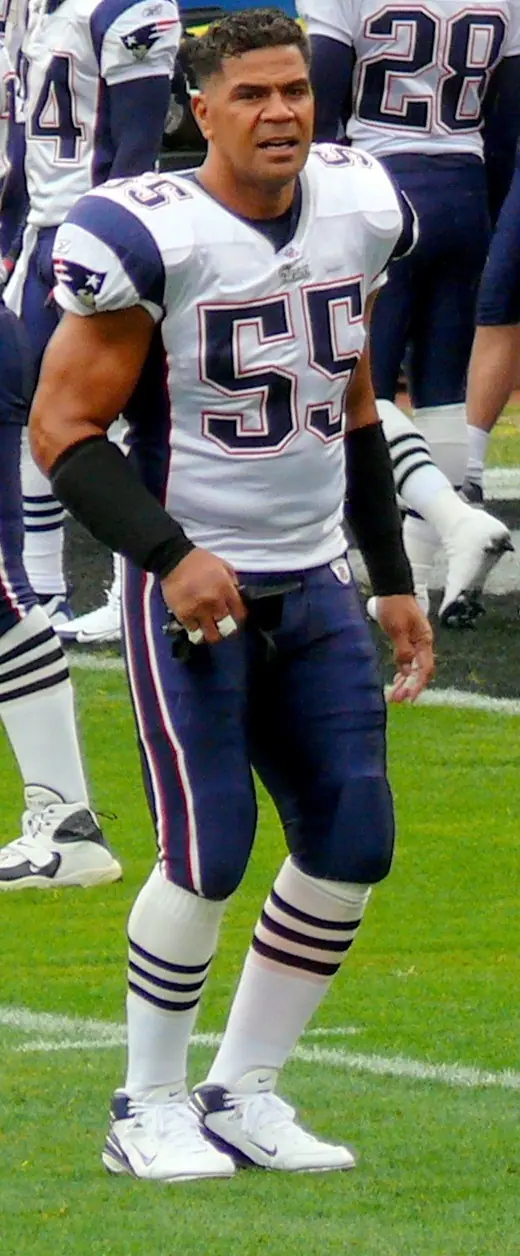
Junior Seau played twenty seasons at linebacker, twelve of them for San Diego, and was elected to the Pro Football Hall of Fame in 2015. He died on May 2, 2012, at 43, of a self-inflicted gunshot wound.
On January 10, 2013, the National Institutes of Health announced that examination of his brain showed abnormalities consistent with chronic traumatic encephalopathy. His family had requested the analysis.
Everything after that is a question this archive exists to ask: when a person dies with a potential lawsuit, who owns it?
The answer is almost never “nobody.” It is usually two people, holding two different things, and most families do not learn the difference until they are already in a courtroom.
One suit in San Diego, thousands in Philadelphia
Seau's survivors filed a wrongful-death action against the NFL in California Superior Court in San Diego in January 2013. They alleged that hits sustained across his career caused brain injury.
It did not stay there. By 2012 the Judicial Panel on Multidistrict Litigation had already consolidated the player concussion cases before Judge Anita B. Brody in the Eastern District of Pennsylvania as MDL 2323, and the Seau case was transferred into it along with everything else.
The NFL's principal defence was jurisdictional rather than factual. It argued the claims were preempted by §301 of the Labor Management Relations Act — that the duties the plaintiffs invoked arose from the collective bargaining agreements, and that anything arising from a CBA belongs in arbitration, not in court. Judge Brody heard argument on the preemption motions in April 2013 and, in July 2013, ordered the parties to mediation instead of ruling.
That is the pivot the case turns on. The preemption question was never decided. It was settled around. Mediation produced a class settlement — initially $765 million, later restructured with the cap removed — and once there is a class settlement, the question stops being “what happened to Junior Seau” and becomes “who is in the class, and what did the class give up.”
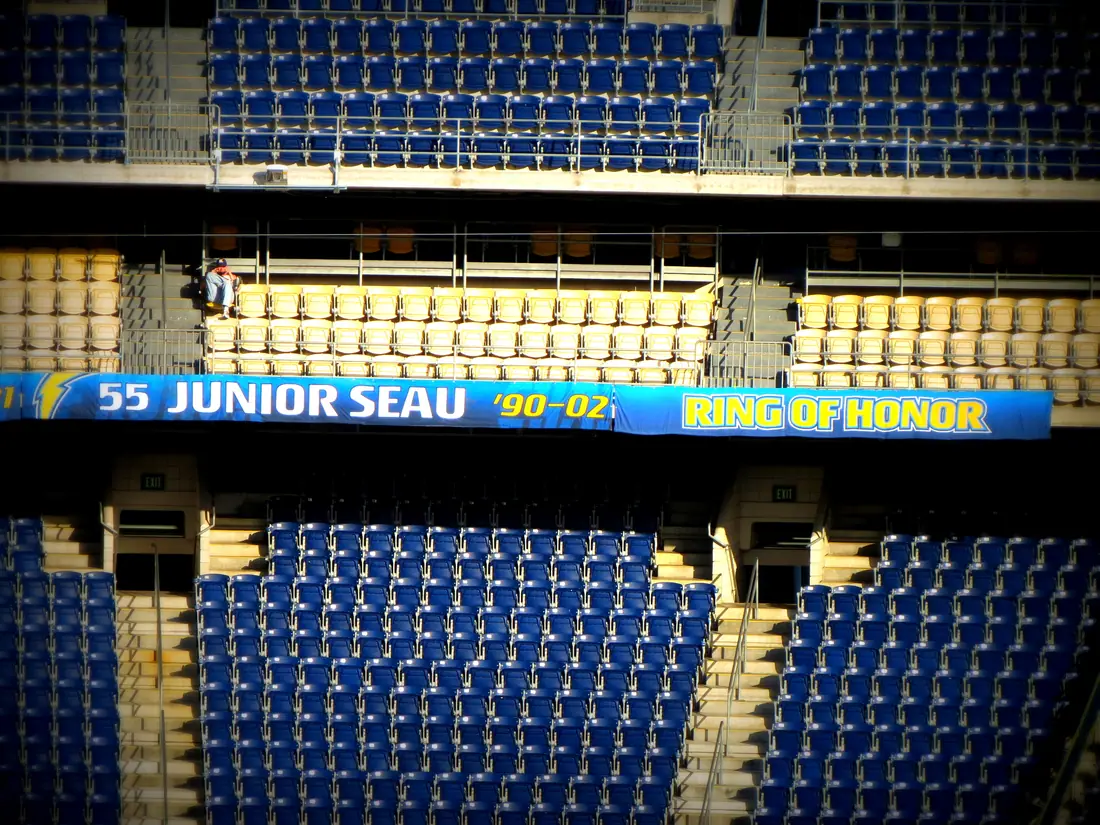
Being represented by people you have never met
The settlement's architecture is the reason this case is here. It defined categories of claimant, and the categories did not treat everyone the same.
- Retired players — the class members proper, sorted into subclasses by whether a qualifying diagnosis had already been made.
- Representative Claimants — the person authorised to act for a deceased or incapacitated player's estate. Under the settlement's terms a Representative Claimant receives a monetary award only if the court determines that a wrongful death or survival claim is allowed under the applicable state law.
- Derivative Claimants — spouses, children, dependants and others with claims derived from the player's injury. Their entitlement was fixed at 1% of the monetary award payable to the Representative Claimant for that player.
The maximum award for a death with a CTE diagnosis before the settlement's approval date was $4 million. One percent of that, split among children, is the arithmetic the Seau family was looking at.
Their objection, argued by counsel through the approval process, was not primarily about the number. It was that the settlement released the children's own wrongful-death claims — claims that belonged to them personally, not to their father's estate — and that they had not been adequately represented in negotiating that release. Their attorney's public criticism was procedural: that the deal had been reached before any depositions were taken or documents produced.
Judge Brody gave preliminary approval in June 2014 and final approval thereafter, holding the settlement fair, reasonable, and adequate in a 132-page opinion. The Third Circuit affirmed in April 2016, in In re National Football League Players Concussion Injury Litigation, 821 F.3d 410 (3d Cir. 2016).
Opting out is a real right, and an expensive one
The Seau family opted out. The deadline for formal notice to the settlement administrator was October 14, 2014, and taking it meant leaving the class and its money entirely and litigating alone against a defendant that had just resolved twenty thousand claims.
It also meant waiting. An opt-out case still has to get out of the MDL, which meant remand, which meant appeals, which meant years.
On October 5, 2018, counsel filed a notice of dismissal. The Seau children — Tyler, Sydney, Jake and Hunter — had settled with the NFL on confidential terms. The youngest had just turned eighteen. Their lead counsel, Steven Strauss of Cooley, said only that it had been an honour to represent them.
No liability was admitted. No document was produced publicly. Nobody found out what the preemption ruling would have been. What the six years established was narrower and, for the purposes of this archive, more useful: the children's claim was their own, it was worth something on its own, and it did not have to be traded for a class share they did not negotiate.
Timeline
- Jan 31, 2012The Judicial Panel on Multidistrict Litigation consolidates the NFL concussion cases before Judge Anita B. Brody in the Eastern District of Pennsylvania as MDL 2323.
- May 2, 2012Junior Seau dies at 43. His family requests examination of his brain.
- Jan 2013Seau's survivors file a wrongful-death action against the NFL in California Superior Court in San Diego. It is transferred into MDL 2323.
- Jan 10, 2013The National Institutes of Health announces that Seau's brain showed abnormalities consistent with chronic traumatic encephalopathy.
- Apr 2013Judge Brody hears argument on the NFL's motions to dismiss on §301 labor-preemption grounds — the argument that the claims belonged in arbitration under the CBA.
- Jul 2013Rather than rule, Judge Brody orders the parties to mediation. A $765 million class settlement follows, later restructured with the monetary cap removed.
- Jun 2014Preliminary approval. The Seau family announces it will opt out; the deadline for formal notice is October 14, 2014.
- Apr 2016The Third Circuit affirms final approval in In re National Football League Players Concussion Injury Litigation, 821 F.3d 410.
- Oct 5, 2018Counsel file a notice of dismissal. The Seau children have settled with the NFL on confidential terms.
What actually went wrong
- Nobody in the family chose the forum. The case was filed in San Diego and litigated in Philadelphia, because a multidistrict panel said so. Where a claim gets heard is frequently decided by people the family has never met.
- A class settlement can release a claim you personally own. The children's wrongful-death claims were their own, and the settlement's release reached them anyway. Opting out is the only reliable answer, and it costs years.
- The big legal question was never answered. Whether the NFL's CBA sent these claims to arbitration was argued in April 2013 and mooted by mediation in July 2013. Cases that settle do not make law.
- Confidentiality is the price of the number. The 2018 settlement terms are sealed, which means the case is useless as a comparison for the next family — the standard trade in every wrongful-death resolution.
- Six years is the real cost. The youngest claimant was a child when his father died and an adult when the case ended. No structure fixes that entirely, but naming a competent fiduciary and moving fast shortens it.
Would it have gone that way in Florida?
Different — and much more centralised. In Florida there is only one action, and only the personal representative can bring it.
Florida starts generously. Fla. Stat. §46.021 says it in one line: “No cause of action dies with the person. All causes of action survive and may be commenced, prosecuted, and defended in the name of the person prescribed by law.” A lawsuit is property. It passes.
Then Florida narrows it hard. §768.20 — the “Parties” section of the Wrongful Death Act — provides that the action “shall be brought by the decedent's personal representative, who shall recover for the benefit of the decedent's survivors and estate all damages.” And then the sentence that changes everything: “When a personal injury to the decedent results in death, no action for the personal injury shall survive, and any such action pending at the time of death shall abate.”
That is the single-action rule, and it is the whole Florida answer. Where the injury caused the death, the decedent's own personal-injury claim does not survive as a separate case. It is absorbed. There is one lawsuit, brought by one person — the personal representative — recovering for everybody at once. Individual survivors do not get their own suits. Junior Seau's children could not have filed separately in Florida; the estate's representative would have filed for them.
Which makes naming the personal representative a litigation decision, not a paperwork decision. In a Florida family where a death may be somebody's fault, the person named in the will controls the timing, the venue, the lawyer, the strategy, and the decision to settle. §733.612(20) gives them authority to prosecute or defend claims in any jurisdiction to protect the estate; §733.612(24) lets them satisfy and settle claims. Choose that person for competence and neutrality, or the first family fight will be about who holds the pen.
The damages are still split, and the split is unusual. §768.21 allocates recovery: a surviving spouse gets loss of companionship and mental pain and suffering; minor children get lost parental companionship, instruction, and guidance, plus mental pain and suffering; the estate recovers lost earnings, medical and funeral expenses, and in some circumstances prospective net accumulations. And §768.18(2) defines “minor children” for this Act as children under 25 years of age, notwithstanding the age of majority — a definition unique enough that out-of-state lawyers routinely get it wrong. Seau's four children were reported as Tyler, Sydney, Jake and Hunter, the youngest having just turned eighteen in 2018; under Florida's definition all four would very likely have qualified.
Two safeguards on settlement. §768.25 provides that while the action is pending, no settlement as to amount or apportionment among the beneficiaries is effective without court approval if any survivor objects, or if a survivor is a minor or an incompetent. §733.708 separately lets the probate court authorise a compromise of a claim by or against the estate where it is in the interested persons' best interest, and — importantly for the fiduciary — the order relieves the personal representative of liability for the compromise. A Florida personal representative settling a wrongful-death case with minor beneficiaries should be getting both orders, not one.
And the clock is short. §95.11(5)(e) gives two years for a wrongful-death action. Two years from the death, not from the diagnosis, not from the day the family finds out what caused it. Probate administration routinely takes longer than that, which is why the sequence matters: open the estate, get letters of administration issued, and let the personal representative evaluate the claim inside the first year. Waiting for the estate to close is how a good claim expires.
What people ask us about this.
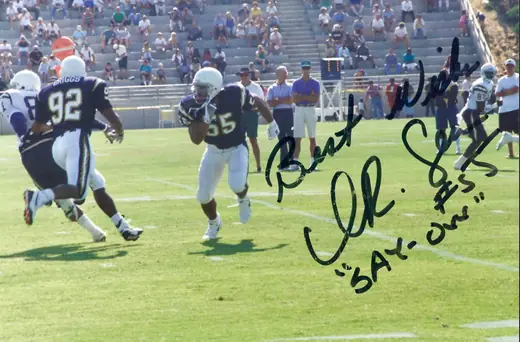

Further reading
Third-party sites. Not ours, not endorsed, not kept current by us — just the places worth going next.
Sources
- Seau had brain disease that comes from hits to head, NIH finds — CNN, Jan 2013
- Junior Seau had degenerative brain disease CTE, study shows — CBS News, Jan 2013
- Junior Seau suit merged with Pennsylvania concussion case — ESPN / Associated Press, Jan 2013
- Seau's wrongful death suit to proceed — ABC News / Associated Press, Aug 2014
- NFL concussion settlement wins final approval from judge — FRONTLINE, PBS
- Junior Seau's family settles wrongful death lawsuit with NFL — CBS News, Oct 2018
- Family of Hall of Famer Junior Seau settles with NFL — NPR, Oct 2018
- Junior Seau's family settles lawsuit against the NFL over his death — ABC 10News San Diego, Oct 2018
- NFL Concussion Settlement — settlement agreement as filed in MDL 2323 — U.S. District Court, E.D. Pa.
If this is your situation
Free 30-minute consult. Plain English. No pressure.
Nearly every case in this archive turned on something ordinary — an unwitnessed page, a stale beneficiary line, a document nobody could find. Those are cheap to fix while you're alive and expensive to fix afterward.