Payne Stewart
Stewart won the US Open in June 1999 and was dead by October, at 42, in an aircraft accident that made no sense and gave nobody any time. What follows a death like that is not a will contest. It is a wrongful death action, and in Florida only one person on earth is allowed to file it.
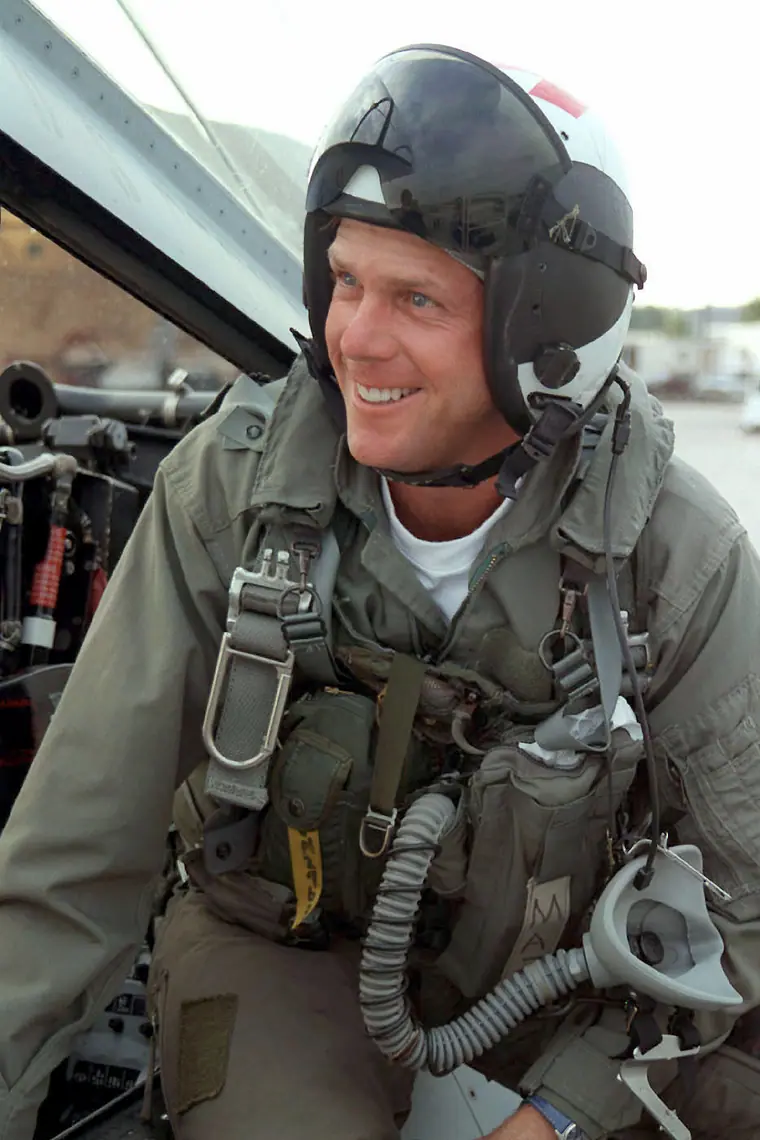
In June 1999, Payne Stewart holed a fifteen-foot putt on the 72nd green at Pinehurst to win the US Open. It is one of the most photographed moments in American golf. Four months later he was dead.
On October 25, 1999, a Learjet 35 carrying Stewart, his agent Robert Fraley, sports executive Van Ardan, golf course architect Bruce Borland, and two pilots left Orlando. The aircraft failed to pressurize during the climb; all six aboard were incapacitated by hypoxia; and it flew on autopilot for nearly four hours and 1,500 miles before running out of fuel and coming down near Mina, South Dakota. The NTSB's probable cause was the incapacitation of the flight crew after a loss of cabin pressurization, for undetermined reasons.
Stewart was 42. He lived in Orlando with his wife Tracey and their two children, aged 13 and 10. He had won the US Open four months earlier and finished seventh on the money list that season.
There was no illness, no decline, no window in which to fix anything. Which makes this a different kind of file from the rest of the archive: nothing here is about a document somebody could have amended at the end.
Six years, one jury, and a defense verdict
A year after the accident, Tracey Stewart and the children — together with the family of Robert Fraley — filed suit against Learjet, the operator SunJet Aviation of Sanford, Florida, and the aircraft's owner, JetShares One. The claim alleged that a cracked adapter had allowed the cabin to lose pressure.
The FBI raided SunJet in April 2000 in an investigation that concluded in 2002, and in 2001 the FAA alleged that a SunJet principal had filed false records about pilot training time.
On June 8, 2005, a jury in an Orlando state court found that Learjet was not liable for the passengers' deaths, and found no negligence in the aircraft's design or manufacture.
That is the whole of what a court found, and it is worth stating cleanly because the shape of it is instructive: five and a half years, in a case with a nationally famous decedent, extraordinary resources, and an accident whose facts were never really in dispute — and the manufacturer walked. Wrongful death litigation is not a settlement mechanism. It is a trial with a defendant who intends to win.

What a 42-year-old's estate is not ready for
The archive is full of people who died at 82 with a stale will. Stewart is the other failure mode, and it is the more common one: someone in the middle of their earning life, whose plan was built for the person they used to be.
A professional athlete at 42 is a small business with an unusual revenue profile. Consider what has to be resolved in the first ninety days after a death like this, none of which a will addresses:
- Contracts that die with the person. Endorsement and appearance agreements are personal-services contracts. Most terminate at death, and a family discovers which ones did — and what advances have to be returned — from the counterparties.
- Name and likeness, which do not die. In Florida the right of publicity survives 40 years under §540.08. Somebody must be designated to license it, or the family litigates about it instead.
- Business interests with no continuity plan. Course design partnerships, management companies, real estate entities. Without a buy-sell agreement funded by insurance, the surviving partners and the estate are instantly adverse.
- Liquidity for a tax that is due in nine months. The federal estate tax return deadline runs from the date of death, not from the resolution of anything else. An estate rich in illiquid interests and short of cash sells assets at the worst possible moment.
- Guardianship of minor children. Where there is a surviving parent this is straightforward. Where there is not — and every couple should plan for the case where there is not — the nomination has to be in a document, or a court will make the choice from scratch.
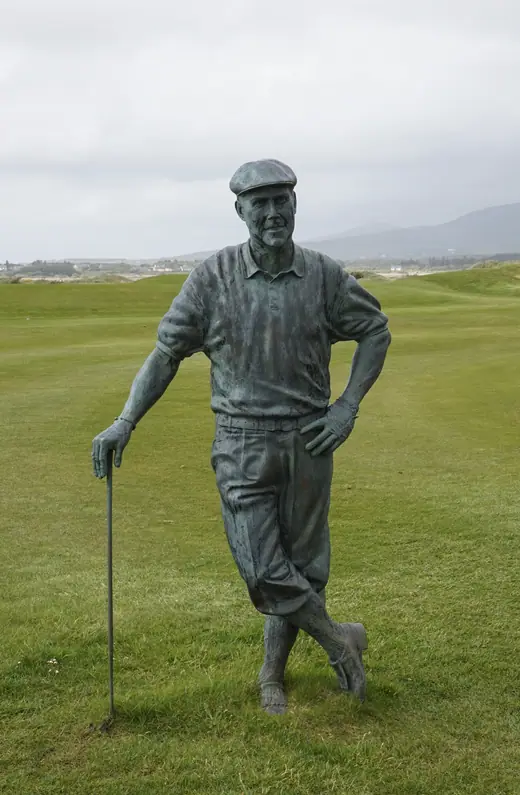
The Payne Stewart Award has been given by the PGA Tour since 2000, and there is a statue of him at Pinehurst and another at Waterville in Ireland. That is what a legacy looks like when the family gets the commercial rights question right. It is not automatic, and it is not free.
The plan is for the day it happens, not the day you make it
People in their forties postpone estate planning because the subject is unpleasant and the odds are good. Both of those things are true and neither is a plan.
A durable power of attorney and a health care surrogate cost almost nothing and matter on any Tuesday — a car accident, a stroke, an operation that goes long. A will with a guardian nomination costs almost nothing. A buy-sell agreement with funded insurance is the single highest-return document a business owner will ever sign, and it is worthless if signed after the event.
Stewart's family was, by every account, well advised and well provided for. The point of this file is not that they were not. It is that the entire apparatus that protected them had to already exist on the morning of October 25, 1999, and there was no version of that day on which anything could be added.
Timeline
- Jun 20, 1999Stewart wins the US Open at Pinehurst No. 2 with a putt on the final green.
- Oct 25, 1999A Learjet 35 leaves Orlando, fails to pressurize during the climb, and flies on autopilot for nearly four hours before crashing near Mina, South Dakota. All six aboard are killed. Stewart is 42.
- 2000The PGA Tour establishes the Payne Stewart Award.
- Apr 2000The FBI raids SunJet Aviation in Sanford, Florida. The investigation concludes in 2002.
- Oct 2000Tracey Stewart and the children, with the family of agent Robert Fraley, sue Learjet, SunJet Aviation, and JetShares One, alleging a cracked adapter caused the loss of cabin pressure.
- 2000The NTSB finds the probable cause to be incapacitation of the flight crew following a loss of cabin pressurization, for undetermined reasons.
- 2001The FAA alleges a SunJet principal filed false records about pilot training time.
- Jun 8, 2005An Orlando jury finds Learjet not liable and finds no negligence in the aircraft's design or manufacture.
What actually went wrong
- Nothing about the accident was foreseeable — and that is the planning fact, not an excuse. Every document that mattered had to be signed before a morning nobody saw coming. That is the only lesson this case teaches, and it is the one people most reliably ignore.
- A wrongful death claim cannot be filed by the family. Under §768.20 only the personal representative may bring it. If no estate is opened, no one has standing, and the two-year limitations period under §95.11(5)(e) runs anyway.
- Litigation is not compensation. Five and a half years to a defense verdict against the manufacturer, in a case with every advantage. Families should be told at the outset what the realistic timeline and the realistic odds are.
- Personal-services income stops instantly. Endorsements, appearances, and prize money are not assets that keep producing. An earner's plan needs life insurance sized to the income, not to the balance sheet.
- Minor children need a nominated guardian in writing. It is one clause in a will, it costs nothing, and without it a judge chooses among people who may all be certain they are right.
Would it have gone that way in Florida?
This is Florida law, start to finish — Florida decedent, Florida flight, Florida jury. And Florida's Wrongful Death Act runs through the probate court.
Stewart was an Orlando resident, the aircraft left Orlando and was operated from Sanford, and the case was tried to an Orlando jury. Everything below is the law that applied.
Florida's Wrongful Death Act, §768.16 through §768.26, has one structural feature that surprises nearly every family that meets it. §768.20: “The action shall be brought by the decedent's personal representative.” Not by the widow. Not by the children. Not by the parents. One action, filed by one person, on behalf of all statutory survivors and the estate. If a personal injury action was already pending when the person died, it abates and the wrongful death action replaces it.
That makes the probate appointment the gateway to the tort claim. Somebody must petition the circuit court, qualify under §733.301, and receive letters of administration before the complaint can be filed. Where the decedent left a will naming a personal representative, that person has preference. Where there is no will, the surviving spouse has first preference, then the person selected by a majority in interest of the heirs. This is why “open the estate” is the first instruction after a fatal accident, even when the family believes there is nothing to probate.
§768.21 then divides the recovery. Each survivor recovers lost support and services, past and future, reduced to present value. The surviving spouse additionally recovers loss of companionship and protection, and mental pain and suffering from the date of injury. Minor children recover lost parental companionship, instruction and guidance, and mental pain and suffering — and adult children may recover those only where there is no surviving spouse. The estate itself recovers lost earnings from injury to death, prospective net accumulations in defined circumstances, and medical and funeral expenses charged against it. Amounts recovered by the estate remain subject to creditor claims; amounts recovered by survivors generally do not. Getting that allocation right is worth real money and it is decided at settlement, not afterwards.
The deadline is two years — §95.11(5)(e) — with a narrow exception in §95.11(11) where the death resulted from murder or manslaughter, in which case the action may be commenced at any time. Two years is short, and it does not wait for the family to feel ready.
The honest caveat: none of this replaces a plan. A wrongful death recovery is uncertain, slow, and sometimes zero — as it was against the manufacturer here. What is certain is what you signed beforehand. Practical instruction: name a guardian for your minor children in your will, sign a durable power of attorney and a health care surrogate, and if you own a business, fund the buy-sell agreement with insurance. Then, if the worst happens, open the estate immediately — because the tort claim cannot begin until a Florida court has appointed someone to bring it.
What people ask us about this.
Further reading
Third-party sites. Not ours, not endorsed, not kept current by us — just the places worth going next.
Sources
- Payne Stewart — career, death, and the litigation that followed — Wikipedia (encyclopedic summary, cited sources at foot)
- 1999 South Dakota Learjet crash — NTSB probable cause and the 2005 Orlando verdict — Wikipedia (encyclopedic summary, cited sources at foot)
- Fla. Stat. §768.20 — Parties — The Florida Senate
- Fla. Stat. §768.21 — Damages — The Florida Senate
- Fla. Stat. §95.11 — Limitations other than for the recovery of real property — The Florida Senate
- Fla. Stat. §733.301 — Preference in appointment of personal representative — The Florida Senate
- Fla. Stat. §540.08 — Unauthorized publication of name or likeness — The Florida Senate
If this is your situation
Free 30-minute consult. Plain English. No pressure.
Nearly every case in this archive turned on something ordinary — an unwitnessed page, a stale beneficiary line, a document nobody could find. Those are cheap to fix while you're alive and expensive to fix afterward.