Ida Wood
She spent twenty-five years in a Herald Square hotel suite with a fortune in cash, under a Southern-belle identity she had invented at nineteen. When she died in 1932, more than eleven hundred people came forward claiming to be her family. Ten of them actually were.
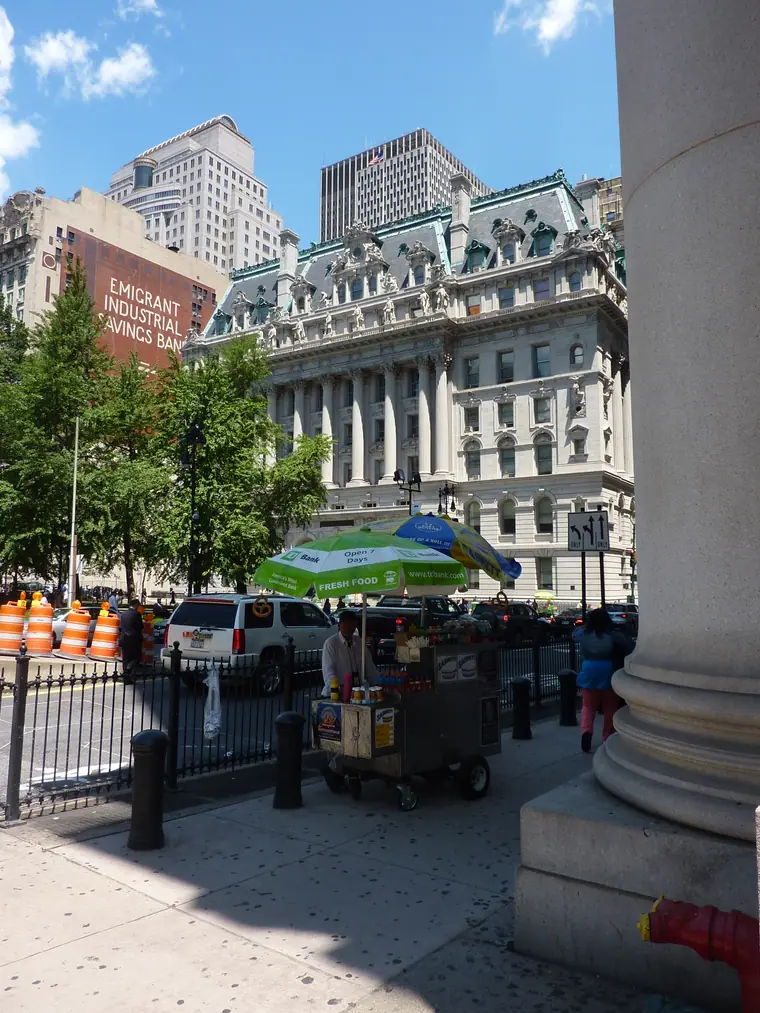
The woman who died in a Manhattan hotel suite on March 12, 1932 was known to New York as Ida Mayfield Wood, the Louisiana-born widow of a congressman. She was in fact Ellen Walsh, born on January 14, 1838 in Oldham, Lancashire, the daughter of an Irish peddler who emigrated to Massachusetts and died in San Francisco in 1864.
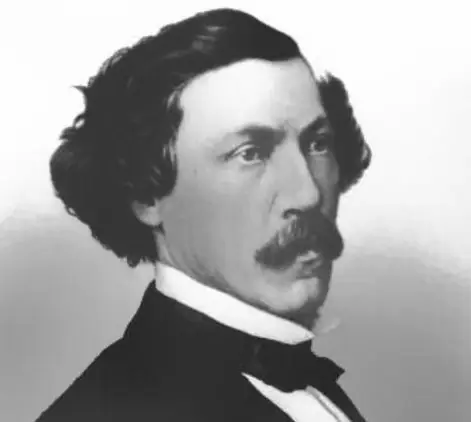
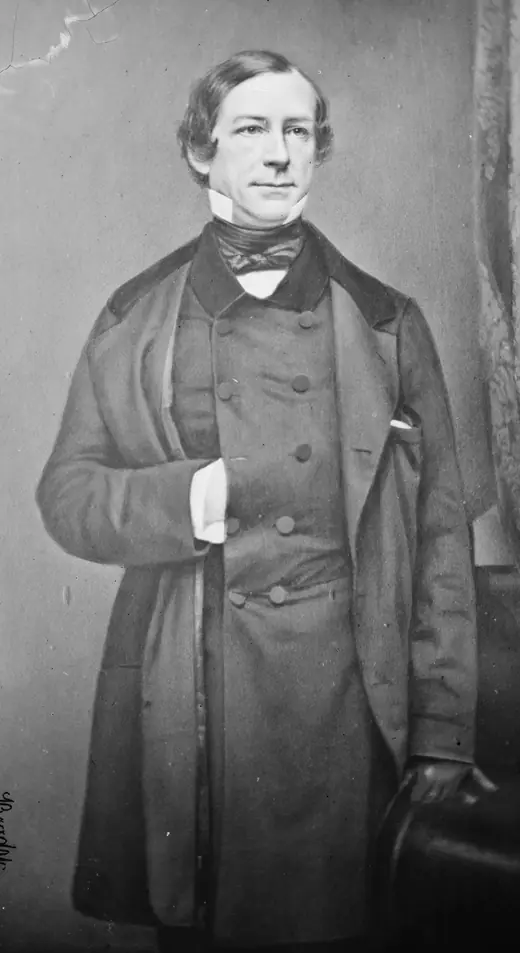
The invention happened at nineteen. Having moved to New York in 1857, she wrote to Benjamin Wood — congressman, state senator, co-owner of the nineteenth-century New York Daily News, and married — proposing herself. She became his mistress, and after the death of his second wife they married in 1867. Along the way she acquired a father: Henry Mayfield, a Louisiana sugar planter, who did not exist.
She was also, by every account, a formidable financial operator. Her husband gambled; she arranged that she would take a share of his winnings and he would carry his own losses. By his death in 1900 she held essentially all of his wealth. In 1901 she sold the newspaper, reported at $250,000 to $300,000.
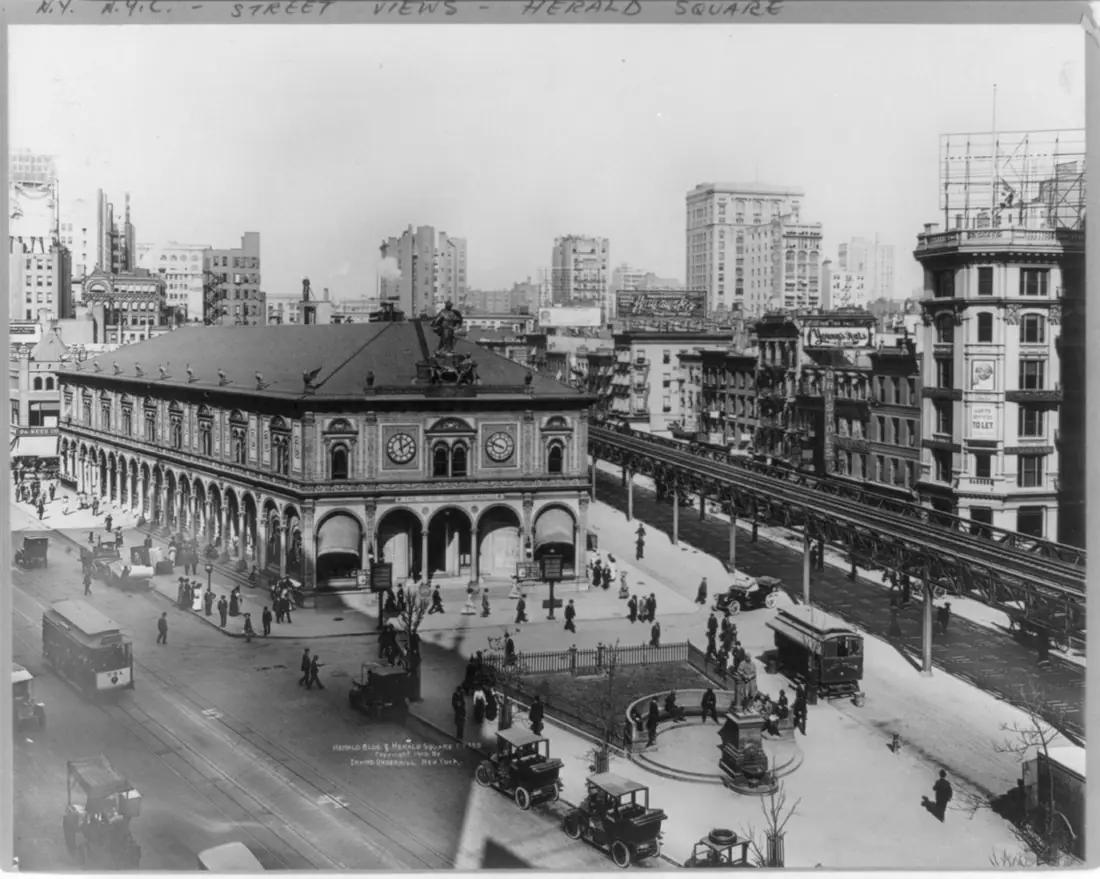
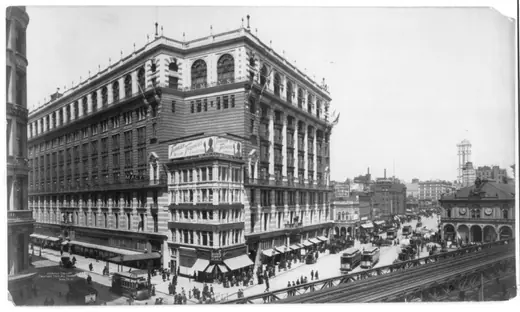
Then, in 1907, she withdrew close to $1 million in cash from her bank, took a two-room suite at the Herald Square Hotel at 19 West 31st Street — rooms 551 and 552 — and effectively stopped coming out.
Twenty-five years, and hundreds of thousands in cash
The sisters lived in the suite as recluses, with almost no contact with anyone. Emma died in 1928. In May 1931 the remaining sister, Mary, became critically ill, and for the first time in a quarter of a century outsiders came through the door.
What they found was squalor and money in roughly equal measure. Hundreds of thousands of dollars in cash and other valuables were recovered from the suite and from trunks stored in the hotel basement. Ida Wood had not been eccentric about banks in a modern sense — she had simply removed her fortune from the financial system in 1907 and lived on top of it.
In September 1931 she was declared incompetent. She died six months later of bronchial pneumonia, at 94, on March 12, 1932.
Eleven hundred and three people
A very large estate, an occupant with no children, and a public identity that turned out to be fabricated is an irresistible combination. 1,103 claimants came forward asserting kinship.
They arrived from both directions of the fiction. Woods claimed through the congressman's family. Mayfields appeared claiming descent from the Louisiana sugar planter — which was a difficult claim to sustain, given that he had been invented by a nineteen-year-old in 1857.
The court's task was not to distribute the estate. It was to establish who Ida Wood actually was, and then work outward. That meant tracing a woman who had spent her adult life concealing her origins, through records in England, Ireland, and the United States.
Neither the Woods nor the Mayfields received anything. The estate was ultimately divided among ten authenticated relatives in England, Ireland, and the United States — real kin of a real Ellen Walsh, most of whom had presumably never heard of Ida Mayfield Wood.
The estate was solvent. The identity was not
Nothing about Ida Wood's fortune was in doubt. The cash was in the room. The problem was entirely that nobody could say who her family was, because she had spent seventy-five years making sure of exactly that.
This is a recognisable modern file, minus the hotel. An estate with no will, no surviving spouse, no children, and a decedent who was private about their origins produces the same proceeding: an heirship determination, a genealogist, publication to unknown claimants, and a queue of people with a plausible surname.
It is worth being clear about what a will would have done here. It would have ended the entire matter in an afternoon. Not because a will proves who your relatives are, but because it means nobody needs to know. A named beneficiary does not have to establish a bloodline.
Timeline
- Jan 14, 1838Ellen Walsh is born at Oldham, Lancashire, England, daughter of an Irish peddler.
- 1857Aged 19, in New York, she writes to Benjamin Wood proposing herself, and adopts the identity of Ida Mayfield, daughter of a Louisiana sugar planter who does not exist.
- 1867She marries Benjamin Wood, congressman, state senator, and co-owner of the New York Daily News.
- 1900–1901Benjamin Wood dies. She holds essentially all of his wealth and sells the newspaper, reported at $250,000 to $300,000.
- 1907She withdraws close to $1 million in cash and takes rooms 551–552 at the Herald Square Hotel, where she lives as a recluse for the next 25 years.
- 1928Emma — presented for decades as her daughter, later established to have been another sister — dies.
- May 1931Her sister Mary becomes critically ill. Outsiders enter the suite and find hundreds of thousands of dollars in cash and valuables there and in basement trunks.
- Sep 1931 – Mar 1932Ida Wood is declared incompetent in September 1931 and dies of bronchial pneumonia on March 12, 1932, aged 94. 1,103 claimants come forward asserting kinship.
- 1930sThe estate is ultimately divided among ten authenticated relatives in England, Ireland, and the United States. No Wood or Mayfield claimant receives anything.
What actually went wrong
- No will. Everything that followed — the 1,103 claimants, the transatlantic genealogy, the years of proceedings — existed only because there was no document naming anybody.
- An identity built to defeat exactly this inquiry. She spent seventy-five years erasing Ellen Walsh. The court then had to reconstruct Ellen Walsh from records, at the estate's expense.
- No lifetime record of family. No letters kept, no acknowledged relatives, no one who could simply say who her people were. Heirship proof depends on somebody having written things down.
- A fortune in physical cash. Money removed from the banking system in 1907 and stored in a hotel room and basement trunks has no custodian, no statement, and no audit trail — and is trivially easy to lose between the death and the inventory.
Would it have gone that way in Florida?
Florida's intestacy ladder stops early — and if nobody qualifies, the money goes to the State School Fund.
Ida Wood died with no will, no spouse, and no children. In Florida that puts the estate entirely in the hands of §732.103, the intestate succession statute, and the striking thing about it is where it stops.
The order runs: descendants; then parents; then brothers and sisters and the descendants of deceased brothers and sisters; then grandparents, and then uncles, aunts and their descendants, divided between the paternal and maternal sides. And that is the end of the family tree. Florida then makes one further pass — to the kindred of the decedent's last deceased spouse, treated as if that spouse had survived and then died intestate — which in Wood's case would have meant the Wood family after all, but only if no qualifying blood relative existed.
If nobody qualifies, §732.107 applies: the property escheats to the State of Florida and is deposited in the State School Fund. Florida does not keep hunting for third cousins indefinitely. The statute draws a line at descendants of grandparents, and beyond that line the state takes.
Two refinements that decide real cases. §732.105 provides that when the ladder reaches collateral kindred, relatives of the half blood inherit half as much as those of the whole blood of the same degree — and if all are half blood, they take whole shares. In an estate like Wood's, built on a family with multiple marriages and sisters presented as daughters, that provision does substantial work. And §732.108 governs adopted and non-marital children, which is frequently where an heirship claim is actually won or lost.
On the 1,103 claimants: Florida handles them the way New York did, through a determination of beneficiaries. Notice is published to unknown persons, claimants must prove kinship on evidence, and the personal representative may — and in a case like this certainly would — retain a forensic genealogist, at the estate's expense, before anyone is paid. There is also a specific statute for the leftovers. §733.816 requires a personal representative holding property for a beneficiary who cannot be found to sell it, deposit the proceeds with the clerk, publish notice, and after six months pay the funds to the Chief Financial Officer for the State School Fund. A claimant then has ten years to petition for payment with proof of entitlement. After that, it is the state's.
The honest caveat, and it applies to almost everyone reading this: most people's intestate estates do not have this problem. A spouse and children resolve it under §732.102 and §732.103 in a paragraph. The Wood scenario needs a specific combination — no spouse, no descendants, no siblings, and no documentary record of who your parents were.
So the instruction is narrow and blunt. If you have no spouse and no children, a will is not optional paperwork — it is the only thing standing between your estate and a genealogist. Name your beneficiaries, name an alternate, name a personal representative, and if you have relatives you do not intend to benefit, say so. It takes an afternoon. The alternative, on this record, took years and 1,093 rejected claims.
What people ask us about this.
Further reading
Third-party sites. Not ours, not endorsed, not kept current by us — just the places worth going next.
Sources
- Ida Wood — Wikipedia
- Benjamin Wood — Wikipedia
- Fla. Stat. §732.103 — Share of other heirs — The Florida Senate
- Fla. Stat. §732.105 — Half blood — The Florida Senate
- Fla. Stat. §732.107 — Escheat — The Florida Senate
- Fla. Stat. §733.816 — Disposition of unclaimed property held by personal representatives — The Florida Senate
If this is your situation
Free 30-minute consult. Plain English. No pressure.
Nearly every case in this archive turned on something ordinary — an unwitnessed page, a stale beneficiary line, a document nobody could find. Those are cheap to fix while you're alive and expensive to fix afterward.