Huguette Clark
A copper heiress worth $300 million spent the last twenty years of her life in a hospital room by choice, while her mansions sat empty and staffed. Then she signed two wills six weeks apart that said opposite things — and nineteen relatives who had never met her went to court.
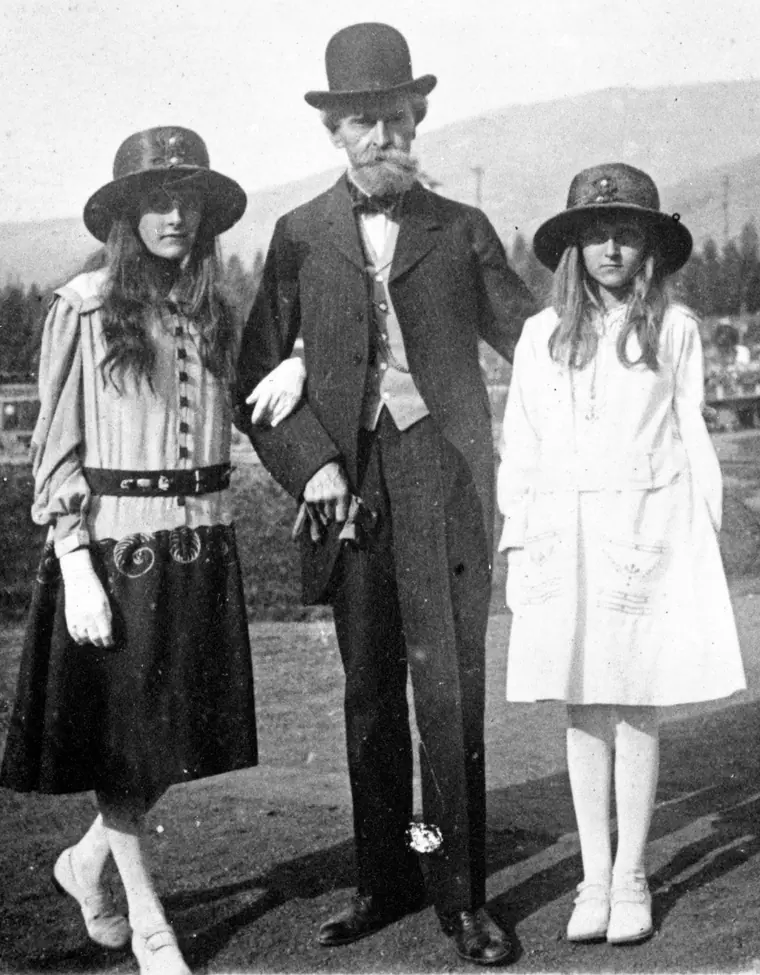
Huguette Clark was the daughter of William A. Clark — copper magnate, railroad builder, United States Senator from Montana, and one of the richest Americans of the Gilded Age. She was born in 1906 into a fortune that had already outgrown any plausible use for it.
She died on May 24, 2011, twelve days short of her 105th birthday, in a room at Beth Israel Medical Center in New York. She had lived in that hospital, more or less continuously, for about twenty years — not because she was ill when she arrived, but because she preferred it.
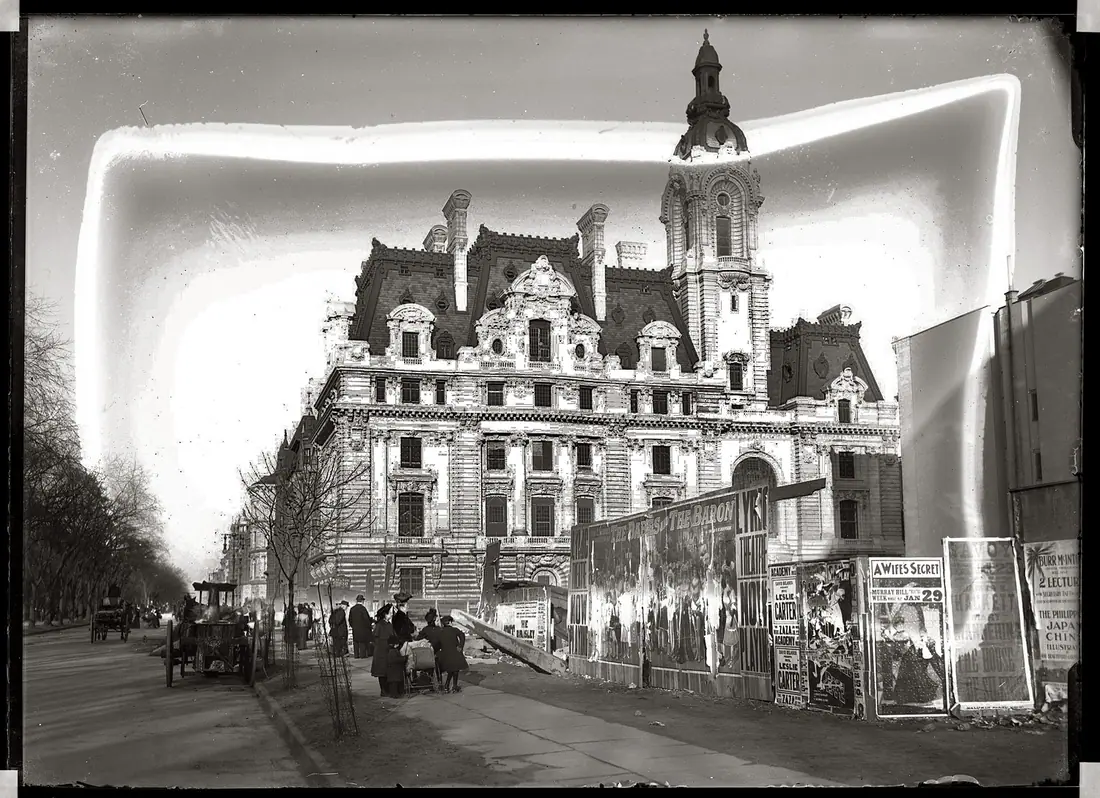
Meanwhile she owned, staffed, heated, and never visited: a 42-room apartment on Fifth Avenue, a mansion in New Canaan she had never spent a night in, and Bellosguardo, a Santa Barbara estate maintained in immaculate condition for decades with nobody living in it.
The book written about her is called Empty Mansions. It is the correct title.
March 7, then April 19
In 2005, at 98, Clark signed a will. Then, six weeks later, she signed another one.
The March 2005 will left her estate to her relatives — the descendants of her father's first family, most of whom she had never met.
The April 2005 will did the opposite. It stated that she had intentionally made no provision for her family. It left the bulk of the estate to a foundation to be created at Bellosguardo, a large gift to her nurse, gifts to her attorney and her accountant, a bequest to the hospital where she lived, and her art to a museum.
Six weeks. Two documents. Opposite outcomes. In a will contest, that fact pattern is not evidence of anything by itself — people change their minds — but it is the loudest possible invitation to ask who was in the room.
$31 million in lifetime gifts
Her private-duty nurse, Hadassah Peri, had cared for her for roughly twenty years. Over that time Clark gave her gifts — cash, property, vehicles — reported to total around $31 million. The April will would have added roughly $30 million more.
Her attorney and her accountant were also named as beneficiaries and were nominated as executors of the estate they would benefit from.
Nineteen relatives — grand-nieces, grand-nephews, and more distant kin — filed to challenge the April will. Their theory was the standard one: undue influence and fraud by the nurse, the lawyer, and the accountant, exercised over a woman in her late nineties who had almost no contact with anyone outside that circle.
The Manhattan District Attorney's office investigated. No one was charged with any crime. That fact belongs in this account as prominently as the allegations.
Resolved on the courthouse steps
The case was set for a jury trial in Surrogate's Court expected to run six to eight weeks. In September 2013, on the eve of trial, the New York Attorney General brokered a settlement. The terms tell you a great deal about how both sides rated their chances:
- $34.5 million to the relatives who had been excluded by the April will.
- Hadassah Peri received nothing under the will — and agreed to return $5 million of the lifetime gifts she had already been given.
- The attorney and accountant were removed as executors and gave up their bequests.
- The Bellosguardo Foundation was funded and the Santa Barbara estate preserved — the one part of the April will that survived largely intact.
- The hospital's bequest was reduced.
Nobody was found to have done anything. Nobody admitted anything. And nearly every professional and caregiver named in the April 2005 will walked away with substantially less than the document gave them — which is what a settlement looks like when both sides have read the room.
Timeline
- 1906Huguette Clark is born, daughter of copper magnate and US Senator William A. Clark.
- ≈1991Clark takes up residence at a New York hospital and remains there for roughly twenty years, leaving her mansions empty and fully staffed.
- Mar 7, 2005Clark, 98, signs a will leaving her estate to her relatives.
- Apr 19, 2005Six weeks later she signs a second will stating she intentionally makes no provision for family, and benefiting her nurse, attorney, accountant, a foundation, and the hospital.
- May 24, 2011Clark dies at 104. Nineteen relatives challenge the April will, alleging undue influence and fraud.
- 2011–2013The Manhattan District Attorney investigates. No charges are filed.
- Sep 2013On the eve of a jury trial, the New York Attorney General brokers a settlement: $34.5M to relatives; the nurse takes nothing and returns $5M; the attorney and accountant are removed and surrender their bequests; the Bellosguardo Foundation is funded.
What actually went wrong
- Beneficiaries who were also fiduciaries. The attorney who prepared the will and the accountant who advised on it were both named as beneficiaries and nominated as executors. That combination is close to a self-executing invitation to litigate.
- Two wills, weeks apart, in opposite directions. Even where every signature is genuine and every intention real, this pattern will be read as evidence that someone was steering.
- Total isolation from anyone with no financial interest. Twenty years in one room, with a circle composed almost entirely of paid caregivers and advisers, means no independent witness exists to say what she actually wanted.
- No independent counsel, no capacity evaluation, no video. For a 98-year-old signing a $300 million instrument that cuts out her whole family, a contemporaneous physician's capacity assessment and independent counsel would have cost a few thousand dollars and might have ended the case before it started.
- Enormous lifetime gifts with no documentation of purpose. $31 million given over twenty years, with no contemporaneous record of why, becomes Exhibit A rather than evidence of affection.
Would it have gone that way in Florida?
The challengers would have been in a stronger position here. Florida shifts the burden of proof, not just the burden of coming forward.
This is the case where Florida law is most favourable to the family — and the reason is a single subsection most people have never read.
Start with the substantive rule. Fla. Stat. §732.5165 provides that a will is void if its execution was procured by fraud, duress, mistake, or undue influence, and that any part so procured is void.
Then the machinery. The Florida Supreme Court held in In re Estate of Carpenter, 253 So. 2d 697 (Fla. 1971), that a presumption of undue influence arises where a person who is (1) a substantial beneficiary under the will, (2) occupied a confidential relationship with the decedent, and (3) was active in procuring the will. Carpenter lists non-exclusive indicators of active procurement, and reading them against this fact pattern is instructive: presence at the execution; presence when the testator expressed a desire to make a will; recommending the attorney; knowing the contents before execution; giving instructions to the attorney; securing the witnesses; and keeping the will after execution.
Here is the part that matters most. In most states, a presumption merely shifts the burden of producing some evidence — offer any reasonable explanation and the presumption evaporates, leaving the challenger to carry the whole load. Florida is different. §733.107(2) provides that the presumption of undue influence implements public policy against the abuse of fiduciary and confidential relationships, and is therefore a presumption shifting the burden of proof under the Evidence Code.
Translated: in a Florida courtroom, once the challengers established that the nurse, the attorney, and the accountant were substantial beneficiaries in confidential relationships who were active in procuring the April 2005 will, the beneficiaries would have had to prove the absence of undue influence — by the greater weight of the evidence, at trial, to a jury. That is a materially harder position to sit in than the one they occupied in New York, and it is the reason Florida undue-influence cases settle early and often.
Two more Florida notes. A no-contest clause would have made no difference: §732.517 and §736.1108 make them unenforceable here, so nineteen relatives could challenge without risking anything they already had. And §733.109 allows a court to revoke probate of a will on these grounds even after it has been admitted.
The defensive lesson, for anyone drafting for an elderly client with a circle of paid caregivers: independent counsel for the testator, a contemporaneous capacity assessment, no beneficiary present at the signing, no beneficiary selecting the lawyer or the witnesses, and a written record of why the plan is what it is. Those five steps do not make a will unchallengeable. They make it defensible, which is all any document can be.
What people ask us about this.
Further reading
Third-party sites. Not ours, not endorsed, not kept current by us — just the places worth going next.
Sources
- Huguette Clark's $300 million copper fortune is divided up: here's the deal — NBC News, Sep 2013
- Nurse, in line to inherit millions more, battles family of Huguette Clark — NBC News
- Family of heiress Huguette Clark claims fraud by nurse, attorney, accountant — NBC News
- Ripe for contest: lessons from the Huguette Clark estate — Lexology
- Heiress' $300 million estate dispute settled — Holland & Knight case study
- Fla. Stat. §733.107 — Burden of proof in proceedings contesting validity of will — The Florida Senate
If this is your situation
Free 30-minute consult. Plain English. No pressure.
Nearly every case in this archive turned on something ordinary — an unwitnessed page, a stale beneficiary line, a document nobody could find. Those are cheap to fix while you're alive and expensive to fix afterward.