Abraham Lincoln
He was admitted to the Illinois bar in 1836 and practised for a quarter century. He drafted wills for his clients. When he was assassinated in 1865 he left none of his own, and a sitting Justice of the Supreme Court spent two and a half years sorting it out for free.

Abraham Lincoln was admitted to the Illinois bar in 1836 and practised law until he left for Washington in 1861. That is twenty-five years. He rode the Eighth Judicial Circuit, he appeared in something over five thousand cases and matters, and his general practice included the ordinary rural work of the period: debt, foreclosure, land, slander, the occasional murder — and drafting wills for clients.
He was shot on April 14, 1865, and died the following morning. He was 56, and he had no will.
There is no mystery to solve here and no scandal. It is simply the plainest available demonstration of a fact every estate lawyer knows and no client believes: knowing how a will works is not the same thing as having one. Lincoln understood intestacy better than almost anyone in Illinois. He had explained it to other families. He did not apply it to his own.
A Supreme Court Justice, working for nothing
With no will there was no executor, so the family had to ask a court to appoint an administrator. They asked for David Davis.
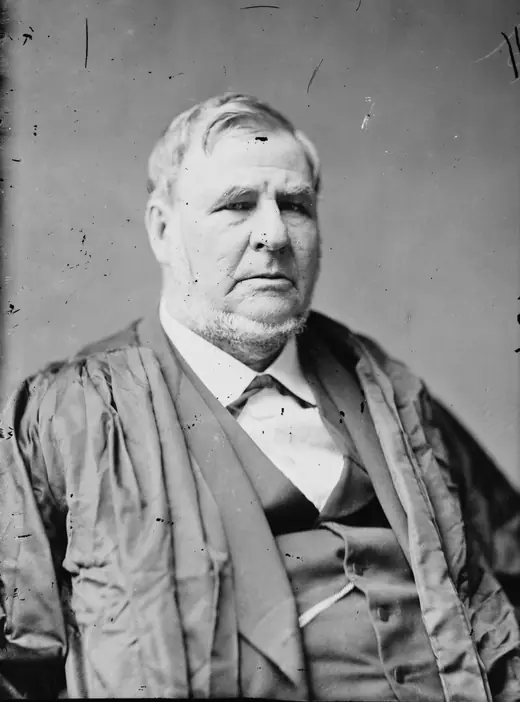
Davis was a natural choice and an extraordinary one. He had been the presiding judge of the Eighth Circuit for fourteen years — the judge Lincoln appeared before, week after week, for most of his career. He had managed Lincoln's 1860 convention campaign. And by 1865 he was a sitting Associate Justice of the United States Supreme Court, appointed by Lincoln in 1862.
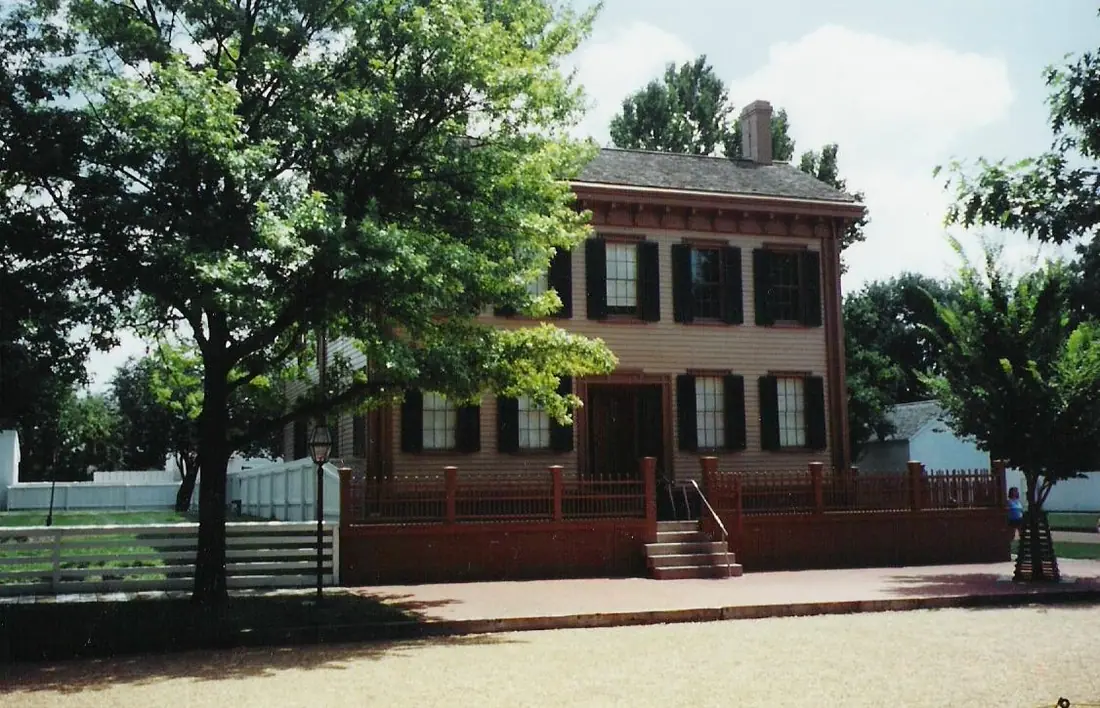
On June 16, 1865, Judge Norman M. Broadwell of the Sangamon County Court issued letters of administration to Davis. Davis took the oath and posted an administrator's bond of $160,000, with John T. Stuart — Lincoln's first law partner — as surety.
Contemporary estimates of the estate at death vary, generally between $65,000 and $85,000: notes, bonds, the Springfield house, and Lincoln's unspent presidential salary. Davis invested it rather than letting it sit, and it grew.
He also declined to pay several bills presented against the estate, including one for a $2,000 inaugural dress, substantial fur accounts, and hundreds of pairs of kid gloves. Whether that was a correct exercise of an administrator's duty was, in 1865, a question for the county court. Today it is exactly the sort of decision that generates a petition.
Three shares, and a fee nobody took
Davis closed the estate on November 13, 1867, two and a half years after the assassination. The fund had grown to $110,296.80.
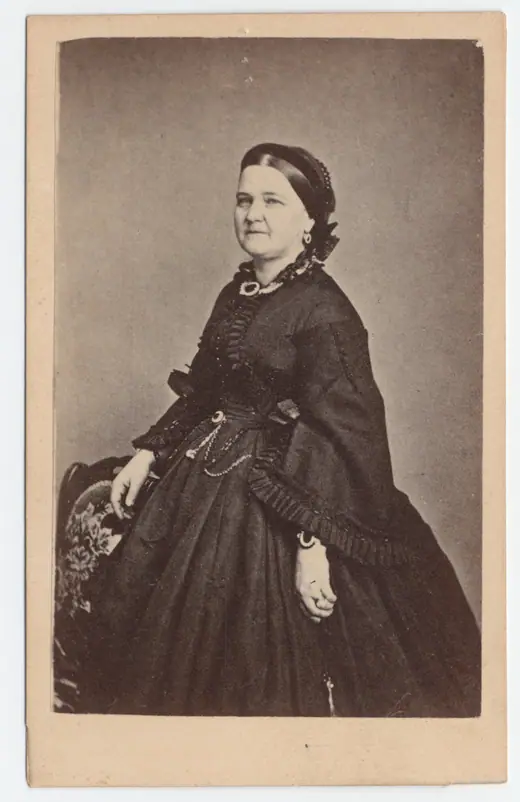
Illinois intestacy law in 1867 divided it into three equal shares — one each to the widow Mary Todd Lincoln, to Robert Todd Lincoln, then 24, and to Thomas “Tad” Lincoln, then 14. Mary's share is reported at $36,991.54.
Davis took no fee and no reimbursement of expenses. The commission he was entitled to by law would have come to roughly $6,600 — a substantial sum in 1867, and about six percent of the estate. He waived all of it.
That is a generous act and a bad planning assumption. Most estates do not get a Supreme Court Justice working for free. Under Florida law today the personal representative of an estate that size would be entitled to a presumptively reasonable commission under §733.617, plus attorney's fees, and both come out of the estate before anyone else is paid.
- No will meant no named executor, no named guardian for Tad, and no instructions of any kind.
- No will meant the shares were set by statute, not by Lincoln — a fixed formula applied to a family in an unusual situation.
- No will meant the estate stayed open for two and a half years while an administrator liquidated, invested, and defended claims without guidance.
- No trust meant Tad, at 14, took an outright statutory share. He died in 1871 at eighteen, and it passed on again.
It did not stop there
Intestacy compounds. Tad Lincoln died in July 1871, at eighteen, and his share moved on to his mother and brother. In 1875 Mary Todd Lincoln was the subject of an insanity proceeding in Cook County, was committed, and was released within months; her son Robert brought the petition, and the episode has been argued over by historians ever since. It sits outside this case, but it belongs to the same story: a family whose property arrangements were being decided by courts rather than by documents, over and over, for a decade.
Robert Todd Lincoln, the only one of the four sons to reach adulthood, did make a will. He also became a corporate lawyer and president of the Pullman Company, and left an estate in 1926 that was administered without incident. He appears to have learned the lesson available in his own family's file.
Timeline
- 1836Lincoln is admitted to the Illinois bar. Over the next 25 years he handles more than 5,000 cases and matters, drafting wills among other general-practice work.
- Apr 15, 1865Lincoln dies in Washington, D.C., at 56. He leaves no will.
- June 16, 1865Judge Norman M. Broadwell of the Sangamon County Court issues letters of administration to Justice David Davis, who posts a $160,000 bond with John T. Stuart as surety.
- 1865–67Davis invests the estate, rejects several claims presented against it, and administers it while sitting on the Supreme Court.
- Nov 13, 1867The estate is distributed: $110,296.80, in three equal shares to Mary, Robert, and Tad. Mary's share is reported at $36,991.54.
- Nov 1867Davis declines the administrator's commission, calculated at roughly $6,600, and takes no reimbursement for expenses.
- July 1871Tad Lincoln dies at eighteen. His share passes to his mother and brother.
- 1875Mary Todd Lincoln is the subject of an insanity proceeding in Cook County, is committed, and is released within months.
What actually went wrong
- No will, from a man who wrote them for a living. Every consequence below follows from this one line.
- No executor named. The family had to petition a court and hope it appointed the person they wanted. It did — but appointment is the court's decision, not the family's.
- No guardian named for a minor child. Tad was fourteen. Guardianship of a minor's inherited property is a court proceeding with annual accountings, and it is entirely avoidable by naming a trustee in a document.
- No trust for a fourteen-year-old. An outright statutory share to a minor is the crudest possible outcome. A trust would have staged the money and named someone to manage it.
- A fixed statutory formula applied to an unusual family. Intestacy is a blunt instrument. It divides by category, not by need, and it does not know that one beneficiary is a widow with no independent means and another is a grown man with a profession.
Would it have gone that way in Florida?
Completely different result. In Florida today, Mary Todd Lincoln takes the entire estate and the sons take nothing.
This is one of the cases where the Florida answer is genuinely surprising, and it turns on a rule most people have never heard of.
Fla. Stat. §732.102 sets the surviving spouse's intestate share, and it does not use fractions the way Illinois did in 1867. Under §732.102(2), if the decedent is survived by one or more descendants, all of whom are also descendants of the surviving spouse, and the surviving spouse has no other descendant, the spouse takes the entire intestate estate.
Robert and Tad Lincoln were both Mary's children. Mary had no children by anyone else. So a Florida Lincoln estate goes 100 percent to the widow, and the two sons receive nothing at all by intestacy — not a third each, not a dollar. The 1867 Illinois split into three would not happen here.
The rule flips the moment a family is blended. Under §732.102(3), if any of the decedent's descendants are not descendants of the surviving spouse, the spouse takes one-half and the descendants share the other half. Under §732.102(4), the same one-half split applies if the spouse has children from another relationship. That is the whole design: Florida gives the spouse everything when the family tree is a single line, and cuts it in half the moment there is a step-relationship anywhere in it.
The house is the exception, and it is a big one. Under §732.401 the Springfield homestead would not follow the intestacy statute. Where a decedent is survived by a spouse and by descendants, the surviving spouse takes a life estate in the homestead, with a vested remainder to the descendants living at the death. The spouse may instead elect an undivided one-half interest as tenant in common, with the other half vesting in the descendants — but the election must be made within 6 months of the death and during the spouse's lifetime, and once made it is irrevocable. So the sons would take nothing of the cash and a defined interest in the house.
And the administrator. Florida would not have needed the family to nominate anyone. §733.301 sets a statutory preference in intestate estates: the surviving spouse first, then the person selected by a majority in interest of the heirs, then the heir nearest in degree. Mary Todd Lincoln would have had the first claim to letters of administration — a materially different set of facts from the one in which a Supreme Court Justice quietly ran the estate for two years and waived his fee.
The instruction: if you have children and a spouse, do not assume intestacy divides your estate the way you would. In Florida it very often does not divide it at all — it hands everything to one person and nothing to the others, and it makes that choice based on a technical question about whose descendants are whose. If that is not the result you want, the fix is a document, and it takes an afternoon. Lincoln had twenty-five years of afternoons.
What people ask us about this.

Further reading
Third-party sites. Not ours, not endorsed, not kept current by us — just the places worth going next.
Sources
- Personal Finances of Abraham Lincoln — University of Michigan Library Digital Collections
- Trusts and Estates, Presidents' Day Edition — Above the Law
- The Case of the Abraham Lincoln Estate — The Probate Pro
- Abraham Lincoln's intestate estate — Ardent Legal PLLC
- David Davis (1815–1886) — Mr. Lincoln and Friends, the Lehrman Institute
- Practicing Law — With Malice Toward None: The Abraham Lincoln Bicentennial Exhibition — Library of Congress
- David Davis (Supreme Court justice) — Wikipedia
- Fla. Stat. §732.102 — Spouse's share of intestate estate — The Florida Senate
If this is your situation
Free 30-minute consult. Plain English. No pressure.
Nearly every case in this archive turned on something ordinary — an unwitnessed page, a stale beneficiary line, a document nobody could find. Those are cheap to fix while you're alive and expensive to fix afterward.