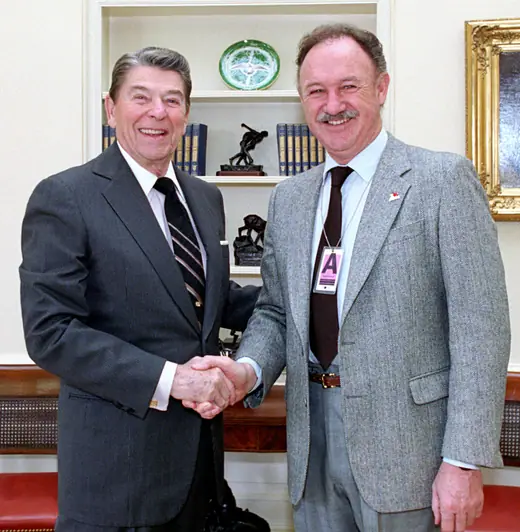
Gene Hackman
Two people died in the same house within about a week of each other in February 2025. Her will said her husband had to outlive her by 90 days. He outlived her by roughly seven. That gap, and not a single word of either document, decided where the money went.
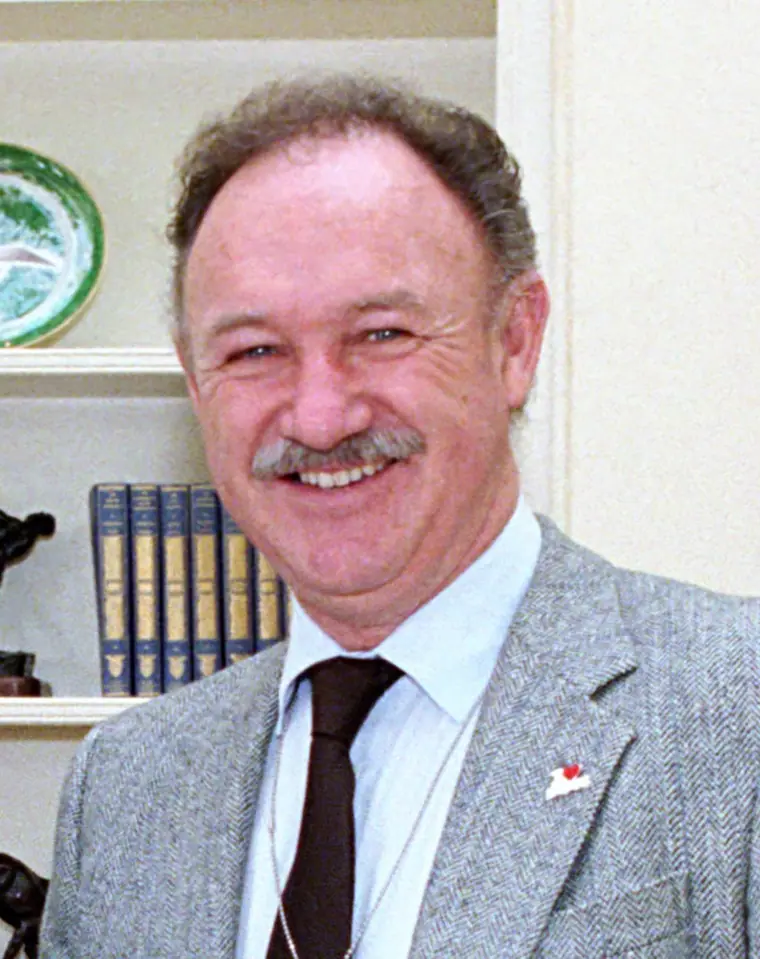
Gene Hackman and his wife, the pianist Betsy Arakawa, were found dead in their Santa Fe home on February 26, 2025, along with one of their three dogs.
The New Mexico investigators established two dates and two causes. Arakawa died on or about February 11 or 12 of hantavirus pulmonary syndrome; accounts differ by a day. Hackman died on or about February 18 of cardiovascular disease, with advanced Alzheimer's disease as a significant contributing factor. He was 95. That is the whole of what this page will say about how they died.
The interval between the two deaths was roughly seven days.
Seven days is why this case is in the archive. Both of them had signed proper documents in 2005 — wills, trusts, the standard architecture of a well-advised estate. And the documents were built on an assumption the week of February 2025 quietly destroyed: that one of them would outlive the other by a meaningful stretch of time.
Two wills, two trusts, one assumption
Both wills were signed in 2005; Hackman's was executed on June 7, 2005. Both used the standard modern structure — a revocable living trust holding the assets, and a pour-over will whose only real job is to sweep anything left outside the trust into it at death.
Two trusts are involved: the Gene Hackman Living Trust, created June 7, 2005, and the GeBe Revocable Trust, dating to September 1994.
Hackman's will named Arakawa as his sole beneficiary and as his personal representative and successor trustee. His three children from his first marriage to Faye Maltese — Christopher Allen, Elizabeth Jean and Leslie Ann — are identified in the will but were not named as successors or as beneficiaries of the trust.
Arakawa's will pointed the bulk of her estate at Hackman as trustee of his trust. It attached a condition, and the condition is the case:
- The 90-day clause. Her will provided that no person would be deemed to have survived her if that person died within 90 days of her death.
- The alternative. If Hackman did not clear 90 days, her will directed her personal representative to establish a charitable trust to achieve purposes beneficial to the community, consistent with the couple's charitable preferences. No specific charities were named.
Hackman survived her by about a week. Under her own instrument, he is treated as having predeceased her. Nothing of hers flowed into his trust, and therefore nothing of hers could reach his children.
That is not a drafting failure. It is the clause working exactly as written. A 90-day survivorship condition is a considered choice, and the outcome it produced here — her estate to charity rather than through a dead husband's trust to his family — is very plausibly the outcome she intended for precisely this scenario. The lesson is not that she got it wrong. The lesson is that the number in that clause is load-bearing, and most people never notice it is there.
When the successor trustee dies first
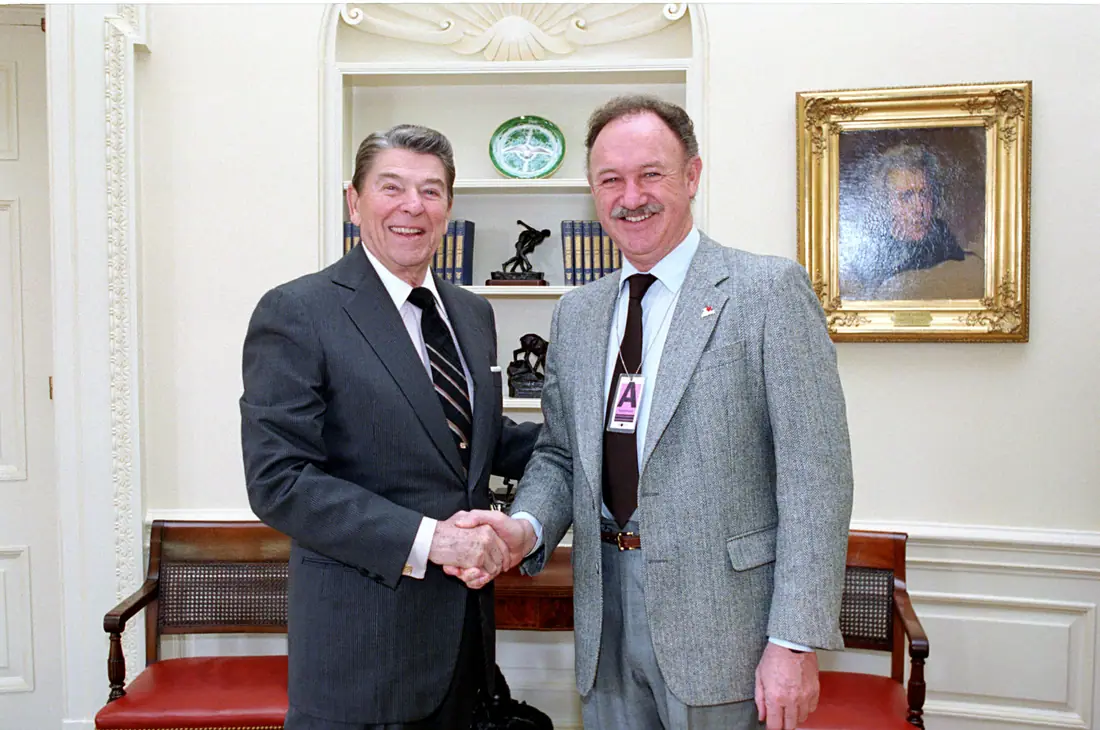
The second-order problem arrived immediately. Both spouses had named each other to run everything. The first alternate personal representative was Hackman's former attorney, Michael G. Sutin, who died in September 2019. The second alternate was Julia L. Peters, chief counsel at Avalon Trust, LLC.
The chain held, barely, because there was a second alternate. Consider how often there is not.
- March 6, 2025 — Peters petitioned for informal probate and was appointed personal representative the same day.
- March 7, 2025 — notice of the appointment was mailed to Hackman's three children.
- March 13, 2025 — Peters filed a petition identifying trust assets requiring administration.
- March 17, 2025 — Peters petitioned for appointment of a successor trustee, Arakawa having been the designated successor and having predeceased with no alternate named.
- March 20, 2025 — District Judge Maria Sanchez-Gagne appointed Avalon Trust, LLC as temporary successor trustee.
Read that sequence as a checklist of things a plan should have contained. A living successor personal representative. A living successor trustee. A named alternate for each, and an alternate for the alternate. Every one of those gaps had to be filled by a judge, in public, three weeks after the bodies were found.
The part the public will probably never see
Here is where the pour-over structure earned its fee.
A will filed for probate is a public record. A trust is not. Because both wills poured into trusts, the wills disclose the plumbing and the trusts hold the beneficiaries — and the trusts have not been made public. The personal representative has indicated the trust involves mainly out-of-state beneficiaries. Who they are has not been disclosed.
So the reporting on an estate valued at roughly $80 million has been able to describe the mechanism in detail and cannot say who actually inherits. That is not evasion. It is the ordinary, intended consequence of using a funded revocable trust, and it is one of the strongest practical arguments for the structure.
The children are the open question, and they should be described carefully. Being named in a will without being given anything is not the same as being disinherited by accident, and it is not by itself a legal claim. Reporting in 2025 indicated that one of the three retained counsel. As of August 2026, no ruling resolving any challenge has been reported, and the administration remains open — roughly eighteen months after the deaths.
Timeline
- Sep 1994The GeBe Revocable Trust is created.
- Jun 7, 2005Hackman executes his will and the Gene Hackman Living Trust, naming Arakawa as sole beneficiary, personal representative and successor trustee. Arakawa's will, also from 2005, contains a 90-day survivorship requirement.
- Sep 2019Michael G. Sutin, the first alternate personal representative under both wills, dies.
- Feb 11–12, 2025Betsy Arakawa dies of hantavirus pulmonary syndrome at 65. Accounts differ by a day on the date.
- Feb 18, 2025Gene Hackman dies at 95 of cardiovascular disease with Alzheimer's a significant contributing factor — roughly seven days after his wife, and 83 days short of her will's 90-day survivorship requirement.
- Feb 26, 2025Both are found at their Santa Fe home.
- Mar 6, 2025Julia L. Peters, the second alternate, is appointed personal representative. Notice is mailed to Hackman's three children the next day.
- Mar 20, 2025Judge Maria Sanchez-Gagne appoints Avalon Trust, LLC as temporary successor trustee, the designated successor having predeceased with no alternate named.
- Aug 2026Eighteen months on, the administration remains open. The trusts, and therefore the beneficiaries, have not been made public.
What actually went wrong
- The survivorship number was never revisited. A 90-day clause signed in 2005 by a 75-year-old and a 45-year-old meant something different in 2025, when the couple were 95 and 65 and living in the same house. The clause did not change. The risk profile did.
- Both plans named the same person to do everything. Sole beneficiary, personal representative and successor trustee, in both directions. Perfectly normal — and it means a single week can vacate every office in both estates at once.
- The first alternate had been dead for five years. Sutin died in September 2019 and the documents were not updated. The plan survived on its second alternate.
- No alternate successor trustee at all. Arakawa was named successor trustee with nobody behind her, so a judge had to appoint one in March 2025.
- Twenty years without a review. Nothing about the 2005 documents was wrong when signed. They simply had not been read against the couple's actual circumstances since the Bush administration.
Would it have gone that way in Florida?
Same outcome — and in Florida the survivorship clause matters more, not less, because Florida gives you no statutory cushion at all.
Florida's rule is Fla. Stat. §732.601, the Simultaneous Death Law, and the first thing to know about it is what it is not.
Many states have adopted the Uniform Probate Code's version, which imposes a flat 120-hour survival requirement: survive by less than five days and you are treated as having predeceased, automatically, whether or not any document says so. Florida did not. Florida kept the older Uniform Simultaneous Death Act formulation, and it turns on evidence rather than on a clock. Under §732.601(1), where title to property or its devolution depends on priority of death and there is insufficient evidence that the persons died otherwise than simultaneously, the property of each is disposed of as if that person survived.
Read that carefully, because the consequence is counter-intuitive. In Florida, if you can prove an order of deaths, the order controls — by any margin. Five days. Five hours. Five minutes, if the evidence establishes it. Florida supplies no minimum survival period. The medical investigator's findings in the Hackman case, establishing dates about a week apart, would have settled the question here outright: she died first, he survived her, full stop.
The statute fills in the other common situations. §732.601(2) splits property among successive beneficiaries where the order among them cannot be established. §732.601(3) divides jointly held property and property held as tenants by the entirety half as if one survived and half as if the other did. §732.601(4) provides that where an insured and a life or accident policy beneficiary die together and the order cannot be established, the proceeds are distributed as if the insured survived the beneficiary — so the money goes down the insured's contingent chain rather than into a dead beneficiary's estate.
And the whole section opens with five words that decide the Hackman case: unless a contrary intention appears in the governing instrument. A survivorship clause is a contrary intention. It overrides the default. In Florida that clause is not decoration duplicating a statutory rule — it is the only survival period you will ever have. Arakawa's 90-day clause would do precisely the same work in Florida that it did in New Mexico.
So why 30, 60, 90 or 120 days, and never a year? Three reasons, and they are worth knowing before you pick a number. First, avoiding a double administration: without a clause, assets pass into the second spouse's estate and are probated twice within months, at two sets of costs. Second, direction of flow: in a blended family — Hackman's exact situation — a short survival can route a first spouse's assets through the second spouse and out to the second spouse's relatives rather than to the first spouse's children. Third, and the reason the outer limit is what it is: the federal marital deduction. Under IRC §2056(b)(3), a survivorship condition does not spoil the deduction only if the period does not exceed six months and the spouse in fact survives it. Draft twelve months and you can lose the marital deduction on a nine-figure estate. Six months is the ceiling; 30 to 120 days is where careful drafters live.
The Florida structural points are the same as New Mexico's, and Florida law supplies each of them. §732.513 expressly authorises the pour-over devise to the trustee of a trust identified in the will — which is why the trust, and the beneficiaries, stay private while the will becomes a public record. §736.0704 fills a vacancy in trusteeship: first from the trust's own terms, then by unanimous agreement of the qualified beneficiaries, and only then by the court. Naming an alternate keeps you out of the second and third steps entirely.
The honest caveat: none of this reaches a Florida homestead, which follows its own rules under Fla. Const. Art. X, §4 and Fla. Stat. §732.4015 whenever a spouse or minor child survives, no matter what the trust says.
The practical instruction, in three lines. Read your survivorship clause and know the number in it — and if you and your spouse live in the same house, travel together, and are past 70, ask whether that number still reflects what you want. Name three fiduciaries deep, ending with an institution that cannot predecease you. And re-read the whole plan every five years, because in this case the documents were not defective. They were simply twenty years old.
What people ask us about this.
If my spouse and I die within days of each other, who is treated as surviving in Florida?+−
What is a survivorship clause and how long should it be?+−
Why did Gene Hackman's children not receive his wife's estate?+−
Does a pour-over will keep my beneficiaries private?+−
How many alternates should I name?+−
Further reading
Third-party sites. Not ours, not endorsed, not kept current by us — just the places worth going next.
Sources
- Gene Hackman had a will, but the public may never find out who inherits his $80M fortune — The Conversation, 2025
- Who will inherit Gene Hackman's estate? — Keystone Law, 2025
- Who will be handed Gene Hackman's estate uncertain as wills of actor and wife are revealed — The Hollywood Reporter, Mar 2025
- Betsy Arakawa — death date, cause, and the Santa Fe timeline — Wikipedia
- The tragic deaths of Gene Hackman and Betsy Arakawa: a timeline — ABC News, 2025
- Records show Gene Hackman's wife researched symptoms of illness days before her death — NPR, Apr 16 2025
- Fla. Stat. §732.601 — Simultaneous Death Law — The Florida Senate
- Fla. Stat. §732.513 — Devises to trustee — The Florida Senate
- 26 U.S.C. §2056(b)(3) — Interest of spouse conditional on survival for a limited period — Cornell Legal Information Institute
If this is your situation
Intake reopens late October 2026. The archive stays free.
Nearly every case in this archive turned on something ordinary — an unwitnessed page, a stale beneficiary line, a document nobody could find. Those are cheap to fix while you're alive and expensive to fix afterward.