Fugitive fortunes
Two candidates: Robert Vesco, who fled with an estimated $220 million and died in Havana in 2007 with none of it recovered, and Ferdinand Marcos, whose estate has been litigated on three continents since 1989. We chose Marcos, because Vesco left no paper and Marcos left an enormous amount of it — including an estate tax bill that has grown from ₱23 billion to ₱203 billion.

Two men were candidates for this page, and the choice between them is itself the lesson.
Robert Vesco left the United States by private jet in 1973, ahead of a criminal indictment, with an estimated $220 million; the Securities and Exchange Commission accused him and others of looting Investors Overseas Services of $224 million. He lived in Costa Rica, the Bahamas, Nicaragua and finally Cuba, where he was arrested in 1995 and where he died in Havana on November 23, 2007. The money has never been recovered. There is no judgment to enforce, no located account, and no estate anyone can administer. It is a story, not a case file.
Ferdinand Marcos produced the opposite problem. He left the Philippines in February 1986 and died in Honolulu on September 28, 1989, aged 72. And from that death forward, his estate generated an extraordinary quantity of documentation — a certified class action in a federal court in Hawaii, forfeiture litigation in Manila and Zurich, a decision of the United States Supreme Court, a statutory reparations programme, and a tax assessment that is still being demanded.
So this is the Marcos page. Not because the wealth was larger, but because it is the one where you can see the machinery.
A US court holds a former head of state's estate liable
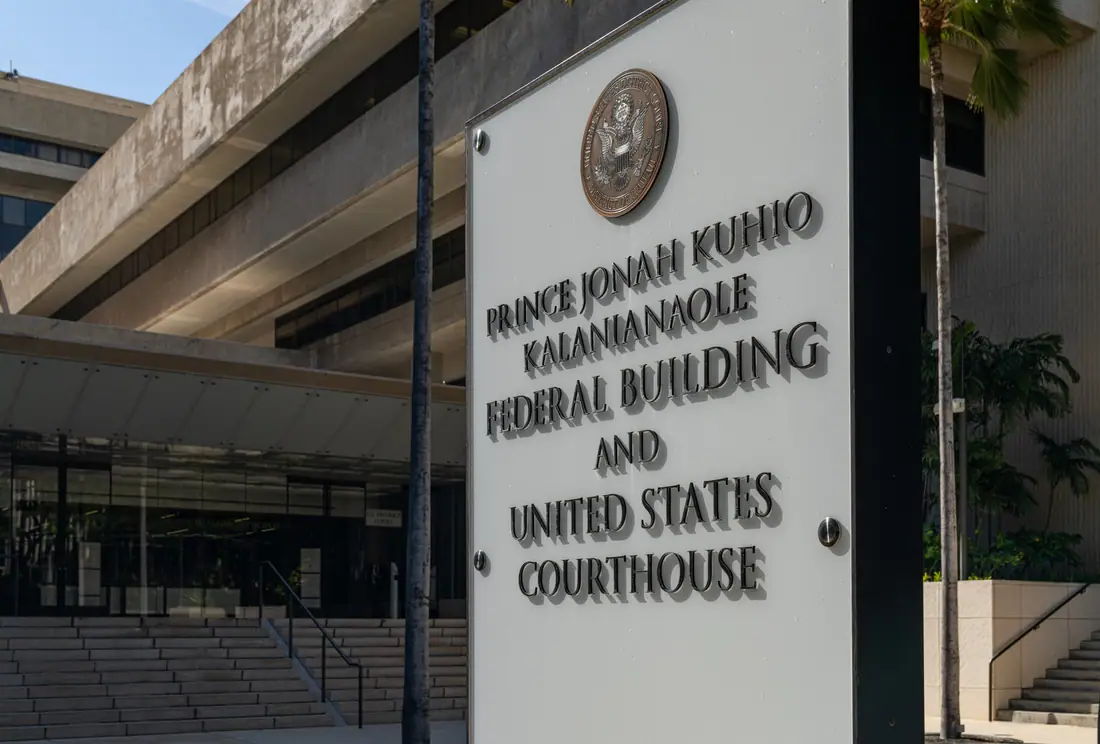
Because Marcos died in Hawaii, a US federal court had jurisdiction over his estate. Philippine nationals who alleged torture, summary execution and forced disappearance between 1972 and 1986 brought a class action in the US District Court for the District of Hawaii, before Judge Manuel L. Real, under the Alien Tort Statute and the Torture Victim Protection Act. The class was certified and divided into three subclasses matching the three categories of injury.
A jury found the estate liable. It then awarded $1.2 billion in exemplary damages and $766 million in compensatory damages — roughly $1.96 billion in total, to a class of about ten thousand people.
On December 17, 1996, the Ninth Circuit affirmed, in Hilao v. Estate of Marcos, 103 F.3d 767. It remains one of the largest human-rights damages judgments ever entered by a US court, and it was entered against an estate, not against a person. The defendant had been dead for five years when the jury returned its verdict.
Then came the part that anyone who has ever tried to collect a judgment will recognise. A judgment is a piece of paper that says you are owed money. Finding money to apply it to is a separate project, in a different country, against a government that wanted the same assets.
Republic of the Philippines v. Pimentel
The clearest illustration is an account held in the name of a Panamanian entity, Arelma, at Merrill Lynch in New York — roughly $35 million. Both the human-rights class and the Republic of the Philippines claimed it. Merrill Lynch did the sensible thing and filed an interpleader, asking a court to decide who owned it.
The Republic and the Presidential Commission on Good Government declined to appear, asserting sovereign immunity. In Republic of the Philippines v. Pimentel, decided June 12, 2008, the United States Supreme Court held that the interpleader had to be dismissed. The Republic and the Commission were required parties under Rule 19; their sovereign immunity meant they could not be joined; and where a non-frivolous sovereign-immunity claim is asserted and the absent sovereign's substantial interests would be prejudiced, the case must go rather than proceed without them.
The Court acknowledged the class's interests and held they could not overcome the sovereign-immunity claim. The judgment was real, the money was real, and the courthouse door closed anyway. Sovereign immunity is not a defence on the merits. It is a rule about which cases can be heard at all, and it defeats good claims routinely.
The route that actually recovered money
The Philippine government took a different path from the beginning. The Presidential Commission on Good Government was created in 1986, days after the change of government, specifically to recover assets. It pursued forfeiture rather than damages — the same structural choice Colombia made with Escobar and the United States makes in civil forfeiture. An action against property does not need a defendant who can be served.
The Swiss deposits were the centrepiece. Following an order of the Swiss Federal Supreme Court of December 10, 1997, the funds were transferred to escrow in the Philippines. On July 15, 2003, in Republic v. Sandiganbayan, G.R. No. 152154, the Supreme Court of the Philippines ordered $658 million forfeited to the Republic. Its reasoning was arithmetic: the couple's known lawful income while in public office was $304,372.43, and assets grossly disproportionate to lawful income were presumed ill-gotten under the anti-graft statute. Motions for reconsideration were denied with finality on November 18, 2003.
And then, unusually, the recovered money reached claimants. Republic Act 10368, the Human Rights Victims Reparation and Recognition Act of 2013, appropriated ₱10 billion of the forfeited Swiss funds, plus accrued interest, to compensate victims of human rights violations during the martial-law period. The Human Rights Victims' Claims Board ultimately found 11,103 claimants eligible for monetary reparation, with a further 125 recognised on the Board's own motion.
Compare the two mechanisms honestly. The US class action produced a $1.96 billion judgment and very little collection. The Philippine forfeiture produced a $658 million recovery and a statutory programme that actually paid people. Damages against an estate are only as good as the assets you can reach; forfeiture goes to the assets first and never has to prove what anyone owes.
₱23 billion, then ₱203 billion
Running underneath all of it is the most ordinary probate obligation there is, and it has outlasted every other proceeding on this page.
The Philippine Bureau of Internal Revenue assessed the estate for estate tax in 1991, at ₱23.29 billion. The heirs did not contest the assessments within the statutory period. In Marcos II v. Court of Appeals, G.R. No. 120880, decided June 5, 1997, the Supreme Court of the Philippines held the assessments final, executory and enforceable, noting that the assessments were presumed correct and that the burden of proving otherwise sat with the taxpayer. The judgment became final on March 9, 1999.
Estate tax accrues interest and penalties. In March 2022 the BIR confirmed that the amount it was demanding had reached ₱203.819 billion. It is, on those numbers, one of the largest unpaid estate tax assessments anywhere.
The dull point is the durable one. An estate tax deficiency is not a claim someone has to bring against you. It is an assessment that becomes final if nobody contests it in time, and then compounds. Of all the proceedings this estate has faced — a US jury verdict, a Supreme Court forfeiture, a decision of the US Supreme Court — the obligation still running is the tax return.
One more thing outlasted the litigation. Marcos's body was kept unburied in Ilocos Norte for decades and was interred at the Libingan ng mga Bayani in Manila in November 2016, following a decision of the Philippine Supreme Court permitting it. Some estates finish paying long before they finish arguing about where the person goes.
Timeline
- Feb 1986Marcos leaves the Philippines. The Presidential Commission on Good Government is created days later to recover assets.
- Sep 28, 1989He dies in Honolulu, aged 72, giving a US federal court jurisdiction over his estate.
- 1991The Philippine Bureau of Internal Revenue assesses the estate for ₱23.29 billion in estate tax.
- 1994–1995A jury in the District of Hawaii finds the estate liable to a class of about ten thousand Philippine nationals and awards $1.2 billion exemplary and $766 million compensatory damages.
- Jun 5, 1997Marcos II v. Court of Appeals, G.R. No. 120880: the estate tax assessments are final, executory and enforceable. Final on March 9, 1999.
- Dec 10, 1997The Swiss Federal Supreme Court orders the Swiss deposits transferred to escrow in the Philippines.
- Dec 17, 1996Hilao v. Estate of Marcos, 103 F.3d 767 — the Ninth Circuit affirms the roughly $1.96 billion judgment against the estate.
- Jul 15, 2003Republic v. Sandiganbayan, G.R. No. 152154 — the Philippine Supreme Court forfeits $658 million in Swiss deposits to the Republic.
- Jun 12, 2008Republic of the Philippines v. Pimentel — the US Supreme Court holds the interpleader over the Arelma account must be dismissed on sovereign immunity grounds.
- 2013–2018Republic Act 10368 appropriates ₱10 billion of the recovered funds; the Human Rights Victims' Claims Board finds 11,103 claimants eligible for reparation.
- Mar 2022The BIR confirms it is demanding ₱203.819 billion in estate tax, interest and penalties.
What actually went wrong
- A fortune with no paper trail cannot be recovered by anyone. Vesco's estimated $220 million produced no judgment, no located account, and no estate. Marcos's produced forty years of litigation because there were records to litigate over.
- A judgment is not a recovery. The $1.96 billion affirmed in 1996 ran into sovereign immunity, competing government claims, and assets held through offshore entities in third countries.
- Forfeiture beat damages. The action against the property recovered $658 million and funded a statutory reparations programme; the action for damages against the estate largely did not.
- Nobody contested the tax assessment in time. The estate tax became final because the deadline passed, not because a court weighed the merits — and it has compounded ever since, from ₱23 billion to ₱203 billion.
- Assets held through entities are assets held in someone else's name. The Arelma account sat in the name of a Panamanian company, which is precisely why establishing who owned it took a trip to the Supreme Court and still produced no answer.
Would it have gone that way in Florida?
Florida would give the claimants a shorter clock, a clearer forum — and the same collection problem.
Marcos died in Hawaii and the estate litigation ran in federal courts and in the Philippines, so no part of this was Florida law. The transferable questions are the ones any Florida estate faces when a claimant abroad wants to reach assets here.
Where an out-of-state or foreign decedent owns Florida property, the route is §734.102 ancillary administration. Florida appoints a personal representative for the Florida assets, and — this is the part claimants miss — the ancillary personal representative must publish a notice to creditors and give notice, which starts the Florida claim clocks running independently of whatever is happening elsewhere.
Those clocks are short. §733.702 bars a claim not filed by the later of 3 months after the first publication of the notice to creditors or 30 days after service on a creditor entitled to be served. §733.710 then bars any claim against the decedent 2 years after the date of death, and there is no extension provision. A claimant litigating a foreign judgment for a decade can be time-barred in Florida before their case abroad is even tried.
A foreign money judgment is a claim, not a lien. Florida's Uniform Out-of-country Foreign Money-Judgment Recognition Act, §§55.601–55.607, is the mechanism for recognising a foreign country judgment, and Chapter 55 governs domestication of sister-state judgments. Recognition converts the judgment into something a Florida court will enforce — but it is still a claim against the estate, filed in the probate on the estate's timetable.
And if the estate cannot pay everyone, order matters. §733.707 puts administration costs and fees in Class 1, funeral expenses to $6,000 in Class 2, and debts and taxes with preference under federal law in Class 3 — ahead of medical bills of the last illness, family allowance, and every ordinary judgment creditor, who sit in Class 8. A tax authority almost always outranks a human-rights claimant, which is exactly the ranking the Marcos estate has produced in practice.
The uncomfortable Florida point, stated straight. Fla. Const. Art. X §4 exempts a Florida homestead from forced sale by creditors with no dollar cap — the limits are acreage only, half an acre inside a municipality or 160 acres outside — and the exemption passes to the heirs who take the property. Florida's protection is among the strongest in the country, it has no equivalent in most of the world, and judgment debtors have relied on it deliberately for well over a century. A foreign claimant with a recognised judgment can find that the most valuable asset in the estate is untouchable and passes to the family exempt. It has limits — it protects only the homestead, and it does not bind the federal government, whose liens attach notwithstanding a state exemption — but within those limits it does what it says.
What to actually do. If a decedent held Florida property and you have a claim, open or monitor an ancillary administration under §734.102 and file a statement of claim inside the §733.702 window, even while your case abroad is unresolved and even if you cannot yet state a number. And if you are the personal representative: file the returns and pay the taxes. Of everything in the Marcos file, the obligation still outstanding after thirty-five years is the estate tax nobody contested in time.
What people ask us about this.

Further reading
Third-party sites. Not ours, not endorsed, not kept current by us — just the places worth going next.
Sources
- Hilao v. Estate of Marcos, 103 F.3d 767 (9th Cir. 1996) — Leagle
- Republic of the Philippines v. Pimentel — syllabus — Cornell Legal Information Institute, Jun 2008
- Republic v. Sandiganbayan, G.R. No. 152154 (July 15, 2003) — Supreme Court E-Library, Philippines
- SC awards $658-M in Marcos Swiss accounts — The Philippine Star, Jul 2003
- Marcos II v. Court of Appeals, G.R. No. 120880 (June 5, 1997) — Supreme Court E-Library, Philippines
- BIR confirms demanding P203.8 billion in taxes from Marcos — The Philippine Star, Mar 2022
- Republic Act No. 10368 — Human Rights Victims Reparation and Recognition Act of 2013 — Supreme Court E-Library, Philippines
- 11,103 victims of human rights violations under Martial Law eligible for reparation — Rappler
- Robert L. Vesco — Encyclopaedia Britannica
If this is your situation
Free 30-minute consult. Plain English. No pressure.
Nearly every case in this archive turned on something ordinary — an unwitnessed page, a stale beneficiary line, a document nobody could find. Those are cheap to fix while you're alive and expensive to fix afterward.