George Steinbrenner
For exactly one year — 2010 — the federal estate tax did not exist. The Yankees owner died in Tampa on July 13th of that year, with a fortune reported above a billion dollars, and his heirs paid nothing.
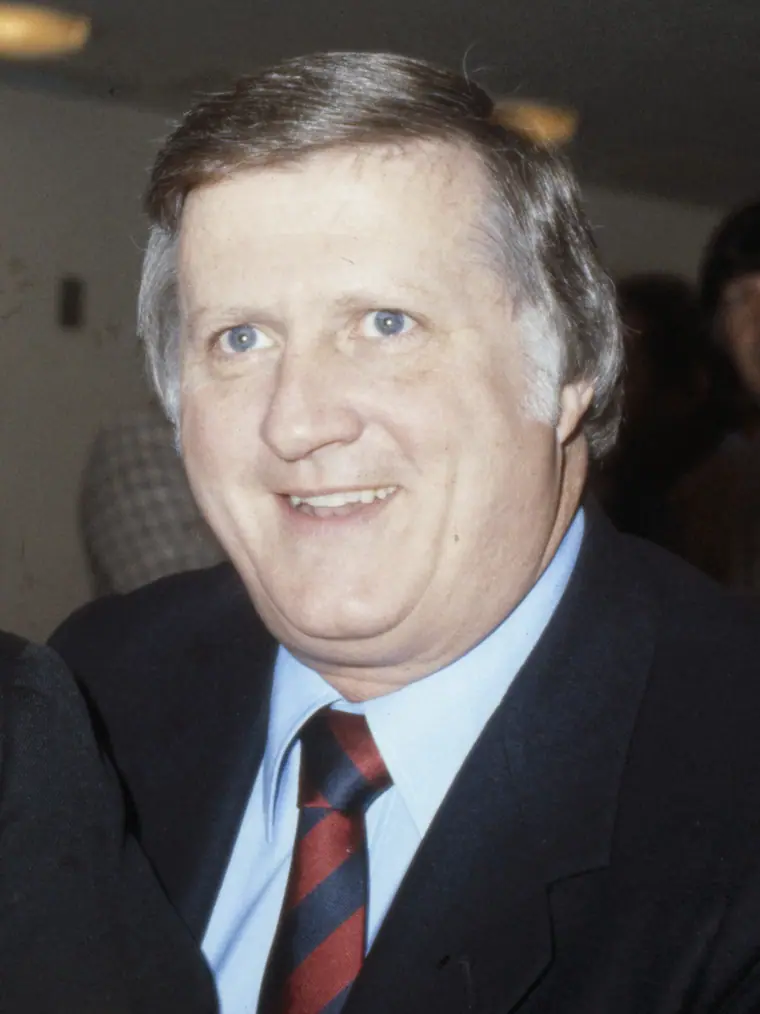
George Steinbrenner died in Tampa on the morning of July 13, 2010. He was 80, he had owned the New York Yankees since 1973, and he had turned a $10 million purchase into one of the most valuable franchises in sport.
He also died in the only year since 1916 in which the United States had no federal estate tax at all.
It is not a conspiracy and it is not clever planning. It is the single most vivid illustration in American tax law of the fact that when you die can be worth more than anything you do while alive.
$500 million, for dying in the right twelve months
Steinbrenner's estate was reported at roughly $1.1 billion, the great bulk of it the family's controlling interest in the Yankees.
Under the 2009 rules — a $3.5 million exemption and a 45% top rate — an estate of that size faced a federal bill in the region of half a billion dollars. Under the 2011 rules that were scheduled to return, with a $1 million exemption and a 55% top rate, it would have been worse.
In 2010 it was zero.
He was not alone. Several American billionaires died in 2010, including energy magnate Dan Duncan of Houston and real-estate developer Walter Shorenstein. Between them the federal government forwent an extraordinary sum, entirely because of the calendar.
Repeal was not free
The 2010 repeal came with a trade that most coverage skips, and it matters for anyone reading this as a planning lesson.
Normally, when you inherit an asset, its tax basis is stepped up to fair market value at the date of death. Inherit a stock your father bought for $10 that is worth $1,000 when he dies, sell it the next day, and you owe capital gains tax on nothing.
For 2010 deaths, that automatic step-up was replaced by modified carryover basis — heirs generally took the decedent's original basis, with only a limited allowance of additional basis to allocate. Which means the estate tax disappeared and a capital gains tax liability appeared in its place, deferred until sale.
Congress then, retroactively, gave 2010 estates a choice: apply the 2010 no-estate-tax-with-carryover-basis regime, or elect into the 2011 rules with a $5 million exemption and a full step-up. For a $1.1 billion estate holding an asset nobody intended to sell, the choice was obvious. For a $6 million estate holding appreciated stock that the heirs planned to liquidate, it genuinely was not.
The general point survives the technicality: estate tax and capital gains tax are two ends of one seesaw. Push one down and the other comes up. Any plan that considers only one of them is half a plan.
The other reason the number was zero
The federal holiday was luck. The state side was not.
Steinbrenner was a Florida resident. He had moved his base to Tampa decades earlier, and the Yankees have trained in Tampa since 1996. Whatever else that was about, it had a tax consequence: Florida imposes no estate tax and no inheritance tax.
This is not a policy that can be quietly changed. Article VII, Section 5 of the Florida Constitution prohibits the state from levying an estate tax beyond what could be credited against the federal tax — and that federal credit was phased out entirely by 2005. The result is a state-level estate tax of exactly nothing, locked in by the constitution rather than by a legislature.
Roughly a dozen states plus the District of Columbia still impose an estate tax, an inheritance tax, or both, some with exemptions as low as $1 million. If Steinbrenner had died a resident of one of them, his heirs would have written a very large check in 2010 regardless of what the federal government was doing.
That is the real Florida story in this case, and it is not a one-year fluke. It is available every year, to everyone who genuinely establishes residence here.
Timeline
- 2001Federal legislation phases up the estate-tax exemption through the decade, repeals the tax entirely for 2010, and lets the whole structure expire after that.
- 2009Exemption stands at $3.5 million with a 45% top rate. Congress is widely expected to prevent the 2010 repeal from taking effect. It does not.
- Jan 1, 2010For the first time since 1916, the United States has no federal estate tax. Step-up in basis is replaced by modified carryover basis.
- Jul 13, 2010George Steinbrenner dies in Tampa at 80, with an estate reported at roughly $1.1 billion.
- Dec 2010Congress acts retroactively, giving 2010 estates the choice between no estate tax with carryover basis, or the new $5M exemption with a full step-up.
- Jan 1, 2011The estate tax returns with a $5 million exemption. The window closes.
- 2026The federal exemption stands at $15 million per person, $30 million for a married couple. Florida still has no estate tax.
What actually went wrong
- Nothing — and that is the uncomfortable part. No planning technique in existence outperforms the 2010 calendar. It is worth being honest that the largest single variable here was luck.
- The lesson people take from it is usually wrong. "Time your death" is not a strategy. "Establish residence in a state with no estate tax, and understand the basis trade-off" is.
- Carryover basis caught smaller 2010 estates off guard. Families who inherited highly appreciated assets and sold them found a capital gains bill where they expected none.
- Legislative uncertainty is itself a planning problem. Practitioners spent 2010 unable to advise clients on the rules that would govern their own year of death. Build plans that survive a change in the law, because the law changes.
Would it have gone that way in Florida?
This is the Florida answer. No state estate tax, no inheritance tax, no income tax — written into the constitution.
Most cases in this archive show Florida law producing a different outcome. This one shows why people move here in the first place.
Florida imposes no estate tax. Article VII, Section 5 of the Florida Constitution limits any state death tax to the amount creditable against the federal estate tax, and that federal credit was eliminated by 2005. Fla. Stat. §198.02 is accordingly a dead letter. Florida also imposes no inheritance tax on beneficiaries and no state income tax on individuals.
Layered on top of the federal picture in 2026: an exemption of $15 million per person, or $30 million for a married couple using portability — which requires filing a timely federal estate tax return on the first death to elect it, even when no tax is owed. That election is missed constantly, and it is the single most expensive form to forget in American estate planning.
Florida homestead adds a second layer that has nothing to do with income tax. Article X, Section 4 of the Florida Constitution exempts the homestead from forced sale by most creditors, without a dollar cap on value — protection materially stronger than most states offer. It also restricts how you may devise it if you have a surviving spouse or a minor child, which is the trap on the other side of the same provision.
Residency is a fact, not a mailing address. Florida Department of Revenue and out-of-state auditors both look at the same things: where you actually spend your days, where you vote, where your driver license and vehicle registrations are, where your physicians and advisers are, where your dependents attend school, and whether you have filed a declaration of domicile under Fla. Stat. §222.17. States with estate and income taxes audit departing residents aggressively. Establish it properly or do not rely on it.
The practical summary: the 2010 window was luck; Florida residency is a decision. One of those is repeatable.
What people ask us about this.


Further reading
Third-party sites. Not ours, not endorsed, not kept current by us — just the places worth going next.
Sources
- Steinbrenner goes out a real winner — Forbes, Jul 2010
- George Steinbrenner's estate tax home run — Illinois State Bar Association, Oct 2010
- Steinbrenner hits a home run — even in death — American Academy of Estate Planning Attorneys, Jul 2010
- George Steinbrenner's estate escapes taxation — Einhorn Barbarito
- Steinbrenner: fourth billionaire in 2010 to escape taxes, if not death — Law Office of Laurie Ohall
- Florida Constitution, Article VII, Section 5 — The Florida Senate
If this is your situation
Free 30-minute consult. Plain English. No pressure.
Nearly every case in this archive turned on something ordinary — an unwitnessed page, a stale beneficiary line, a document nobody could find. Those are cheap to fix while you're alive and expensive to fix afterward.