Meyer Lansky
Federal investigators spent decades certain that Meyer Lansky had roughly $300 million hidden offshore. He died in Miami Beach in 1983, and what anyone could actually document was a bank balance under $35,000. Reputed wealth and provable assets are different things. Probate only deals in the second.
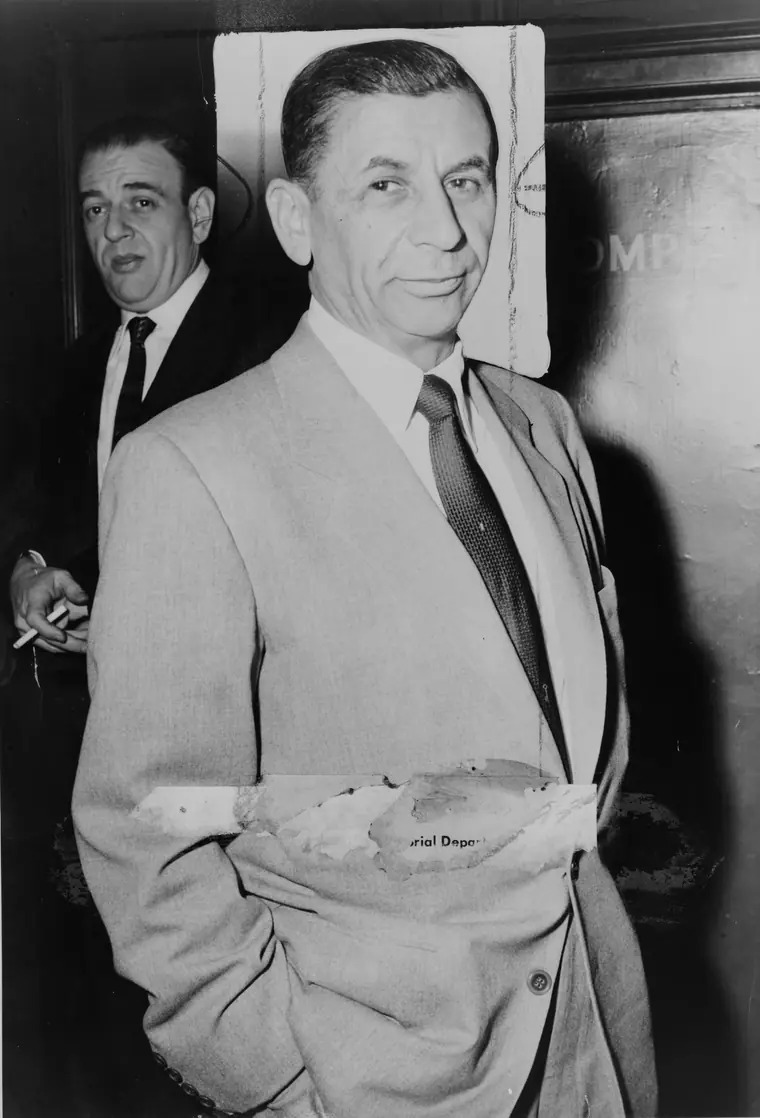
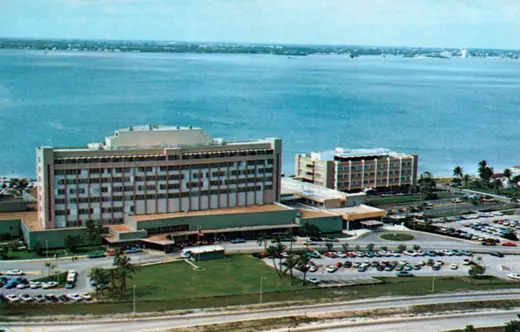
Meyer Lansky died of lung cancer on January 15, 1983, at Mount Sinai Medical Center in Miami Beach. He was 80, and he had spent his last years living unremarkably a few miles from the hospital — a small, elderly man walking a dog on Collins Avenue.
For four decades, federal agencies had treated him as the financial architect of American organised crime. The FBI file on him now runs to twenty-six released parts. Federal authorities put his hidden holdings at roughly $300 million. In 1982 Forbes included him in the very first Forbes 400 — a list whose cutoff that year was about $100 million.
What could be documented when he died was a bank balance of less than $35,000. Some later accounts put the figure nearer $57,000. Either way, the gap between the reputation and the record is three orders of magnitude.
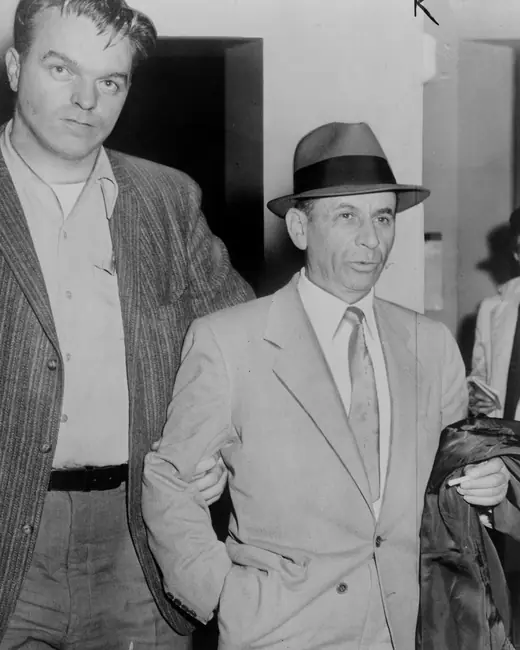
He was never convicted of anything more serious than gambling offences. A federal jury in Miami acquitted him of income-tax evasion in July 1973. A contempt conviction entered in February of that year was reversed on appeal in December. The remaining indictments were abandoned in December 1974, in part because of his health.
Three hundred million dollars, attached to no account
The $300 million figure has a source — federal investigators — and no ledger behind it. It was never tied to an identified account at an identified institution. It has been repeated for forty years because it is a good number, not because anyone produced it.
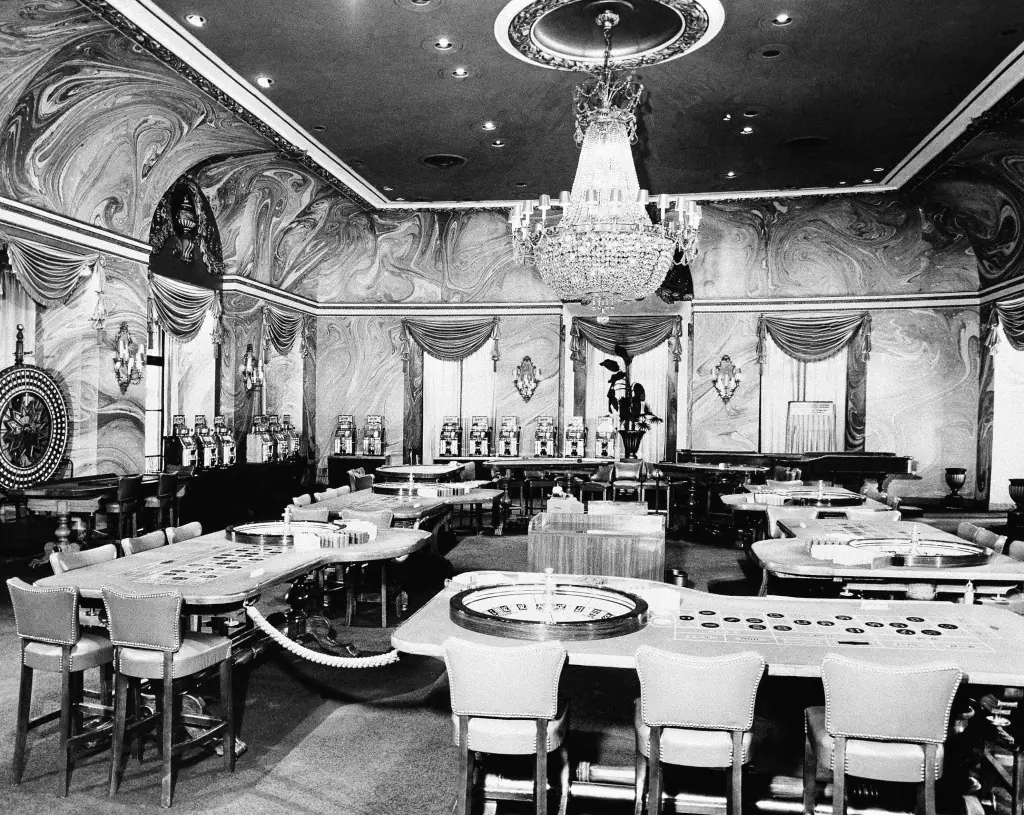
The most careful reconstruction is Robert Lacey's biography Little Man: Meyer Lansky and the Gangster Life (1991). Lacey's conclusion was that the hidden nest egg was fantasy: the loss of the Havana casinos after 1959 destroyed Lansky's finances, and his last two decades were financially constrained. Lacey documents that he could not meet the medical costs of his disabled son, who died in poverty.
There is a plainer explanation available, and it is the one most historians now prefer. Lansky's role was moving and arranging other people's money. Investigators counted what passed through his hands as what he owned. Those are not the same thing, and the difference is the whole case.
This is not a claim that everything about him was overstated. He was, by every account including his own family's, deeply involved in illegal gambling for most of his life. It is a narrower point: a fortune nobody can locate is indistinguishable from a fortune that does not exist, and an estate is administered on evidence.
“It was all supposed to be returned”
His daughter Sandra Lansky, born 1937, published a memoir in 2014. Her explanation of where the money went is not that it sat in Zurich. It is that it went to relatives and never came back.
In interviews around the book she said that when her father got into legal trouble he transferred his stock and holdings to his brother, and described the arrangement in one line: “It was all supposed to be returned. And nothing was ever returned.”
That is a family member's account, not a court finding, and no court has adjudicated it. But it describes an entirely ordinary probate failure mode, which is why it is worth stating. Property held in someone else's name is not in the estate. Recovering it means proving a resulting trust, a constructive trust, or a fraudulent transfer — in court, against a person whose name is on the paper, using records that a man who spent his life avoiding records did not keep.
The same absence of documentation that protected him in life left his heirs with nothing to prove.
What a personal representative can actually do about hidden money
Strip out the folklore and what is left is a set of ordinary duties, identical whether the decedent is a Miami Beach retiree of unusual reputation or your grandmother.
- Inventory what exists. A verified list of estate property, in reasonable detail, valued as of the date of death. Not what people say was there.
- Amend it when something surfaces. Assets do turn up late. There is a statutory mechanism for that, and using it is not an admission of anything.
- Use discovery, not speculation. Bank subpoenas, prior tax returns, safe-deposit records, title searches. If they produce nothing, that is an answer.
- Publish the notice to creditors immediately. The clock that protects the estate from claims sized to the rumour only starts when the notice runs.
The Lansky estate never produced a reported probate fight, which is itself the point. There was nothing to fight over. Forty years later the $300 million is still circulating, and it is still attached to no account number.
Timeline
- 1959The Cuban revolution closes the Havana casinos. Lacey identifies this as the event that wrecked Lansky's finances.
- 1970–1972Lansky travels to Israel and applies to remain under the Law of Return. The interior ministry rejects the application on grounds of his criminal record and he returns to the United States.
- Feb 1973A federal judge convicts him of contempt for failing to answer a subpoena.
- Jul 1973A federal jury in Miami acquits him of income-tax evasion.
- Dec 1973The contempt conviction is reversed on appeal.
- Dec 1974The remaining indictments are abandoned, in part because of his chronic ill health.
- 1982Forbes includes him in the first Forbes 400. The cutoff for that list is about $100 million.
- Jan 15, 1983Lansky dies of lung cancer at Mount Sinai Medical Center, Miami Beach, at 80. Documented accounts hold less than $35,000.
- 1991Robert Lacey's Little Man concludes the hidden fortune did not exist and that Lansky's last decades were financially constrained.
What actually went wrong
- Everything in other people's names. By his daughter's account, holdings went to a brother and were never returned. That structure keeps assets away from creditors during life and from your own children afterwards, because the estate has no claim it can prove.
- No records, by design. A career spent keeping transactions off paper leaves heirs with no way to establish ownership either. Asset protection and estate planning point in opposite directions unless somebody writes down where things went.
- A disabled child with nothing set aside. Lacey's account is that Lansky could not meet his disabled son's medical costs in his final decades. A funded special-needs trust is the ordinary answer, and it has to be created while there is still something to fund it with.
- A reputation the estate inherits. Where a decedent is believed to be hiding money, claimants file against the belief. The estate then spends real money proving a negative.
Would it have gone that way in Florida?
This is a Florida estate, and Florida law answers it the dull way: file the inventory, publish the notice, let the clock run.
Lansky died domiciled in Miami Beach, so Chapter 733 governed the administration. Nothing about a decedent's reputation changes a single step of it.
Fla. Stat. §733.604 requires the personal representative to file a verified inventory of estate property, in reasonable detail, with a fair-market value as of the date of death. Note the two words doing the work: estate property. The inventory records what the decedent owned, not what investigators believed he controlled. If property is later discovered, or a value turns out to be wrong, §733.604(2) requires a verified amended or supplementary inventory — the statute assumes assets surface late and provides for it. Florida also makes inventories and accountings confidential and exempt from the public-records law, disclosable to interested persons and by court order, which matters more in a high-profile estate than in an ordinary one.
Then the claims. A Florida notice to creditors starts two clocks. Under §733.702, a claim is barred unless filed by the later of 3 months after the first publication of the notice or, for a creditor entitled to be served, 30 days after service. Extensions exist under §733.702(3), but only on grounds of fraud, estoppel, or insufficient notice. Behind that sits §733.710, the hard stop: 2 years after death, the estate, the personal representative, and the beneficiaries are not liable for any claim against the decedent. It runs from the date of death, it does not wait for anyone to discover anything, and it is not extendable.
If tax claims do arrive, §733.707 sets the order of payment. Administration costs and fees are Class 1; funeral expenses up to $6,000 are Class 2; debts and taxes with preference under federal law are Class 3 — ahead of last-illness medical bills, family allowance, and every ordinary judgment creditor, who sit in Class 8. An estate under federal tax pressure pays that before it pays almost anyone else.
The uncomfortable Florida point, stated straight. Fla. Const. Art. X §4 exempts homestead from forced sale by creditors with no dollar cap — only an acreage limit of half an acre inside a municipality or 160 acres outside one — and the protection carries through to the heirs the property descends to. Florida's homestead protection is among the strongest in the country, and judgment debtors have relied on it deliberately for more than a century. That is a fair description of the law, not an endorsement of the tactic. It has real limits: it does not defeat a mortgage on the property, property taxes, or a construction lien on the home itself, and it does not override a federal tax lien, which attaches under federal law regardless of a state exemption.
What to actually do. If you are administering an estate and someone is certain there is money hidden somewhere, do two things on day one: publish the notice to creditors, and open real discovery — bank subpoenas, prior returns, title searches, safe-deposit inventories. Then stop. The §733.710 two-year bar runs from the date of death, not from the day the family stops believing, and an estate held open on a rumour pays fees the entire time.
What people ask us about this.
Further reading
Third-party sites. Not ours, not endorsed, not kept current by us — just the places worth going next.
Sources
- Meyer Lansky — Wikipedia
- Meyer Lansky — The Mob Museum
- Lansky, Meyer — Encyclopedia.com
- The March of the 400 — Forbes, Sep 2002
- Little Man: Meyer Lansky and the Gangster Life — review — Publishers Weekly
- Spoiled by mobsters, Meyer Lansky's daughter recalls family men, not killers — Tampa Bay Times, Feb 2014
- FBI Records: The Vault — Meyer Lansky — Federal Bureau of Investigation
- Fla. Stat. §733.604 — Inventories and accountings — The Florida Senate
If this is your situation
Free 30-minute consult. Plain English. No pressure.
Nearly every case in this archive turned on something ordinary — an unwitnessed page, a stale beneficiary line, a document nobody could find. Those are cheap to fix while you're alive and expensive to fix afterward.