Donor intent
Norman Rockwell gave two paintings to the museum in the town where he had lived. Forty years after his death the museum announced it would sell them to fund its own survival. His sons sued and were told they had no right to be in the room.
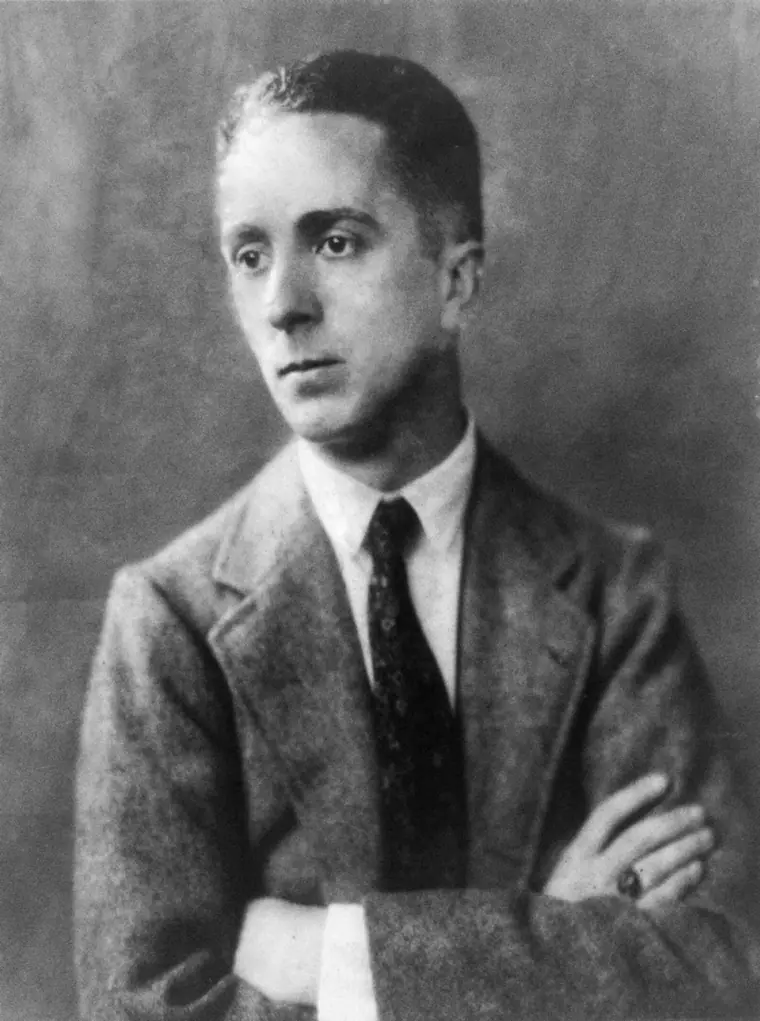
This entry is not about one person's estate. It is about the question every charitable gift eventually raises: when you give something away, how long does what you wanted about it survive?
The Berkshire Museum in Pittsfield, Massachusetts, is a small institution with a mixed collection — natural history, science, and art. In July 2017 its board announced a plan it called the New Vision: engage Sotheby's and sell forty works from the collection, expecting proceeds of around $50 million, to fund a renovation and an endowment. The museum's stated position was that it faced a structural deficit that threatened its survival.
Two of the forty were paintings by Norman Rockwell: Shuffleton's Barbershop (1950) and Blacksmith's Boy — Heel and Toe, also known as Shaftsbury Blacksmith Shop (1940).
Rockwell had given them to the museum himself. He lived in the Berkshires; the museum was the local institution; the gifts were made in that spirit and, as far as the public record shows, without a written restriction attached.
November 7, 2017: nobody had standing except the Attorney General
Objectors sued. Among them were Rockwell's three sons and a group of museum members. The Massachusetts Attorney General's office opened its own inquiry and initially opposed the sale.
On November 1, 2017, Berkshire Superior Court Judge John A. Agostini heard argument, much of it on standing. On November 7 he ruled.
He denied the preliminary injunction, finding no evidence of bad faith, no conflict of interest, and no breach of the duty of loyalty by the trustees. And he dismissed the non-governmental plaintiffs for lack of standing.
That second holding is the one that matters, and it is the general American rule. A charitable gift is enforced by the state Attorney General, not by the donor, not by the donor's family, and not by the public that enjoys it. The reasoning is practical: a charity that could be sued by anyone who felt attached to an object would be unable to function. The consequence is that a donor's family typically has no seat at the table at all, however clear everybody is about what the donor wanted.
Rockwell's sons believed the paintings would always remain at the museum. The court did not hold that they were wrong about their father. It held that they were not the people entitled to raise it.
The Massachusetts Appeals Court granted a temporary injunction that halted the sale; it expired on December 11, 2017.
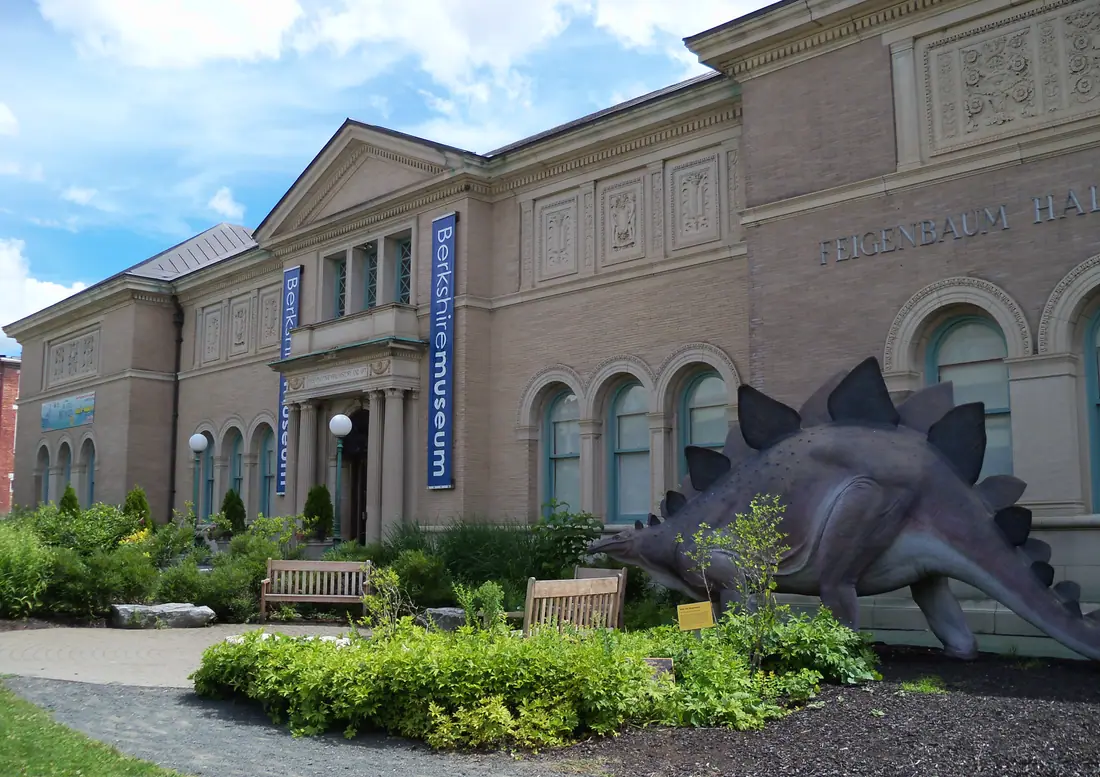
Up to $55 million, and one painting kept in public view
With standing resolved, the case became a negotiation between the museum and the only party who could enforce anything — the Attorney General.
A tentative agreement was reached on February 9, 2018, and taken to the Massachusetts Supreme Judicial Court. On April 5, 2018, single justice David A. Lowy approved it.
The terms were a compromise with real content. The museum could sell up to forty works, but sales would stop once proceeds reached $55 million. $5 million of the permitted proceeds had to be applied to the care of the remaining collection, not to the building. And Shuffleton's Barbershop was to be sold to a nonprofit institution rather than into a private collection, and to remain on public view.
On April 11, 2018, Shuffleton's Barbershop was sold to the Lucas Museum of Narrative Art for an undisclosed sum, and lent to the Norman Rockwell Museum in Stockbridge.
In November 2018 the museum announced the sales complete: 22 works, raising $53.25 million, most of it directed to an endowment.
Three sentences, written at the time
Read the outcome carefully and something becomes obvious. Every protection that survived was one the Attorney General negotiated, not one the donor imposed. The dollar cap, the collection-care carve-out, the requirement that the Rockwell go to a nonprofit and stay visible — all of it came from a public officer with statutory standing, exercising judgement about the public interest, forty years after the donor's death.
That is not a criticism of the Attorney General, who obtained more than the litigation was likely to. It is an observation about where the leverage sits. Donors routinely assume that the gravity of the gift will do the work. It does not. Restrictions do the work, and only restrictions written into the gift instrument.
There is a real counterweight, and honesty requires stating it. A restriction that cannot be met can strangle the charity. An institution locked into displaying a collection nobody visits, in a building it cannot afford, honouring the preferences of someone who died in 1978, is not what the donor wanted either. Every legal system therefore keeps an escape hatch — cy pres, the doctrine that redirects a charitable gift whose original purpose has become impossible or wasteful, to a purpose as close as possible to the original.
The whole discipline lives in the gap between those two things: write the restriction tightly enough to bind, and loosely enough that the charity can still breathe in fifty years.
Timeline
- Mid-20th centuryNorman Rockwell gives two of his paintings to the Berkshire Museum in Pittsfield, the institution in the county where he lived.
- Jul 2017Thirty-nine years after Rockwell's death, the Berkshire Museum announces the New Vision plan: 40 works to be sold through Sotheby's, with expected proceeds of about $50 million.
- Oct–Nov 2017Rockwell's three sons and museum members sue. The Massachusetts Attorney General's office opens an inquiry and opposes the sale.
- Nov 7, 2017Judge John A. Agostini denies the injunction and dismisses the non-governmental plaintiffs for lack of standing, finding no bad faith or breach of loyalty by the trustees.
- Nov–Dec 2017The Massachusetts Appeals Court grants a temporary injunction; it expires on December 11.
- Feb 9, 2018The museum and the Attorney General reach a tentative settlement.
- Apr 5, 2018Supreme Judicial Court Justice David A. Lowy approves it: up to 40 works, sales stopping at $55 million, $5 million to collection care, and Shuffleton's Barbershop to a nonprofit and kept on view.
- Apr 11, 2018Shuffleton's Barbershop is sold to the Lucas Museum of Narrative Art and lent to the Norman Rockwell Museum in Stockbridge.
- Nov 2018The museum completes the sales: 22 works, $53.25 million, most directed to an endowment.
What actually went wrong
- A gift with an expectation and no restriction. Everyone involved understood what Rockwell intended. Nothing in the gift instrument said it, so nothing in the gift instrument could be enforced.
- The donor's family had no standing. Under the ordinary American rule, charitable gifts are enforced by the Attorney General. Rockwell's sons were dismissed — not because they were wrong about their father, but because they were not the right party.
- No mechanism to reopen the conversation. Nobody had provided a way for the museum to go back to a living donor, or to a person the donor had named, and ask. The only route left was litigation.
- A financially precarious institution holding uniquely valuable objects. That combination will eventually produce this proposal at any museum. Donors who care about permanence should be asking about the endowment, not only about the wall.
- Restrictions negotiated forty years late. Every meaningful protection in the final settlement — the cap, the collection-care allocation, the nonprofit purchaser, the public display — was invented in 2018 by a public officer. Any of it could have been written into the gift in the 1950s, in three sentences, for nothing.
Would it have gone that way in Florida?
Florida gives the donor something Massachusetts did not: standing. §736.0405(3) lets the settlor of a charitable trust enforce it.
Florida's answer to this case is genuinely different from most states', and it turns on a single subsection.
First, standing — the Florida difference. Under Fla. Stat. §736.0405(3), the settlor of a charitable trust, among others, may maintain a proceeding to enforce the trust. That is not the common-law default. The traditional rule, applied in Pittsfield, is that only the Attorney General may enforce a charitable gift. Florida has codified a right for the donor to walk into court and say this is not what I gave it for. If you make a substantial restricted charitable gift in Florida and it is structured as a charitable trust, you have not given away your ability to complain about it.
The obvious limitation is that it is the settlor's right, and settlors die. So if you want the objection to outlive you, name an enforcer in the instrument — a named individual, a successor, a family foundation, or a committee — rather than relying on your children being able to litigate. Rockwell's sons were not settlors. They were his sons, which as a matter of standing is nothing.
Second, the restriction has to be real. §736.0404 requires that a trust's purposes be lawful, not contrary to public policy, and possible to achieve — three tests every restricted gift should be drafted against. A condition that is unlawful or genuinely impossible is not protection; it is an invitation to a modification proceeding. And §736.0405(1) confirms that the advancement of arts and of education are recognised charitable purposes, so the gift itself is unproblematic. It is the terms that need care.
Third, the escape hatch, which cuts both ways. §736.0413 codifies cy pres: where a particular charitable purpose becomes unlawful, impracticable, impossible to achieve, or wasteful, the court may modify or terminate the trust and direct the property to be applied in a manner consistent with the settlor's charitable purposes. A settlor, trustee, or qualified beneficiary may bring the proceeding. Note the two halves. Your restriction will not be enforced into absurdity — but the replacement must still track your purposes, which is precisely why articulating the purpose matters more than specifying the mechanism. Write “to make American illustration visible to the people of this county” and the museum has to find a way to do that. Write only “hang it in gallery three” and gallery three eventually closes.
Fourth, gifts to an institution rather than into a trust. Most museum gifts are not trusts; they are restricted gifts to a nonprofit corporation, and those are governed by the Florida Uniform Prudent Management of Institutional Funds Act, §617.2104. It sets out exactly how a restriction can be undone. The institution may release or modify a restriction with the donor's written consent, provided the fund stays dedicated to charitable use. Without consent, it must apply to the circuit court, on grounds that the restriction has become impracticable, wasteful, or impairs management — and it must notify the Attorney General. There are limited self-help routes for small and old funds: broadly, funds of $100,000 or less where the donor is dead, disabled, or unavailable, and funds between $100,000 and $250,000 established more than 20 years ago. Above those thresholds, a court and the Attorney General are involved.
The instruction, and it is four sentences long. If you are making a charitable gift you care about, put it in writing at the moment of the gift, and say four things: the purpose (why, in your words, not just what), the restriction (what the institution must and must not do), who may enforce it after you die (name a person or an entity, because your children cannot), and what should happen if the restriction becomes impossible (name the substitute charity or purpose yourself, rather than leaving a court to guess). Every one of those is free to write and none of them can be added later.
What people ask us about this.
Further reading
Third-party sites. Not ours, not endorsed, not kept current by us — just the places worth going next.
Sources
- Mass. high court says Berkshire Museum's contentious art sale could go forward — WBUR, Apr 2018
- Berkshire Museum gets court approval to sell up to 40 artworks — The Boston Globe, Apr 2018
- Judge allows Berkshire Museum to sell Rockwell painting and other works — The New York Times, Apr 2018
- Lucas Museum buys Norman Rockwell painting from Berkshire Museum — The New York Times, Apr 2018
- Berkshire Museum finishes controversial art sales, raising $53.25 million — The Boston Globe, Nov 2018
- Agostini decision on the Berkshire Museum art sale, Nov 7, 2017 — Berkshire Superior Court (document copy)
- Fla. Stat. §736.0413 — Cy pres — The Florida Senate
- Fla. Stat. §617.2104 — Florida Uniform Prudent Management of Institutional Funds Act — The Florida Senate
If this is your situation
Free 30-minute consult. Plain English. No pressure.
Nearly every case in this archive turned on something ordinary — an unwitnessed page, a stale beneficiary line, a document nobody could find. Those are cheap to fix while you're alive and expensive to fix afterward.