Charles Dickens
He directed a plain funeral, no public announcement, and — emphatically — no monument of any kind. Five days after he died his friends had him buried in Westminster Abbey and the grave left open for the public. The clause that did hold was the one giving all his private papers to his sister-in-law.
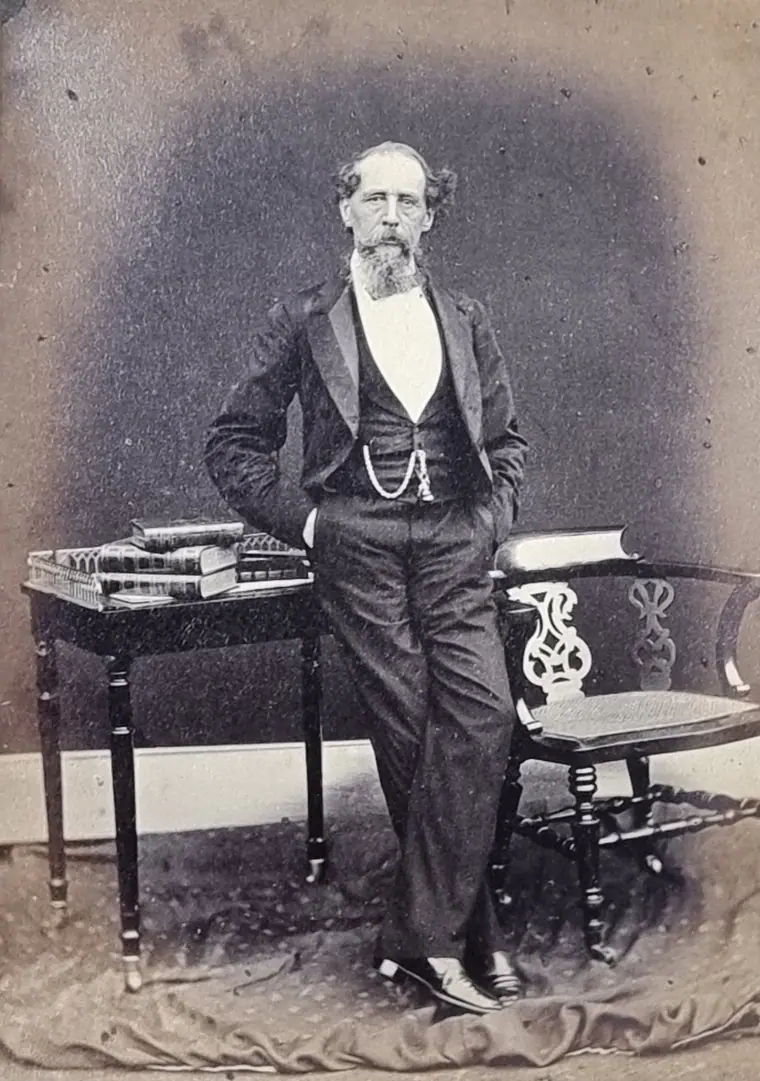
The man who wrote Bleak House — the novel that made Jarndyce and Jarndyce the permanent shorthand for a probate case that eats an estate — signed his own will on May 12, 1869. He added a codicil on June 2, 1870, leaving his interest in All the Year Round to his son Charley. He died at Gad's Hill Place in Kent on June 9, 1870, aged 58, the day after a stroke. His personal estate was sworn under £80,000.
The will was, by the standards of its era, a strikingly personal document, and it opened with a bequest most testators would have buried in the middle: £1,000, free of legacy duty, to “Miss Ellen Lawless Ternan.” It went on: nineteen guineas to each domestic servant of a year's standing; specific sums to his long-serving housekeeper and her daughter; £8,000 to his sister-in-law Georgina Hogarth, together with his personal jewellery, the small objects from his writing table, and “all my private papers whatsoever and wheresoever.” He named Georgina Hogarth and his friend and biographer John Forster as executrix and executor.
And it contained three instructions about how he was to be remembered. Two of them failed inside a week.
“Inexpensive, unostentatious, and strictly private”
The funeral clause is one of the plainest pieces of testamentary drafting in English literature, and it is worth reading as drafting rather than as prose:
He emphatically directed that he be buried in an inexpensive, unostentatious, and strictly private manner; that no public announcement be made of the time or place of his burial; that not more than three plain mourning coaches be used; and that those attending wear no scarf, cloak, black bow, long hat-band, “or other such revolting absurdity.” He directed that his name be inscribed on his tomb in plain English letters. And he conjured his friends on no account to make him the subject of “any monument, memorial, or testimonial whatever,” resting his claim to remembrance on his published works.
It had been assumed he would be buried near Gad's Hill — at Rochester, or in the churchyard at Cobham or Shorne. Research published in 2020 on newly examined documents found that Rochester Cathedral had already prepared, and invoiced for, a grave.
Instead: on June 11, the Dean of Westminster, Arthur Penrhyn Stanley, wrote indicating his readiness to take the burial. On June 13, The Times ran an editorial arguing for Westminster Abbey, and that same day Forster and Dickens's son Charley went to the Deanery, where the plan was settled. The claim that the local burial grounds were closed does not survive an inspection of the parish records.
On the morning of June 14, 1870, three coaches arrived at Dean's Yard. About a dozen mourners attended, with the Abbey clergy. The grave in Poets' Corner had been dug at night.
So the letter of the clause was honoured — three coaches, no announcement, a private service — and its substance was inverted. He was buried in the single most public monument in England, and then the grave was left open so that the public could file past it.
The one instruction that worked, because he executed it himself
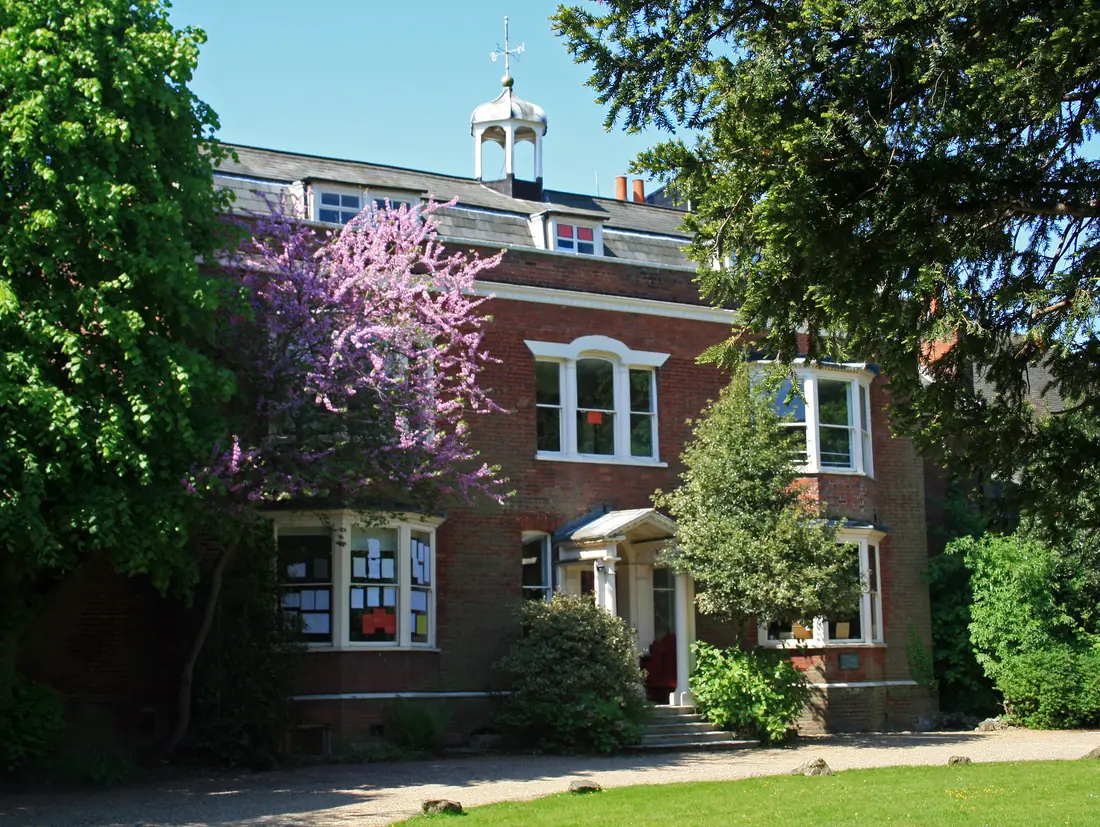
Ten years before he died, on September 3, 1860, Dickens built a bonfire in the field behind Gad's Hill Place and burned the accumulated letters and papers of twenty years — by most estimates well over ten thousand items. His children helped. His daughter Mamie asked him to keep some; he declined. He said afterwards that he had been shocked by the misuse of the private letters of public men, and from then on he burned most of what he received.
The will then did the second half of the job: “all my private papers whatsoever and wheresoever” to Georgina Hogarth, the sister-in-law who had run his household for decades and whom he described in the will as the best and truest friend a man ever had.
That instruction held completely, and it is instructive why. He did not ask anyone to destroy anything after his death. He destroyed it himself while alive, and left the remainder to a single named person with unfettered discretion. No executor had to weigh a request against public interest. No court had to construe a wish.
What he could not reach were the letters he had sent, which belonged to their recipients. Those came out slowly, through family and friends, over the following century — some fifteen thousand of them.
A separated wife, a legacy to Miss Ternan, and no divorce
Dickens and Catherine Dickens separated in 1858 after twenty-two years of marriage and ten children. They never divorced — divorce in 1858 was expensive, public, and required grounds. He settled an income on her of £600 a year, and the will refers to that arrangement in explaining the shape of the estate.
Ellen Ternan was an actress twenty-seven years his junior whom he had met in 1857. The £1,000 to her was the will's first bequest — the same figure he left his unmarried daughter — and its position at the head of the document was noticed immediately when the will was printed in the newspapers.
We are not going to speculate about a relationship that two centuries of biographers have not settled. The point that belongs on this page is structural, and it is the same one that walks into Florida probate offices every week: he was separated, not divorced. Catherine survived him. In 1870 in England that mattered less than it would today, because the estate was settled largely by agreement and by the annuity already in place.
In modern Florida, it would have mattered enormously.
Timeline
- 1858Dickens and Catherine Dickens separate after twenty-two years of marriage. They never divorce. He settles an income of £600 a year on her.
- Sep 3, 1860Dickens burns twenty years of accumulated letters and papers in a bonfire at Gad's Hill Place.
- May 12, 1869He signs his will: £1,000 to Ellen Lawless Ternan, £8,000 and all his private papers to Georgina Hogarth, a plain private funeral, and no monument of any kind.
- Jun 2, 1870A codicil leaves his interest in All the Year Round to his son Charley.
- Jun 9, 1870Dickens dies at Gad's Hill Place, a day after a stroke, at 58.
- Jun 11, 1870The Dean of Westminster writes indicating his readiness to bury Dickens in the Abbey.
- Jun 13, 1870The Times editorialises for Westminster Abbey; Forster and Charley Dickens meet the Dean and the plan is settled. Rochester Cathedral had already prepared a grave.
- Jun 14, 1870A private funeral, three coaches, about a dozen mourners. Burial in Poets' Corner. The grave is then left open for the public.
- 1870The estate is sworn under £80,000. Georgina Hogarth and John Forster administer it.
What actually went wrong
- Funeral instructions in a will, again. The document was read after the decision had been made. It is 1870 and it is the same failure as Ted Williams in 2002: the clause that has to work in the first 48 hours cannot live in the instrument that gets opened in week two.
- “I conjure my friends” is not a direction. He used mandatory language for the coaches and precatory language for the monument. The precatory half was the half that got ignored — and the people ignoring it were his executor and his son.
- No named person with authority over the burial. He said what he wanted. He did not say who was to decide, or hand the instruction to anyone with the standing to insist on it against a Dean and a newspaper.
- A separation that was never converted into anything. Twelve years of living apart, one annuity, and no legal change of status. In a jurisdiction with a forced spousal share, that gap is the whole estate plan.
- Nothing about the copyright. The codicil dealt with his interest in a magazine. The will disposed of papers as objects. A body of work worth more than the £80,000 estate was left to the ordinary residue and to the copyright law of the day.
Would it have gone that way in Florida?
Two of his three wishes would have failed in Florida as well — and the wife he had not divorced would have taken 30% off the top.
Three Florida answers, in ascending order of how much they would have cost him.
First, the funeral. Florida would have done better, but only if he had moved the clause. Fla. Stat. §497.005 defines the “legally authorized person” who may direct the disposition of remains, and it puts the decedent's own written inter vivos directions at the top of the list, above the spouse and every relative. Dickens had the directions. He had them in the wrong instrument. A one-page signed disposition directive handed to a funeral provider on May 12, 1869 would have bound the undertaker on June 10, 1870, and there would have been nothing for a Dean to negotiate about.
Second, the monument — and here Florida cannot help him. No American statute lets you forbid other people from erecting a memorial to you. Once you are dead, a statue is somebody else's expenditure of somebody else's money on somebody else's land. You can decline to fund one, you can refuse permission for the use of your name and likeness where §540.08 applies, and you can decline to leave the property a memorial would sit on. You cannot prohibit remembrance. The word Dickens chose — conjure — turns out to have been the legally accurate one.
Third, the marriage, and this is the expensive part. Under Fla. Stat. §732.507(2), a provision of a will affecting the testator's spouse is void upon dissolution of the marriage, and the former spouse is treated as having predeceased. Separation does nothing. Not living apart for twelve years, not a settled annuity, not an agreed division of the household. Only a judicial dissolution or annulment triggers §732.507(2).
So a Florida Catherine Dickens would have been a surviving spouse on June 9, 1870. That entitles her to the elective share under §732.2035 — 30% of the elective estate, a pool deliberately drawn wide enough to include revocable trusts, pay-on-death accounts, joint property, and certain transfers made within a year of death. She would also have had homestead rights under §732.4015 and §732.401, exempt property under §732.402, and a family allowance under §732.403. Against an £80,000 estate, the elective share alone would have exceeded every legacy in the will combined.
The caveat, which is also the fix. It is waivable. §732.702 allows a spouse to waive elective share, homestead, exempt property, family allowance, and preference in appointment, by a written contract signed by the waiving party — and an agreement signed before the marriage requires no financial disclosure at all, while one signed during the marriage requires fair disclosure. A properly drafted separation agreement containing a spousal waiver would have converted the 1858 arrangement into a document that actually did something. The £600 annuity, standing alone, would not.
The instruction, in three lines. Put your disposition directions in a standalone signed document and give it to a funeral home, not to your executor. Use I direct for what you require and reserve I request for what you are genuinely leaving to someone's judgment. And if you are separated and not divorced, understand that Florida still regards that person as your spouse with a 30% claim, and that the only thing which changes it is a signed waiver or a final judgment.
What people ask us about this.
Further reading
Third-party sites. Not ours, not endorsed, not kept current by us — just the places worth going next.
Sources
- Charles Dickens: newly discovered documents reveal truth about his death and burial — The Conversation, 2020
- Even in death, Charles Dickens left behind a riveting tale of deceit — Smithsonian Magazine
- Charles Dickens — Abbey commemorations — Westminster Abbey
- Last will and testament of Charles Dickens — J.R. McCarthy Law (transcription of the 12 May 1869 will)
- The mystery of Ellen Ternan — The Charles Dickens Page
- Bonfire at Gad's Hill Place, September 3, 1860 — Charles Dickens Info
- Charles Dickens burned his most private letters — The Daily Beast
- Fla. Stat. §732.507 — Effect of subsequent marriage, birth, adoption, or dissolution of marriage — The Florida Senate
If this is your situation
Free 30-minute consult. Plain English. No pressure.
Nearly every case in this archive turned on something ordinary — an unwitnessed page, a stale beneficiary line, a document nobody could find. Those are cheap to fix while you're alive and expensive to fix afterward.