The church split
A congregation divides. Both halves claim the sanctuary, the parking lot, and the endowment. The US Supreme Court has told states they may resolve this two different ways — and in April 2026 a Florida appellate court held that Florida still uses the older one, then asked the Florida Supreme Court whether it should.
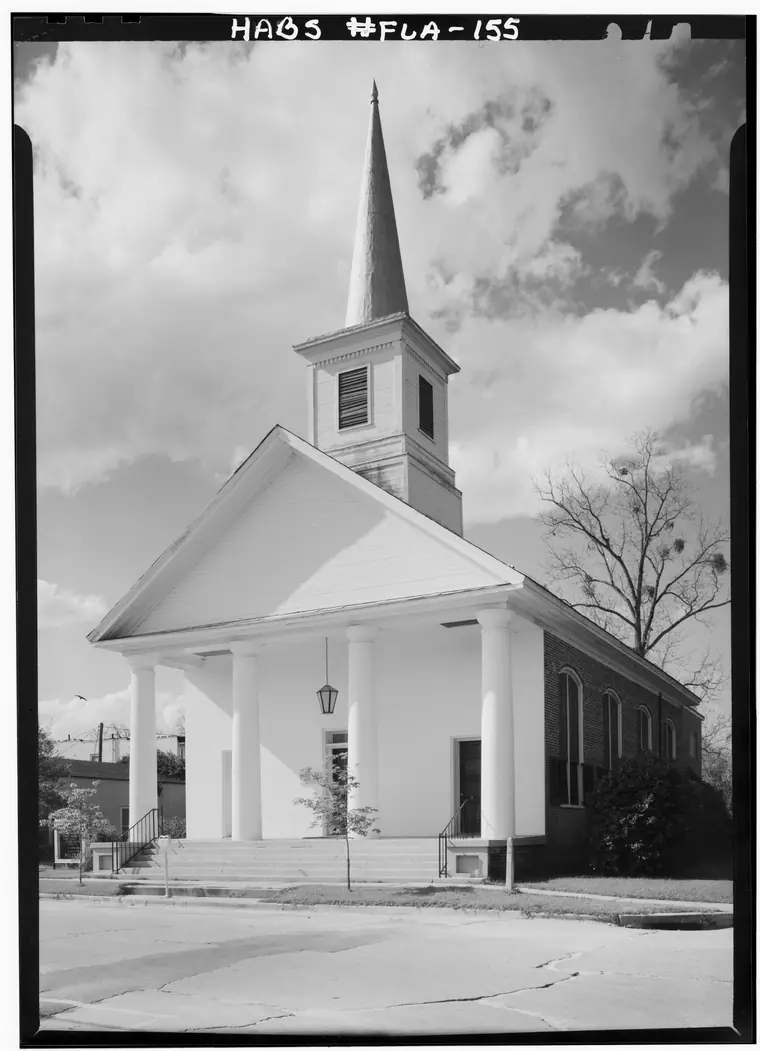
This is a page about deeds and trust clauses. It reports how courts allocate title when a congregation divides. It expresses no view about any doctrine, denomination, or disagreement of belief — and the law it describes is designed to make sure no court expresses one either.
The fact pattern is always the same. A congregation splits. One group wants to stay with the national denomination; the other wants to leave. Both groups worship in the same building, which was paid for over decades by people now on both sides. Somebody has to own it, and a civil court has to say who.
The constitutional problem is immediate. The First Amendment forbids a court from deciding which faction holds the correct doctrine. But a deed dispute is an ordinary civil matter that courts resolve every day. The whole body of law here exists to let judges answer the property question without answering the religious one.
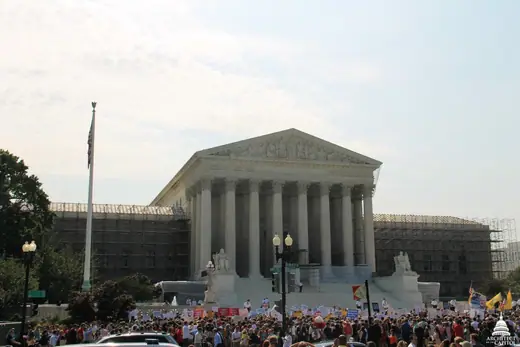
The US Supreme Court set the boundaries in Jones v. Wolf, 443 U.S. 595 (1979), a case arising from a division at the Vineville Presbyterian Church in Macon, Georgia. The Court held that a state may adopt neutral principles of law to resolve a church property dispute. It did not hold that a state must.
Neutral principles, and deference
Neutral principles of law tells a judge to do what a judge normally does. Look at the deed. Look at the articles of incorporation and the bylaws. Look for an express trust in favour of the denomination — in the deed, in the local corporation's charter, or in the denomination's own governing book. Apply ordinary property and trust law and see where title lands. The attraction is that it keeps the court entirely out of doctrine, and it gives congregations a way to arrange their affairs in advance in language a court will enforce.
Hierarchical deference, sometimes called ecclesiastical abstention, tells the judge to identify whether the denomination is hierarchical — governed by ascending bodies with a highest tribunal — and, if it is, to accept that tribunal's determination as final. Florida's formulation of the rule is old and blunt. In St. John's Presbytery v. Central Presbyterian Church of St. Petersburg, 102 So. 2d 714 (Fla. 1958), the Florida Supreme Court held that where a church is representative, republican, or episcopal in government, property held by express or implied trust cannot be diverted from the parent church by those who withdraw from it, and that it does not matter whether the withdrawing group is a majority or a minority.
Read that last clause again, because it is the single most consequential sentence in this area of law. A congregation can vote 95% to leave and take nothing with it, if the denomination is hierarchical and the state applies deference.
- Congregational bodies — self-governing, no higher tribunal — are generally resolved on ordinary corporate and property law, whichever approach the state prefers.
- Hierarchical bodies — Presbyterian, Episcopal, Methodist, Catholic and others — are where the two approaches produce genuinely different outcomes.
- The trust clause is the pivot. Many denominations' governing books state that all local property is held in trust for the whole denomination. Under deference, that settles it. Under neutral principles, a court still asks whether the clause satisfies state trust law.
- Timing is everything. A trust clause added to a denomination's book decades after a local congregation bought its building raises a question that neutral principles will examine and deference will not.
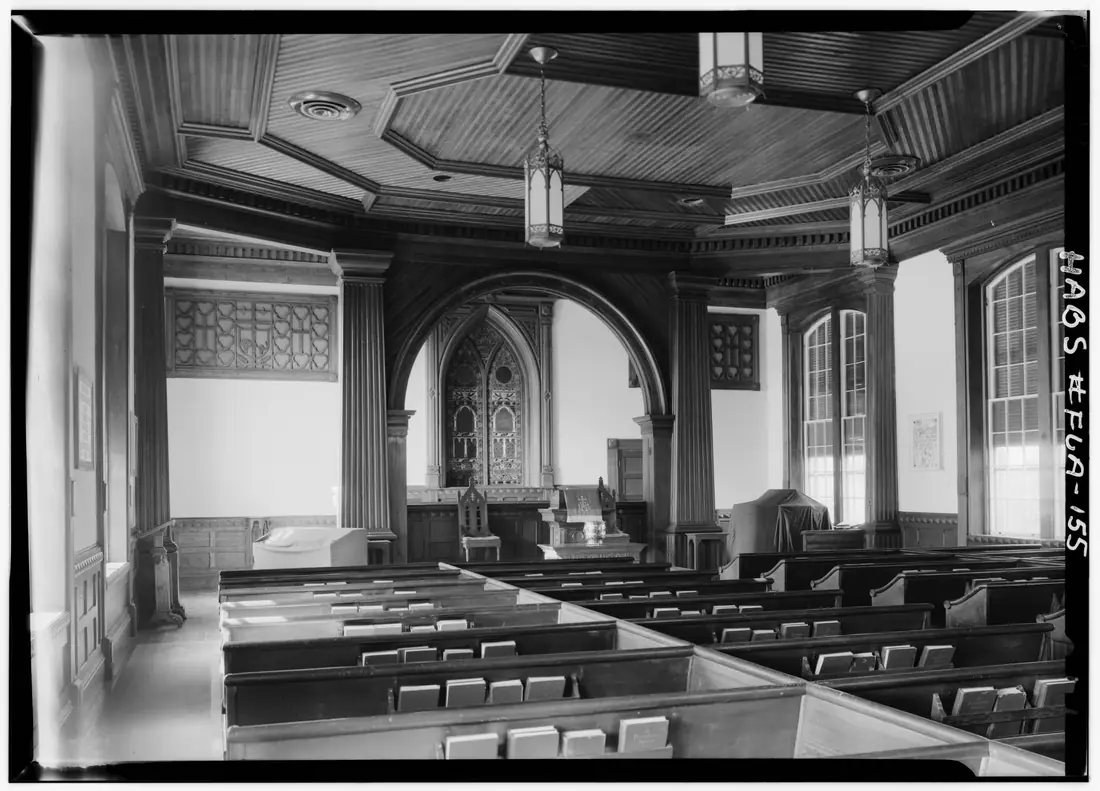
Hobe Sound, and a question sent upstairs
Florida's position was tested directly in First United Methodist Church of Hobe Sound v. Board of Trustees of the Florida Annual Conference of the United Methodist Church, Inc., No. 1D2023-1048, decided by the First District Court of Appeal on April 8, 2026.
Local Methodist congregations sought to disaffiliate from the denomination and keep their real property. The United Methodist Trust Clause provides that local church properties are held in trust for the benefit of the entire denomination, and that the trust is irrevocable except as provided in the Discipline. A 2019 amendment added paragraph 2553, setting out a disaffiliation process. The congregations characterised the terms of that paragraph as onerous, and argued that a different provision should apply.
The trial court dismissed on hierarchical deference. The First DCA affirmed. It acknowledged that Jones v. Wolf permits a state to choose either approach, and held that Florida has chosen deference — citing, among others, Mills v. Baldwin, 362 So. 2d 2 (Fla. 1979) and 377 So. 2d 971 (Fla. 1979); St. John's Presbytery, 102 So. 2d 714 (Fla. 1958); Full Gospel Temple of Tallahassee v. Redd, 82 So. 2d 589 (Fla. 1955); Bethel AME Church of Newberry v. Domingo, 654 So. 2d 233 (Fla. 1st DCA 1995); and New Jerusalem Church of God, Inc. v. Sneads Community Church, Inc., 147 So. 3d 25 (Fla. 1st DCA 2013). Applying neutral principles to test the Trust Clause, the court reasoned, would render the deference approach a nullity.
Then it did something unusual. It certified a question to the Florida Supreme Court: when asked to adjudicate state-law claims resolving intra-church property disputes involving hierarchical churches, are Florida courts still governed by the hierarchical deference approach, or may such disputes be resolved under the neutral principles of law approach?
As of August 2026 that question has not been answered. Anyone with property at stake in a Florida congregational division is litigating on ground that a court has publicly flagged as unsettled.
The corporate-law exception
Deference is not a blanket immunity, and the case that shows where it stops is worth knowing.
In Bendross v. Readon, 89 So. 3d 258 (Fla. 3d DCA 2012), the Third District held that the ecclesiastical abstention doctrine did not bar a suit alleging that individuals had acted without authority to remove board members of a church corporation, in derogation of the requirements of Chapter 617, Florida Statutes. Because the claim could be decided by applying a neutral statute governing not-for-profit corporations — without inquiring into doctrine and without interpreting the organisation's religious practices — the court could hear it.
That is the practical dividing line. A dispute about who validly holds a corporate office, whether a meeting was noticed, whether a quorum existed, or whether directors were removed in the manner the bylaws require is a Chapter 617 question, and a Florida court will decide it. A dispute about whether a congregation is entitled to leave a denomination and keep the sanctuary is, in Florida today, an ecclesiastical question the court will not reach.
Which means the drafting matters enormously — and it has to be done before anyone is angry.
Timeline
- 1955Full Gospel Temple of Tallahassee v. Redd, 82 So. 2d 589 — early Florida statement of judicial deference in church disputes.
- 1958St. John's Presbytery v. Central Presbyterian Church of St. Petersburg, 102 So. 2d 714 (Fla.) — property cannot be diverted from the parent church by those who withdraw, whether they are a majority or a minority.
- 1979Mills v. Baldwin, 362 So. 2d 2 and 377 So. 2d 971 (Fla.) — Florida reaffirms the deference approach.
- Jul 2, 1979Jones v. Wolf, 443 U.S. 595 — the US Supreme Court holds that a state may constitutionally adopt neutral principles of law. It does not require any state to do so.
- 1995Bethel AME Church of Newberry v. Domingo, 654 So. 2d 233 (Fla. 1st DCA) — deference applied.
- 2012Bendross v. Readon, 89 So. 3d 258 (Fla. 3d DCA) — abstention does not bar a claim that board members were removed contrary to Chapter 617, because the question can be answered with a neutral statute.
- 2013New Jerusalem Church of God, Inc. v. Sneads Community Church, Inc., 147 So. 3d 25 (Fla. 1st DCA).
- 2019The United Methodist Church adds paragraph 2553 to the Book of Discipline, setting out a disaffiliation process.
- Apr 8, 2026First United Methodist Church of Hobe Sound, No. 1D2023-1048 (Fla. 1st DCA) — dismissal affirmed on hierarchical deference, and a question certified to the Florida Supreme Court asking whether Florida should permit neutral principles instead. Unanswered as of August 2026.
What actually went wrong
- Property bought locally, held nationally. Congregations that raised the money, bought the land, and built the building often discover the denomination's governing book has said for decades that they hold it in trust for the whole church.
- Deeds that never mention the denomination. Under neutral principles a silent deed is a strong position. Under deference it may not matter at all — which is why the state you are in decides the case before the facts do.
- Trust clauses adopted long after the purchase. A denomination-wide provision added in 1970 or 2019 raises real state-law questions about consent and formality. Deference does not reach them.
- A vote taken before the paperwork was read. Congregations frequently vote to leave, then learn what leaving costs. The order should be reversed: read the governing book, read the deed, get an opinion, then vote.
- No exit route negotiated in advance. Disaffiliation terms are far cheaper to agree when nobody is leaving. Once a split is underway, both sides are negotiating with a lawsuit in the room.
Would it have gone that way in Florida?
This IS the Florida question, and it is genuinely open. Florida applies hierarchical deference — and in April 2026 the First DCA asked the Florida Supreme Court whether it still should.
Florida is a hierarchical deference state. That is the answer today, it has been the answer since the 1950s, and a Florida appellate court has just asked whether it should remain the answer.
The rule comes from St. John's Presbytery v. Central Presbyterian Church of St. Petersburg, 102 So. 2d 714 (Fla. 1958): where the church is representative, republican, or episcopal in government, property held under an express or implied trust cannot be diverted from the parent church by those who withdraw — and it makes no difference whether the withdrawing group is the majority or the minority. The Florida Supreme Court reaffirmed the approach in Mills v. Baldwin, 362 So. 2d 2 (Fla. 1979) and 377 So. 2d 971 (Fla. 1979), and the district courts have applied it since, including in Bethel AME Church of Newberry v. Domingo, 654 So. 2d 233 (Fla. 1st DCA 1995) and New Jerusalem Church of God, Inc. v. Sneads Community Church, Inc., 147 So. 3d 25 (Fla. 1st DCA 2013).
Jones v. Wolf, 443 U.S. 595 (1979), permits Florida to switch to neutral principles at any time. It has not. On April 8, 2026, in First United Methodist Church of Hobe Sound, No. 1D2023-1048, the First District affirmed a dismissal on deference grounds and certified the question to the Florida Supreme Court: whether Florida courts adjudicating state-law claims in intra-church property disputes involving hierarchical churches are still governed by hierarchical deference, or may instead resolve them under neutral principles. As of August 2026 the Court has not answered.
The caveat is Bendross v. Readon, 89 So. 3d 258 (Fla. 3d DCA 2012), and it is a real one. Abstention does not bar a claim that can be resolved by a neutral statute without reaching doctrine — there, an allegation that directors of a church corporation had been removed contrary to Chapter 617. So a Florida court will decide whether a meeting was properly noticed, whether a quorum existed, and whether officers were validly elected under §617.0803 and the bylaws. It will not decide who is entitled to the sanctuary after a denominational split.
There is a second, quieter Florida lever that almost nobody uses in time: charitable trust law. If a donor gives property to a religious organisation for a stated purpose, §736.0405 confirms that the advancement of religion is a charitable purpose and gives the settlor standing to enforce the trust. §736.0413 lets a court apply cy pres if the stated purpose becomes impracticable. And §736.0110(3) gives the Attorney General standing to assert a qualified beneficiary's rights in a Florida charitable trust. A gift made as a restricted charitable trust with a named enforcer behaves differently from an unrestricted gift to a corporation — and that difference is created at the moment of the gift, not afterwards.
Practical instruction, in three lines. If you are a congregation: get a written legal opinion on your deed and your denomination's governing book before you vote on anything, and negotiate exit terms while relations are good. If you are a donor making a substantial gift to a congregation: say in writing what the gift is for, and whether it follows the congregation or the denomination if the two part ways. If you are drafting a will or trust that leaves money to a local congregation: name the exact legal entity, add what happens if that entity dissolves, merges, or leaves its denomination, and name an alternate. One paragraph now replaces a decade of litigation later.
What people ask us about this.
Further reading
Third-party sites. Not ours, not endorsed, not kept current by us — just the places worth going next.
Sources
- Jones v. Wolf, 443 U.S. 595 (1979) — United States Reports, Library of Congress
- First United Methodist Church of Hobe Sound v. Board of Trustees of Florida Annual Conference of United Methodist Church Inc. — Fla. 1st DCA, No. 1D2023-1048, Apr. 8, 2026 (FindLaw)
- Opinion, First United Methodist Church of Hobe Sound, No. 1D2023-1048 — Florida Courts
- St. John's Presbytery v. Central Presbyterian Church of St. Petersburg, 102 So. 2d 714 (Fla. 1958) — Justia
- When church property disputes aren't really property disputes: the First DCA reaffirms ecclesiastical abstention — Boatman Ricci
- Florida court defers to ecclesiastical abstention doctrine in church property dispute — Church Law & Tax
- Jones v. Wolf (1979) — The First Amendment Encyclopedia, MTSU
- Fla. Stat. §736.0405 — Charitable purposes; enforcement — The Florida Senate
If this is your situation
Free 30-minute consult. Plain English. No pressure.
Nearly every case in this archive turned on something ordinary — an unwitnessed page, a stale beneficiary line, a document nobody could find. Those are cheap to fix while you're alive and expensive to fix afterward.