Father Divine
The Peace Mission movement owned hotels in Philadelphia, farms in the Hudson Valley, and a 73-acre chateau on the Main Line. Its leader held title to almost none of it — which made his assets nearly impossible to sue and made one $4,476 judgment the most consequential case of his life.
This page is about who holds title. It reports what property the organisation acquired, whose names were on the papers, and what courts did about it. It takes no position on anyone's beliefs.
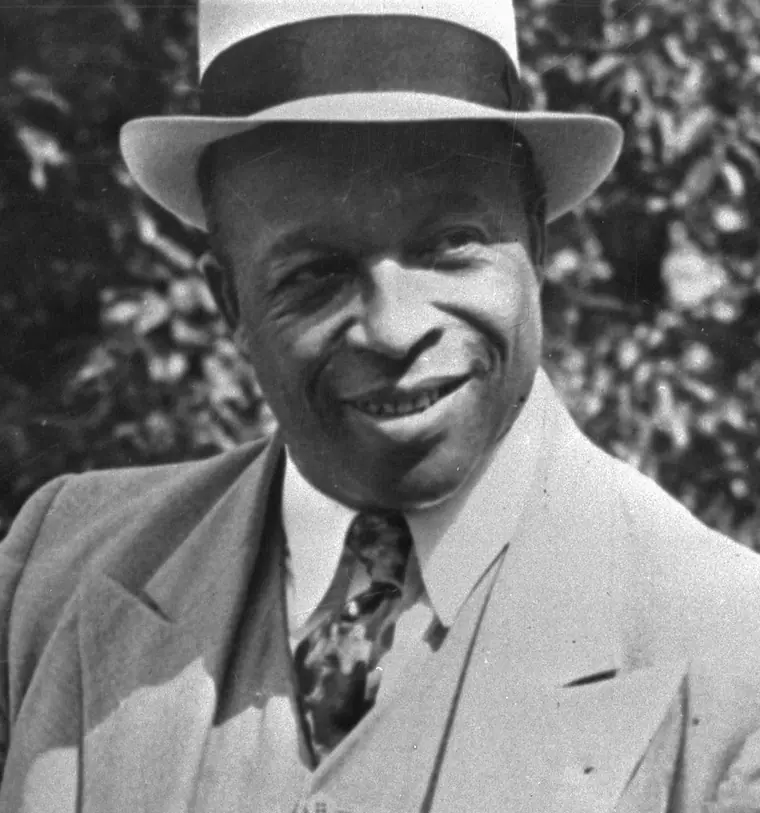
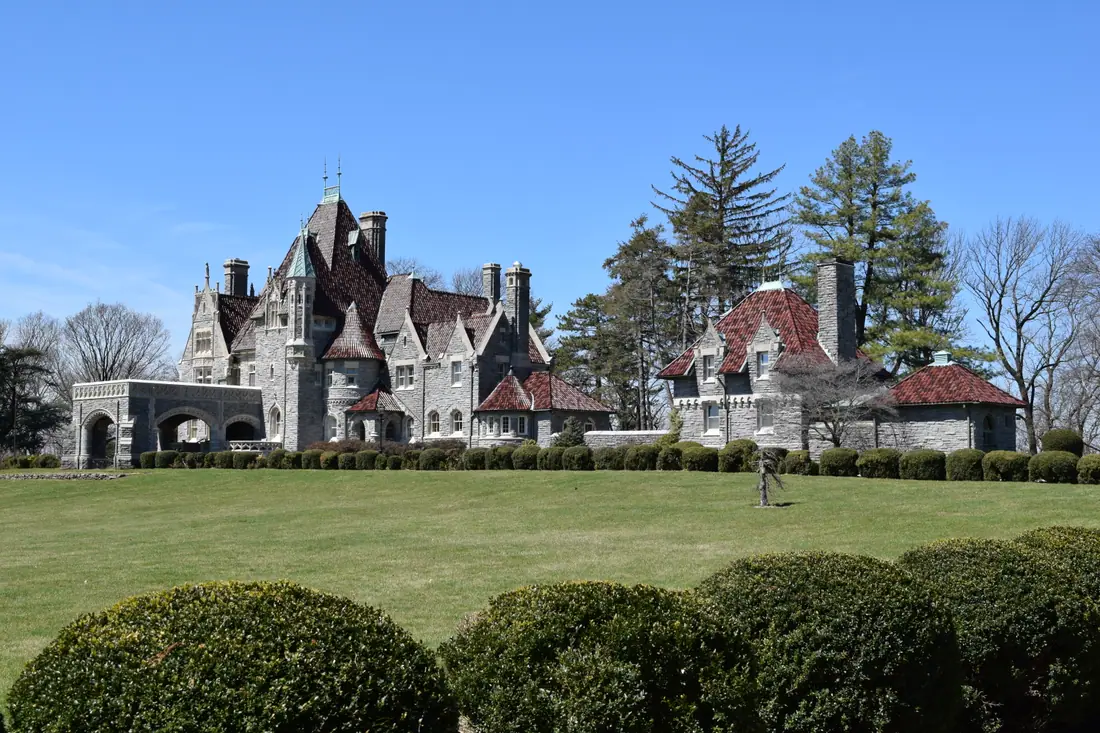
Father Divine — born George Baker — led the International Peace Mission movement from the 1920s until his death on September 10, 1965, at Woodmont, a French Gothic chateau on 73 acres in Gladwyne, Pennsylvania. At its height the movement operated hotels, restaurants, shops, farms, and residences that followers called “heavens,” across New York, Philadelphia, and the Hudson Valley.
The estate question is simple to state and unusual to answer. He did not own it. Reporting and scholarship on the movement are consistent on the point: members, rather than Father Divine personally, held most of the real-estate deeds, and the operating properties were titled in corporate churches. What he had was direction over an economy in which he appeared on very few of the documents.
Two large properties illustrate the pattern. In 1938, Howland Spencer transferred the roughly 500-acre Crum Elbow estate in Dutchess County, New York — across the river from President Roosevelt's mother's property — to the movement. In 1953, a follower named John Devoute gave Woodmont; the movement's own account describes Palace Mission, Inc. purchasing it for $75,000 cash in 1952. Accounts differ on the mechanism. They do not differ on the destination: an entity, not a person.
$4,476, and the reason he left New York
In May 1937, a former follower named Verinda Brown sued for $4,476. She and her husband had turned savings over in 1931. They left the movement in 1935 and could not get the money back.
In 1940 the court ordered repayment of $3,937, treating the transaction as creating a personal fiduciary duty rather than a gift to an institution. That characterisation is the entire case. A gift to a church is gone. Money entrusted to a person who holds it for you is money you can sue for.
The judgment was sustained on appeal. It was also, in scale, trivial — under four thousand dollars against a movement that ran hotels. The exposure was the problem, not the amount. If one departing follower could recover on a fiduciary theory, every departing follower could. Rather than satisfy the judgment, and facing contempt proceedings, Father Divine left New York for Philadelphia in July 1942, and the movement's headquarters moved with him.
That is a remarkable fact about the American law of judgments: a court can enter one, sustain it on appeal, and still be unable to collect it from a defendant who owns nothing in the jurisdiction and can move.
- A judgment reaches assets, not people. A defendant with no titled property is a defendant with nothing to levy on.
- Corporate separateness is a wall, not a loophole. Property held by a corporation is not the leader's, and a creditor of the leader cannot execute against it without a separate legal theory.
- Three churches, not one. Financially independent entities with parallel governance mean a judgment against one does not reach the others.
- Relocation changes the enforcement problem. Domesticating a judgment in another state is possible, and it is another lawsuit, with its own cost and its own delay.
A succession with no probate fight in it
When Father Divine died in 1965, his widow, Edna Rose Ritchings — Mother Divine — took over leadership and held it until her own death in March 2017. That is a fifty-two-year second act, and it produced no reported contest over the movement's assets.
The reason is structural. There was no large personal estate to fight over, because the property had been institutional for decades. Leadership passed through the organisations. Ownership never moved at all. Where an estate holds nothing, an estate contest has nothing to contest.
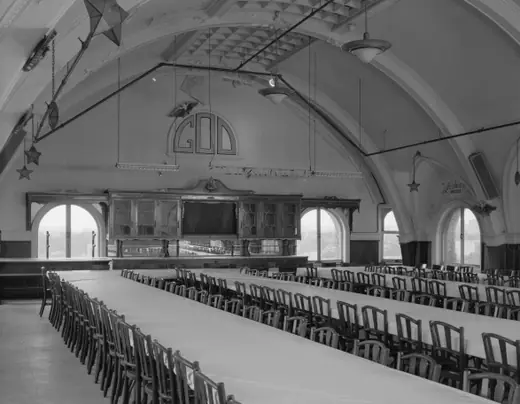
The properties themselves have had a long, ordinary institutional afterlife. The Divine Lorraine Hotel on North Broad Street — 246 rooms, purchased in 1948 and operated as an integrated hotel — closed in 1999. The Divine Tracy, bought in 1949, closed in 2006. Most of the movement's holdings had been sold by 2017 as membership declined; the Philadelphia Inquirer reported another North Philadelphia mansion going to auction in August 2024.
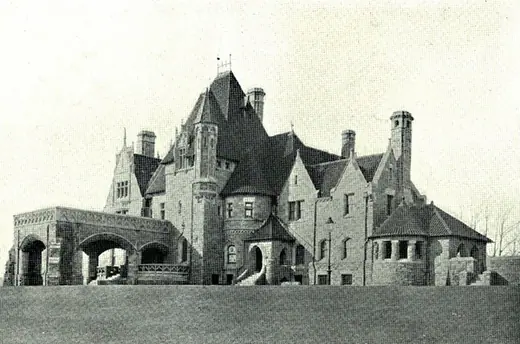
Woodmont remains. It is owned by Palace Mission, Inc., was designated a National Historic Landmark on August 6, 1998, and houses the movement's offices and the Shrine to Life mausoleum. Father Divine's rooms are preserved as they were in 1965.
Two people should worry about this, for opposite reasons
The person who gives. If you transfer money or property to an organisation and want it treated as a gift, say so in writing and keep the acknowledgment. If you are handing something over for safekeeping, or in expectation of care in old age, say that in writing, because the difference determines whether you can ever get it back. Verinda Brown won because a court accepted that her transfer created an obligation. She spent five years proving it.
The person who leads. A structure that keeps assets out of your name protects the institution and simplifies your estate. It also means your family inherits nothing from it, that you have no personal claim on the house you live in, and that your successor is chosen by a board rather than by you. Those are real trade-offs, and they should be made deliberately rather than discovered by relatives afterwards.
There is a third party in every one of these arrangements who is easy to forget: the state. Charitable assets have no private owner with a financial motive to police them. That is precisely why every US state gives its attorney general a supervisory role, and why Florida's version of it is worth knowing.
Timeline
- 1931Verinda Brown and her husband turn savings over to Father Divine at Sayville, New York.
- 1935The Browns leave the movement and are unable to recover the money.
- May 1937Verinda Brown sues for $4,476.
- 1938Howland Spencer transfers the roughly 500-acre Crum Elbow estate in Dutchess County, New York, to the movement.
- 1940The court orders repayment of $3,937, treating the transfer as creating a personal fiduciary duty rather than a gift. The judgment is sustained on appeal.
- 1940sThree corporate churches — Circle Mission, Unity Mission, and Palace Mission — are established with parallel constitutions and independent finances.
- Jul 1942Facing contempt proceedings over the unpaid judgment, Father Divine leaves New York for Philadelphia. The movement's headquarters relocates with him.
- 1948–1949The movement buys the Divine Lorraine Hotel (246 rooms) and the Divine Tracy Hotel (150 rooms) in Philadelphia.
- 1952–1953Woodmont, a 73-acre estate in Gladwyne, comes to the movement. Accounts differ on whether it was purchased by Palace Mission, Inc. for $75,000 or given by follower John Devoute.
- Sep 10, 1965Father Divine dies at Woodmont. Edna Rose Ritchings — Mother Divine — leads the movement until her death in March 2017. No contest over the movement's assets is reported.
- Aug 6, 1998Woodmont is designated a National Historic Landmark. It remains owned by Palace Mission, Inc.
What actually went wrong
- No writing at the moment of transfer. The Browns handed over savings in 1931 and litigated from 1937 to 1942 over what that handover meant. A one-page receipt saying “gift” or “held for the depositor” would have answered it in five seconds.
- A judgment against a defendant with no titled assets. Winning and collecting are different projects. A plaintiff should establish what the defendant actually owns before spending years on the merits.
- Property in members' names. Deeds held by individual followers protect the institution from the leader's creditors — and expose the institution to the follower's creditors, the follower's spouse, and the follower's heirs. It is a trade, not a free move.
- No public succession document. Leadership passed smoothly in 1965 and again after 2017, but the record of how is thin. Institutions with charismatic founders should write the succession down while the founder can still sign it.
Would it have gone that way in Florida?
Same wall, same crack in it. Florida would not let a creditor of the leader touch the corporation's property — and would let a donor who was pressured undo the transfer.
Two questions, and Florida answers them in opposite directions.
First: could a creditor of the leader reach the movement's property? No, and the statute says why in five words. Fla. Stat. §733.607(1) entitles a personal representative to possession or control of the decedent's property. Not property the decedent directed. Not property the decedent lived in. A judgment creditor is in the same position: execution runs against the debtor's assets. Property titled in a Florida not-for-profit corporation under Chapter 617 belongs to that corporation, which has no owners and issues no stock, and whose directors are elected or appointed as the articles and bylaws provide under §617.0803. To get past that a creditor must plead and prove something extra — that the transfer was fraudulent as to creditors, or that the entity is a sham — and neither is easy.
Second: could a donor undo a transfer? Yes, on the right facts, and this is the Florida answer that actually matters to readers. §736.0406 provides that if the creation, amendment, or restatement of a trust is procured by fraud, duress, mistake, or undue influence, the trust or the part so procured is void. §732.5165 does the same for wills. And §733.107(2) makes the presumption of undue influence a burden-shifting presumption: once a challenger shows a substantial beneficiary in a confidential relationship who was active in procuring the instrument, that beneficiary must prove the absence of undue influence.
Read those together and the point is that Florida's test is about relationship and process, never about the identity of the recipient. The analysis for a gift to a congregation is the same as for a gift to a nephew, a caregiver, a college, or a charity. That is not a courtesy. It is the design.
Florida also supplies the supervisor. §736.0110(3) gives the Attorney General the right to assert the rights of a qualified beneficiary, with standing in any judicial proceeding, for a charitable trust whose principal place of administration is in Florida. And §736.0405(3) gives the settlor standing to enforce a charitable trust they created. Charitable property has no private owner watching it, so the statute appoints watchers.
The honest caveat: none of this helps someone who simply changed their mind. A completed gift, freely made, with the paperwork in order, is gone. Regret is not a cause of action, and neither is a later disagreement with the organisation. What Florida gives you is a remedy for process failure — pressure, isolation, a confidential relationship exploited — not a right to reconsider.
Practical instruction, and it applies to donors of $500 and $5 million alike. Get a written acknowledgment for every transfer, at the time you make it, saying what it is — an outright gift, a restricted gift for a stated purpose, a loan, or property held for you. Keep it with your estate-planning file. If the transfer is large enough to change your own financial position, have your own lawyer — not the organisation's — look at it first.
What people ask us about this.
Further reading
Third-party sites. Not ours, not endorsed, not kept current by us — just the places worth going next.
Sources
- Father Divine — Wikipedia
- International Peace Mission movement — Wikipedia
- International Peace Mission Movement and Father Divine — Encyclopedia of Greater Philadelphia
- Woodmont (Gladwyne, Pennsylvania) — Wikipedia
- Father Divine's Peace Mission is auctioning off another of its historic North Philly mansions — The Philadelphia Inquirer, Aug 2024
- Edna Rose Ritchings — Wikipedia
- Fla. Stat. §733.607 — Possession of estate — The Florida Senate
- Fla. Stat. §736.0406 — Effect of fraud, duress, mistake, or undue influence — The Florida Senate
- Fla. Stat. §736.0110 — Others treated as qualified beneficiaries — The Florida Senate
If this is your situation
Free 30-minute consult. Plain English. No pressure.
Nearly every case in this archive turned on something ordinary — an unwitnessed page, a stale beneficiary line, a document nobody could find. Those are cheap to fix while you're alive and expensive to fix afterward.