The disappointed charity
A grandchild left out of a trust often cannot get into court at all. A charity named in the same document usually can. The reason is a definition in Florida's trust code — and behind it stands an Attorney General with statutory power to sue on behalf of gifts nobody else is watching.
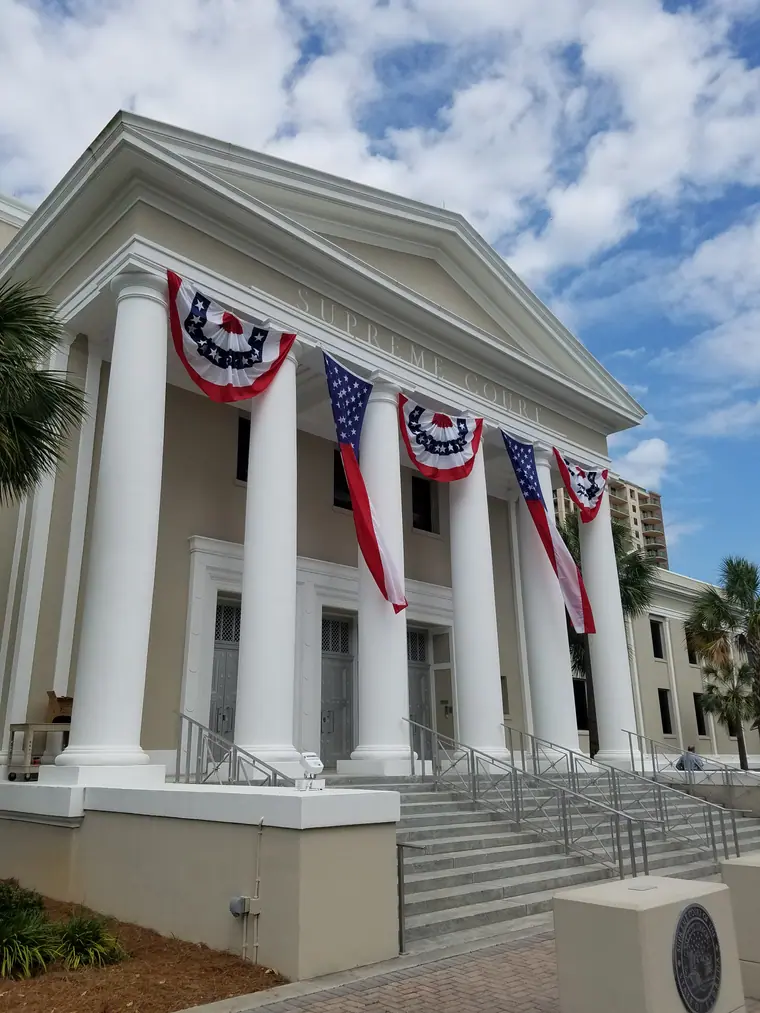
Most people assume that if you are unhappy about an estate, you can sue. You cannot. You have to have standing — a legally recognised stake in the outcome — and the rules that decide who has it are the least intuitive part of this area of law.
Here is the pattern that surprises everyone. A trust leaves everything to a charity. A grandchild who was never a beneficiary of any version of the document is not entitled to notice, not entitled to accountings, and generally not entitled to be heard. The charity is entitled to all three. Not because charities are favoured, but because the charity is a beneficiary and the grandchild is a stranger to the instrument.
And when the charity is not paying attention — or the gift is to a purpose rather than an organisation, so there is no beneficiary at all — a different party has standing: the state.
What §736.0110 actually says
Florida's answer sits in one short section of the trust code, and it is worth reading rather than summarising.
§736.0110(1): a charitable organisation expressly designated to receive distributions under the terms of a charitable trust has the rights of a qualified beneficiary if, on the date its qualification is determined, it is a distributee or permissible distributee of income or principal, would be one on termination of other interests, or would be one if the trust terminated on that date.
§736.0110(3): the Attorney General may assert the rights of a qualified beneficiary with respect to a charitable trust having its principal place of administration in Florida, and has standing to assert such rights in any judicial proceedings.
Those two subsections do most of the work in this whole area. The first tells a named charity it can demand accountings, object to a trustee's conduct, and be heard on modification or termination. The second means that even where no organisation is named — a gift to a purpose rather than an entity — someone with subpoena power is entitled to ask what happened to the money.
- Named charity, currently entitled to distributions — qualified-beneficiary rights under §736.0110(1). Notice, accountings, standing.
- Purpose trust with no named organisation — no private enforcer; the Attorney General under §736.0110(3).
- Living settlor — may enforce the charitable trust personally under §736.0405(3). That right does not survive death.
- Disappointed relative who was never a beneficiary — generally no standing in the trust proceeding at all. In a probate proceeding they may qualify as an interested person under §731.201, defined as anyone who may reasonably be expected to be affected by the outcome — which is broader, and still not automatic.
Hershey, 2002
The most vivid demonstration of what a public enforcer can do is not a Florida case, but it is a clean one.
In 2002 the Hershey Trust Company and the Board of Managers of the Milton Hershey School moved to sell the trust's controlling interest in Hershey Foods Corporation. The trust exists to fund a school. Its trustees judged that diversifying out of a single concentrated stock position was prudent. Nobody who benefits from the school — the students — could plausibly have sued.
The Attorney General of Pennsylvania did. On August 19, 2002 he obtained a citation directing the trustees to show cause why the sale process should not be disclosed to the court and to him. On August 23, 2002 he moved for special injunctive relief, and the Orphans' Court preliminarily enjoined the trust from committing to any disposition of its Hershey Foods shares without court approval. The Commonwealth Court affirmed on September 18, 2002, in In re Milton Hershey School Trust, 807 A.2d 324 (Pa. Commw. Ct. 2002). The sale did not proceed.
Whatever one thinks of the outcome — and reasonable people have argued about it for two decades — the mechanism is the point. A charitable trust holding a controlling stake in a public company was stopped from selling it by a state official acting for beneficiaries who had no lawyer.
When the state agrees with the trustees
The Attorney General's monopoly on standing cuts the other way too, and the Barnes Foundation is the standing case, not just the donor-intent case.
When the foundation petitioned to move Albert Barnes's collection from Merion to Philadelphia, the Friends of the Barnes Foundation and Montgomery County tried to intervene. They were denied standing — in 2008 and again in 2011 — because under Pennsylvania law the party with standing to defend a charitable trust is the Attorney General. And the Attorney General supported the petition.
The result was a proceeding in which the trustees asked for something and the only party with standing to oppose them did not oppose them. That is a structural feature of charitable-trust litigation in every state, not a Pennsylvania anomaly, and it is the strongest argument for building your own enforcer into your own document while you can.
Florida has the same shape. §736.0405(3) gives the settlor standing to enforce a charitable trust — but only while the settlor is alive. After that, unless you named an organisation entitled to distributions under §736.0110(1), or appointed someone with power to direct under §736.1406, or wrote in a gift-over to an alternate charity if your terms are breached, the Attorney General is the only one who can act, and is under no obligation to see it your way.
Timeline
- Aug 19, 2002The Pennsylvania Attorney General obtains a citation directing the Hershey trustees to show cause why the sale process should not be disclosed to the court.
- Aug 23, 2002The Attorney General moves for special injunctive relief. The Orphans' Court enjoins the trust from committing to any disposition of its Hershey Foods shares without court approval.
- Sep 18, 2002In re Milton Hershey School Trust, 807 A.2d 324 (Pa. Commw. Ct.) — the injunction is affirmed. The sale does not proceed.
- 2004A Pennsylvania court permits the Barnes Foundation collection to move to Philadelphia. The Attorney General, the party with standing to defend the trust, supports the petition.
- 2006
- 2008 & 2011The Friends of the Barnes Foundation and Montgomery County seek to reopen the Barnes case and are denied standing.
- Dec 14, 2011SPCA Wildlife Care Center v. Abraham (Fla. 4th DCA) — charities intervene in a Florida trust proceeding and win a reversal, saving a bequest to an organisation that did not exist.
- 2016Robert Rauschenberg Foundation v. Grutman, 198 So. 3d 685 (Fla. 2d DCA) — a Florida charitable foundation litigates trustee compensation to the appellate level, and the lodestar method is rejected.
What actually went wrong
- Assuming a family member can challenge a charitable gift. A relative who was never a beneficiary of any version of the instrument usually cannot get into a trust proceeding at all. Being unhappy is not a legal interest.
- Naming a purpose instead of an organisation. A gift “for animal welfare” has no beneficiary who can enforce it. A gift to a named, currently-entitled charity has one, with rights under §736.0110(1).
- Relying on the Attorney General to share your view. The AG's duty is to the charitable interest generally, not to your particular instructions. In Barnes, the AG sided with the trustees who wanted to change the plan.
- No gift-over clause. The cheapest enforcement mechanism in charitable giving is a second charity that takes if the first breaches. Nobody polices a gift like the organisation that inherits it.
- Charities that miss deadlines. A named charity with perfect standing still loses if it does not file its claim within the §733.702 window or watch for the notice of proposed action. Standing is permission to act, not a substitute for acting.
Would it have gone that way in Florida?
This IS the Florida rule. A named charity has qualified-beneficiary rights under §736.0110(1); the Attorney General has standing in any proceeding under §736.0110(3).
Florida answers the standing question in a single section, and the answer is unusually clear.
§736.0110(1) — a charitable organisation expressly designated to receive distributions under a charitable trust has the rights of a qualified beneficiary, provided it is a distributee or permissible distributee of income or principal on the date its status is determined, or would be on the termination of other interests, or would be if the trust terminated that day. Qualified-beneficiary status is the key that opens the door: notice, annual accountings under §736.0813, the right to object to a trustee's proposed action, the right to be heard on modification under §736.04113 and cy pres under §736.0413, and the right to petition for removal under §736.0706.
§736.0110(3) — the Attorney General may assert the rights of a qualified beneficiary as to a charitable trust with its principal place of administration in Florida, and has standing to assert such rights in any judicial proceedings. That is the public-enforcement provision, and it is the reason a Florida charitable gift with no organisational beneficiary is not simply unpoliced.
Two other Florida provisions round out state supervision, and they are frequently missed. §617.1430 authorises the Department of Legal Affairs — the Attorney General's department — to bring a proceeding for judicial dissolution of a Florida not-for-profit corporation that obtained its articles through fraud or has exceeded or abused its authority, and expressly preserves other actions by the Department or any state official. And Chapter 496, the Solicitation of Contributions Act, requires charitable organisations soliciting in Florida to file registration statements under §496.405; under §496.404(7) the administering department is the Department of Agriculture and Consumer Services. So Florida supervision is split: registration and solicitation policing at Agriculture, trust enforcement and corporate dissolution at Legal Affairs.
On the probate side, standing is broader but not automatic. §731.201 defines an interested person as anyone who may reasonably be expected to be affected by the outcome of the particular proceeding, and defines a beneficiary as an heir at law in an intestate estate and a devisee in a testate estate. A charity named in a will is a devisee, and therefore a beneficiary, and therefore entitled to notice of administration and to object. A relative who would inherit only if the will were set aside is generally an interested person for the contest — which is why will contests and trust contests behave so differently.
The honest caveat is one of expectation rather than law. Standing does not mean the Attorney General will act. The office has finite resources and its own view of the charitable interest, and in the highest-profile American case of the last quarter century the Attorney General supported the trustees against the donor's written terms. If you want your instructions defended by someone whose interests match yours, you have to appoint that person yourself.
Practical instruction, split by role. If you are making a charitable gift: name a specific organisation entitled to distributions, add a gift-over to a second named charity if the terms are not honoured, and consider a trust protector under §736.1406 with express power to enforce. If you are a charity named in a document: confirm your status in writing with the trustee, demand the annual accounting you are entitled to, and calendar the §733.702 claim deadlines the week you learn of a death. If you are a relative who feels a charitable gift was wrong: get advice on standing before anything else, because that question — not the merits — is where most of these cases end.
What people ask us about this.
Further reading
Third-party sites. Not ours, not endorsed, not kept current by us — just the places worth going next.
Sources
- Fla. Stat. §736.0110 — Others treated as qualified beneficiaries — The Florida Senate
- Fla. Stat. §736.0405 — Charitable purposes; enforcement — The Florida Senate
- Fla. Stat. §731.201 — General definitions — The Florida Senate
- Fla. Stat. §617.1430 — Grounds for judicial dissolution — The Florida Senate
- Fla. Stat. §496.404 and §496.405 — Solicitation of Contributions Act — The Florida Senate
- In re Milton Hershey School Trust, 807 A.2d 324 (Pa. Commw. Ct. 2002) — FindLaw
- Barnes move leaves tangled legal legacy, lingering hard feelings — WHYY
- 4th DCA: what is the cy pres doctrine, and why should Florida charities care? — Florida Probate & Trust Litigation Blog
If this is your situation
Free 30-minute consult. Plain English. No pressure.
Nearly every case in this archive turned on something ordinary — an unwitnessed page, a stale beneficiary line, a document nobody could find. Those are cheap to fix while you're alive and expensive to fix afterward.