The body broker industry
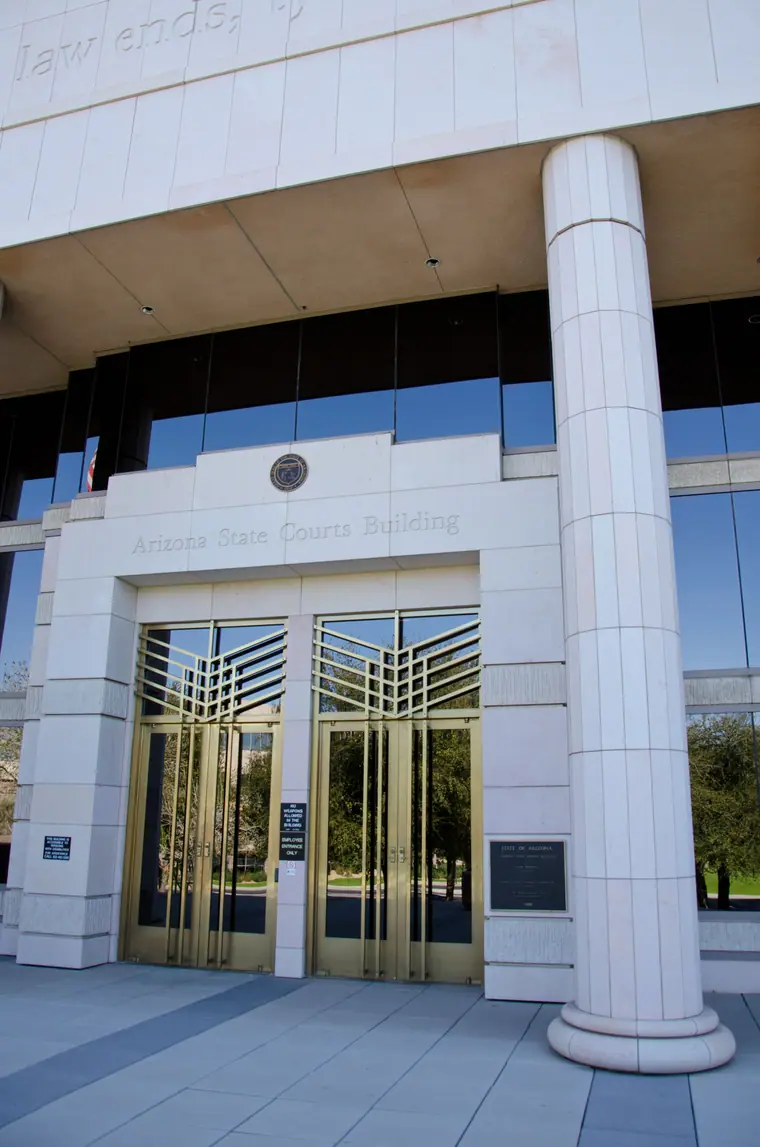
Federal law forbids paying for organs. It was written for transplantation, and it stops there. Bodies donated for education and research fall outside it — and a small industry grew in the space, until an Arizona jury awarded donor families $58.5 million.
Two entirely different systems handle a donated body in the United States, and almost nobody outside the field knows there are two.
The transplant system is heavily regulated. Organ procurement organisations are federally designated, allocation runs through a national network, and the National Organ Transplant Act prohibits the transfer of human organs for valuable consideration. Everyone has heard of it.
The nontransplant system — bodies donated for medical education, surgical training, and research — is not. As a 2026 review in Anatomical Sciences Education puts it, NOTA “prohibited commodification of the donated deceased beyond service fees” but applied only to “donations made for transplantation and therapy purposes,” not education and research. The 2006 revision of the Uniform Anatomical Gift Act, adopted by 46 of the 50 states, contains a Section 16 titled “Sale or Purchase of Parts Prohibited” — but its text was written to harmonise with NOTA, and so carries NOTA's scope with it.
That is the gap. Between the two systems sits an industry of nontransplant tissue banks, sometimes called body brokers, which accept whole-body donations at no cost to the family, recover what is usable, and supply it to medical device companies, surgical training programmes, universities, and the military — charging what the trade describes as processing, storage, and transportation fees rather than a price.
Biological Resource Center, and what the families were told
The Biological Resource Center, Inc. was founded in 2003 by Stephen Gore in Phoenix, Arizona. Families donated the bodies of relatives to it, understanding that the donation would advance medical science.
The peer-reviewed account of the litigation is blunt about the mismatch. The company “sold donated bodies and body parts to end users, although the company represented that the charges amounted to a processing fee.” Some of the bodies transferred were contaminated with infectious diseases.
Donor families sued. The case went to trial, and a jury awarded donor families $8.5 million in compensatory damages and $50 million in punitive damages — $58.5 million in total. The appeal was decided by the Arizona Court of Appeals, Division One, as Aloia v. Gore, 1 CA-CV 20-0431 (2022).
The coverage was, predictably, lurid — the same review notes the media's reliance on “chop shop” and “Frankenstein” framing. That framing is worth resisting, and not out of squeamishness. It converts a systemic regulatory failure into a monster story, and monster stories do not produce statutes.
The harm here is precise and does not need embellishment. People made a gift. They were told what it was for. What happened afterwards did not match, and the families found out from investigators rather than from the organisation they had trusted. That is a consent injury, and consent is the only thing the entire anatomical gift system runs on.
It was not one company
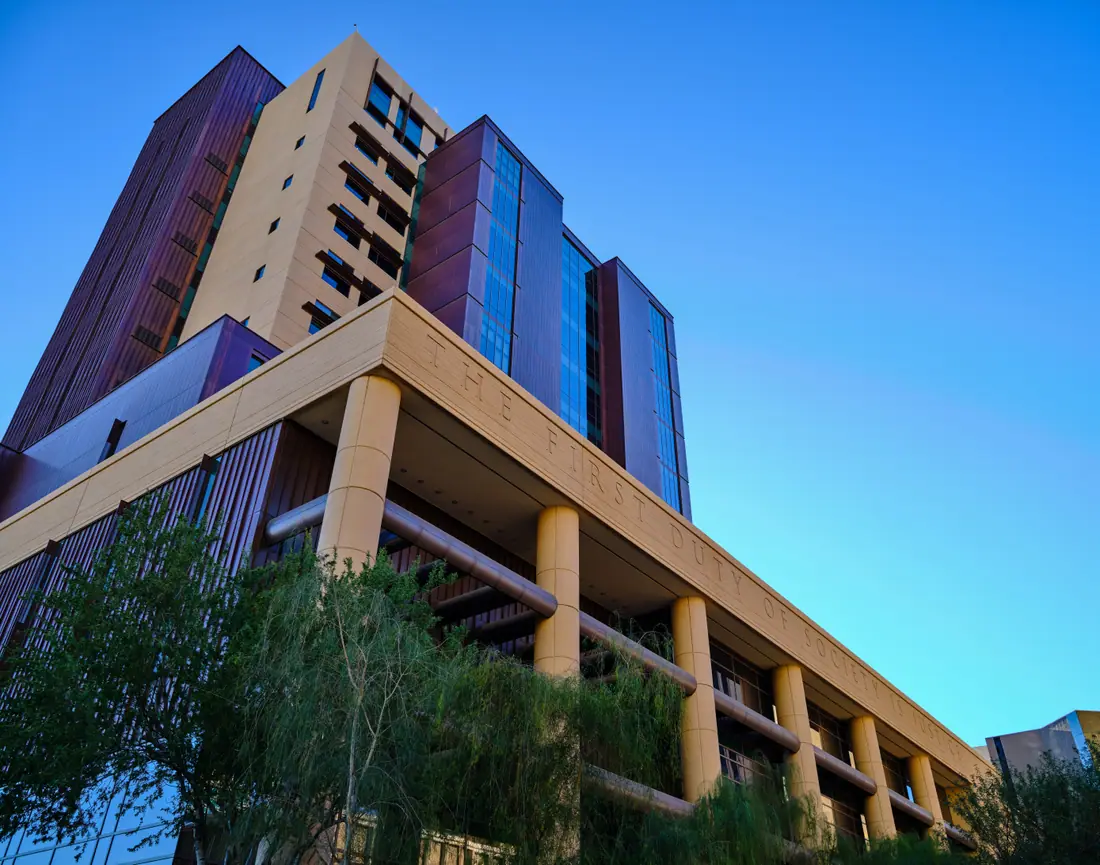
BRC is the largest civil case, not the only one. The same review traces a sequence of federal proceedings across a decade, and the pattern is consistent enough to be a diagnosis rather than a coincidence.
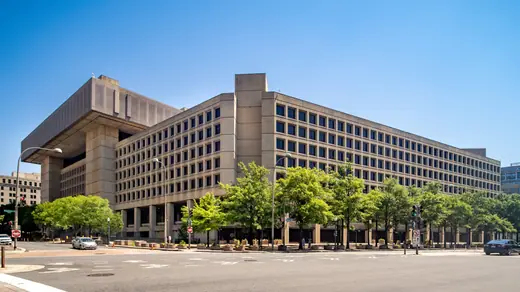
- International Biological Inc. — a federal criminal case followed a 2013 FBI raid; the appeal was decided by the Sixth Circuit as United States v. Rathburn, No. 18-1652 (2019).
- Sunset Mesa — the FBI raided the Colorado operation in 2018, and in 2020 a grand jury indicted Hess and Koch for mail fraud and hazardous material transportation. The Tenth Circuit decided an appeal in United States v. Hess, No. 23-1008 (2024). Colorado updated its laws after the raid.
- Harvard Medical School's morgue — in June 2023 a grand jury indicted Cedric Lodge and others on several counts, in United States v. Lodge, No. 4:23-CR-159 (M.D. Pa.). An indictment is an allegation, and nothing here treats it as more than that.
- Where the criminal charges came from is itself the tell. The federal counts in these cases have tended to be mail fraud and improper transportation of hazardous materials — statutes about lying and about shipping. There is no federal statute against commercialising a donated body for education and research, so prosecutors have used what exists.
And the legislative response has been state by state. The review identifies Arizona, Colorado, Minnesota, Texas, and Oregon (Multnomah County) as jurisdictions that have enacted regulation of nontransplant tissue banks. Its conclusion on the federal picture is one sentence: “Despite the scandals associated with nontransplant tissue banks, no recent legislation has banned the commercialization of the dead for education and research.”
Why this matters to programmes that do it properly
It would be easy to read all of this as an argument against body donation. It is closer to the opposite.
Medical education depends on donated bodies. Surgeons train on them, anatomists teach with them, and device manufacturers test on them because the alternative is testing on a living patient first. University willed-body programmes have operated for a century on a foundation that is entirely non-legal: families believe the programme will do what it said.
The review's framing is exactly this — that commercialisation by nontransplant tissue banks poses a risk to public trust in academic body donation programmes. Every scandal costs the honest programmes donors, and the honest programmes are not the ones being investigated.
The proposed remedy is unglamorous and correct: “Anatomists, ethicists, and those in anatomical services should develop ethical financial models … that can be used to inform recommended minimal national legal standards.” In other words, decide publicly what recovery actually costs, so that the difference between a fee and a price stops being a matter of assertion.
Timeline
- 1968The Uniform Anatomical Gift Act is promulgated, authorising anatomical gifts and building the consent framework the whole system still runs on.
- 1984The National Organ Transplant Act prohibits transfer of human organs for valuable consideration — for transplantation and therapy, and not for education and research.
- 2003The Biological Resource Center, Inc. is founded by Stephen Gore in Phoenix, Arizona.
- 2006The revised Uniform Anatomical Gift Act, later adopted by 46 of 50 states, includes Section 16, “Sale or Purchase of Parts Prohibited” — drafted to harmonise with NOTA, and so carrying NOTA's transplantation-and-therapy scope.
- 2013The FBI raids International Biological Inc.; the federal criminal case that follows reaches the Sixth Circuit as United States v. Rathburn, No. 18-1652 (2019).
- 2017Reuters publishes The Body Trade, a series on the market in donated bodies, which brings the industry to a general audience.
- 2018The FBI raids Sunset Mesa in Colorado. Colorado subsequently updates its laws; a grand jury indicts Hess and Koch in 2020.
- TrialIn the Biological Resource Center litigation, a jury awards donor families $8.5 million in compensatory damages and $50 million in punitive damages.
- 2022The Arizona Court of Appeals, Division One, decides the appeal as Aloia v. Gore, 1 CA-CV 20-0431.
What actually went wrong
- The federal prohibition was drafted for a different problem. NOTA addresses transplantation and therapy. Bodies donated for education and research were never inside it, and the uniform act's sale prohibition was written to match NOTA's scope.
- “Processing fee” did the work of a price. Every version of the prohibition permits recovery of reasonable costs of removal, storage, and transportation. Without a published standard for what those costs are, the exception is whatever the seller says it is.
- Consent was general where it needed to be specific. A family that agrees to donation “for medical science” has not agreed to any particular use, recipient, or destination. Specific authorisation is the only document that closes that gap.
- The prosecutions had to borrow statutes. The federal counts in these cases have run on mail fraud and hazardous materials transport — offences about deception and shipping, not about commercialising the dead.
- Reform has been reactive and local. Arizona, Colorado, Minnesota, Texas, and Multnomah County, Oregon have legislated. The peer-reviewed conclusion is that no recent federal legislation has banned commercialising the dead for education and research.
Would it have gone that way in Florida?
Florida is better placed than the federal baseline. §873.01 makes transferring human tissue for valuable consideration a second-degree felony, and on its face it is not limited to transplantation.
The strongest Florida provision is one most people have never heard of. Fla. Stat. §873.01 — “Purchase or sale of human organs and tissue prohibited” — provides that no person shall knowingly offer to purchase or sell, or purchase, sell, or otherwise transfer, any human organ or tissue for valuable consideration, and separately bars for-profit corporations and their employees from transferring human body parts for compensation. The listed tissues include eyes, corneas, kidneys, livers, hearts, lungs, pancreases, bone, and skin, plus others the Agency for Health Care Administration may adopt by rule. A violation is a felony of the second degree.
Read the scope carefully, because this is where Florida diverges from the federal baseline. NOTA reaches transplantation and therapy. §873.01's text is not written with that limitation on its face — it speaks to human organ or tissue transferred for valuable consideration, full stop. What it does contain is the familiar exception: “valuable consideration” excludes “the reasonable costs associated with the removal, storage, and transportation of a human organ or tissue.” So in Florida the question in a body-broker case would land exactly where it always lands — was that number a cost, or was it a price — but it would land there under a state felony statute rather than falling outside the prohibition altogether.
Chapter 406, Part II adds two more prohibitions that fit this fact pattern precisely. §406.55 prohibits contracts offering payment for the delivery of human remains after death — the arrangement at the front end of every broker operation. And §406.61 prohibits selling, buying, or conveying human remains outside the state without the anatomical board's approval, with an exception for accredited organisations. Florida wrote a border control for bodies, which is unusual and, in this context, useful.
Consent runs through Chapter 765, Part V — the Florida Uniform Anatomical Gift Act, which governs who may make a gift of the body or its parts and for what purposes, with §765.513 setting out permitted donees and purposes. And §497.005 determines who may direct disposition of remains in the first place, with the decedent's own written directions ranking first.
The honest caveats. §873.01's exception for reasonable costs is real and necessary; recovery, screening, storage, and transport genuinely cost money, and legitimate university programmes pay those costs every day. Nothing here suggests that donating your body in Florida is unsafe — the university-based willed-body programmes are the ones the misconduct elsewhere has damaged, not the ones committing it. And a Florida statute reaches Florida conduct; a body lawfully released in Florida and commercialised in another state is a harder case, which is part of why §406.61 exists.
What to actually do, and it is four questions. If you or a relative is considering whole-body donation: (1) donate to a named university medical school programme rather than to an intermediary whose customers you cannot identify; (2) ask, in writing, who may receive the body or its parts, for what purposes, and whether anything may be transferred out of Florida — and get the answer in the document, not on the phone; (3) ask what the family receives back and when, because reputable programmes state a timeframe for cremated remains; and (4) sign written directions under §497.005 naming the programme, so your instruction sits at the top of the hierarchy and not in a will that will be read weeks too late.
What people ask us about this.
Further reading
Third-party sites. Not ours, not endorsed, not kept current by us — just the places worth going next.
Sources
- The lack of legal protections in the United States to prevent commercializing the dead for education and research — Anatomical Sciences Education 19(4):587–598, 2026
- Aloia v. Gore, 1 CA-CV 20-0431 (Ariz. Ct. App., Div. One, 2022) — Justia — Arizona Court of Appeals, Division One
- United States v. Rathburn, No. 18-1652 (6th Cir. 2019) — Justia — U.S. Court of Appeals for the Sixth Circuit
- United States v. Hess, No. 23-1008 (10th Cir. 2024) — Justia — U.S. Court of Appeals for the Tenth Circuit
- The Body Trade: cashing in on the donated dead — Reuters investigates, 2017
- Fla. Stat. §873.01 — Purchase or sale of human organs and tissue prohibited — The Florida Senate
- Fla. Stat. Ch. 406 — Medical examiners; disposition of human remains — The Florida Senate
If this is your situation
Free 30-minute consult. Plain English. No pressure.
Nearly every case in this archive turned on something ordinary — an unwitnessed page, a stale beneficiary line, a document nobody could find. Those are cheap to fix while you're alive and expensive to fix afterward.