Bette Davis
Her daughter published a memoir in 1985. In 1987 she signed a will naming both daughters and both grandsons as intentionally omitted, and split everything between her son and her assistant. Nobody contested it. The order of those events is the whole legal story.
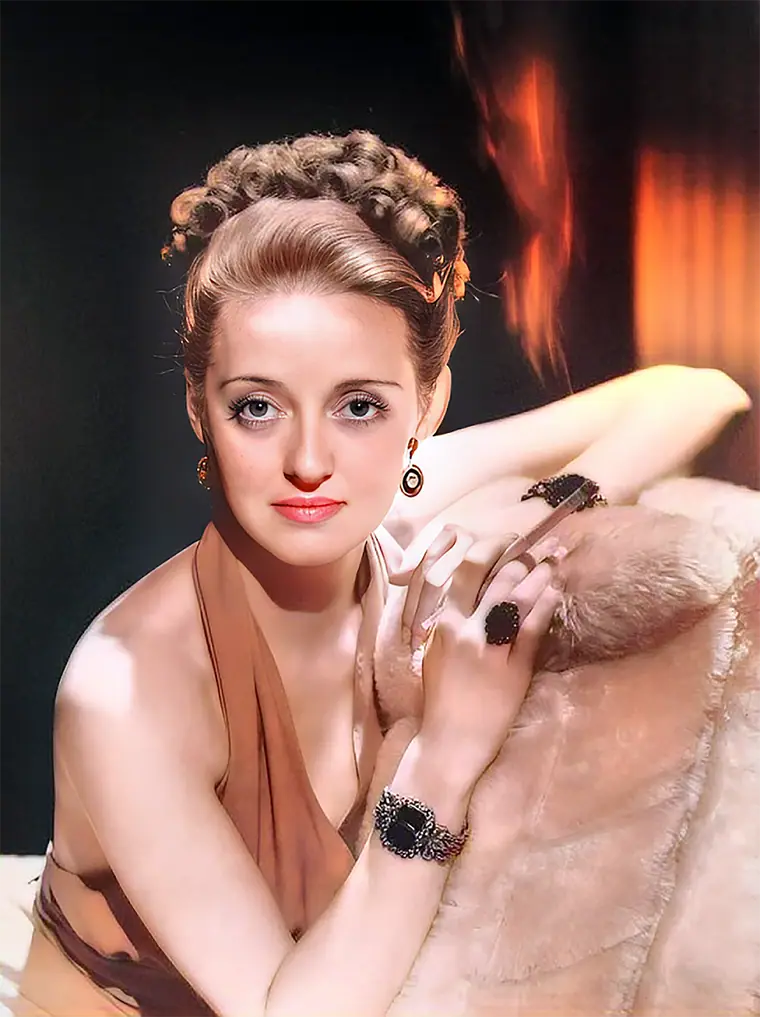
In 1985, B.D. Hyman published My Mother's Keeper, a memoir about her mother. Bette Davis and her daughter were estranged from that point onward. This archive states no view about the book's contents; what matters here is the date on it.
On September 2, 1987 — two years later — Davis executed the will that governed her estate. It contained this sentence:
“I declare that I have intentionally and with full knowledge omitted to provide herein for my daughter, Margot, and my daughter, Barbara, and/or my grandsons, Ashley Hyman and Justin Hyman.”
Davis died in France on October 6, 1989, at 81. Her estate, reported at close to $1 million, was divided equally between her adopted son Michael Woodman Merrill and her longtime assistant, Kathryn Sermak. No contest to the will has been reported.
Crawford and Davis, same problem, opposite drafting
The two women are permanently linked in film history, and their wills belong side by side for a reason that has nothing to do with the films.
- Joan Crawford, will signed October 28, 1976. Two of four children excluded “for reasons which are well known to them.” The clause first appeared in her wills in the 1960s and was carried forward. Result: an objection to probate filed in 1977 alleging incapacity and undue influence, and a $55,000 settlement in July 1979.
- Bette Davis, will signed September 2, 1987. Two daughters and two grandsons excluded by full name, “intentionally and with full knowledge,” no reason stated. Result: nothing.
Crawford's clause was written before the memoir that made her family notorious — the disinheritance predated the grievance by more than a decade. Davis's was written after. On the conventional intuition, Davis's should have been the more vulnerable document: a will changed in the aftermath of a public falling-out is exactly the fact pattern a contest is built on.
It was not vulnerable, because of how it was drafted. The clause supplied no premise to attack. It did not say because of the book. It did not say for reasons known to her. It said: I know these people exist, I know what I am doing, and I am not providing for them. There is no fact in that sentence a court could find untrue.
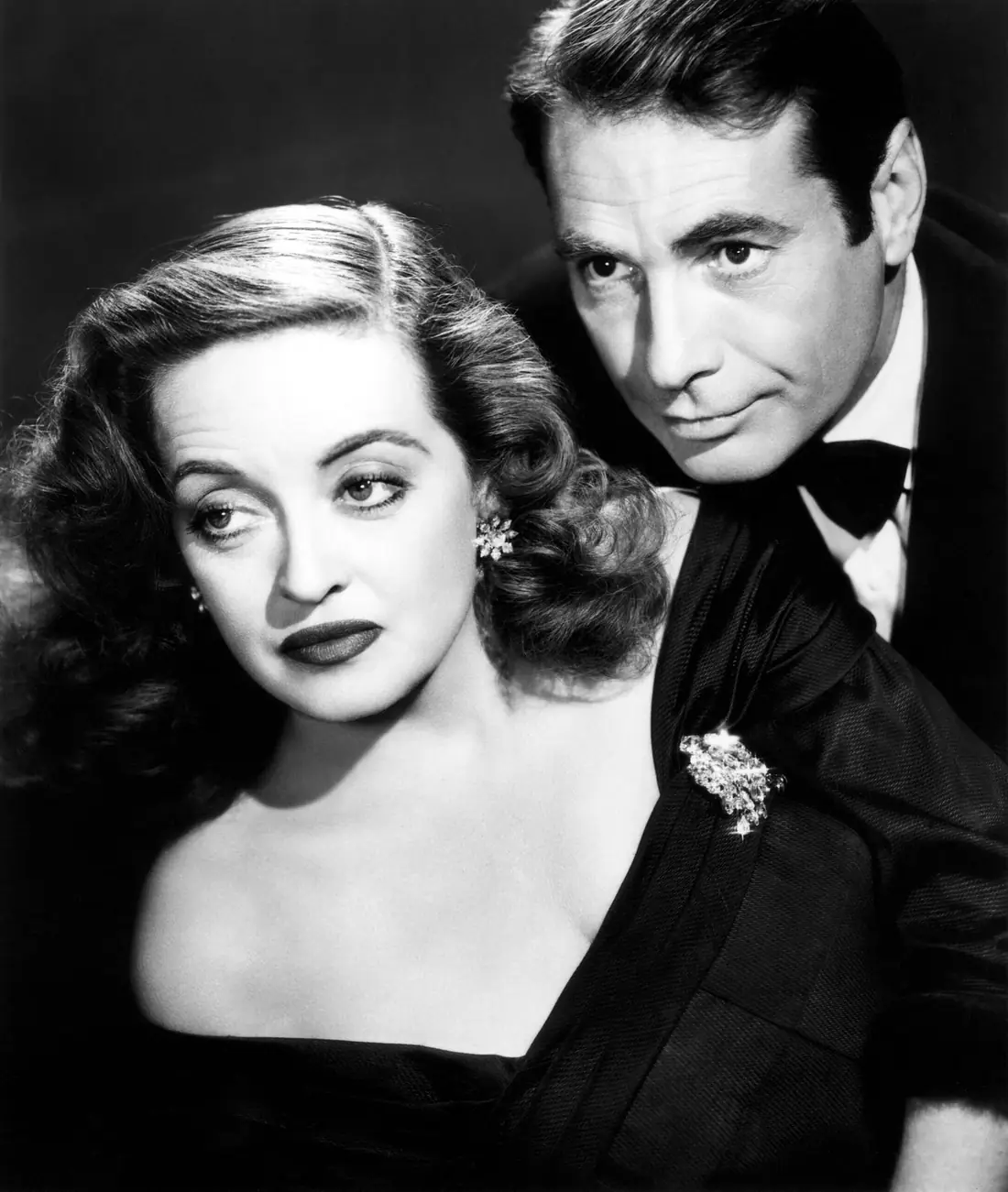
Margot, and the trust that was somewhere else
One name in that clause needs its own paragraph, because reading it without context produces the wrong conclusion.
Margot Merrill, Davis's adopted daughter, has developmental disabilities resulting from brain damage sustained in infancy, and from childhood she lived at the Lochland School in Geneva, New York. She is named in the will among those intentionally omitted.
She was not left without provision. Gary Merrill, her adoptive father and Davis's fourth husband, paid for her care at Lochland until his death in 1990, and reportedly established a trust to provide for her afterwards, managed by her brother Michael Merrill. She was reported to be still living at Lochland as of 2008.
That structure — omitted from the will, provided for by a separate trust — is not neglect. For a beneficiary who depends on means-tested public benefits, an outright inheritance is actively harmful: it is a countable resource that can suspend eligibility until it is spent down, converting a legacy into a bill. The correct instrument is a supplemental needs trust, in which the beneficiary has no right to demand anything and the trustee pays for what benefits do not cover.
This archive has no access to the terms of the Merrill trust and does not know what motivated any of it. What the public record shows is a will that named a disabled daughter as omitted, and a separate arrangement that funded her care for decades. Those two facts are consistent with a plan, not with an oversight.
Half the estate to the assistant
Kathryn Sermak had worked for Davis since 1979, through the stroke and the years afterward. Half of the estate went to her.
A substantial gift to a paid caregiver is, statistically, the single most contested provision in American estate law — it is the fact pattern that produces undue-influence litigation more reliably than any other, because it combines a confidential relationship with a substantial benefit.
Here it did not, and the reasons are visible in the file. The relationship was long and public. The will was signed two years before death, not on a deathbed. The other half went to a family member, which is not what a document authored by a caregiver tends to look like. And the family members who might have objected were themselves the subject of a clause that stated, in terms, that the testator knew exactly what she was doing.
Timeline
- 1950–1960Davis marries Gary Merrill; they adopt Margot in 1951 and Michael in 1952. Margot is later found to have brain damage sustained in infancy and lives at the Lochland School in Geneva, New York.
- 1985B.D. Hyman, Davis's daughter, publishes My Mother's Keeper. The two are estranged from that point.
- Sep 2, 1987Davis executes her will, declaring that she has intentionally and with full knowledge omitted to provide for her daughters Margot and Barbara and her grandsons Ashley and Justin Hyman.
- Oct 6, 1989Bette Davis dies in France at 81.
- Nov 1989The will is reported. The estate, close to $1 million, is divided equally between her son Michael Merrill and her assistant Kathryn Sermak. No contest is reported.
- 1990Gary Merrill dies, having paid for Margot's care at Lochland and having reportedly established a trust to continue it, managed by Michael Merrill.
- 2008Margot Merrill is reported to be still living at Lochland.
What actually went wrong
- Very little — this is the well-drafted example, and it should be read that way. Full names, the word intentionally, the phrase with full knowledge, grandchildren covered, no reasons given, signed two years before death.
- The document was a will, so it became public. Every sentence quoted on this page is available because a will is filed with a court. A funded revocable trust would have achieved the same distribution without publishing the clause in a newspaper six weeks after the funeral.
- A large gift to a caregiver, without visible protective steps. It survived here. It frequently does not. Where a caregiver receives a substantial share, the routine protections are worth taking: independent counsel for the testator, a contemporaneous capacity assessment, the caregiver absent from the drafting and the signing, and a note in the file explaining the relationship.
- Provision for a disabled beneficiary sat outside the main plan. Margot's care depended on a separate trust created by a different parent who died a year later. Coordinating both parents' documents — or funding a single supplemental needs trust from both estates — removes the risk that one plan quietly assumes the other exists.
Would it have gone that way in Florida?
Florida would enforce this word for word — and Florida is exactly where the disabled daughter's arrangement matters most.
Three points, and the third is the one worth the reading time.
The disinheritance holds. Florida gives adult children no forced share. A surviving spouse is protected by the 30% elective share under §732.2035, and homestead is protected for a spouse or minor child under §732.4015. Adult children and grandchildren are protected by nothing. The pretermitted-child rule, §732.302, reaches only a child born or adopted after the will was made who is neither provided for nor intentionally omitted — and it does not reach grandchildren at all. Davis's clause satisfies every element Florida would look for, twice over.
And no clause could have made it safer. Florida will not enforce a no-contest provision: §732.517 for wills, §736.1108 for trusts. A disinherited daughter in Florida may file, lose, and keep whatever she was left, so the American standard technique of buying peace with a conditional bequest simply does not operate here. What protects a Florida estate is the same thing that protected this one: a clean clause, signed early, with nothing in it to argue about. Had a contest come, §733.107(2) would have shifted the burden of proof to a beneficiary once a presumption of undue influence arose — which is precisely the risk carried by a caregiver taking half an estate, and the reason for independent counsel and a contemporaneous capacity record.
Now the part that matters. If you have a beneficiary who receives means-tested benefits — SSI, Medicaid, subsidised residential care — never leave them money outright, and never leave them nothing without funding something else. An outright inheritance is a countable resource that can suspend eligibility until it is spent down. A cheque intended as a kindness becomes a bill for the care that benefits were already paying for.
The instrument is a third-party supplemental needs trust, created and funded by someone else — a parent, a grandparent — for the disabled person's benefit. It is drafted so that the beneficiary can demand nothing: distributions are entirely at the trustee's discretion and are made for things public benefits do not cover. Under §736.0504, a creditor of a beneficiary generally cannot compel a distribution a trustee has not chosen to make, and under §736.0502 a valid spendthrift provision keeps the interest out of reach before it is paid. §736.0503 names the narrow exceptions — a child, spouse or former spouse holding a support judgment, a provider of services protecting the interest, and certain state and federal claims. Eligibility itself is governed by federal and state benefits rules rather than by Chapter 736, but the trust structure is what makes those rules come out right.
The instruction: if a family member has a disability, do two things before you touch anything else. Make sure every relative who might leave them money — parents, grandparents, aunts, siblings — directs it to the same supplemental needs trust rather than to the person, because a single well-meaning $10,000 bequest from an uncle can undo the whole structure. And name a successor trustee and a care advocate who will still be alive when the beneficiary is seventy. That second point is the one families skip, and it is the one that determines how the story ends.
What people ask us about this.
Further reading
Third-party sites. Not ours, not endorsed, not kept current by us — just the places worth going next.
Sources
- Bette Davis froze out daughters and grandsons — Deseret News, Nov 8, 1989
- Bette Davis cuts daughter out of $1 million will — UPI Archives, Nov 6, 1989
- Why Bette Davis cut her daughters and grandsons out of her $1 million will — Hello! Magazine
- Where is Margot Merrill now? Bette Davis' daughter didn't live with her — Romper
- Here's who inherited Bette Davis' fortune after her death — Grunge
- B. D. Hyman — Wikipedia
- Bette Davis — Wikipedia
- Fla. Stat. §736.0504 — Discretionary trusts; effect of standard — The Florida Senate
If this is your situation
Free 30-minute consult. Plain English. No pressure.
Nearly every case in this archive turned on something ordinary — an unwitnessed page, a stale beneficiary line, a document nobody could find. Those are cheap to fix while you're alive and expensive to fix afterward.