Errol Flynn
He died in 1959 leaving a 1954 will, an ex-wife who said there was a 1957 one, a bank he had not paid, a tax authority that wanted its share, and real property in three countries. The estate stayed in probate for about fourteen years. One beneficiary was declared dead in 1984.
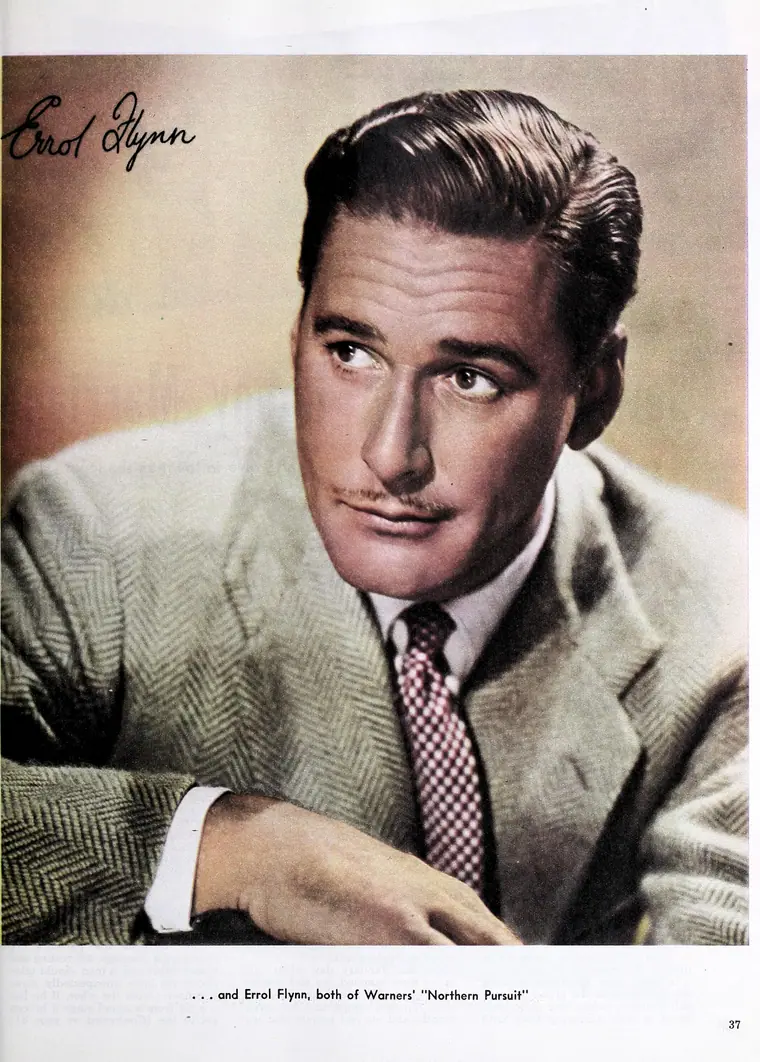
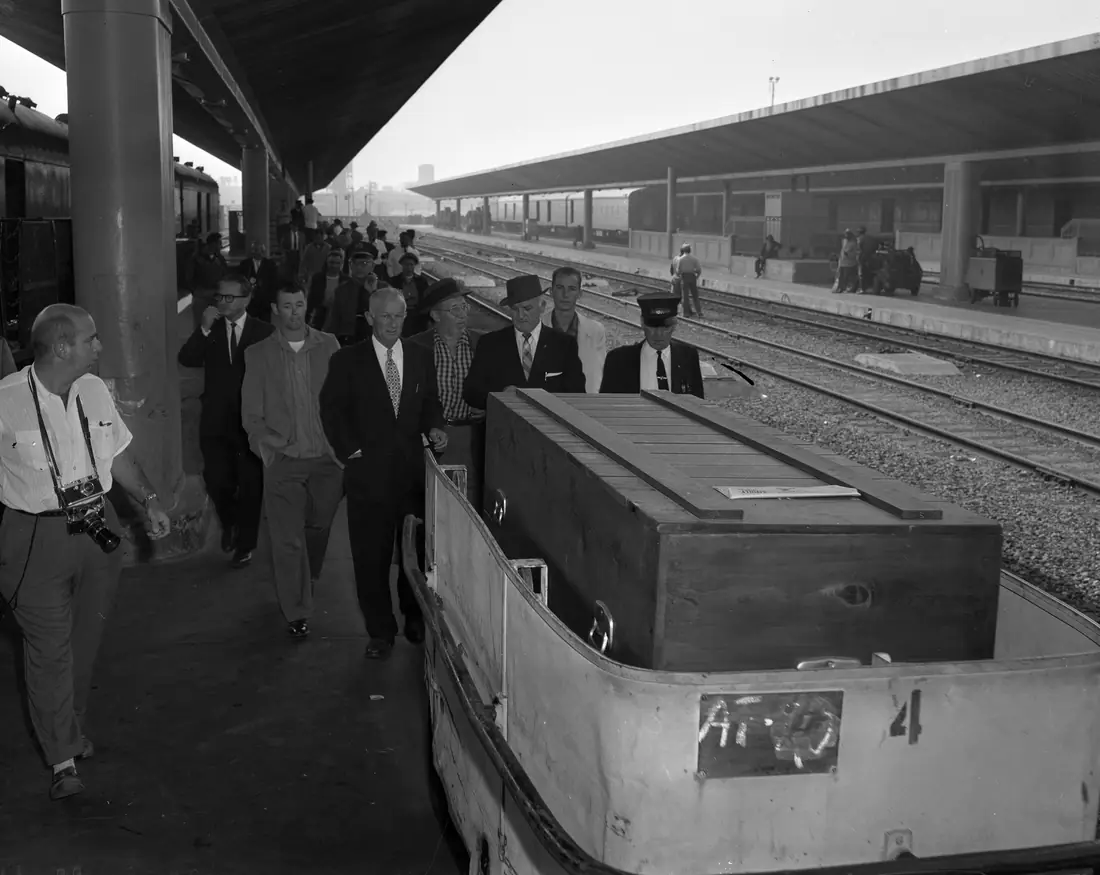
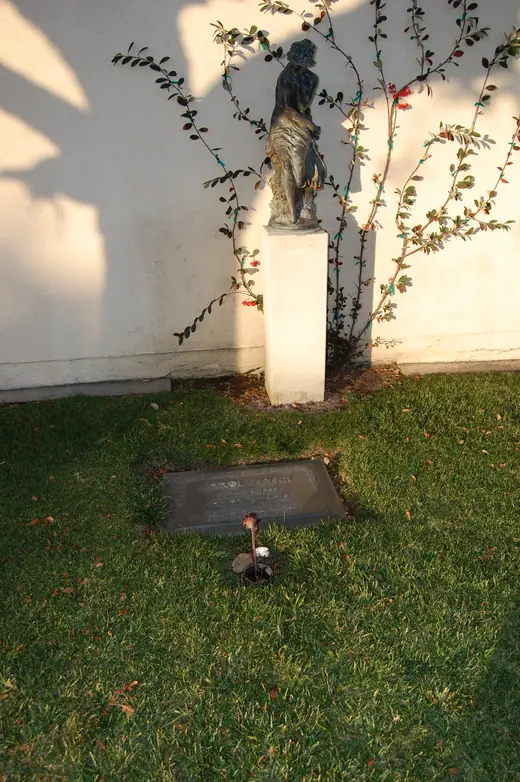
Errol Flynn died in Vancouver, British Columbia, on October 14, 1959, of a heart attack. He was 50. His body was returned to Los Angeles by train and buried at Forest Lawn.
The will offered for probate was dated April 27, 1954 — five years old, and written during a marriage that had since become a separation. Its terms were modest and specific: $10,000 apiece to his two daughters with provision for their support, $5,000 to his son Sean, his West Indies property to his parents, and the residue to his widow, Patrice Wymore.
Contemporaneous accounts of what the estate was actually worth varied from just over a million dollars to nearly two million — a spread wide enough to tell you that nobody had a reliable inventory. And that was the least of it.
Everyone who arrived after the funeral
Within days of the will being filed, the estate had four separate problems walking toward it.
- The phantom 1957 will. Flynn's former wife Nora Eddington Haymes stated publicly that Flynn had told her there was a later will, dated 1957, leaving everything to his children and his parents. She said she would consult a lawyer to protect her two daughters' interests. The document was never produced.
- The companion who was not in it. Beverly Aadland, then 17, was Flynn's companion in his final years and received nothing under the 1954 will. Her attorney, Melvin Belli, said publicly that he was amazed no provision had been made for her and that he intended to do something about it.
- The first wife. Lili Damita, Flynn's first wife and Sean's mother, pressed claims against the estate.
- The creditors. Flynn and the tax authorities had been in dispute over unpaid taxes for years. Separately, an unhonoured 1957 bank debt kept the estate, in one account's phrase, in and out of the courts.
None of these produced a dramatic ruling. That is the point. Estates rarely die of a single fatal blow. They die of accumulation — a claim here, a jurisdictional problem there, a document somebody swears exists, and fourteen calendar years of professional fees that come out of the same pot the beneficiaries were waiting on.
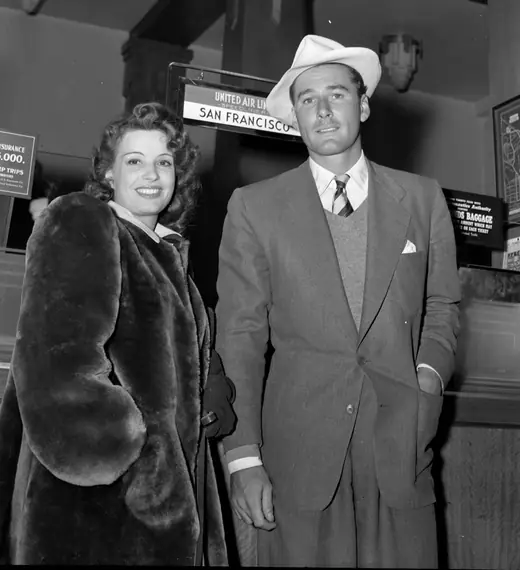
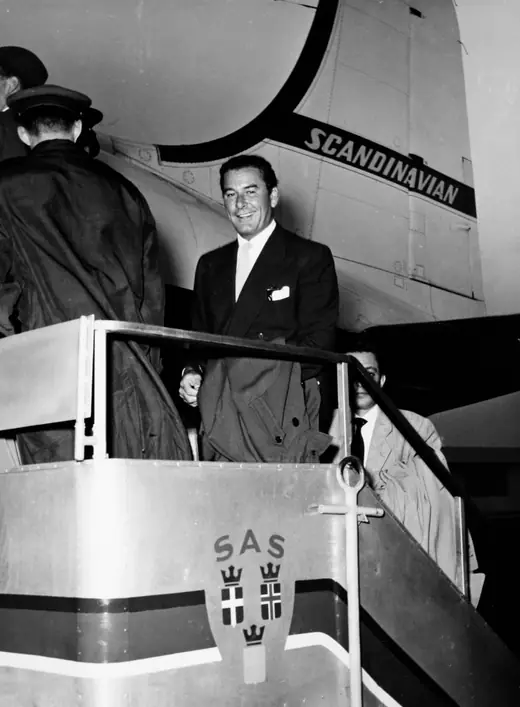
Property in more than one country
Flynn died in Canada. He was a United States resident with a Los Angeles probate. He owned property in the West Indies — the Jamaican estate near Port Antonio that his widow would live on for another fifty-four years. He owned a schooner, the Zaca, which by some accounts was ultimately transferred to an attorney in satisfaction of legal fees.
Real property does not travel. It is governed by the law of the place it sits, and it can only be transferred through a proceeding opened in that place. A person who owns land in three jurisdictions has, functionally, guaranteed three probates — a main one where they were domiciled and an ancillary one everywhere else — each with its own court, its own lawyer, its own timetable, and its own fees.
That single structural fact explains more of the fourteen years than every colourful claimant combined.
$5,000 to a son who disappeared in 1970
The will left $5,000 to Sean Flynn. Sean became a photojournalist, and in 1970 he disappeared in Cambodia while covering the war. He was never found.
He was declared dead in 1984, on a petition brought by his mother, Lili Damita — fourteen years after he vanished and twenty-five after his father died.
This is a category of problem most estate plans have no answer for: the beneficiary whose status is unknown. They are not dead, in the sense that no one has proved it. They are not available, in the sense that nothing can be delivered to them or signed by them. Until a court decides which, the share cannot be distributed and the file cannot close.
The Jamaican property, and a family that disagreed
Patrice Wymore Flynn took the residue as the widow and lived on the Jamaican estate for the rest of her life. She died in March 2014, at 87, in Jamaica.
When the property was put up for sale, members of the Flynn family — including his daughter Rory Flynn — publicly objected, on the view that the sale removed something the family regarded as its inheritance. There is no adjudicated finding here; it is a family disagreement about a property that had passed, correctly and lawfully, under a residuary clause written in 1954.
That is the durable lesson in the file, and it is not about money. A residuary clause that leaves everything to a second spouse leaves everything to that spouse's estate plan too. Whatever they do with it afterwards is theirs to decide. If a specific asset is meant to stay in the bloodline, the instrument has to say so — in trust, with named remainder beneficiaries — because the residuary clause will not do it for you.
Timeline
- Apr 27, 1954Flynn executes the will that will be offered for probate: $10,000 to each of two daughters with support, $5,000 to his son Sean, West Indies property to his parents, residue to his wife Patrice Wymore.
- Oct 14, 1959Flynn dies of a heart attack in Vancouver, British Columbia, at 50.
- Oct 19, 1959His body arrives by train in Los Angeles. He is buried at Forest Lawn, Glendale.
- Late 1959The 1954 will is filed. Nora Eddington Haymes states that a later 1957 will exists; it is never produced. Melvin Belli, for 17-year-old Beverly Aadland, announces he will act on her behalf. Lili Damita presses claims.
- 1959–1973Tax claims and an unhonoured 1957 bank debt, plus property in the United States and the West Indies, keep the estate in and out of court for roughly fourteen years.
- 1970Sean Flynn, a beneficiary under the will, disappears in Cambodia while working as a photojournalist.
- 1984Sean Flynn is declared legally dead on a petition brought by his mother, Lili Damita.
- Mar 2014Patrice Wymore Flynn dies in Jamaica at 87, having lived on the West Indies property that passed to her under the residuary clause.
What actually went wrong
- A five-year-old will and a changed life. The 1954 document was written during a marriage that was effectively over by 1959. Whatever Flynn intended in his last years, the only instrument anyone could prove was the one from before.
- A will people talked about but nobody could find. A later will that cannot be produced is not a will. If a document is revised, the new original goes somewhere its custodian is known — and the old ones are destroyed, so nobody spends a decade arguing about them.
- Real property in three jurisdictions, owned personally. Each parcel required its own proceeding, its own lawyer and its own fees. Held in a trust or an entity, none of them would have. Debts and a disputed tax position carried into death made every one of those proceedings longer.
- No plan for a beneficiary who could not be found. A gift to a person who disappears freezes the share until a court determines status. A clause naming what happens if a beneficiary cannot be located within a fixed period costs one sentence.
- A residuary clause with no remainder direction. Everything not specifically given went outright to the widow, and therefore into her plan, not his. That was his choice; families are frequently surprised to learn it was a choice at all.
Would it have gone that way in Florida?
Same result on every contested point — but Florida gives you the tools that would have cut fourteen years down to one.
Take the claims first, because they all fail in Florida, and they fail cleanly.
The 1957 will. Florida has a specific rule for a will nobody can produce. Fla. Stat. §733.207 allows a lost or destroyed will to be established only on the testimony of two disinterested witnesses to its contents, or on a correct copy plus one disinterested witness. And a will that was in the testator's possession and cannot be found after death is presumed revoked. Nora Haymes's account — that Flynn told her a later will existed — meets none of that. Nor would an unsigned draft, because §732.502 requires the testator's signature at the end and two attesting witnesses signing in the testator's presence and in each other's presence. In Florida an unsigned will is not a weak will; it is not a will.
The companion who received nothing. Beverly Aadland was not a spouse. Florida protects a surviving spouse through the elective share in §732.2035 and a pretermitted spouse — one married after the will was made — through §732.301. It protects an unmarried partner through nothing at all. Florida does not recognise common-law marriage entered into after 1968, and a long relationship confers no inheritance rights of any kind. That is not a gap in the law; it is the law, and it is the reason unmarried partners must be named in a document.
The creditors. Tax and bank claims would be filed as statements of claim under §733.702 — three months from the first publication of the notice to creditors — with the two-year absolute bar in §733.710 behind it, and paid in the order fixed by §733.707. State claim deadlines do not, however, run against the federal government, so a disputed federal tax liability is the one creditor an estate cannot simply outlast.
The son who disappeared. Florida answers this by statute. §731.103(3): a person absent from their last known domicile for a continuous period of 5 years, whose absence is not satisfactorily explained after diligent search and inquiry, is presumed dead at the end of that period — earlier if the evidence shows exposure to a specific peril of death. A Florida estate would not have waited fourteen years for that determination. It could have been made in 1975.
And the fourteen years. The real driver was property in more than one place, and Florida's version of the problem is §734.102, ancillary administration: a non-resident who dies owning Florida real property requires a separate Florida proceeding, with a Florida personal representative and Florida counsel, no matter how complete the probate is back home. The reverse is equally true for a Floridian who owns a cabin in North Carolina or a condominium in Jamaica. Meanwhile §733.617 sets presumptively reasonable personal-representative compensation at 3% of the first $1 million and §733.6171 does the same for attorney's fees — per proceeding, and for as long as each one lasts.
The instruction: if you own real property outside your home state or outside the country, put it into a funded revocable trust or a properly maintained LLC during your lifetime. Titled that way, it transfers on your death without any second court and without a second set of fees. That one step is the difference between a probate that closes in a year and an estate your grandchildren are still arguing about.
What people ask us about this.
Further reading
Third-party sites. Not ours, not endorsed, not kept current by us — just the places worth going next.
Sources
- Errol's estate in probate for 14 years? — The Errol Flynn Blog
- Errol's last (?) will and testament filed April 27, 1954 — The Errol Flynn Blog (reproducing UPI reporting)
- Errol Flynn dies in Vancouver — Madera Tribune, Oct 15, 1959 (California Digital Newspaper Collection)
- Sean Flynn (photojournalist) — disappearance in 1970 and declaration of death in 1984 — Wikipedia
- Errol Flynn — Wikipedia
- Patrice Wymore — Wikipedia
- Actress Patrice Wymore, widow of Errol Flynn, dies at age 87 — Euronews, Mar 25, 2014
- Fla. Stat. §733.207 — Establishment and probate of lost or destroyed will — The Florida Senate
If this is your situation
Free 30-minute consult. Plain English. No pressure.
Nearly every case in this archive turned on something ordinary — an unwitnessed page, a stale beneficiary line, a document nobody could find. Those are cheap to fix while you're alive and expensive to fix afterward.