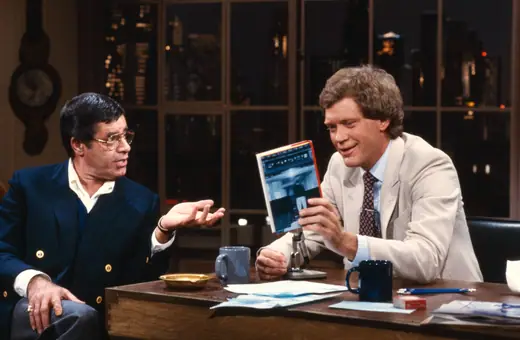
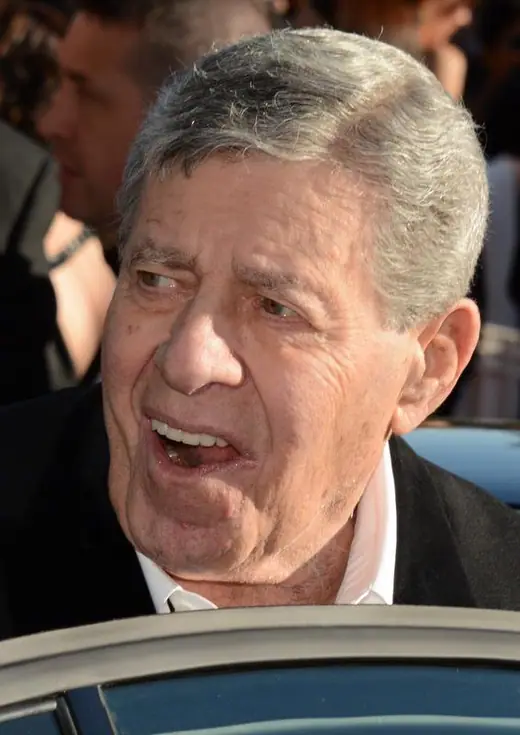
Jerry Lewis
His will excluded all six sons from his first marriage — by full legal name, together with their descendants, in a single sentence with no reason attached. Five years later he died and nobody contested it. This is what the well-drafted version of a hard decision looks like.
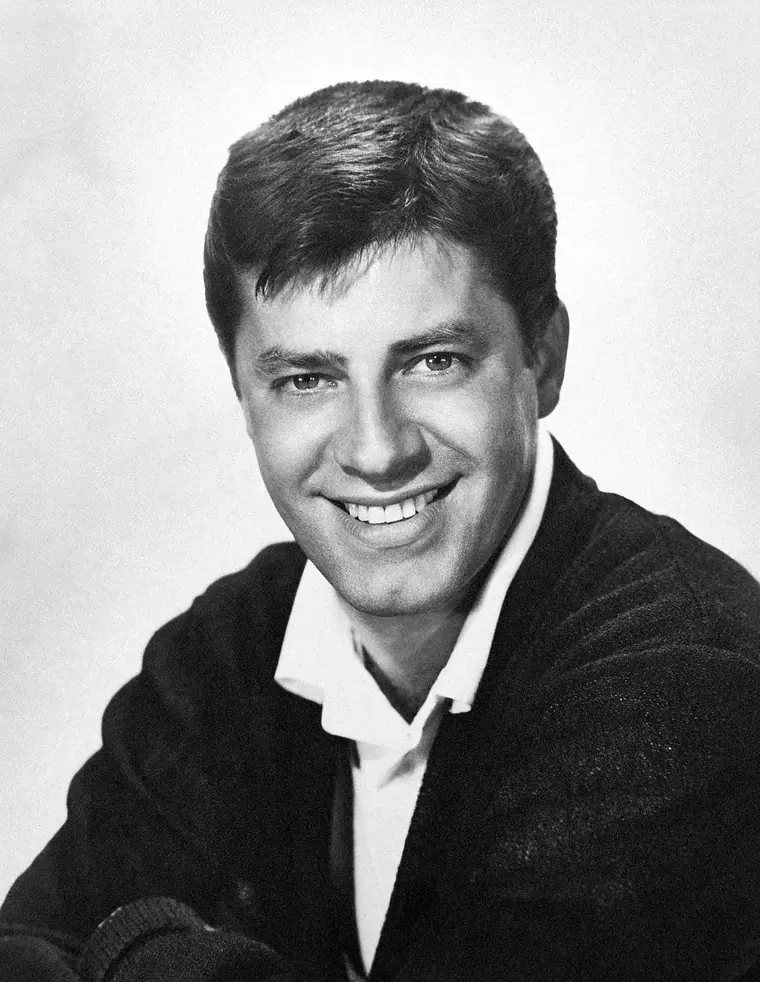
Jerry Lewis died on August 20, 2017, in Las Vegas, at 91. His will had been executed in 2012, five years earlier, and when it was filed it contained one sentence that estate lawyers immediately began using as a teaching example:
“I have intentionally excluded Gary Lewis, Ronald Lewis, Anthony Joseph Lewis, Christopher Joseph Lewis, Scott Anthony Lewis and Joseph Christopher Lewis and their descendants as beneficiaries of my estate, it being my intention that they shall receive no benefits hereunder.”
Six sons from his first marriage, to Patti Palmer, which lasted from 1944 to 1980. Each named in full. Their descendants swept in expressly. The word intentionally doing the load-bearing work. And — this is the part that matters most — no reason given. Not a hint, not a grievance, not a “for reasons well known.” The estate passed to his widow, SanDee Pitnick, whom he married in 1983, and after her to their daughter Danielle, adopted in 1992. Reporting put the estate at roughly $50 million, an estimate rather than an inventory.
One of the six, Joseph, had died in 2009.
Set it beside Joan Crawford and Leona Helmsley
Three American wills, forty years apart, doing the same job.
- Joan Crawford, 1976. Two of four children excluded “for reasons which are well known to them.” Result: a contested probate, allegations of incapacity and undue influence, and a $55,000 settlement to make it go away.
- Leona Helmsley, 2007. Two of four grandchildren excluded “for reasons which are known to them.” Result: a contest, and a Surrogate awarding the two grandchildren $6 million.
- Jerry Lewis, 2012. Six sons excluded, named in full, no reason offered. Result: nothing. No reported contest, no reported settlement, no headline beyond the fact of it.
That is not a coincidence and it is not luck. The two clauses that got litigated both gestured at a justification without supplying one, which is an invitation to argue about whether the justification was real. The clause that did not get litigated simply stated a fact about the testator's intention, which is not arguable at all.
There is a second structural difference. Crawford's and Helmsley's disinherited relatives were left nothing at all in a contest with no downside. Lewis's sons were in exactly the same position — but by 2012 the document was five years old, executed while he was healthy and working, and it had already been public knowledge for decades that he was estranged from that side of the family. A challenge would have had to prove something about a man who was demonstrably competent when he signed.
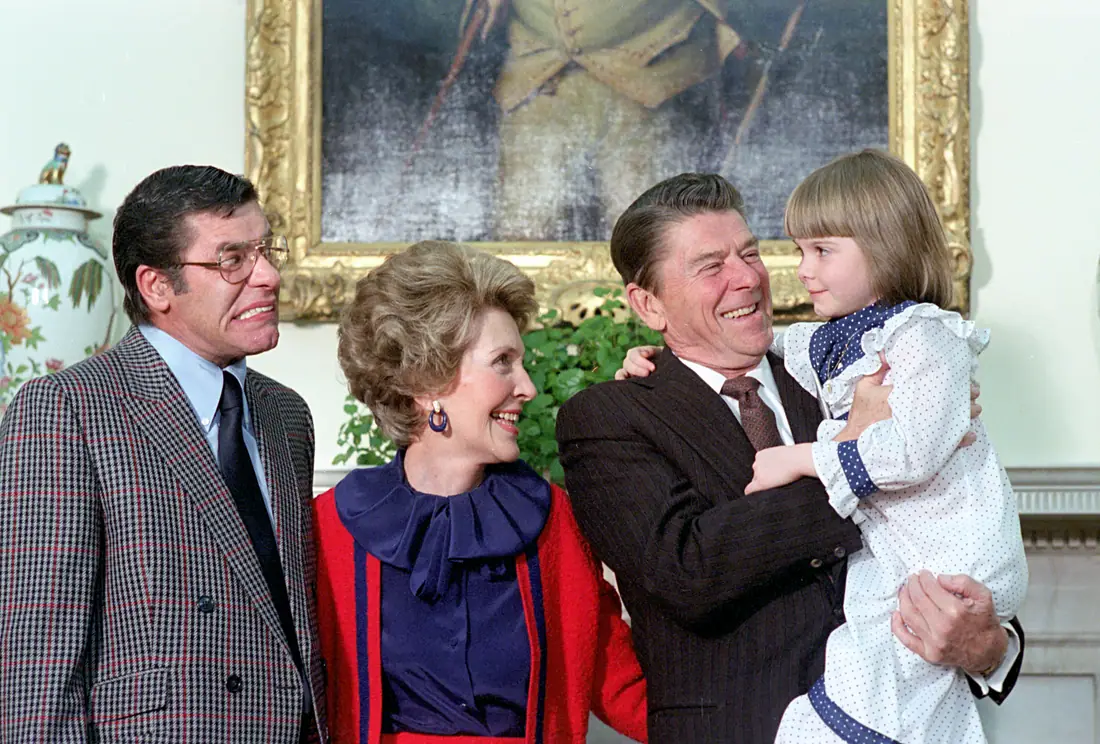
The person the clause did not name
Estate commentators who wrote about the will noticed one thing missing from it, and it is worth stating precisely, because it involves a living person and nothing here has ever been adjudicated.
A woman named Suzan Minoret has publicly stated that Jerry Lewis was her father. In 2009 she took a DNA test with his eldest son, Gary Lewis, which was reported to show an 88.7% probability that the two shared a father. Jerry Lewis never publicly confirmed or denied the claim. No court ever determined paternity. She is not named anywhere in the 2012 will — neither as a beneficiary nor among the people excluded from it. No claim against the estate by her has been reported.
The observation the commentators made is a drafting one, not a moral one: a clause that carefully names six people and their descendants, and is silent about a seventh who has publicly asserted a relationship, leaves an ambiguity where it did not need to. The cure is a single additional line — one that disclaims any other child, known or unknown, without naming or acknowledging anyone.
Everything above became public because it was a will
Every quotation on this page is available because a will is filed with a court and a court file is a public record. Journalists read it in September 2017, and six men learned the contents of their father's estate plan at the same time as everyone with an internet connection.
That is not required. A funded revocable trust does the same dispositive work and is not filed anywhere. Its administration does not require a probate proceeding, its terms are disclosed only to the people the statute says are entitled to them, and someone who has been excluded is generally not one of those people.
So the ideal version of this plan is the same sentence, verbatim, sitting inside a trust instrument that never becomes a public document. Same decision, same clarity, none of the audience.
Timeline
- 1944–1980Lewis is married to Patti Palmer. They have six sons: Gary, Ronald, Scott, Christopher, Anthony and Joseph.
- 1983Lewis marries SanDee Pitnick.
- 1992The couple adopt a daughter, Danielle.
- 2009Suzan Minoret, who has publicly stated Lewis was her father, takes a DNA test with Gary Lewis reported to show an 88.7% probability of a shared father. Lewis never publicly confirms or denies the claim, and no court ever determines paternity.
- 2009Joseph Lewis dies.
- 2012Lewis executes the will, naming all six sons and their descendants as intentionally excluded, and leaving the estate to his widow and then to Danielle.
- Aug 20, 2017Jerry Lewis dies in Las Vegas at 91.
- Sep 2017The will is filed and reported. The disinheritance clause becomes public, along with the rest of the document.
What actually went wrong
- Almost nothing — that is the point of this entry. The clause is specific, the names are complete, descendants are covered, no reason is supplied, and the document was signed five years before death while the testator was working. It is the version other people should copy.
- No catch-all for an unnamed child. A single further line disclaiming any other child, known or unknown, costs nothing and closes the one question the document leaves open.
- The plan ran through a will, so it ran through a court. A funded revocable trust would have achieved the identical result without publishing the family's business in a Clark County file.
- The value was left to be guessed at. “Reportedly $50 million” is what happens when the public document discloses the disposition but not the assets. That is usually preferable to the reverse, but it is worth knowing that a probate inventory is discoverable and a trust's is not.
Would it have gone that way in Florida?
This IS the model. Florida enforces it word for word — and closes the one gap it leaves.
Florida gives adult children no forced share of a parent's estate. A surviving spouse is protected by the elective share under Fla. Stat. §732.2035 — 30% of an elective estate that reaches revocable trusts, joint accounts and beneficiary designations — and homestead is protected for a spouse or minor child under §732.4015. Adult sons are protected by nothing. A Florida version of this will disposes of the estate exactly as written.
The clause itself is drafted the way Florida practitioners draft it, and each element earns its place. Full legal names eliminate any argument about which Christopher Lewis was meant. The word intentionally forecloses the claim that the omission was an accident. “And their descendants” stops a grandchild from arguing that only their parent was cut out and that the share passed down. And there is no stated reason, which means there is no stated reason to litigate about.
The statute that would otherwise rescue an omitted child is §732.302, and it is narrow: it protects only a child born or adopted after the will was executed, who is neither provided for nor intentionally omitted. All six sons were adults decades before 2012. So was the woman who has claimed to be his daughter. In Florida, §732.302 would help none of them — the clause is belt and braces over a rule that already reaches the same place.
The paternity question would be handled by §732.108(2), which is more generous than people expect. A person born outside marriage is a descendant of the father — with full inheritance rights — if paternity is established by adjudication before or after the father's death, or is acknowledged in writing by the father. Note the words after the death: a paternity determination can be made in the probate proceeding itself. That is exactly why the catch-all line matters. A clause that disclaims any other child, whether or not their existence is known, means that even a person who later proves paternity takes nothing under the document. Without that line, an heir who establishes paternity in the probate is an omitted pre-existing child — still with no §732.302 claim, but now with standing, notice rights, and a seat at the table.
One thing a Florida testator cannot do is buy silence. §732.517 makes a no-contest clause unenforceable in a will and §736.1108 does the same in a trust. Leaving a disinherited child a modest sum on condition that they not challenge is a bargain Florida law will not enforce. In Florida the only real protection is the quality of the document and the circumstances of its signing — which is precisely what this will had.
The instruction: put the clause in a funded revocable trust, not only in a will. Under §736.0813 the trustee's duty to inform and account runs to qualified beneficiaries — and a person excluded by the instrument is not one. The trust is never filed, never indexed, and never read by a reporter. Then use four elements and stop: full legal names, the word intentionally, and their descendants, and a final sentence disclaiming any other child known or unknown. No reasons. Sign it years before you think you need to.
What people ask us about this.
Further reading
Third-party sites. Not ours, not endorsed, not kept current by us — just the places worth going next.
Sources
- Jerry's kids get cut out … or do they? — WealthManagement.com
- Late Jerry Lewis snubbed children he had with first wife Patti Palmer from will — Fox News, Sep 2017
- The will of Jerry Lewis shows that he disinherited his kids — Bellomo & Associates
- Comedian Lewis isn't the only one disinheriting his kids — Legacy Counsellors, P.C.
- “Daughter” not included in Jerry Lewis' estate — Estate Planning & Elder Law Center
- DNA results: is Jerry Lewis the biological father of Suzan Lewis? — Inside Edition / Paramount Press Express
- Jerry Lewis — Wikipedia
- Fla. Stat. §732.302 — Pretermitted child — The Florida Senate
If this is your situation
Free 30-minute consult. Plain English. No pressure.
Nearly every case in this archive turned on something ordinary — an unwitnessed page, a stale beneficiary line, a document nobody could find. Those are cheap to fix while you're alive and expensive to fix afterward.