Athletes and the short window
A professional athlete compresses a lifetime of income into a handful of years, at an age when almost nobody writes a will, with a body that gets hurt for a living. Then, for some of them, the earnings continue after death — and that is a separate problem.
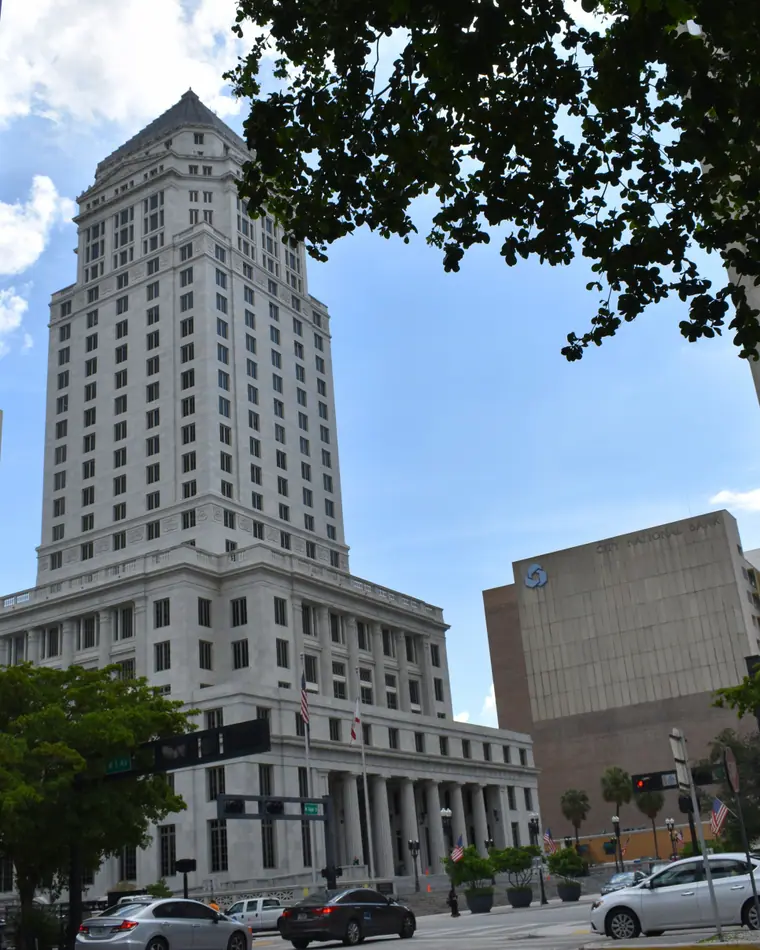
Every profession has a shape to its income. Most people's rises slowly, peaks in their fifties, and tapers. A professional athlete's is a spike. It arrives at twenty-two, lasts a few years, and stops — usually before the person is old enough to have written a will, appointed a health care surrogate, or thought seriously about anything ending.
That shape is the whole story, and there is real research on it rather than folklore.
In 2009, Sports Illustrated published Pablo S. Torre's “How (and Why) Athletes Go Broke,” which reported that 78% of former NFL players were bankrupt or under financial stress within two years of retirement and that an estimated 60% of NBA players were broke within five. The article became one of the most-read pieces in the magazine's online history and inspired the ESPN documentary Broke. It has also been sharply criticised for the sourcing of those two numbers, and this archive will not present them as established.
The number that is established is smaller, harder, and in some ways worse.
Money arriving faster than structure
The economists framed it as a test of the life-cycle hypothesis — the idea that people save when income is high to cover the years when it is low. Athletes are the cleanest natural experiment available, because the spike is unmistakable and everybody involved knows the date it ends.
They failed the test. Not slightly, and not only the ones who earned least. Total career earnings and career length had almost no effect on bankruptcy risk. A long, lucrative career bought very little protection.
The average NFL career is widely reported at about 3.3 years. Other sports run longer — figures around five to six years are commonly cited for baseball and hockey, four to five for basketball — but the structure is the same everywhere: the earning window closes decades before the spending window does.
For estate planning, the specific consequence is not “athletes are bad with money.” It is that the documents get written for a life stage that is already over. A will signed at twenty-four, if one is signed at all, names a parent as beneficiary and a college friend as executor. It is not revisited when there is a spouse, a child, a business interest, and a brand.
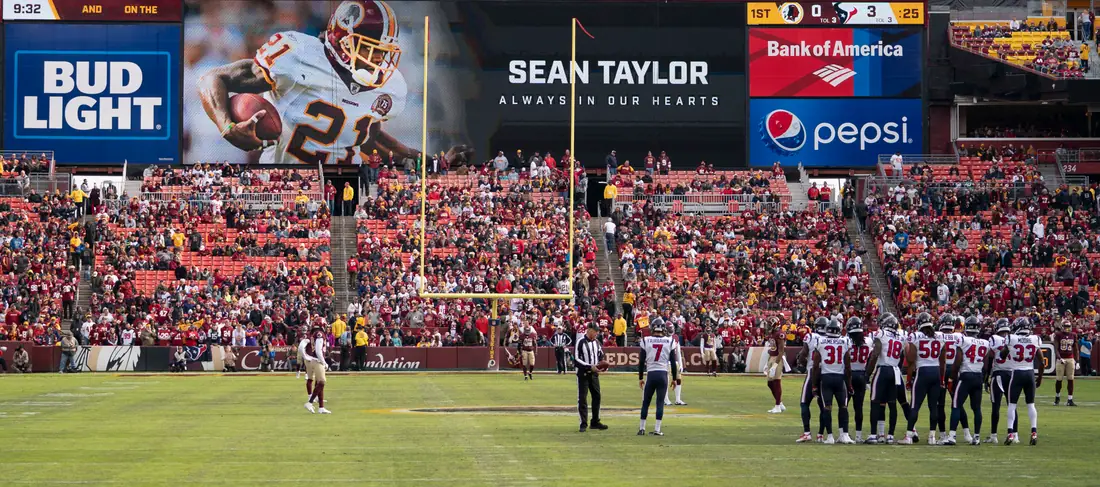
The risk of dying young is not theoretical
Most wealthy people can plan on the reasonable assumption that they will have time. This cohort cannot, and the archive is full of the evidence.
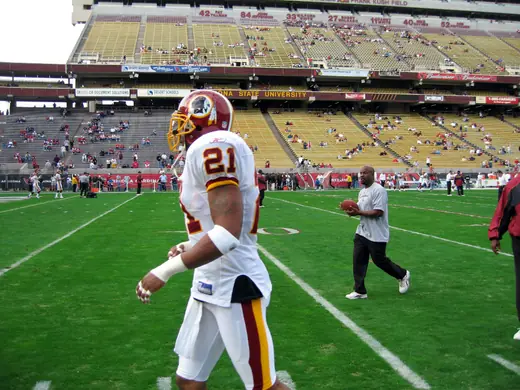
Sean Taylor was 24. He died on November 27, 2007, of injuries sustained in a shooting during a break-in at his home in Miami. He had a daughter who was eighteen months old, and he had no will.
What followed is the cleanest illustration in American sport of what intestacy actually does. A judge ordered that essentially the whole estate — reported at roughly $5.7 million — pass to his only child. His mother received nothing. Neither did his grandmother, his great-grandmother, two half-siblings, or the relatives who had been supported by him during his life. Reporting a year later described her as unable to pay the taxes on a house he had bought for her in 2005.
There is no villain in that paragraph. Intestacy is not a punishment; it is a default. The statute does exactly what it says: descendants first, and everyone else after. A one-page will naming his mother for a share, or a life insurance beneficiary designation, would have changed the entire outcome. He had one such designation — a $650,000 policy naming his eldest sister — and it worked precisely as intended.
The pattern repeats across the archive with different names and the same structure: Payne Stewart at 42 in 1999, Dale Earnhardt at 49 at Daytona in 2001, Kobe Bryant at 41 in 2020, Junior Seau at 43 in 2012. Some had documents. Some had documents that had not been touched in years. The variable is never how much money there was.
- No will means the statute writes one. Every state has a default, and no state's default resembles what a twenty-four-year-old would have chosen.
- Beneficiary designations are the fastest fix available. Life insurance, retirement accounts, and pay-on-death registrations pass outside probate and can be changed in an afternoon.
- A minor cannot receive money. Leaving an estate to a small child does not produce a plan; it produces a court-supervised guardianship of the property until the child turns eighteen and then hands the whole balance over at once.
Earnings that begin at the funeral
The final structural feature is the one almost nobody plans for, because it sounds like a joke until it happens: for a small number of athletes, the largest transaction of the career occurs after death.
Arnold Palmer won $1,861,857 in prize money across 703 PGA Tour events. Forbes estimated his career earnings from appearances, endorsements, licensing and course design at $875 million. And then he died in September 2016 — and Forbes reported his estate earning $40 million in 2017, $40 million the year before, $35 million in 2018, $30 million in 2019, $25 million in 2020, and figures in the ten-to-fourteen-million range through 2025.
Read the first and last sentence of that paragraph together. In a single posthumous year, the Palmer estate out-earned his entire professional tournament career by more than twenty to one.
Kobe Bryant's estate topped the same Forbes list in 2022 at $400 million, driven by Coca-Cola's acquisition of full control of BodyArmor — a company in which he had taken a stake in 2014 — as part of a transaction reported at $5.6 billion. Muhammad Ali appeared on the 2018 list at $8 million.
These are not royalties in the musician's sense. They are licensing revenue from a name, a face, and a signature — assets that legally exist only because a statute says they survive death, and that are only worth anything if somebody has been given clear authority to license them. Which is a drafting question, and a valuation question, and a tax question, and it is why the estates that handle this well look nothing like the estates that do not.
Four documents, none of them exotic
The remedies here are unglamorous and cheap relative to the sums involved.
- A revocable trust, funded, instead of a will alone. It keeps the inventory private — relevant when the beneficiary is a minor and the numbers will be reported — and it avoids a probate court in every state where property sits.
- Beneficiary designations checked against the plan every single year. They override the will. They are the most common single point of failure in a young person's estate, and they take twenty minutes.
- A trust for the child rather than an outright gift. Staged distributions, a named trustee, and no eighteenth-birthday cliff. This is the difference between the Sean Taylor outcome and a plan.
- A written licence of name and likeness, with a named person authorised to grant it. Publicity rights are property. If nobody is authorised to license them, the family spends the first two years arguing about who can sign.
And one behavioural point that the NBER authors' own data supports better than any adviser's anecdote. Because career length and total earnings did not predict bankruptcy, the fix is not earning more. It is structure imposed early — while the income is arriving, not after it stops.
Timeline
- Nov 27, 2007Sean Taylor dies in Miami at 24, without a will. His estate, reported at roughly $5.7 million, passes to his 18-month-old daughter by intestacy.
- Mar 2009Sports Illustrated publishes “How (and Why) Athletes Go Broke.” Its 78% and 60% figures become the most-quoted — and most-contested — numbers in the field.
- 2012ESPN's 30 for 30 documentary Broke, inspired by the SI piece, brings the question to a mass audience.
- Apr 2015Carlson, Kim, Lusardi and Camerer publish NBER Working Paper 21085: 15.7% of drafted NFL players filed for bankruptcy within 12 years of retiring, with career length and total earnings making almost no difference.
- Sep 2016Arnold Palmer dies. His PGA Tour prize money totalled $1,861,857; Forbes had estimated his career earnings at $875 million.
- 2017Forbes reports the Palmer estate earning $40 million — in one posthumous year, more than twenty times his entire tour prize money.
- Nov 2021Coca-Cola acquires full control of BodyArmor. Kobe Bryant's estate is reported to receive roughly $400 million from the transaction.
- Oct 2022Bryant's estate ranks second on the Forbes highest-paid dead celebrities list at $400 million. Palmer is still on it.
- 2025Palmer appears again at $12 million — nine years after his death, and still earning six times his lifetime tour winnings every year.
What actually went wrong
- The documents are written for the wrong life. A will signed at twenty-two names parents and siblings. Nobody rewrites it when a spouse, a child, and a licensing company appear.
- Beneficiary designations drift out of alignment. They control regardless of what the will says, and they are the single most common failure in the estate of a person who died young.
- Money left outright to a minor becomes a court file. A guardianship of the property is supervised, expensive, and ends with a lump sum handed to an eighteen-year-old.
- Nobody is authorised to license the name. Publicity rights survive death by statute, but if no document names who may grant a licence, the asset sits idle while the family litigates authority.
- Earning more is not a plan. The NBER data is unambiguous: total earnings and career length barely moved the bankruptcy rate. Structure did the work, or nothing did.
Would it have gone that way in Florida?
Florida is where a large share of this cohort actually lives — and its intestacy, guardianship, and publicity statutes are unusually consequential for people who die young.
Start with the default, because it is what applies when nothing was signed. Fla. Stat. §732.103 sets the order for everything not going to a spouse: descendants first, then parents, then siblings and their descendants, then grandparents and their descendants — and it stops there. §732.102 governs the spouse's share. Where there is one child and no spouse, the child takes everything. That is the Sean Taylor outcome in statutory form, and Florida produces it exactly the same way. A parent who depended on the decedent receives nothing under intestacy, no matter how obvious the intention was.
Then the guardianship problem, which is the part people underestimate. A minor cannot hold property. Fla. Stat. §744.301(2) allows a natural guardian to receive, without court appointment or bond, amounts not exceeding $15,000 in the aggregate on a minor child's behalf. Above that, Chapter 744 applies: a guardian of the property must be appointed, bonded, and supervised, with annual accountings, court approval for investments and expenditures, and attorney and guardian fees paid out of the child's money — until the child turns eighteen, at which point the entire remaining balance is handed over. There is no discretion in that transfer and no protection after it.
A trust removes all of that. A revocable trust that becomes irrevocable at death, naming a trustee and staging distributions — a portion at twenty-five, a portion at thirty, discretion for education and health in between — avoids the guardianship entirely and avoids the eighteenth-birthday cliff. It costs a fraction of one year of guardianship administration.
Florida's publicity statute is one of the strongest in the country, and it has a clock. §540.08 prohibits the use of a person's name, likeness or photograph for purposes of trade without consent, and provides that no action may be brought more than 40 years after the death of that person. After death, consent may be given by any person or company authorised in writing to license the commercial use of the likeness — and only if there is no such authorisation does the right fall to a class made up of the surviving spouse and surviving children. Remedies include injunction, damages including a reasonable royalty, and punitive damages.
Read that sequence carefully, because it is the drafting instruction. Florida gives priority to a written authorisation. If the decedent signed one — naming a licensing entity, a trustee, or a named individual — that person controls. If not, control defaults to a class of family members who must agree with each other. For an estate with a real brand, the difference between those two outcomes is the difference between a licensing programme and a lawsuit.
And the creditor clock is short. Under §733.702, claims against a Florida estate must be filed by the later of three months after first publication of the notice to creditors or thirty days after personal service, and §733.710 imposes an absolute two-year bar from the date of death. For a young decedent, the claims that surface are usually the ones nobody knew about: guarantees, business loans, agent agreements, and family arrangements never put in writing.
The instruction is four lines long and does not require a fortune to justify. Sign a will and a funded revocable trust. Put the children's shares in trust with staged distributions rather than at eighteen. Pull every beneficiary designation you have and read it against the plan, once a year. And if your name is worth licensing, sign a written authorisation naming who may license it — because §540.08 gives that document priority over your family, and forty years is a long time for a family to argue.
What people ask us about this.
Further reading
Third-party sites. Not ours, not endorsed, not kept current by us — just the places worth going next.
Sources
- Bankruptcy Rates among NFL Players with Short-Lived Income Spikes — Carlson, Kim, Lusardi & Camerer — NBER Working Paper 21085, Apr 2015
- Bankruptcy Rates among NFL Players with Short-Lived Income Spikes — American Economic Review 105(5), May 2015
- Study: 16 percent of NFL players go bankrupt within 12 years — CBS Sports, Apr 2015
- How (and Why) Athletes Go Broke — Pablo S. Torre, Sports Illustrated, Mar 2009
- The death of Sean Taylor: one year later — The Washington Post, Nov 2008
- How Arnold Palmer earned $875 million during a legendary career in golf — Forbes, Sep 2016
- Arnold Palmer net worth and career earnings — Golf Monthly
- The highest-paid dead celebrities of 2022 — Forbes, Oct 2022
- BodyArmor sale to Coca-Cola will give Kobe Bryant estate $400M — NBC Los Angeles, Nov 2021
If this is your situation
Free 30-minute consult. Plain English. No pressure.
Nearly every case in this archive turned on something ordinary — an unwitnessed page, a stale beneficiary line, a document nobody could find. Those are cheap to fix while you're alive and expensive to fix afterward.