Arnold Palmer
In the twelve months after he died, Arnold Palmer's estate earned about $40 million — roughly what he had earned in his last year alive. Thirty-nine licensees, a drink most Americans think is a beverage rather than a man, and no public estate fight at all. This archive is mostly failures. This is the other kind.
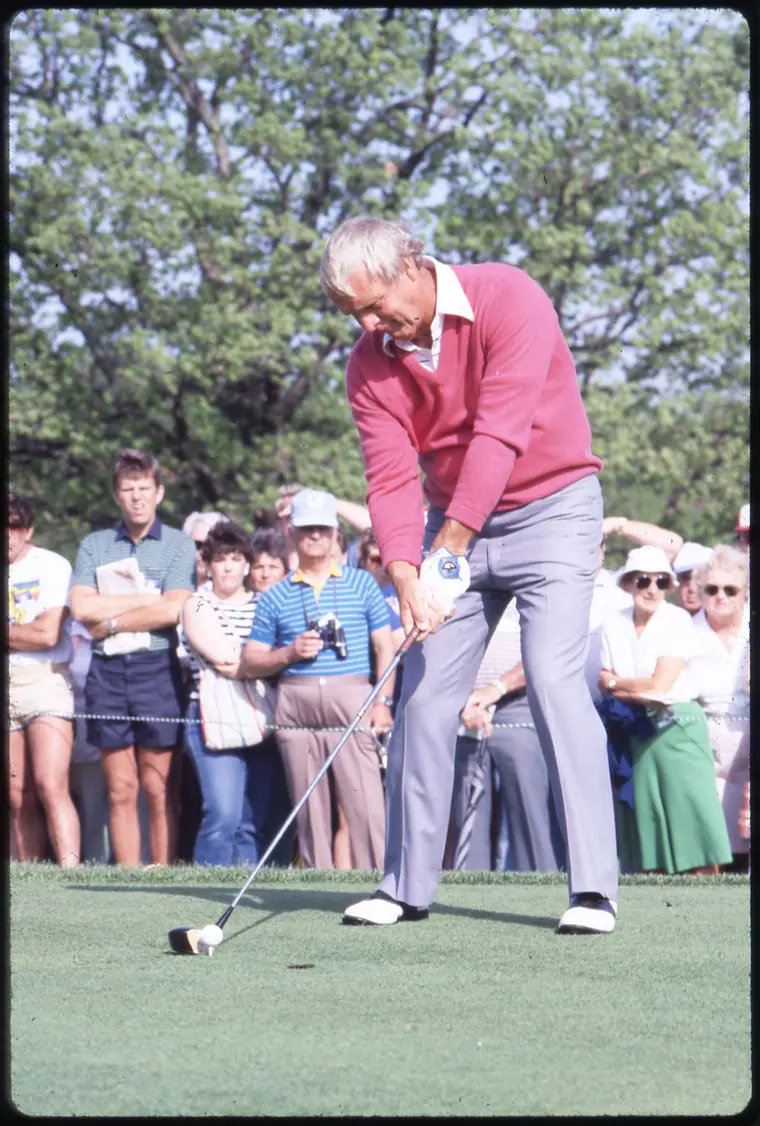
Arnold Palmer died on September 25, 2016, in Pittsburgh, at 87.
Twelve months later, Forbes reported that his estate had earned about $40 million — a figure in line with what he had been earning in his final year alive. He placed second on that year's list of top-earning deceased celebrities, behind Michael Jackson.
The archive you are reading is largely a catalogue of what goes wrong. Palmer is here for the opposite reason. Nothing did. There is no public will contest, no fee war, no petition to construe an ambiguous clause, no fight among the heirs that reached a courtroom. The revenue simply continued, uninterrupted, through the transition from a living businessman to a dead one.
The handshake that invented the industry
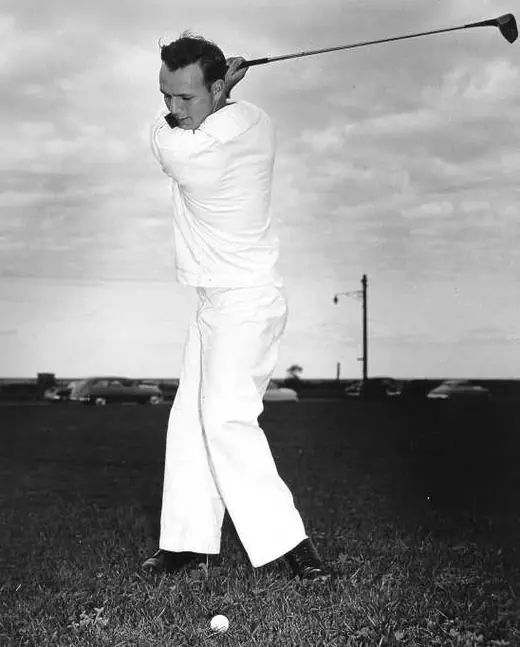
In 1960, Palmer agreed by handshake to let a young Cleveland lawyer named Mark McCormack represent him. McCormack's fledgling company became International Management Group — IMG. Palmer was its first client, on the condition that he be its only one.
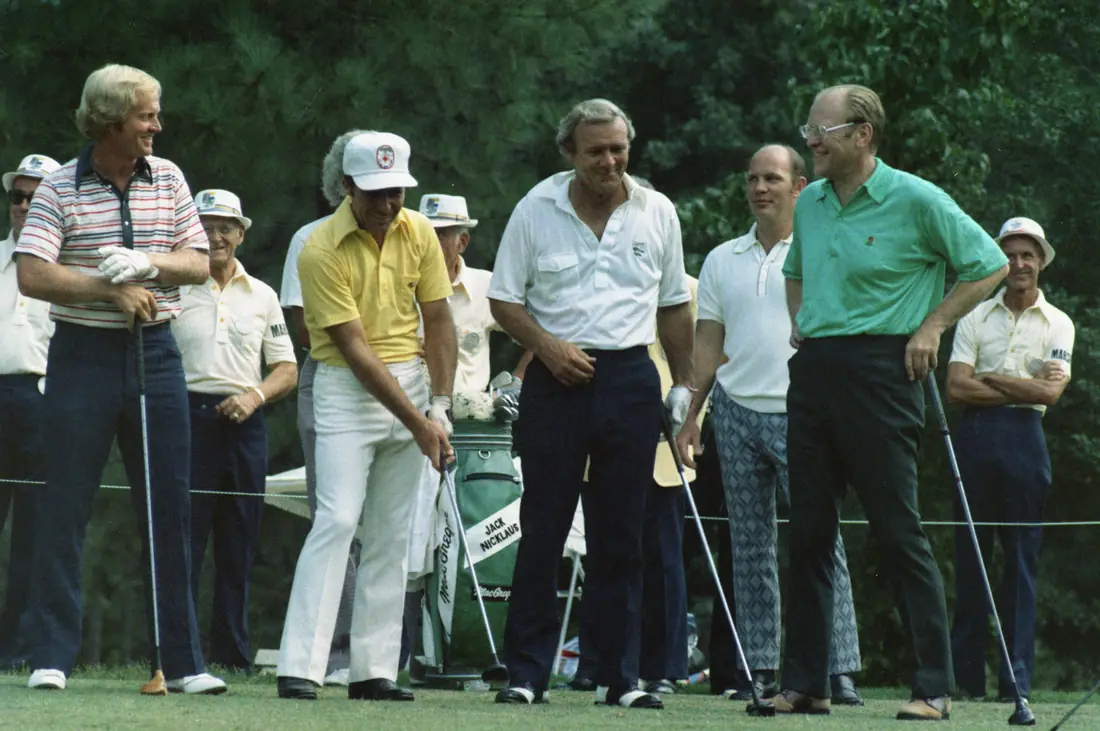
That did not last long. Gary Player signed next; Jack Nicklaus followed in early 1961. IMG went on to represent tennis players, drivers, and broadcasters and became the template for every athlete-management business that came after it.
What McCormack understood, and what most of the sport did not, was that Palmer's tournament winnings were the least valuable thing he produced. The endorsements were the business: Rolex, Pennzoil, United Airlines, Hertz, Callaway, and eventually a beverage.
All of it ran through Arnold Palmer Enterprises, a holding company with a registered trademark portfolio — not through Arnold Palmer, the individual, holding a stack of personal contracts. That distinction sounds like accounting. It is the whole reason this case has a happy ending.
A brand so successful it nearly stopped being a person
The iced-tea-and-lemonade combination Palmer drank was licensed to AriZona Beverages in 2001. By 2017 AriZona was producing a reported 500 million cans a year.
Forbes reported a detail in 2017 that ought to make every brand lawyer sit up: somewhere between 60% and 70% of customers associated the name Arnold Palmer with the drink rather than with the golfer.
That is a triumph of licensing and a live legal risk at the same time. A personal name that becomes the ordinary word for a product is a name drifting toward genericide — the point at which a trademark stops functioning as a mark because the public uses it as a noun. Aspirin, escalator, and thermos all used to be brands.
Palmer's people kept the mark alive by doing the unglamorous work: policing use, renewing registrations, and continuing to attach the name to a person rather than only to a flavour. His longtime agent Alastair Johnston negotiated a new AriZona contract after Palmer's death — which is the tell. The business had someone with authority to sign on the day after the funeral.
Continuity is a job, and somebody has to be paid to do it
The reason the Palmer estate reads as boring is that three things were true at once, and all three were arranged in advance.
- The assets sat in entities, not in a person. Trademarks, licences, and course-design contracts held by a company do not need to be re-titled when a shareholder dies. The company signs. Probate touches the shares, not the business.
- The operator did not change. Alastair Johnston had run the commercial side for decades and continued to run it. Licensees renewed because they were renewing with the same person they had always dealt with.
- The family had defined roles. Palmer's daughter and son-in-law, Amy and Roy Saunders, took on ownership of the Bay Hill Club and Lodge in Orange County, Florida, which he had owned since 1974. A specific asset went to specific people who wanted it.
None of that is free. An estate that keeps operating a business is an estate that pays for the work — professional fiduciary fees, counsel, accountants, trademark maintenance. Families who balk at those numbers usually have not priced the alternative, which is a brand that goes quiet for eighteen months while everyone argues about who can sign.
There is one more thing worth saying honestly. Palmer's plan worked partly because his heirs did not fight. No structure, however elegant, survives a determined contest without cost. What good planning buys is not immunity. It is the removal of the ambiguities that give a fight something to be about.
Timeline
- 1960Palmer agrees by handshake to be represented by Mark McCormack, the first client of what becomes IMG.
- 1961Gary Player and Jack Nicklaus join. The athlete-endorsement industry effectively begins.
- 1974Palmer takes ownership of the Bay Hill Club and Lodge near Orlando, Florida. He holds it until his death.
- 2001The iced-tea-and-lemonade drink bearing his name is licensed to AriZona Beverages.
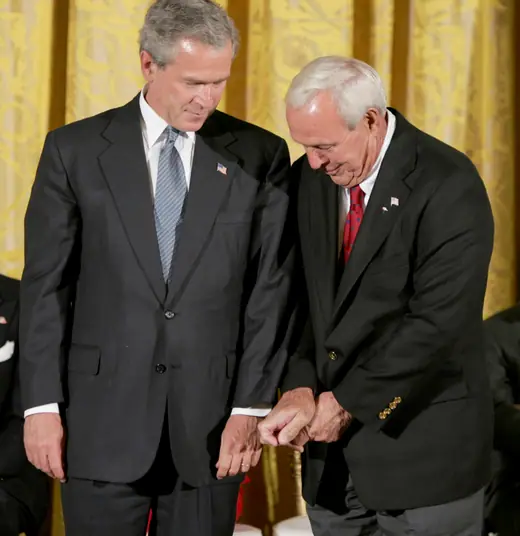
- Jun 23, 2004Palmer receives the Presidential Medal of Freedom.
- Sep 25, 2016Palmer dies in Pittsburgh at 87.
- 2017Alastair Johnston negotiates a new AriZona contract on behalf of the estate. Forbes reports first-year estate earnings of about $40 million across 39 licensees.
- 2017–presentBay Hill continues under Amy and Roy Saunders and still hosts the Arnold Palmer Invitational each March. No significant public estate litigation has been reported.
What actually went wrong
- Almost nothing — which is why it is here. The instructive cases are not only the disasters. An estate that produces no reported litigation across a decade and a nine-figure brand is a result, not an absence of one.
- The one live risk was the trademark, not the family. A personal name used by most consumers as the name of a drink is a mark under pressure. Continuous policing and renewal are what keep it a mark, and that work has to be funded and assigned to someone.
- Everything depended on one operator. Continuity through a single long-serving agent is a strength until that person retires or dies. Succession plans need their own succession plan.
- A Pennsylvania decedent with a Florida golf club is two probates unless somebody prevents it. Out-of-state real property is the most commonly overlooked item on an otherwise well-built plan.
Would it have gone that way in Florida?
Same result — with one Florida-specific step his advisers had to handle: a nonresident who owns Florida real estate gets a second probate here unless the property is titled to avoid it.
Palmer was a Pennsylvania resident who owned a golf club in Orange County, Florida. That combination triggers the rule most people planning across two states have never heard of.
Fla. Stat. §734.102 provides that if a nonresident of Florida dies leaving assets in this state, credits due from Florida residents, or liens on Florida property, those assets are administered here in an ancillary administration — a separate Florida probate, running alongside the main one in the home state. The statute sets its own order of preference for who gets appointed: a personal representative named in the will specifically for the Florida property, then the foreign personal representative if qualified, then an alternate or successor named in the will, and onward.
That is a second court, a second set of filings, a second set of fees, and a second timetable — for one asset. It is entirely avoidable, and the ways of avoiding it are ordinary: hold the Florida real property in a revocable trust, in a properly maintained LLC or other entity, or in a form of joint ownership with survivorship. Palmer's Florida property sat inside an operating business, which is the version that also solves the management question.
The second Florida point is what continuity costs. Fla. Stat. §733.617 sets presumptively reasonable compensation for a personal representative: 3% of the first $1 million, 2.5% from $1 million to $5 million, 2% from $5 million to $10 million, and 1.5% above $10 million — plus extraordinary services, which the statute lists as including the sale of property, litigation, tax proceedings, dealing with protected homestead, and, in terms, carrying on the decedent's business. An estate that keeps a licensing operation running is squarely inside that provision. In Florida, running the business is a compensable job, and the statute says so.
The honest caveat: those percentages are a presumption, not a ceiling and not a floor. A court may allow more or less, and a will or trust that fixes compensation by agreement generally controls. If you intend a family member to serve without pay, or a professional to serve at a negotiated rate, put the number in the document rather than leaving it to a statute and a hearing.
The practical instruction, in two lines. If you live somewhere else and own anything in Florida — a condominium, a lot, a club membership carrying real property, a boat slip — find out today how it is titled, because that single fact decides whether your family opens one probate or two. And if anything you own has to keep operating after you die, name the person with authority to sign, in writing, before it is needed.
What people ask us about this.
Further reading
Third-party sites. Not ours, not endorsed, not kept current by us — just the places worth going next.
Sources
- How Arnold Palmer still earns $40 million annually after his death — Forbes, Oct 2017
- Arnold Palmer still makes a LOT of money, according to Forbes' list of highest-paid dead celebrities — Golf Digest, Oct 2017
- Arnold Palmer, IMG and the “handshake” that started the modern sports industry — Golf.com
- Arnold Palmer leaves legacy as sports business pioneer — Sports Destination Management, 2016
- Bay Hill Club and Lodge — ownership history — Wikipedia
- Fla. Stat. §734.102 — Ancillary administration — The Florida Senate
- Fla. Stat. §733.617 — Compensation of personal representative — The Florida Senate
If this is your situation
Free 30-minute consult. Plain English. No pressure.
Nearly every case in this archive turned on something ordinary — an unwitnessed page, a stale beneficiary line, a document nobody could find. Those are cheap to fix while you're alive and expensive to fix afterward.