Aaron Hernandez
For 673 days, an old common-law doctrine meant that a man who died before his appeal was heard had, in the eyes of the law, never been convicted at all. In 2019 Massachusetts abolished the rule and put the conviction back on the record.

Odin Lloyd was 27 when he was killed in North Attleborough, Massachusetts, in June 2013. On April 15, 2015, a Bristol County jury convicted Aaron Hernandez of murder in the first degree, along with unlawful possession of a firearm and of ammunition. The sentence was life without the possibility of parole.
Two years later, in a separate Suffolk County trial, Hernandez was acquitted of the 2012 killings of Daniel de Abreu and Safiro Furtado. That verdict came on April 14, 2017.
Five days later, on April 19, 2017, Hernandez was found dead in his cell at the Souza-Baranowski Correctional Center. The death was ruled a suicide. He was 27.
His appeal of the Lloyd conviction had been filed. The record had not yet been assembled. And because of that timing — because the appellate machinery had started but not finished — a doctrine most people have never heard of erased the conviction entirely.
The trial judge applies the rule she is bound by
On May 9, 2017, Superior Court Judge E. Susan Garsh allowed the motion to abate. She dismissed the notice of appeal, vacated the convictions, and dismissed the indictments — applying what she understood to be binding Massachusetts precedent.
The Commonwealth did not object to dismissing the appeal. It objected to the rest, and appealed directly to the Supreme Judicial Court.
What abatement did in practice is worth stating plainly, because it is the reason the doctrine collapsed. Odin Lloyd's mother, Ursula Ward, had a pending civil wrongful-death action against Hernandez's estate. A criminal conviction ordinarily does substantial work in a subsequent civil case — the issues litigated to a verdict beyond reasonable doubt cannot generally be relitigated by the losing party. Abatement removed that. The civil plaintiff was returned to proving her case from zero, against an estate.
The doctrine also touched inheritance directly. Massachusetts, like every state, bars a killer from taking from the victim's estate — G.L. c. 190B, §2-803(b) — and bars other benefits under G.L. c. 265, §46. Those provisions run off a conviction. Abate the conviction and the provision has nothing to attach to.
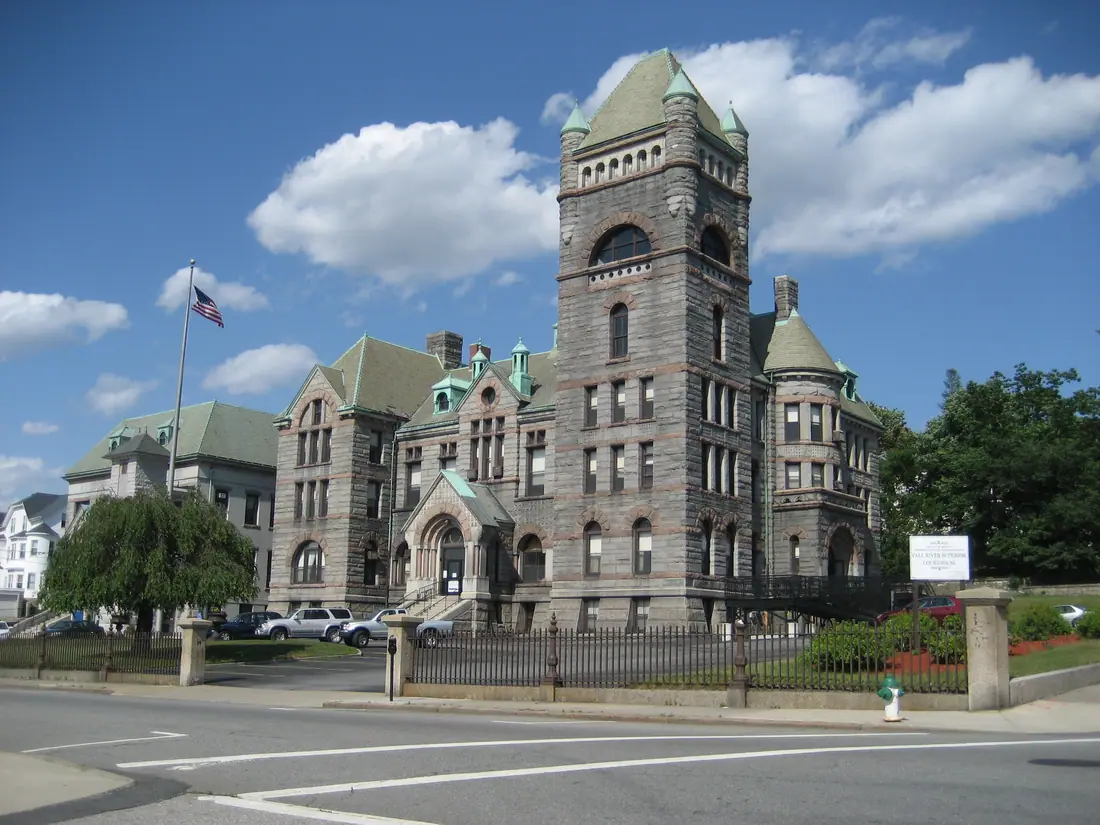
Commonwealth v. Hernandez, 481 Mass. 582
The SJC heard argument on November 8, 2018 and decided on March 13, 2019. It abolished abatement ab initio, holding the doctrine “outdated and no longer consonant with the circumstances of contemporary life.”
The replacement rule is procedural and precise. Where a defendant dies while a direct appeal as of right is pending, the appeal is dismissed as moot, and the trial court record receives a notation: that the conviction removed the defendant's presumption of innocence, but that the conviction “was appealed from and it was neither affirmed nor reversed on appeal because the defendant died while the appeal was pending.”
That formulation is doing careful work. It does not pretend the appeal was heard. It does not pretend the conviction was tested. It simply declines to pretend the trial never happened.
The court's reasoning leaned heavily on the interests the old rule ignored: victims' statutory rights, including restitution under G.L. c. 258B, §3(o); the effect of a conviction in later civil proceedings; and the inheritance bars in c. 190B, §2-803(b) and c. 265, §46. Abatement, in each of those settings, took something away from people who were not parties to the criminal appeal.
The new rule applies prospectively — except that the court applied it to Hernandez's own case. The conviction was restored to the record. He remains, in Massachusetts law, a man convicted of murder in the first degree whose appeal was never decided.
- Abatement is not gone everywhere. It survives in some jurisdictions and has been abandoned or modified in others, state by state and circuit by circuit. It is a doctrine, not a statute, which is why courts can and do simply stop applying it.
- It never reached the civil case. Ward's wrongful-death action against the estate continued throughout. Abatement removed a proof advantage; it did not remove the claim.
- The federal courts do it differently. Federal practice on the death of a defendant pending appeal has its own line of authority and its own exceptions. Nothing here is a general rule of American law.
A wrongful-death claim, a $0.00 affidavit, and an irrevocable trust
The probate side of this case is the part that generalises, and it is the reason it sits in this archive.
The estate was reported as worthless. An affidavit filed in the Bristol County Probate and Family Court by Hernandez's fiancée, Shayanna Jenkins Hernandez, and attorney George Leontire put the value at “$0.00,” with “no monies available and no identifiable personal assets.” Counsel for the Lloyd family publicly identified two assets: a North Attleborough house listed at $1.3 million, on the market for over a year, and a Hummer.
The contract money did not arrive. The Patriots released Hernandez after his June 2013 arrest and declined to pay the remaining guaranteed compensation, including a deferred $3.25 million signing-bonus instalment. The union filed grievances; the team filed its own. The dispute was later resolved on terms that produced a salary-cap credit for the club rather than a payment to the estate.
And there was a trust. Filings in the Bristol County probate case referenced an “AJH Irrevocable Trust.” A trustee stated that its assets were not part of the probate estate. A judge ordered the Boston firm that assisted in creating it to produce documents and related materials. The trust's contents are not public record.
That is the whole architecture of creditor exposure in one estate: a probate estate reported at zero, a contested contract receivable, and an irrevocable trust that the personal representative does not control. Whether any of it would have withstood a full challenge was never publicly resolved, because on September 6, 2018, Suffolk Superior Court Judge Merita A. Hopkins entered an order dismissing Ward's wrongful-death action as settled. The terms were not disclosed.
A separate action, brought on behalf of Hernandez's young daughter against the NFL and the Patriots for loss of parental consortium and seeking $20 million, was dismissed on February 15, 2019 by Judge Anita B. Brody — the same judge who presided over the concussion MDL — on the ground that Hernandez fell within the settlement class definition and had not opted out.
One thing this archive will not do is speculate about why a person died. Contemporary commentary connected the timing of the death to the abatement rule. No court found that, and nothing in the record establishes it. The doctrine is interesting on its own terms; the man's death is not a puzzle to be solved for entertainment.
Timeline
- Jun 2013Odin Lloyd is killed in North Attleborough, Massachusetts. Hernandez is arrested; the Patriots release him and decline to pay the remaining guaranteed compensation.
- Apr 15, 2015A Bristol County jury convicts Hernandez of murder in the first degree and of unlawful possession of a firearm and ammunition. Sentence: life without parole.
- Apr 14, 2017In a separate Suffolk County trial, Hernandez is acquitted of the 2012 killings of Daniel de Abreu and Safiro Furtado.
- Apr 19, 2017Hernandez is found dead in his cell at the Souza-Baranowski Correctional Center. The death is ruled a suicide. His direct appeal is pending; the record has not been assembled.
- May 9, 2017Superior Court Judge E. Susan Garsh applies abatement ab initio: notice of appeal dismissed, convictions vacated, indictments dismissed. The Commonwealth appeals to the SJC.
- Sep 2017Boston University researchers report an advanced stage of chronic traumatic encephalopathy. An action is filed on behalf of his daughter against the NFL and the Patriots.
- Sep 6, 2018Suffolk Superior Court dismisses Ursula Ward's wrongful-death action against the Hernandez estate as settled. Terms undisclosed.
- Nov 8, 2018The Supreme Judicial Court hears argument in Commonwealth v. Hernandez.
- Feb 15, 2019Judge Anita B. Brody dismisses the daughter's $20 million claim against the NFL, holding Hernandez fell within the concussion settlement class and had not opted out.
- Mar 13, 2019The SJC abolishes abatement ab initio in Commonwealth v. Hernandez, 481 Mass. 582, and restores the conviction to the record.
What actually went wrong
- A doctrine designed for the defendant erased a remedy belonging to a victim's family. Abatement was justified by the unfairness of an untested conviction. Its practical effect fell on a civil plaintiff who was not a party to the criminal appeal.
- A conviction is an evidentiary asset in a civil case, and it can vanish. Families relying on a criminal verdict to carry a wrongful-death suit should understand that appeals, deaths, and vacaturs all remove it.
- An estate reported at $0.00 is a starting position, not a conclusion. Non-probate transfers, irrevocable trusts, and contested receivables sit outside the inventory. Finding them is a personal representative's job, and a creditor's fight.
- Irrevocable trust assets are outside the probate estate by design. That is what the word means. Creditors of the estate do not reach them by filing a claim in probate; they need a separate theory and a separate proceeding.
- Everything of value settled confidentially. Two of the three financial disputes here ended on undisclosed terms. Sealed outcomes are normal, and they are the reason families cannot benchmark their own case.
Would it have gone that way in Florida?
Florida does not depend on the criminal case at all. §732.802 lets a probate judge decide the killing question on the civil standard, conviction or no conviction.
Abatement ab initio is a criminal-procedure doctrine, and Florida's version of the question would arise in the same way — a defendant dying with a direct appeal pending. But the probate consequences that made the Hernandez abatement matter so much are handled by Florida in a way that largely defuses them.
Fla. Stat. §732.802 is Florida's slayer statute: “Killer not entitled to receive property or other benefits by reason of victim's death.” Subsection (1) disqualifies a person who unlawfully and intentionally kills or participates in procuring the death of the decedent from any benefit under the will or the Probate Code. Subsection (2) severs a joint tenancy. Subsection (3) reaches life insurance and other contractual beneficiary designations. Subsection (4) sweeps in anything else, including a life estate in homestead property.
Then the sentence that answers this case. §732.802(5): “A final judgment of conviction of murder in any degree is conclusive for purposes of this section. In the absence of a conviction of murder in any degree, the court may determine by the greater weight of the evidence whether the killing was unlawful and intentional.”
Read that twice. A conviction makes the question conclusive — no relitigating. But the absence of a conviction proves nothing. The probate court makes its own finding, on the preponderance standard that governs civil cases, not the criminal standard. An acquittal, a mistrial, a dismissal, a death before appeal — none of them ends the inquiry in a Florida probate courtroom. Florida had already decoupled the two systems before Massachusetts got around to it.
The civil claim would still be one claim, held by one person. Under §768.20, a Florida wrongful-death action is brought by the personal representative for the benefit of the survivors and the estate, and where the injury caused the death the decedent's own personal-injury action does not survive. Ursula Ward's Massachusetts suit against an estate would, in Florida, have been the Lloyd estate's personal representative suing the Hernandez estate. Two estates, one action.
And the clock against an estate is brutal. §733.702(1) requires a claim against a Florida estate to be filed by the later of three months after the first publication of the notice to creditors, or thirty days after service on a creditor who was reasonably ascertainable and personally served. §733.710 then imposes an absolute bar: two years after the date of death, regardless of notice, with narrow exceptions. A claimant who waits for a criminal appeal to conclude before filing a probate claim will very often be too late — which is precisely the trap the Hernandez timeline would have sprung.
One Florida asset the judgment may never reach. Article X, Section 4 of the Florida Constitution exempts homestead property from forced sale by most creditors, with no cap on value, and the protection passes to the heirs. A wrongful-death judgment is a general creditor claim. It does not touch a properly established Florida homestead. That is not a loophole — it is the constitution, and it is one of the reasons this state's creditor law looks so different from Massachusetts'.
The practical instruction has two halves. If you may have a claim against an estate, file it inside the statutory window and do not wait for anything — not a criminal case, not an appeal, not a settlement conversation. And if you are the personal representative of an estate facing claims, inventory the non-probate transfers first: irrevocable trusts, beneficiary designations, joint titling, and contract receivables are where the actual money in a case like this lives, and they are not on the probate inventory.
What people ask us about this.

Further reading
Third-party sites. Not ours, not endorsed, not kept current by us — just the places worth going next.
Sources
- Commonwealth v. Hernandez, 481 Mass. 582, 118 N.E.3d 107 (2019) — Massachusetts Supreme Judicial Court, Mar 2019
- Commonwealth v. Hernandez — decision record — Mass.gov
- Massachusetts SJC finds doctrine of abatement ab initio outdated, reinstates Aaron Hernandez's conviction — Northeastern University Law Review Forum
- Questions remain on Aaron Hernandez wealth after conviction erased — Boston.com / Associated Press, May 2017
- Aaron Hernandez may have set up trust for daughter before suicide — AOL, Nov 2017
- Odin Lloyd's mother settles wrongful death lawsuit with Aaron Hernandez estate — The Boston Globe, Sep 2018
- Federal court dismisses claim brought by Aaron Hernandez's daughter — The Boston Globe, Feb 2019
- Why the Patriots could owe money to Aaron Hernandez — ESPN Outside the Lines, Apr 2017
- Fla. Stat. §732.802 — Killer not entitled to receive property or other benefits — The Florida Senate
If this is your situation
Free 30-minute consult. Plain English. No pressure.
Nearly every case in this archive turned on something ordinary — an unwitnessed page, a stale beneficiary line, a document nobody could find. Those are cheap to fix while you're alive and expensive to fix afterward.