Astrue v. Capato
Robert Capato banked sperm before chemotherapy and died in Florida in 2002. His widow gave birth to twins in September 2003. The Supreme Court held 9–0 that whether they were his “children” for Social Security purposes depended on Florida's intestacy statute — and Florida's answer was no.
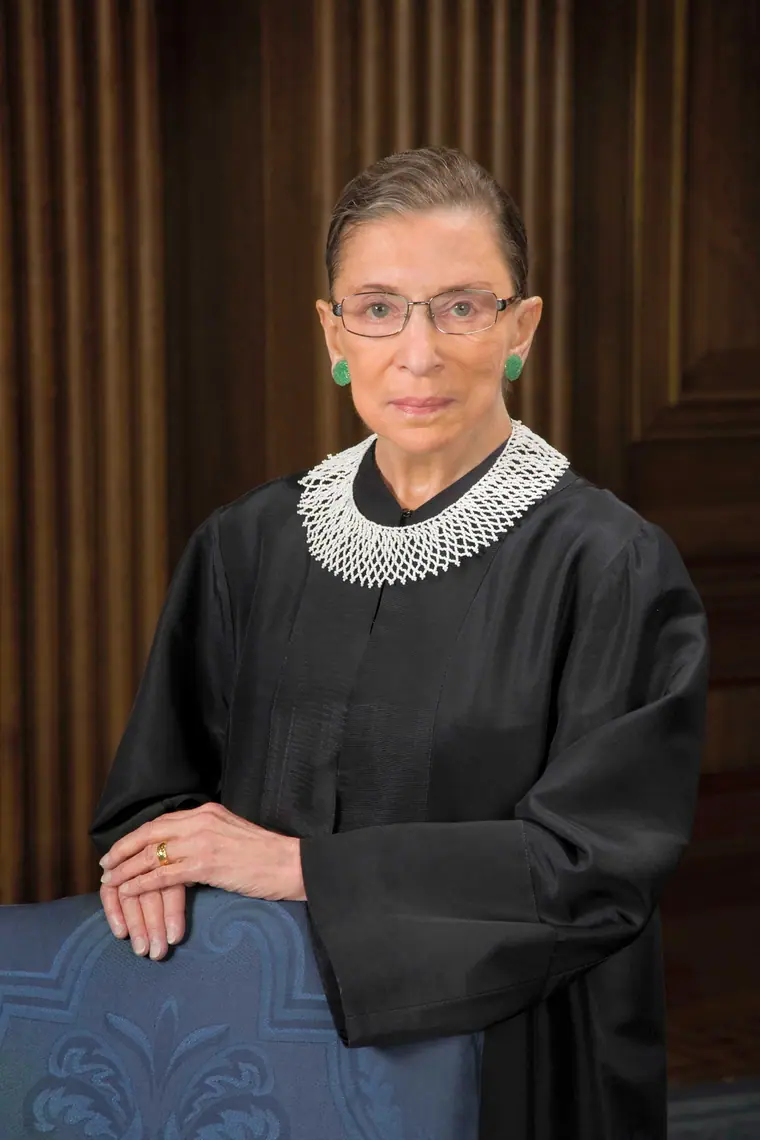
Karen and Robert Capato married in May 1999. Shortly afterwards Robert was diagnosed with oesophageal cancer and told that chemotherapy might leave him sterile. Before starting treatment he deposited semen at a sperm bank. The couple had a son, conceived naturally, in 2001.
Robert Capato died in Florida in March 2002. His will provided for his then-living children and said nothing about children conceived after his death.
Karen Capato began in vitro fertilisation using the frozen sperm, conceived in January 2003, and gave birth to twins in September 2003 — eighteen months after Robert Capato's death. She then applied for Social Security survivors benefits for them under 42 U.S.C. §402(d).
The Social Security Administration said no. The question that took ten years and three courts to answer was not whether the twins were Robert Capato's biological children. Everyone agreed they were. It was whether the Social Security Act uses the word “child” to mean that.
Four provisions, and the fight over which one controls
The Social Security Act's definition of “child” is not in one place, and that is the entire case.
- 42 U.S.C. §402(d) provides child's insurance benefits to the child of an insured individual who has died.
- 42 U.S.C. §416(e)(1) defines “child” to mean, among other things, the child or legally adopted child of an individual.
- 42 U.S.C. §416(h)(2)(A) directs that, in determining whether an applicant is the child of an insured individual, the Commissioner applies the intestacy law of the state in which the insured was domiciled at death.
- 42 U.S.C. §416(h)(3)(C) supplies alternative routes to child status for applicants who cannot satisfy the state-law test — for example, written acknowledgment or a court decree of paternity.
The Capatos' position was that §416(e) already answered the question: the twins were the biological children of a married couple, so they were “children,” and §416(h) was a set of supplementary rules for cases where parentage was in doubt rather than a gate everyone must pass through.
The District Court for the District of New Jersey upheld the denial, holding that the twins could qualify only if they could inherit from Robert Capato under state intestacy law — which, under Florida law, they could not. The Third Circuit reversed, holding that the biological children of a deceased wage earner and his widow qualify regardless of state intestacy law.
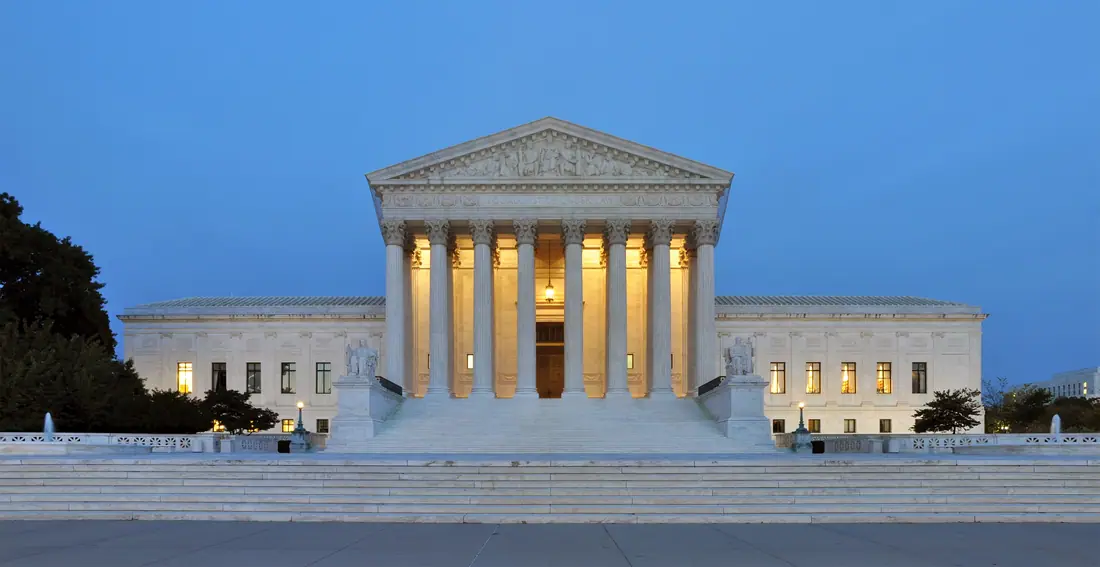
A unanimous Court sends the question back to the states
Justice Ruth Bader Ginsburg wrote for a unanimous Court, and the Court reversed the Third Circuit.
The holding is narrow and mechanical, and it is worth stating in exactly the terms the Court used. The Social Security Administration's reading — that an applicant in the Capatos' position must satisfy §416(h)(2)(A) and therefore must be able to inherit under the intestacy law of the insured's domiciliary state — is “better attuned to the statute's text” than the alternative, and it serves the Act's central purpose of protecting family members who were dependent on the insured. As the Court put it, “reliance on state intestacy law to determine who is a 'child' thus serves the Act's driving objective.”
So the twins' eligibility turned on Florida. And under Florida law, a posthumous child inherits through intestate succession only if the child was conceived during the decedent's lifetime. The twins were conceived ten months after their father died.
Two things the decision did not do, and both matter. It did not hold that posthumously conceived children can never receive survivors benefits — in a state whose intestacy law recognises them, they can. And it did not decide anything about who is a parent for any other purpose. It is a case about one federal statute's cross-reference.
Fifty answers, and yours depends on where the parent lived
By routing the question through state intestacy law, Capato guaranteed that identical families receive different answers.
Compare Woodward v. Commissioner of Social Security, 435 Mass. 536 (2002). Warren Woodward was diagnosed with leukaemia and preserved sperm; two years after his death, Lauren Woodward gave birth to twin girls conceived by artificial insemination. The Supreme Judicial Court of Massachusetts held that in certain limited circumstances a child resulting from posthumous reproduction may take as “issue” under the Massachusetts intestacy statute — where the surviving parent or the child's representative establishes a genetic relationship with the decedent and establishes that the decedent affirmatively consented both to posthumous conception and to supporting any resulting child.
Same technology, same tragedy, opposite results — because one family's insured died in Massachusetts and the other's died in Florida.
That is the practical lesson of Capato, and it has nothing to do with the Social Security Act. The document that decides this is not a benefits application. It is a will, and a written consent, signed while the person is alive. Massachusetts asks for evidence of affirmative consent. Florida asks for a provision in the will. Both are asking for a piece of paper that costs nothing to create and cannot be created later.
Timeline
- May 1999Karen and Robert Capato marry. Shortly afterwards Robert is diagnosed with oesophageal cancer and told chemotherapy may leave him sterile.
- 1999Before beginning treatment, Robert Capato deposits semen at a sperm bank.
- 2001The Capatos have a son, conceived naturally.
- Mar 2002Robert Capato dies in Florida. His will provides for his then-living children and is silent as to children conceived after his death.
- Jan 2003Karen Capato conceives twins by in vitro fertilisation using the preserved sperm.
- Sept 2003The twins are born, eighteen months after their father's death. Karen Capato applies for Social Security survivors benefits under 42 U.S.C. §402(d).
- D.N.J.The District Court for the District of New Jersey upholds the SSA's denial: the twins qualify only if they could inherit under state intestacy law, and under Florida law they cannot.
- 2011The Third Circuit reverses, holding that the biological children of a deceased wage earner and his widow qualify regardless of state intestacy law. The Commissioner seeks certiorari.
- May 21, 2012Astrue v. Capato, 566 U.S. 541: a unanimous Supreme Court, per Justice Ginsburg, reverses the Third Circuit. Eligibility turns on the intestacy law of the insured's domiciliary state.
What actually went wrong
- The will was silent on the one thing the family had actually planned for. Robert Capato deliberately preserved sperm before treatment. The document that would have made that intention legally effective — the will — did not mention it.
- Florida's intestacy rule was never going to help. §732.106 saves only heirs conceived before death. A child conceived afterwards is outside the statute, however clear the parent's wishes were.
- The federal question was a state question wearing a federal badge. §416(h)(2)(A) borrows the domiciliary state's intestacy law, so the answer moved with the decedent's residence rather than with the family's circumstances.
- Domicile decided everything and nobody chose it for this purpose. Robert Capato was domiciled in Florida at death. Had he been domiciled in Massachusetts, Woodward's limited-circumstances test would have applied instead.
- The consent was medical, not testamentary. Consenting to sperm storage is not the same document as consenting to posthumous conception and to supporting a resulting child — which is precisely what Massachusetts requires proof of.
Would it have gone that way in Florida?
This IS the Florida case — Robert Capato died domiciled in Florida, and Florida's answer decided it. A posthumously conceived child does not inherit in Florida by default, but can be provided for by will.
The rule that decided Capato is one sentence long. Fla. Stat. §732.106 provides: “Heirs of the decedent conceived before his or her death, but born thereafter, inherit intestate property as if they had been born in the decedent's lifetime.” Conception before death is the condition. The Capato twins were conceived ten months after their father's death, so §732.106 did not reach them, and because 42 U.S.C. §416(h)(2)(A) sends the Social Security Administration to Florida's intestacy law, that ended the benefits claim as well.
The second Florida provision is the one that offers a way out. Fla. Stat. §742.17(4) provides that a child conceived from the eggs or sperm of a person who died before the transfer “shall not be eligible for a claim against the decedent's estate unless the child has been provided for by the decedent's will.” Read it forwards rather than backwards: the will is the switch. Florida's default is exclusion, and Florida's statute names the document that changes the default.
§742.17 also requires the agreement that should exist upstream of all of this. A commissioning couple and the treating physician shall enter into a written agreement providing for disposition of eggs, sperm, and preembryos in the event of divorce, the death of a spouse, or any other unforeseen circumstance. Absent such an agreement, the statute's default on death is that the surviving spouse retains control of the material — which is how a widow can lawfully proceed with conception and still have a child who inherits nothing.
The honest caveats. §742.17(4) speaks to a claim against the decedent's estate; how far it extends to non-probate assets, trust interests, and class gifts in instruments drafted by third parties is a drafting question rather than a settled one, and a well-drafted trust addresses it expressly. Social Security is a separate system with its own rules and deadlines, and eligibility there follows §416(h) rather than the will. And Capato fixed the method, not the answer: a state that amends its intestacy law changes the outcome for its residents without any federal case being overruled.
One more Florida provision belongs in the frame. Where a will or trust makes a gift to a class — “my children,” “my descendants” — the question is whether a child conceived after death falls inside it. Florida's rules of construction start from the settlor's or testator's intent under §732.6005, which is exactly why guessing is the wrong strategy and a defined term is the right one.
What to actually do, and it is unglamorous. If genetic material is being stored: (1) sign the §742.17 written disposition agreement and read the death provisions; (2) put an express clause in the will and in any revocable trust either including or excluding children conceived after your death — say which, in terms, and define “children” and “descendants” accordingly; (3) sign a separate written statement consenting to posthumous conception and to the support of any resulting child, because several states require exactly that evidence and it costs nothing to have; and (4) if you may change your domicile, review all of it, because Capato means the state you die in writes the answer.
What people ask us about this.

Further reading
Third-party sites. Not ours, not endorsed, not kept current by us — just the places worth going next.
Sources
- Astrue v. Capato, 566 U.S. 541 (2012) — Legal Information Institute, Cornell Law School
- Astrue v. Capato — case file and briefs — SCOTUSblog
- Astrue v. Capato — oral argument and decision summary — Oyez
- Supreme Court decides Astrue v. Capato — Faegre Drinker Biddle & Reath, May 2012
- Woodward v. Commissioner of Social Security, 435 Mass. 536 (2002) — LSU Law — Biotechnology and the Law
- Fla. Stat. §732.106 — Afterborn heirs — The Florida Senate
- Fla. Stat. §742.17 — Disposition of eggs, sperm, or preembryos; rights of inheritance — The Florida Senate
If this is your situation
Free 30-minute consult. Plain English. No pressure.
Nearly every case in this archive turned on something ordinary — an unwitnessed page, a stale beneficiary line, a document nobody could find. Those are cheap to fix while you're alive and expensive to fix afterward.