Sonny Bono
He was a member of the United States House of Representatives, 62 years old, with four children by three women and a catalogue of hit records. He died on a ski slope in January 1998 without a will — and nine months later Congress named the law that would keep his copyrights earning for another twenty years after him.
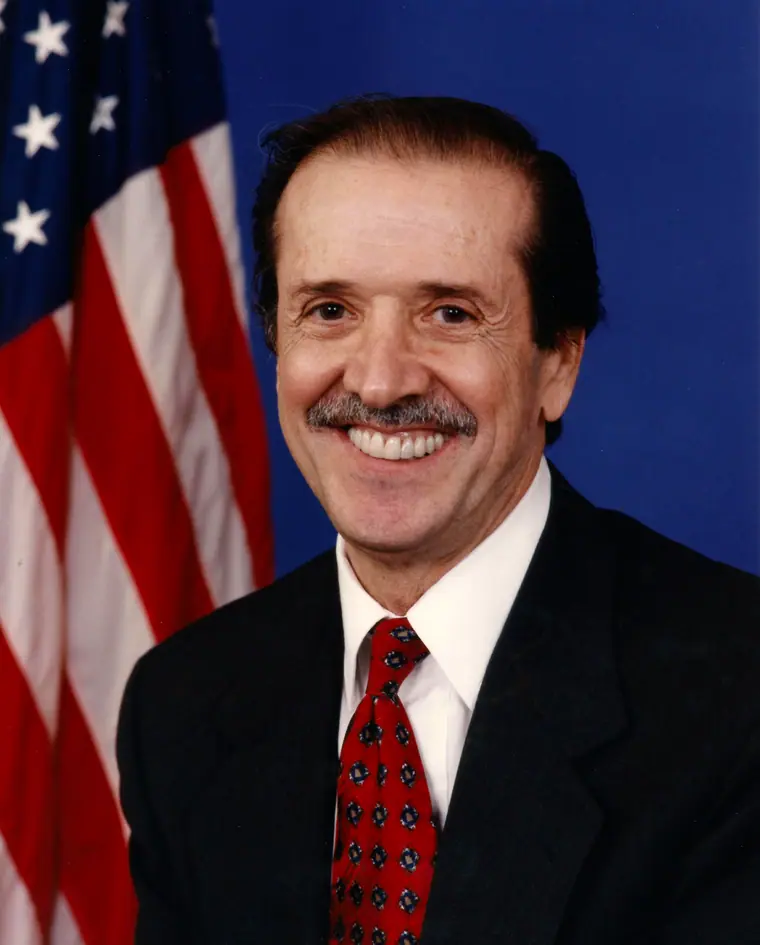
Salvatore Phillip Bono was born in Detroit on February 16, 1935. He wrote and produced records, spent a decade as one half of the most recognisable double act on American television, ran a restaurant, became mayor of Palm Springs, and in January 1995 was sworn in as the United States Representative for California's 44th congressional district. He was re-elected in 1996.
On January 5, 1998, skiing at Heavenly Mountain Resort near South Lake Tahoe, he struck a tree and died of blunt trauma. He was 62.
He left no will.
Consider the biography one more time. Four children — Christine, from his first marriage; Chaz, from his marriage to Cher; and Chesare and Chianna, from his marriage to Mary. Three former marriages. A congressional office. A song catalogue. This is roughly the maximum-complexity profile American estate planning is built for, and there was no document.
Someone has to ask for the job
Mary Bono petitioned to be appointed administrator of the estate. She was the widow, she was the obvious candidate, and she still had to file the petition and be appointed, because with no will there was no named personal representative and therefore no authority in anyone.
She was doing this while running for his seat. She won the special election and served in Congress until 2013.
The estate was valued in court filings at $1.66 million. Two claims arrived against it, and they are the two claims intestacy invites most reliably.
- The ex-spouse. Cher filed a claim against the estate alleging unpaid back alimony from their divorce. An obligation that dies with a marriage does not necessarily die with a person; it becomes a creditor claim, and a probate court decides it.
- The claimed child. About six months after the death, Sean Machu, then 35, of Marina del Rey, petitioned as Bono's son. His April 1964 birth certificate named Salvatore Bono, described as a 29-year-old self-employed record producer. Bono had written in his autobiography about a relationship with Machu's mother.
In April 1999 a judge in Indio, California ordered a Nevada coroner to release the blood sample containing Bono's DNA so the question could be tested. Mary Bono stated in court filings that she would not contest the claim if Machu was in fact Bono's son — a notably restrained position, and a reminder that the fight here was procedural rather than personal.
Machu subsequently withdrew the petition. The estate was ultimately divided among his widow and his children.
So: a court hearing to decide who is in charge, a hearing on an ex-wife's claim, and a court order for a dead man's blood. All three were answerable in advance by a document that costs less than a weekend.
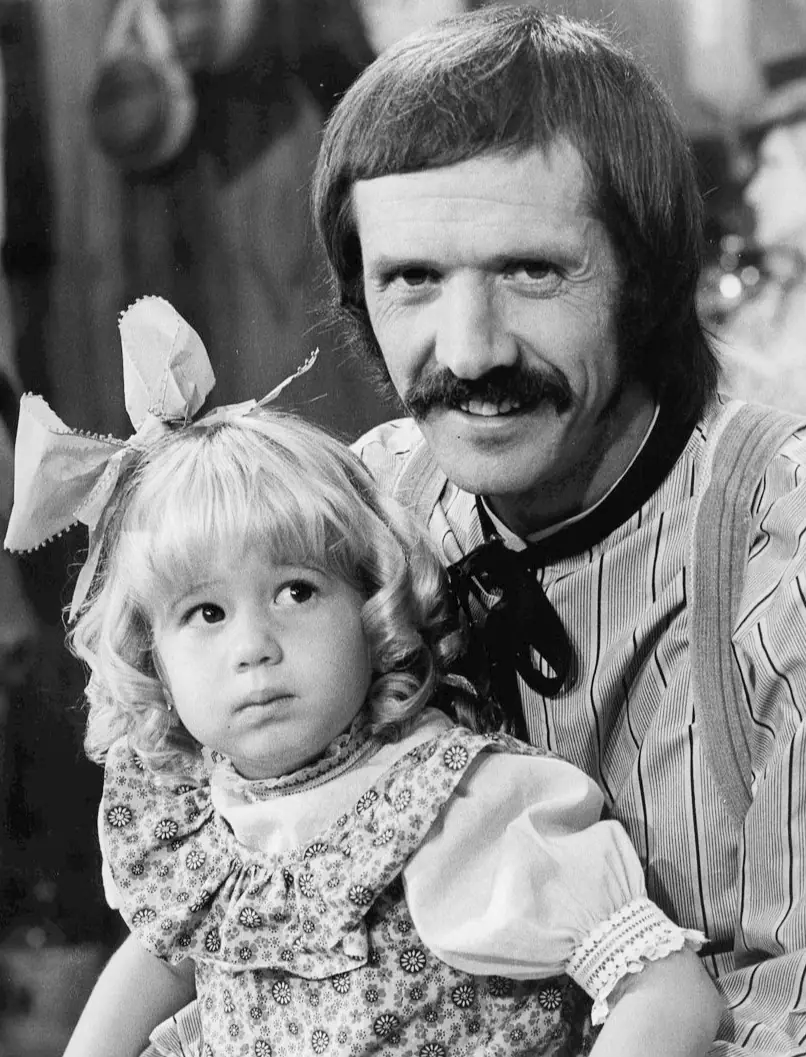
The law that made the asset worth planning for
Nine months after his death, on October 27, 1998, President Clinton signed Public Law 105-298, the Sonny Bono Copyright Term Extension Act. Bono had supported extending copyright terms in Congress; the Act was named for him after he died.
What it did, in one paragraph. For works by individual authors it extended protection from life of the author plus 50 years to life plus 70. For works made for hire it set 95 years from publication or 120 years from creation, whichever expires first. For pre-1978 works it extended the renewal term from 47 years to 67, producing 95 years of protection in total.
Mary Bono, by then holding his seat, told the House that her late husband had wanted copyright to last forever, and that staff had informed her the Constitution would not permit it. That line has been quoted in law reviews ever since.
The constitutional challenge came anyway, and lost. On January 15, 2003, in Eldred v. Ashcroft, the Supreme Court upheld the Act 7-2.
Here is why any of that belongs in a probate archive. A recorded song written in 1965 by an author who died in 1998 is protected until 2068. The estate of a musician is not a diminishing pile of cash to be counted and split. It is a seventy-year income stream, jointly owned, requiring somebody to make decisions about it every year for three generations — and the person who died intestate named nobody to make them.
Timeline
- Jan 5, 1998Bono dies of blunt trauma in a skiing accident near South Lake Tahoe, aged 62, while serving as US Representative for California's 44th district. No will is found.
- Jan 1998Mary Bono petitions to be appointed administrator of the estate. With no will, nobody holds authority until a court grants it.
- Apr 1998Mary Bono wins the special election for her late husband's congressional seat.
- 1998Cher files a claim against the estate alleging unpaid back alimony from their divorce.
- Oct 27, 1998President Clinton signs Public Law 105-298, the Sonny Bono Copyright Term Extension Act — life of the author plus 70 years.
- Apr 1999A judge in Indio, California orders a Nevada coroner to release the blood sample containing Bono's DNA, so Sean Machu's paternity claim can be tested. Mary Bono files that she will not contest the claim if it is true.
- 1999Machu withdraws the petition. The estate is later divided among the widow and the children.
- Jan 15, 2003In Eldred v. Ashcroft the Supreme Court upholds the Act, 7-2.
What actually went wrong
- No will, at maximum complexity. Four children across three relationships, a public office, and a catalogue. Every one of those facts is a reason to sign something, and none of them produced one.
- No personal representative named. The widow had to petition a court for the authority a single sentence would have given her, in the same weeks she was running a congressional campaign.
- No provision addressing paternity claims. A will can name the takers, and only the takers, and can address whether an unnamed claimant is included. Silence leaves the question to a judge, a birth certificate, and an order for a blood sample.
- Divorce obligations left live. An ex-spouse's unpaid support obligation becomes a creditor claim against the estate. The place to resolve it is in life, in writing, with a release.
- The main asset had no plan. A copyright catalogue is a seventy-year income stream requiring active management. It was left to be administered by whoever the probate court eventually appointed.
Would it have gone that way in Florida?
Same intestacy, different arithmetic — and Florida answers the paternity question with a statute that lists exactly three doors.
Start with the widow's share, because Florida's is not what most people assume. Under Fla. Stat. §732.102, a surviving spouse takes the entire intestate estate only where all of the decedent's descendants are also descendants of that spouse, and the spouse has no other descendants. Bono's children were not all Mary Bono's children. So in Florida she would take one-half, and the other half would pass under §732.103 to all four of his descendants, per stirpes — including the two who were not hers.
That is the ordinary result and it surprises people every time. In a blended family, Florida's intestacy statute cuts the surviving spouse to half, whatever the marriage looked like in practice.
Then the paternity claim. Florida does not leave this to atmosphere. Fla. Stat. §732.108(2) provides that a person born out of wedlock is a descendant of the father, for inheritance purposes, only if one of three things is true: the natural parents participated in a marriage ceremony, even a void one; the father's paternity is established by adjudication before or after the father's death; or the father acknowledged paternity in writing.
Two features of that statute do the real work. First, an adjudication after death is expressly allowed — which is precisely why estates end up litigating over preserved samples, and why the statute adds that Chapter 95's limitations periods do not apply to determining heirs in a probate proceeding. Second, a birth certificate naming a man is evidence, not a determination. A passage in a memoir describing a relationship is also evidence, and also not a determination. The claimant still has to walk through one of the three doors.
Then everything else. With no will, the court appoints the personal representative under §733.301, from a statutory order of preference — the surviving spouse first among heirs, but only after a petition and an appointment. A former spouse's unpaid support obligation is a creditor claim, filed and resolved under §733.702, with §733.710 imposing a two-year absolute bar running from the date of death regardless of notice. And the right of publicity in Florida survives death for 40 years under §540.08, which is a different and shorter clock than copyright's.
The honest caveat: none of this touches the copyrights themselves. 17 U.S.C. §304(c)(2) vests the statutory termination interest in the widow or widower and the children by federal law — one-half to the spouse, one-half among the children per stirpes — and no state intestacy statute and no will redirects it. Estate planning works around that rule; it does not override it.
The practical instruction is unglamorous. If you have children from more than one relationship, a will is not optional, and neither is naming your personal representative. Say who takes, name them, and address any claimant you know exists — including by name, or expressly excluding by name. If your estate includes copyrights, patents, trademarks or royalties, put them in a trust with one named decision-maker and a mechanism for the next one, because those assets will still be generating money and requiring decisions long after everyone who remembers you is gone.
What people ask us about this.
Further reading
Third-party sites. Not ours, not endorsed, not kept current by us — just the places worth going next.
Sources
- Sonny Bono — biography, congressional service, marriages and children — Wikipedia
- Is man Bono's son? DNA test ordered in battle over estate — Deseret News, Apr 20 1999
- Judge orders Nevada coroner to give up DNA in paternity lawsuit involving Sonny Bono — Las Vegas Sun, Apr 20 1999
- Celebrity probate: Salvator Phillip Bono — Legal Professionals, Inc.
- Copyright Term Extension Act — terms, naming, and Eldred v. Ashcroft — Wikipedia
- S.505 — Sonny Bono Copyright Term Extension Act, Public Law 105-298 — Congress.gov
- Eldred v. Ashcroft: Supreme Court affirms extension of U.S. copyright protection — WilmerHale, Feb 2003
- 17 U.S.C. §304 — Duration of copyright; subsisting copyrights — Cornell Legal Information Institute
- Fla. Stat. §732.108 — Adopted persons and persons born out of wedlock — The Florida Senate
If this is your situation
Free 30-minute consult. Plain English. No pressure.
Nearly every case in this archive turned on something ordinary — an unwitnessed page, a stale beneficiary line, a document nobody could find. Those are cheap to fix while you're alive and expensive to fix afterward.