Pablo Picasso
The most prolific artist of the twentieth century left no instructions at all. It took six years, a court-appointed administrator, a five-year inventory, and a change in French law about who counts as a child to work out who owned what.
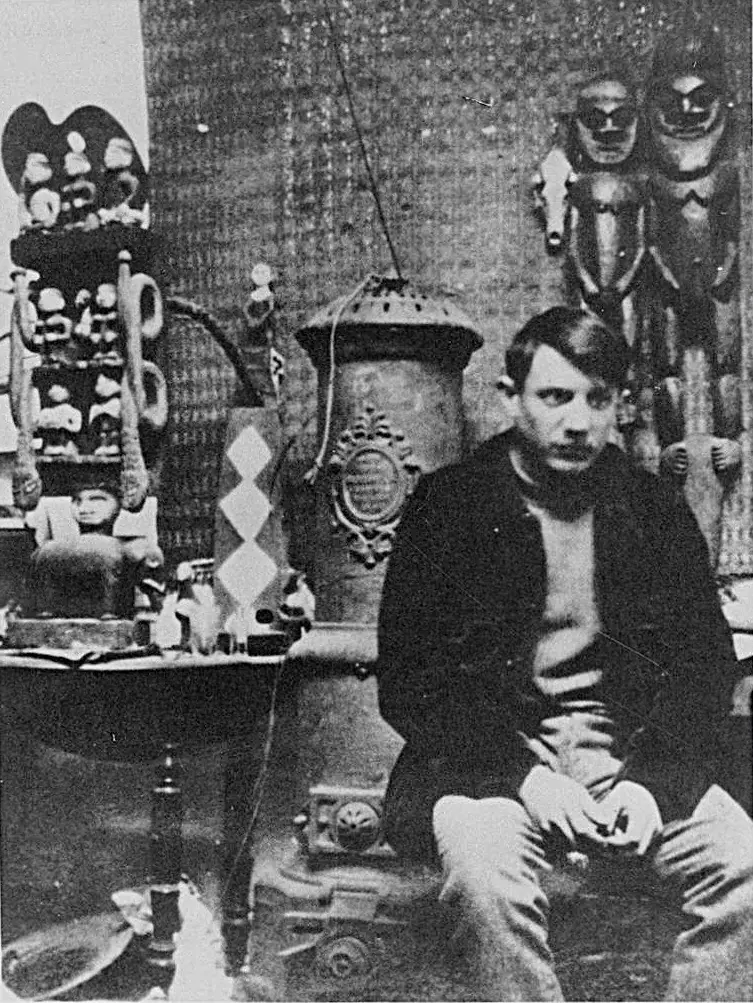
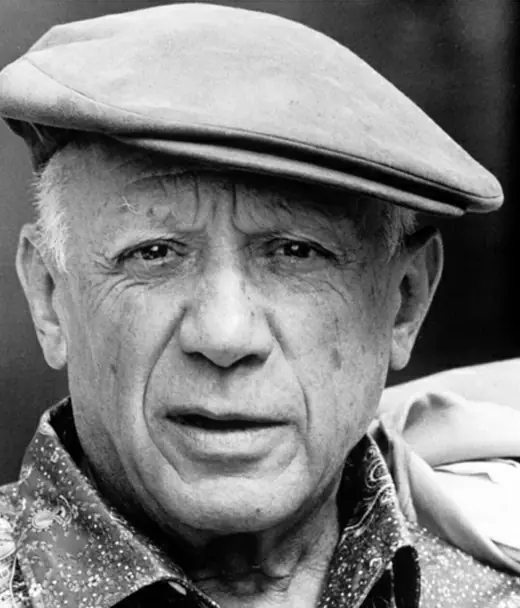
Pablo Picasso died at Mougins on April 8, 1973, at 91. He left five houses, a bank account, gold, and — the reason anyone is still talking about it — roughly 45,000 works of art, most of them his own, most of them never sold, most of them in rooms he had not opened in years.
He left no will. Not a lost will, not a disputed will, not a will scribbled on the back of something. Nothing. A man who signed his name to more objects than almost anyone in history never signed the one document that says what happens next.
What followed took six years to resolve and required a court-appointed administrator, an auctioneer with a five-year assignment, and a statute passed the year before he died that changed which of his children the law was willing to see.
A family tree that changed twice during the case
At the moment of death, French law recognised two heirs: his widow Jacqueline Roque, whom he married in 1961, and Paulo, his only son born inside a marriage — the child of his first wife, Olga Khokhlova.
Three of his children were not on that list. Maya, born to Marie-Thérèse Walter in 1935. Claude and Paloma, born to Françoise Gilot in 1947 and 1949. Under the French law of filiation as it stood for most of Picasso's life, children born outside marriage did not inherit on equal terms.
That law had just changed. The loi du 3 janvier 1972 on filiation reworked the rights of children born outside marriage, and in 1974 it was applied to this estate. Maya, Claude and Paloma were recognised as heirs. Three people who had been outside the estate were inside it, a year after the death.
Then the tree changed again. Paulo died in 1975, and his share passed to his children, Marina and Bernard. Paulo's eldest son, Pablito, had died on July 2, 1973, at 24.
So the estate that opened with two heirs closed with six people entitled to a share, none of whom Picasso had ever named in writing, and several of whom had never been in a room together.
Five years counting a man's own collection
France appointed an administrator, Pierre Zecri, and an expert, the auctioneer Maurice Rheims, to find and value everything. The work ran from 1974 to 1977 on the core inventory and later still on the tail of it.
The difficulty was not locating the famous paintings. It was that Picasso had kept nearly everything: studies, false starts, sketchbooks, plates, proofs, ceramics he never intended to sell, and — his own line — the largest collection of Picassos in the world. Every one of those objects had to be catalogued and given a value, because an intestate share is a fraction, and a fraction of an unvalued thing is nothing at all.
When the inventory closed in 1977, the estate was valued at 1,372,903,256 francs. Contemporary English-language reporting put it near $260 million. Both numbers are period figures for a body of work now worth a multiple of either.
The state took paintings instead of money
French inheritance tax on an estate this size was enormous, and the heirs' assets were almost entirely unsold art. Paying in cash would have meant a forced sale large enough to move the market against itself.
France had already built the escape hatch. A 1968 law permits dation en paiement — settling inheritance tax by transferring works of art the state considers important to the national heritage. The Picasso estate became the first great use of it.
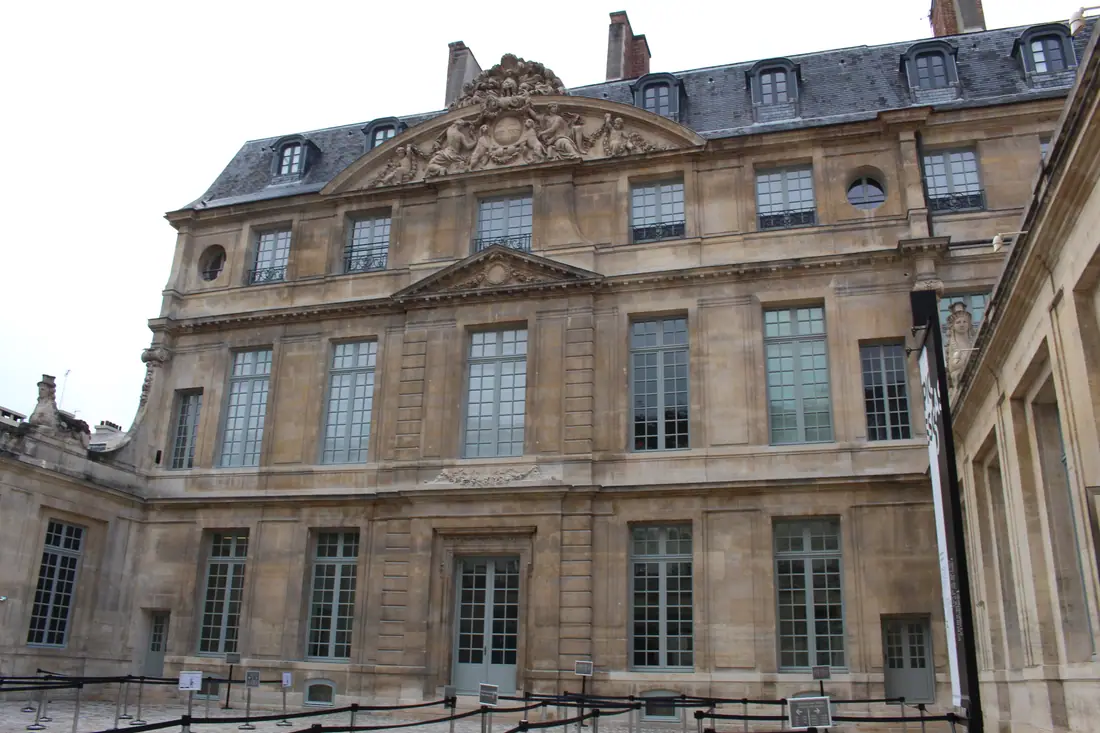
In 1979 the heirs made a dation of roughly 3,800 works, chosen with Dominique Bozo and approved that year. Those works are the founding collection of the Musée Picasso, which opened in the Hôtel Salé in the Marais in 1985. Jacqueline Picasso died in 1986, and a further dation from her estate enlarged the museum again.
The division of what was left was settled between 1979 and 1980. Reported shares: the widow about three-tenths of the art; Maya, Claude and Paloma one-tenth each; Marina and Bernard one-fifth each. Marina took the villa La Californie at Cannes; Bernard took the château de Boisgeloup.
It is the rarest outcome in this archive: an intestate estate that produced a national museum. It is also the most expensive route to one. Reporting on the settlement put the professional cost in the tens of millions of dollars, and the six-year figure is not in dispute.
The part a will could not have fixed either
Dividing the objects did not divide the name. The right to license Picasso's signature, image and works stayed with the heirs collectively, and the management of it has been a recurring subject of family disagreement in the decades since. Picasso Administration, the entity that handles those rights, has been run by different members of the family at different times.
That is worth separating out. The absence of a will explains the six years, the fractions and the inventory. It does not explain the licensing arguments, which are a feature of any estate whose principal asset is a name that keeps earning after the person stops. A will helps with the first problem. Only a structure — a trust, a company, a stated succession of control — helps with the second.
Timeline
- Apr 8, 1973Picasso dies at Mougins, aged 91, without a will. Heirs recognised at that moment: his widow Jacqueline and his son Paulo.
- Jul 2, 1973Paulo's eldest son, Pablito, dies at 24.
- 1974The loi du 3 janvier 1972 on filiation is applied to the estate. Maya, Claude and Paloma are recognised as heirs.
- 1974–1977Administrator Pierre Zecri and expert Maurice Rheims inventory and value the works.
- 1975Paulo dies. His share passes to his children, Marina and Bernard.
- 1977The inventory closes. The estate is valued at 1,372,903,256 francs.
- 1979The heirs make a dation to the French state of roughly 3,800 works, under the 1968 law permitting inheritance tax to be paid in art.
- 1979–1980The division among the six heirs is settled, six years after the death.
- 1985The Musée Picasso opens in the Hôtel Salé, Paris, built on the dation.
- 1986–1990Jacqueline Picasso dies; a further dation from her estate enlarges the museum.
What actually went wrong
- No will, at all. Not a contested one — an absent one. Every subsequent problem in this file is downstream of a document that would have taken an afternoon.
- An estate made almost entirely of one illiquid asset class. Art cannot be divided into fractions without first being counted and valued, and it cannot pay a tax bill without being sold. Both problems are solvable in advance and neither was addressed.
- A family the law had not caught up with. Three of his five children were outside the intestacy rules when he died and inside them a year later. Naming people in a will removes the question of whether the statute recognises them.
- No named person in charge. With no executor, France appointed an administrator and an expert, and the estate paid for both for years. An intestate estate is administered by whoever the court picks.
- No plan for the name. The works were divided. The right to license the name was not, and it has been argued about ever since.
Would it have gone that way in Florida?
The family tree question resolves faster here — but the hard part, the art and the tax, would be worse in Florida, not better.
Take the two halves separately, because Florida answers them very differently.
Who inherits. Florida does not care whether a child was born inside a marriage. Under Fla. Stat. §732.108, a person born out of wedlock is a descendant of the mother, and is a descendant of the father where the parents participated in a marriage ceremony, or paternity is established by adjudication before or after death, or the father acknowledged paternity in writing. Picasso publicly acknowledged all of his children, so in a Florida administration Maya, Claude and Paloma would be lineal descendants from day one. There is no 1974 moment.
In what shares. With a surviving spouse and descendants who are not all descendants of that spouse — exactly this family — §732.102(4) gives the surviving spouse one-half of the intestate estate. The other half passes to the descendants under §732.103(1), per stirpes: each of the five children takes an equal branch, and Paulo's branch, had he predeceased, would be split between his surviving children. The whole allocation is arithmetic, and it is done on the day the heirs are identified, not six years later.
Who runs it. No executor named means the court appoints. §733.301 sets the order of preference in an intestate estate: the surviving spouse first, then the person selected by a majority in interest of the heirs, then an heir the court chooses. With six heirs and no majority, that appointment is itself a fight. §733.617 sets presumptively reasonable compensation for the personal representative — 3% of the first $1 million, sliding down from there, plus extraordinary services — and §733.106(4) lets the court direct which part of the estate pays attorney fees, including charging a specific beneficiary's share.
The tax, and the part that is worse here. Florida has no estate tax at all — Fla. Const. Art. VII, §5 forbids one beyond the old federal credit, which no longer exists. So the state takes nothing. But the federal estate tax applies to a US decedent's worldwide estate, and the United States has no dation. The IRS does not accept paintings in satisfaction of tax. A Florida version of this estate pays in cash, on a nine-month clock, which for an illiquid collection means either a forced sale, a §6166 installment election if the assets qualify, or borrowing against the art. There would be no Musée Picasso — there would be an auction.
The honest caveat. None of this makes Florida intestacy a good outcome. It makes it a fast one on the question of who, and no help at all on the question of how. Fractional co-ownership of tens of thousands of objects by six people who do not agree is a bad ending in any jurisdiction, and it is what intestacy produces everywhere.
The practical instruction. If your estate's value sits in things rather than accounts — art, a collection, a working farm, a closely held business — the will is the easy half. Do three more things: put the illiquid assets in a revocable trust so no court has to appoint anyone to control them, name the person in charge and their successor in writing, and identify in advance where the tax and the administration costs will be paid from. A liquidity plan is what turns a collection into an inheritance instead of a liquidation.
What people ask us about this.
Further reading
Third-party sites. Not ours, not endorsed, not kept current by us — just the places worth going next.
Sources
- 8 avril 1973 : retour sur « la succession du siècle » — Le Journal des Arts
- Running the numbers on the impending sale of Marina Picasso's 'inheritance without love' — The Conversation, 2015
- Musée Picasso — history and formation of the collection — Wikipedia
- Marina Picasso — Wikipedia
- Pablo Picasso — Wikipedia
- Fla. Stat. §732.108 — Adopted persons and persons born out of wedlock — The Florida Senate
- Fla. Stat. §732.102 — Spouse's share of intestate estate — The Florida Senate
- Fla. Stat. §733.301 — Preference in appointment of personal representative — The Florida Senate
If this is your situation
Free 30-minute consult. Plain English. No pressure.
Nearly every case in this archive turned on something ordinary — an unwitnessed page, a stale beneficiary line, a document nobody could find. Those are cheap to fix while you're alive and expensive to fix afterward.