Johnny Hallyday
The biggest rock star France ever produced signed a trust under California law leaving everything to his widow and their two daughters. France reserves three-quarters of an estate for the children. The question was which country he actually lived in.

Johnny Hallyday sold an estimated 110 million records across sixty years and never meaningfully broke outside the French-speaking world, which is part of what makes this case what it is. He was, in France, a national institution. He also owned a house in Los Angeles.
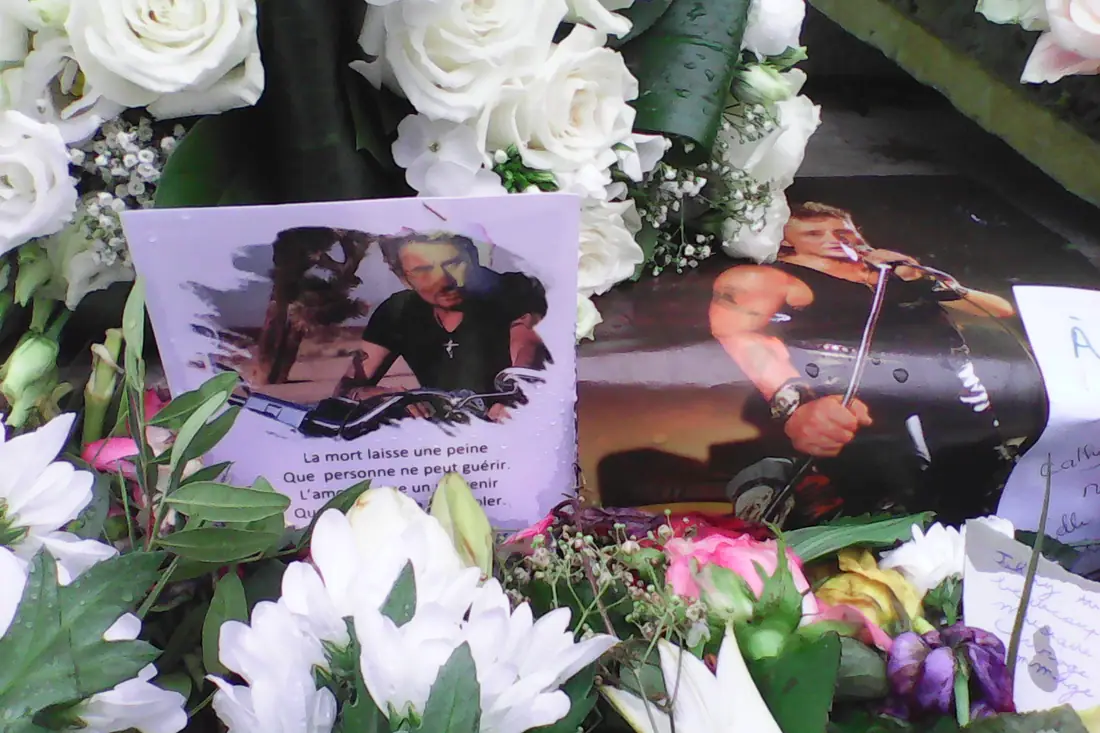
He died on December 5, 2017, at Marnes-la-Coquette outside Paris, aged 74, of lung cancer. His funeral cortège came down the Champs-Élysées.
His estate plan was a trust governed by California law, under which his fourth wife Laeticia and their two adopted daughters, Jade and Joy, were the beneficiaries. His two eldest children — David Hallyday, his son with Sylvie Vartan, and Laura Smet, his daughter with Nathalie Baye — took nothing under it.
In France, that is not a thing you can do. In California, it is entirely ordinary. The whole case is the collision between those two sentences.
Not 'is this fair'. 'Which country did he live in'
Since 2015, cross-border succession inside the EU has run on Regulation (EU) 650/2012 — Brussels IV. Its default rule is simple and consequential: the law that governs the whole estate is the law of the country where the deceased had their habitual residence at death, wherever the assets sit and whatever nationality the person held. A person can choose the law of their nationality instead, but that choice must be made expressly.
So the fight was never a moral argument about disinheritance. It was a factual argument about a man's life. If Hallyday was habitually resident in California, California law governed, the trust stood, and the elder two children received nothing. If he was habitually resident in France, French law governed, the réserve applied, and half the estate at minimum was theirs by operation of law.
David Hallyday and Laura Smet filed in the tribunal de grande instance de Nanterre. In February 2019 the court ordered royalties from the posthumous album Mon pays c'est l'amour held pending the outcome — the album had already sold in the hundreds of thousands.
Nanterre: he lived in France
The Nanterre tribunal ruled on May 28, 2019 that Hallyday's habitual residence at death was France, so French courts had jurisdiction over the whole succession and French law applied.
The reasoning is worth reading because it is how these cases are actually decided — not by counting passport stamps but by looking at where a life was centred. The court found the regularity and duration of his presence in France in the years before his death; that he toured almost exclusively in France, before French-speaking audiences; and that his financial interests were plainly centred in France, because that is where the money was earned. It treated the California time as time spent to rest and find inspiration rather than as evidence of a settled intention to live there.
Laeticia Hallyday appealed and then, in October 2019, dropped the appeal on jurisdiction. The venue question was over. What remained was the merits, and the arithmetic on the merits was not favourable to the trust.
Settled, on terms nobody had to prove
The case never reached a judgment on the substance. An agreement signed on July 3, 2020 ended the litigation. David Hallyday's lawyer said publicly that all legal action was being dropped.
Reported terms: Laeticia Hallyday retained the properties in Saint-Barthélemy, Los Angeles and Marnes-la-Coquette and assumed the estate's tax liability, reported in the range of €30 million; Laura Smet received a payment reported at €1.5 million plus a further sum corresponding to her half-brother's share, David having agreed to pass his to her. Figures come from French press reports rather than a public judgment, and the parties have not published the agreement.
So the great forced-heirship showdown ended in a private deal, which is how nearly all of them end. What survives is the Nanterre habitual-residence ruling, which is now the case everyone cites when a French national dies with an American estate plan.
France changed the statute
In 2021 the French legislature added a third paragraph to article 913 of the Civil Code. Where the deceased or one of their children is a national of an EU member state or habitually resides in one, and the foreign law that governs the succession contains no reserve mechanism for children at all, each child may take a compensatory levy — a prélèvement compensatoire — out of assets located in France, up to the value of what French reserve rights would have given them.
It is, in effect, a statutory answer to the Jarre and Colombier decisions: move to California all you like, but if there are assets in France, the children can reach them.
It does not apply here. The provision came from the law of August 24, 2021 and applies to successions opened on or after November 1, 2021. Hallyday's opened in December 2017.
Timeline
- 2014Hallyday signs the estate documents governed by California law naming his wife and their two daughters.
- Sep 27, 2017The Cour de cassation decides the Jarre and Colombier cases: a foreign law without forced heirship is not by itself contrary to French international public policy.
- Dec 5, 2017Johnny Hallyday dies at Marnes-la-Coquette, aged 74, of lung cancer.
- Feb 2018David Hallyday and Laura Smet file in the tribunal de grande instance de Nanterre, contending French law governs the succession.
- Oct 2018The posthumous album Mon pays c'est l'amour is released and sells in enormous numbers, adding a live income stream to the disputed estate.
- Feb 2019The Nanterre court orders royalties from the album held pending the outcome.
- May 28, 2019Nanterre rules that Hallyday's habitual residence at death was France. French courts have jurisdiction; French law applies.
- Oct 2019Laeticia Hallyday withdraws the appeal on jurisdiction.
- Jul 3, 2020A settlement agreement is signed. All proceedings are dropped; no judgment on the merits is ever entered.
- Nov 1, 2021France's new compensatory levy under article 913, paragraph 3 takes effect — for successions opened from that date.
What actually went wrong
- The plan assumed a country the life did not match. A California trust is a fine instrument for a person habitually resident in California. Habitual residence under Brussels IV is a factual finding about where a life is centred, not a box on a form, and the touring schedule pointed one way.
- No express choice of law. Regulation 650/2012 lets a person choose the law of their nationality to govern the whole succession, but the choice must be expressly made. Hallyday held French nationality, so the available choice would have pointed back to France anyway — but the absence of any express choice left the entire case turning on a fact question.
- A forced-heirship jurisdiction was in play from the start. Where a reserve exists, disinheriting a child is not a drafting problem to be solved. It is a rule that applies over the document.
- Assets in the reserve country. Even after 2021's compensatory levy, the practical exposure follows the property. Real estate and royalty streams located in France are reachable in France.
- A blended family and a document that named half of it. Two children in, two children out, and no contemporaneous explanation on the record. That is the shape of nearly every contested estate in this archive.
Would it have gone that way in Florida?
Florida is California on this, not France. You can disinherit an adult child here. You cannot disinherit a spouse.
Florida has no forced heirship for adult children. There is no reserve, no quotité disponible, no fraction that a competent adult child is entitled to over the will's objection. A Florida will that leaves an adult child nothing is valid, and the reason it is valid is that testamentary freedom is the default rule in every American state.
Two real limits exist, and they are not the French one. The first is the elective share. Under Fla. Stat. §732.201 a surviving spouse of a Florida-domiciled decedent may elect to take 30% of the elective estate, and §732.2035 defines that estate broadly enough to include revocable trust property, pay-on-death accounts, joint property and certain transfers within a year of death. If Hallyday's family shape were reversed — everything to the children, nothing to the spouse — Florida would override the document just as firmly as France did, only for a different person. The election deadline in §732.2135 is six months after service of the notice of administration or two years after death, whichever comes first, and it can be waived in advance under §732.702.
The second limit is homestead, which is the closest thing Florida has to forced heirship — and it protects minor children, not adult ones. Under §732.4015 and Fla. Const. Art. X, §4, a Florida homestead cannot be devised at all if the owner is survived by a spouse or a minor child, subject to the exception where the owner is survived by a spouse and no minor child and devises the homestead outright to that spouse. Devise it to anyone else and §732.401 takes over: a life estate to the surviving spouse with a remainder to the descendants, or the spouse's election to take a half-interest as tenant in common. The document does not get a vote.
The pretermitted-child rule is narrower than people think. §732.302 protects a child born or adopted after the will was executed and not provided for. It does not help a child who existed when the will was signed and was left out on purpose. A child who was named and given nothing is simply disinherited.
On which law applies. Florida generally looks to the law of the decedent's domicile at death for succession to personal property and to Florida law for Florida real property, so the domicile question that decided Hallyday matters here too — it is the same fight in a different vocabulary. §732.502(2) helps at the margins: a will executed by a non-resident is valid in Florida if it was validly executed under the law of the place where the testator was at the time, with two exceptions — Florida will not accept a holographic or nuncupative will no matter where it was made.
The honest caveat. If you own property in a forced-heirship country — France, Spain, most of Latin America, much of the Middle East — a Florida will and a Florida trust do not make that property Florida property. Situs law and the local reserve can still reach real estate there, and since November 2021 France has an express mechanism for doing exactly that.
The practical instruction. If you intend to leave an adult child nothing, do three things. Name the child in the document and say the omission is deliberate — silence looks like an oversight and invites a pretermitted-child argument. Do not rely on a no-contest clause, because §732.517 makes them unenforceable in Florida wills and §736.1108 does the same for trusts. And if any part of your estate is abroad, have a lawyer in that country look at it before you sign, because the country where the asset sits gets the last word on the asset.
What people ask us about this.


Further reading
Third-party sites. Not ours, not endorsed, not kept current by us — just the places worth going next.
Sources
- Succession de Johnny Hallyday : pourquoi la justice française a-t-elle tranché en faveur de David Hallyday et Laura Smet ? — Le Club des Juristes
- Children of French rocker Hallyday bury hatchet with widow over inheritance — France 24, Jul 2020
- Héritage Hallyday : Laeticia renonce à faire appel sur la compétence des tribunaux français — France Bleu, Oct 2019
- Cour de cassation, 1re civ., 27 septembre 2017, n° 16-13.151 — Légifrance
- Article 913 du Code civil — Légifrance
- Un nouveau prélèvement compensatoire dans les successions internationales — Cridon Nord-Est
- Johnny Hallyday — Wikipedia
- Fla. Stat. §732.4015 — Devise of homestead — The Florida Senate
- Fla. Stat. §732.302 — Pretermitted children — The Florida Senate
If this is your situation
Free 30-minute consult. Plain English. No pressure.
Nearly every case in this archive turned on something ordinary — an unwitnessed page, a stale beneficiary line, a document nobody could find. Those are cheap to fix while you're alive and expensive to fix afterward.