Sandra West
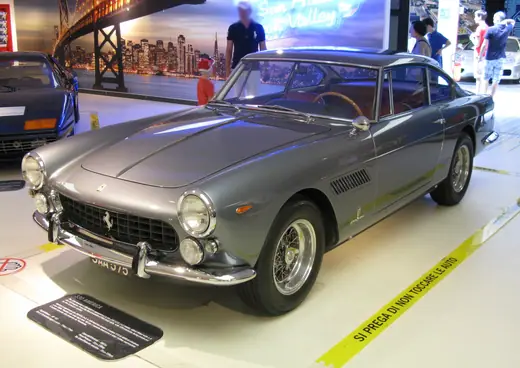
West directed that she be buried in a lace nightgown, seated in her powder-blue 1964 Ferrari, with the seat slanted comfortably. A Los Angeles court held the instruction unusual but not illegal. San Antonio poured two truckloads of concrete over the grave.

Sandra West was a Beverly Hills millionaire. She died on March 10, 1977, and left an instruction about her own burial specific enough to require a judge.
She was to be buried dressed in her lace nightgown, sitting in her 1964 Ferrari, with the seat slanted comfortably.
That last clause is the one that makes the case. Not the car and not the nightgown — the posture. A person who writes with the seat slanted comfortably into a testamentary instruction has thought about the arrangement in detail and expects it to be honoured in detail.
The estate went to court rather than guess. On April 11, 1977, Commissioner Franklin E. Dana of the Los Angeles Superior Court held that the request was, in the phrase that has followed the case ever since, unusual, but not illegal.
Nine feet down, in a twenty-foot crate
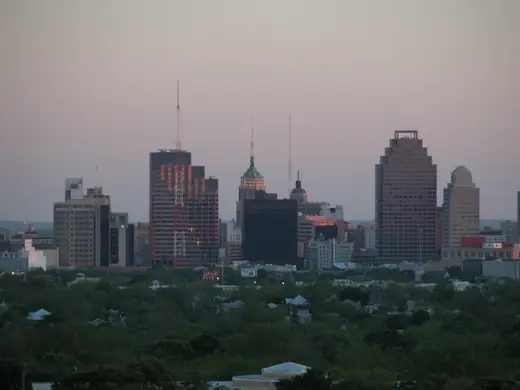
The burial took place on May 19, 1977, at a cemetery in San Antonio, Texas — nine weeks after her death, which is what it takes to obtain a ruling and then engineer a grave to fit a car.
The car, with West's body seated in it as directed, was loaded into a twenty-foot wooden crate and lowered into a grave nine feet deep. Then two truckloads of concrete were poured over the whole thing.
The concrete was not ceremonial. A Ferrari 330 America is a valuable car and its location was public knowledge, and the estate had an obvious and immediate problem with grave robbing. Sealing the crate in concrete was the practical answer to a risk the will itself created.
The grave is still there and still gets visitors. What visitors see is a flat marker. What is underneath it is a sports car in a concrete block.

The instruction worked because someone asked first
Most eccentric burial instructions do not survive contact with the funeral industry, the cemetery, or the family. This one did, and the reason is procedural rather than romantic: the estate obtained a court ruling before acting, in a jurisdiction that had no rule against what was being asked.
That is a genuinely useful precedent for anyone with an unusual final wish. The obstacle is almost never that the wish is illegal. It is that the people holding the body have to make an immediate decision, under time pressure, with no authority to do anything strange, and no ruling telling them they are covered. Faced with that, they do the ordinary thing.
The other structural problem with a burial instruction is timing, and it is not solvable by drafting alone. A will is frequently not read until after the funeral. An instruction about a body has to reach the people making arrangements within roughly seventy-two hours of death, which is why the will is the wrong document for it — or at least, not the only document for it.
The last thing worth noticing is the cost. Somebody paid for the crate, the excavation, the crane work, the concrete, and the litigation, and all of it came out of the estate before a single beneficiary saw anything. An unusual funeral is an estate expense, and estate expenses are paid before inheritances.
Timeline
- Mar 10, 1977Sandra West dies in Beverly Hills, leaving an instruction that she be buried in her lace nightgown, seated in her 1964 Ferrari, with the seat slanted comfortably.
- Mar–Apr 1977The estate seeks a ruling on whether the instruction can lawfully be carried out.
- Apr 11, 1977Commissioner Franklin E. Dana of the Los Angeles Superior Court holds the request unusual, but not illegal.
- Apr–May 1977Arrangements are made in San Antonio, Texas, for a grave capable of taking a car.
- May 19, 1977West is buried seated in the Ferrari. The car and body are loaded into a twenty-foot crate, lowered into a nine-foot grave, and covered with two truckloads of concrete.
What actually went wrong
- Nothing failed — but it needed a court, and that is the story. The instruction was lawful, and it still took a judicial ruling and nine weeks before anybody would act on it.
- A burial instruction in an estate document. Wills are read on the estate's timetable, not the funeral home's. An unusual direction about a body has to be in the hands of the family and the funeral director within days of death.
- A very expensive disposition, paid before anyone inherits. Crate, excavation, crane, concrete, and legal fees all came out of the estate ahead of the beneficiaries.
- A valuable asset placed where it can be stolen. The concrete exists because a publicly known grave containing a Ferrari is a security problem. Any instruction that buries value creates that problem automatically.
Would it have gone that way in Florida?
Florida would allow it too — and unlike California in 1977, Florida law says in writing that your directions come first.
West's estate had to ask a court whether an unusual burial was permissible. In Florida you would generally not need to, because the ranking is set out by statute.
Fla. Stat. §497.005 defines the “legally authorized person” entitled to control the disposition of a decedent's remains, and the order it establishes begins with the decedent — specifically, the decedent where written inter vivos authorizations and directions have been provided. Only after that come the surviving spouse, adult children, parents, adult siblings, adult grandchildren, grandparents, and remoter kin. Your own written directions outrank your spouse and your children.
Read that phrase carefully, because it contains the practical instruction: inter vivos. A writing made during life. Not a clause discovered during probate. A separate signed direction, given to the family and the funeral establishment, is what actually operates on the day — and Florida's own statute is telling you which document it wants to see.
Would a court stop it? Almost certainly not. Florida has no rule against being buried in a car, and courts do not audit taste in funerals. The realistic constraints are the ones nobody thinks about: the cemetery's own rules on plot size and vault requirements, local health and burial permitting, and the physical fact that a standard plot is not the size of a Ferrari. Get the cemetery's written agreement before you write the instruction, not after.
Now the money, which is the part that catches people. Under §733.707, expenses of an estate are paid in classes. Class 1 is costs and expenses of administration, personal representative compensation, and attorney fees. Class 2 is reasonable funeral, interment, and grave-marker expenses — and Class 2 is capped at $6,000 in total, whoever pays it. That cap is not a limit on what you may spend. It is a limit on what gets protected priority when there is not enough money to go round. A burial costing many multiples of $6,000 is fine out of a solvent estate. Out of an insolvent one, the excess drops to the back of the queue with the ordinary creditors, and the personal representative who authorised it is exposed.
One further Florida wrinkle if the vehicle is the point: §732.402 treats up to two qualifying vehicles as exempt property for a surviving spouse or children — property that passes outside creditors' reach. Burying the car is a disposition of an asset, and if a surviving spouse or child would otherwise be entitled to claim it, that is a conversation to have while you are alive rather than a surprise at the graveside.
So, the instruction. Write it separately, sign it, date it, and hand it out. One copy to the person you expect to handle arrangements, one to your funeral or cemetery provider, one with your estate documents. Get the cemetery's written sign-off on anything unusual. And pre-fund it — a prepaid contract or a designated account — so nobody has to decide between honouring your wishes and protecting themselves under §733.707. Sandra West's estate got a judge to say yes. A signed page and a cemetery letter get you there without one.
What people ask us about this.
Further reading
Third-party sites. Not ours, not endorsed, not kept current by us — just the places worth going next.
Sources
- April 1977 — April 11: Sandra West burial ruling — Wikipedia
- 11 unusual wills, burial requests, and final wishes — Everplans
- Fla. Stat. §497.005 — Definitions — The Florida Senate
- Fla. Stat. §733.707 — Order of payment of expenses and obligations — The Florida Senate
- Fla. Stat. §732.402 — Exempt property — The Florida Senate
- Fla. Stat. §732.502 — Execution of wills — The Florida Senate
If this is your situation
Free 30-minute consult. Plain English. No pressure.
Nearly every case in this archive turned on something ordinary — an unwitnessed page, a stale beneficiary line, a document nobody could find. Those are cheap to fix while you're alive and expensive to fix afterward.