Fredric Baur
He was the organic chemist who worked out how to stack a curved potato crisp in a cylinder, and he asked his family to bury part of him in one. On the day, his children stopped to buy a can on the way to the funeral home. Original flavour. It is the only case in this archive where the instruction was simply followed.
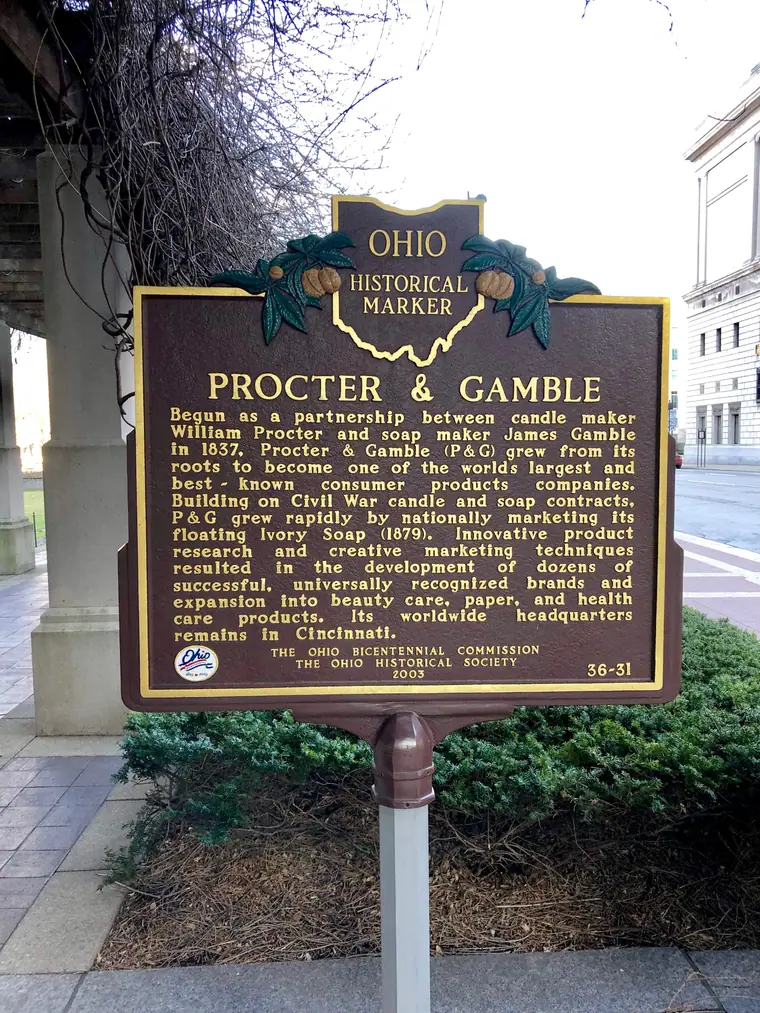
Fredric J. Baur was born in Toledo on July 14, 1918. He took a bachelor's degree at the University of Toledo and a master's and doctorate in organic chemistry at Ohio State, served as an aviation physiologist in the US Navy, and spent his career at Procter & Gamble in Cincinnati working on frying oils and food storage. Among other things, he worked on freeze-dried ice cream.
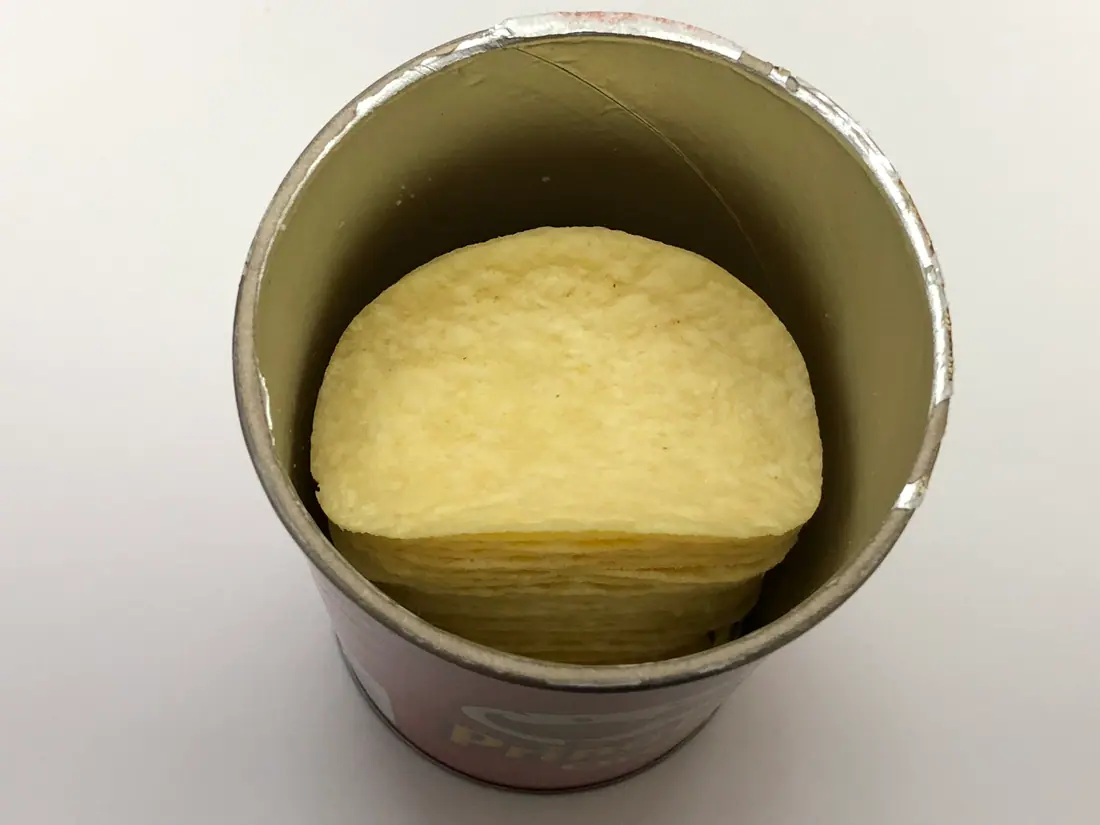
He is remembered for a cylinder. In July 1966 he and a colleague filed the patent for stacking uniform, saddle-shaped snack chips inside a rigid, gas-impervious tube — US Patent 3,498,798, granted in March 1970 and assigned to Procter & Gamble. It is the Pringles can, and the patent is unromantic and completely clear about why it exists: less air, less breakage, less oxidative rancidity, a longer shelf life than a bag.
He was, by every account, proud of it. At some point he told his family that when he died he wanted part of him buried in one.
He died on May 4, 2008, in Cincinnati, at 89, of Alzheimer's disease.
They stopped and bought one on the way
His children have described the moment plainly. On the way to the funeral home, they stopped and bought the can. His son Larry has said the family considered which one, briefly, and then did the obvious thing.
They chose Original flavour. Part of Baur's cremated remains went into the container and into the ground at a cemetery in Springfield Township, Ohio. The rest was divided — some to a conventional urn, some to a grandchild.
That division is worth pausing on, because it is the quiet drafting lesson inside the joke. Cremated remains can be split. They can go to more than one place, in more than one form, for more than one purpose, and different family members can each end up with something that means something. A body cannot be divided. Ashes can, and that fact defuses an extraordinary number of family disputes before they start.
The whole thing cost approximately the price of a can of crisps plus a normal cremation. It required no litigation, no petition, and no permit.
Four conditions, all of them ordinary
Strip the story of its charm and what is left is a checklist. Baur's wish satisfied every item on it, which is why nothing went wrong:
- It was specific. Not “do something fun with me.” A named object, and a clear instruction about which part of him went in it.
- The people who would carry it out already knew. He told his children while he was alive. Nobody discovered it in a drawer three weeks after the funeral, which is the single most common way a disposition wish fails.
- It was cheap. No structure to build, no aircraft, no permit, no cannon. Cost is the silent killer of final wishes — an expensive one becomes a decision the family has to make about money at the worst possible moment.
- It broke no rule. Cremated remains in a rigid container, buried in a cemetery plot. Unusual, entirely lawful, and a funeral director had no reason to object.
Compare that with a will directing an elaborate memorial, unfunded, discovered after the burial, in a state whose statute puts a different relative in charge of the decision. Same sincerity. Opposite outcome.
Timeline
- Jul 14, 1918Fredric J. Baur is born in Toledo, Ohio.
- 1940s–50sDegrees from the University of Toledo and Ohio State; service as a US Navy aviation physiologist; a career at Procter & Gamble on frying oils and food storage.
- Jul 29, 1966Baur and a colleague file the patent for stacking uniform curved chips in a rigid, gas-impervious cylinder.
- Mar 3, 1970US Patent 3,498,798 is granted, assigned to Procter & Gamble. It is the Pringles can.
- Before 2008Baur tells his children he wants part of him buried in one of the cans.
- May 4, 2008Baur dies in Cincinnati at 89.
- May 2008On the way to the funeral home the family buys a can — Original flavour. Part of his cremated remains is buried in it in Springfield Township, Ohio; the rest goes to an urn and to a grandchild.
What actually went wrong
- Nothing. That is the case. It is included precisely because it is the control group for everything else in this archive.
- He told people, rather than only writing it. That is a strength here and a risk in general — a spoken wish depends entirely on the memory and goodwill of whoever heard it. Write it down as well.
- No document meant no backstop. Had one child disagreed, the statutory hierarchy would have decided, and a can of crisps would have lost to whoever ranked highest and objected.
- The mundane version of this fails constantly. Not because the wish is strange, but because the family learns of it after the disposition has already happened.
Would it have gone that way in Florida?
Entirely lawful in Florida — and nobody is permitted to tell you otherwise.
Start with the point most people get wrong at the worst possible time: a Florida funeral provider may not tell you that the law requires a casket, an outer burial container, or any particular merchandise when it does not. Under the FTC's Funeral Rule, 16 C.F.R. §453.3(d)(1), it is a deceptive practice to represent that federal, state, or local law — or a particular cemetery or crematory — requires the purchase of any funeral goods or services when that is not the case. §453.3(b)(1) applies the same rule specifically to caskets for direct cremation, and requires providers to disclose that alternative containers made of fiberboard or composition materials may be used.
Florida enforces the same principle through licensing. Fla. Stat. §497.152, the disciplinary-grounds section for funeral, cemetery, and consumer services licensees, reaches false statements about the legal requirements for funeral merchandise, misrepresentations about the necessity or protective qualities of caskets and burial containers, and failures to give a written contract with itemized pricing. A Florida licensee who tells a family that state law requires a casket is not merely being pushy — they are exposed to discipline by the Board.
So the Baur question in Florida — may I be buried in a container of my choosing? — is a plain yes for cremated remains. Ashes may be buried, kept, divided among family members, scattered, or placed in whatever container you want, and no statute prescribes the vessel. The practical constraints are contractual rather than statutory: a cemetery may impose its own rules about what goes in the ground and may require an outer burial container as a condition of the plot, and a crematory will require a rigid, combustible container for the cremation itself — which is not a casket and does not have to be bought from anyone in particular.
The instruction side is where Florida gives you real control. §497.005 places the decedent's own written directions first in the hierarchy of who may direct the disposition of remains — ahead of a spouse, ahead of adult children. Baur's wish was carried out because his children were united and willing. Yours does not have to depend on that. Put it in a standalone signed document and the funeral director has an instrument to follow rather than a family conversation to referee.
The honest caveat, and it is the same one that runs through every case in this section: speed beats paper. Disposition happens in the first two or three days, often before anyone opens a will or a safe. A written direction only helps if it physically reaches the funeral home while the decision is still open.
The practical instruction, and it takes an afternoon: write down what you want done with your remains, including the container, and sign it. Give a copy to your health care surrogate, a copy to the funeral home, and a copy to your family. Then say it out loud, the way Baur did — because the document settles the law, and the conversation settles the family.
What people ask us about this.
Further reading
Third-party sites. Not ours, not endorsed, not kept current by us — just the places worth going next.
Sources
- Fred Baur — chemist, Pringles can designer, and his burial request — Wikipedia
- Pringles — product history, the can, and Baur's request — Wikipedia
- US Patent 3,498,798 — Packaging of chip-type snack food products — Google Patents / USPTO
- 16 C.F.R. §453.3 — Misrepresentations — Cornell Legal Information Institute
- Fla. Stat. §497.152 — Disciplinary grounds — The Florida Senate
- Fla. Stat. §497.005 — Definitions, including “legally authorized person” — The Florida Senate
- Fla. Stat. Ch. 497 — Funeral, Cemetery, and Consumer Services — The Florida Senate
If this is your situation
Free 30-minute consult. Plain English. No pressure.
Nearly every case in this archive turned on something ordinary — an unwitnessed page, a stale beneficiary line, a document nobody could find. Those are cheap to fix while you're alive and expensive to fix afterward.