Hunter S. Thompson
He designed it in 1978, on camera, twenty-seven years before he needed it: a 153-foot tower in the shape of a two-thumbed fist, with a cannon on top to fire his ashes over Colorado. It happened exactly as drawn. It cost a reported $3 million, and his estate did not pay a cent of it.
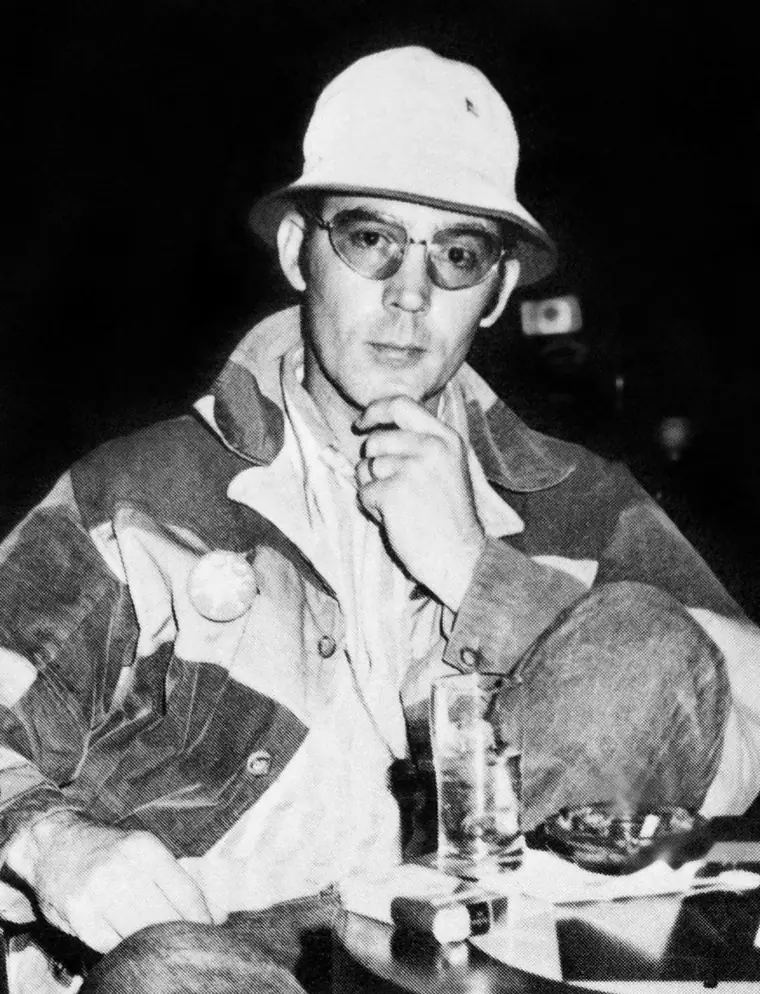
Hunter S. Thompson died on February 20, 2005, at his home at Owl Farm in Woody Creek, Colorado, at 67, of a self-inflicted gunshot wound.
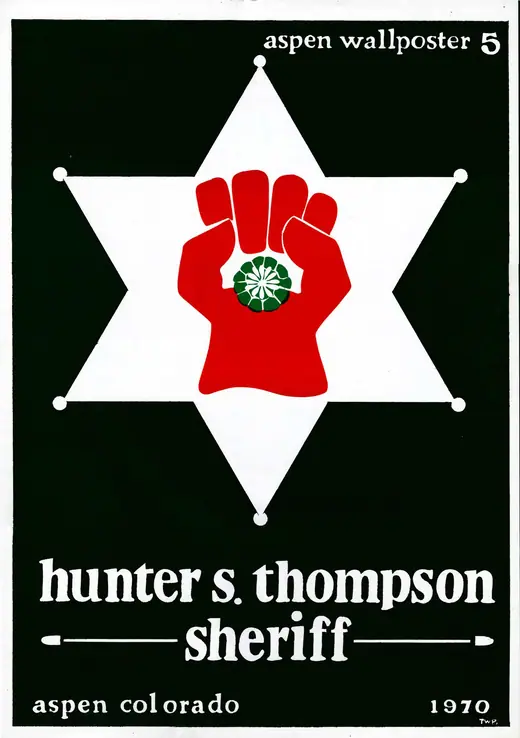
Six months later, on August 20, 2005, about 280 people stood on his property and watched his ashes fired from a cannon mounted on top of a 153-foot tower shaped like a fist with two thumbs, gripping a peyote button — the Gonzo symbol he had adopted during his 1970 run for sheriff of Pitkin County. There were fireworks in red, white, blue and green. The guests included Senators John Kerry and George McGovern, Jack Nicholson, and Bill Murray.
The reported cost was $3 million. It was paid by Johnny Depp, who had played Thompson on screen and had become a friend.
He drew it in 1978, and told the BBC about it
This is the part that separates Thompson from every other eccentric-funeral story: he did not leave a cryptic line in a will for somebody to interpret. He described the thing out loud, decades early, to a camera crew, with the artist standing next to him.
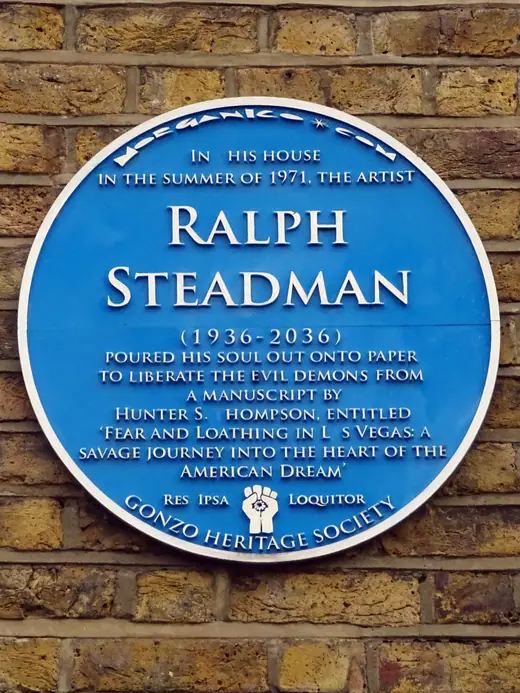
In 1978 the BBC's Omnibus filmed Thompson and Ralph Steadman for a documentary directed by Nigel Finch — released as Fear and Loathing on the Road to Hollywood, and better known by its alternate title, Fear and Loathing in Gonzovision. Part of it was shot at Owl Farm. In it, Thompson set out the monument: the fist, the peyote button, the cannon, the height. Steadman drew it. Thompson's contribution to the design brief, as Steadman has recounted it, was an instruction that the fist be given two thumbs, immediately.
So when he died in 2005, nobody had to decide what he would have wanted. The design existed. The artist was alive. The film was on a Criterion disc. His widow, Anita Thompson, has confirmed that Depp funded the service.
That is the whole trick, and it has nothing to do with money. The reason it worked is not that a movie star wrote a cheque. It is that the wish was recorded in a form other people could find, understand, and act on without a lawyer.
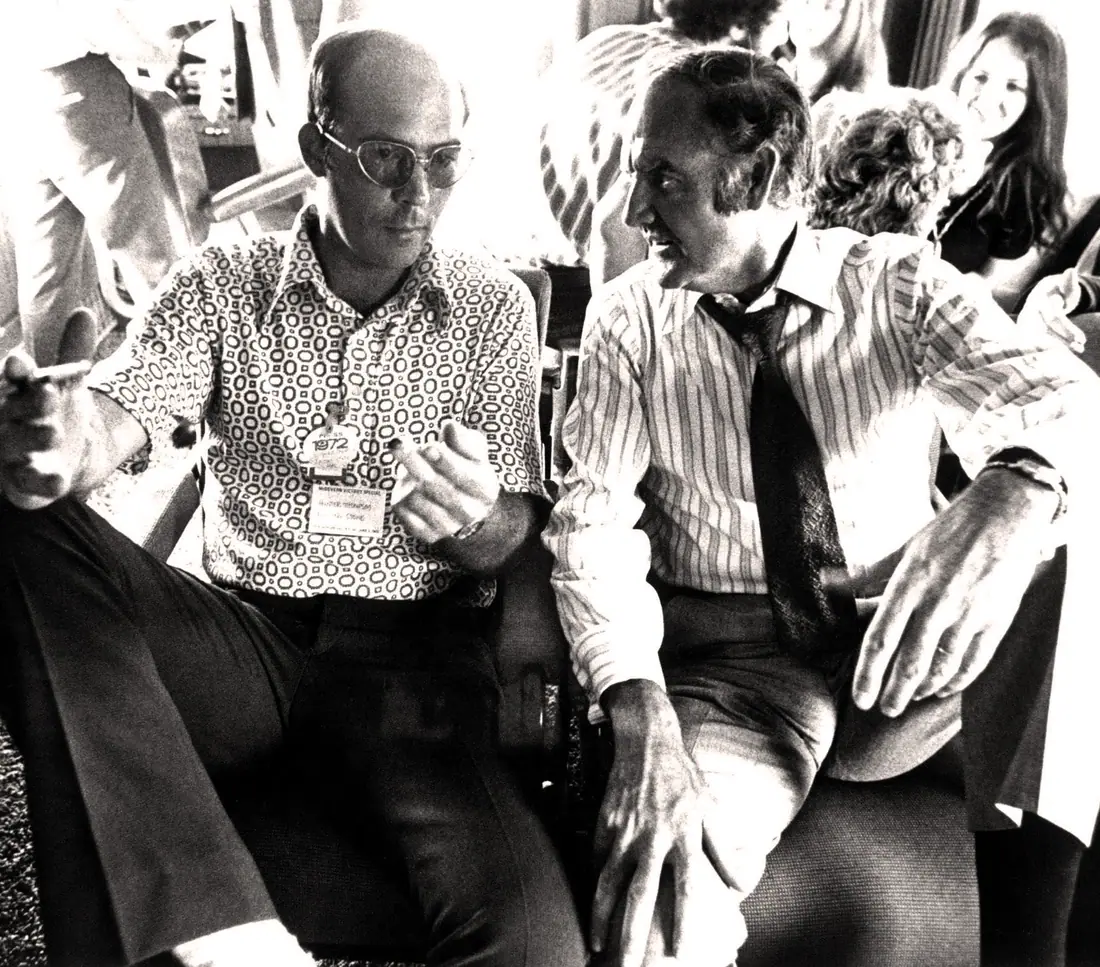
Who actually pays for a funeral
Set the cannon aside and look at the money, because this is the question every family faces in the first week and almost nobody has thought about in advance.
There are only four places funeral money comes from, and they arrive at different speeds:
- Somebody's own pocket, immediately. A family member pays the funeral home and hopes to be reimbursed later. This is how most funerals in America are actually financed, and it is the source of an enormous amount of quiet family resentment.
- A pre-paid contract signed by the decedent. The arrangements were bought and funded in advance. Nothing has to be decided, argued about, or fronted.
- The estate, in due course. Reimbursement, after a personal representative is appointed, in the order the statute sets, and subject to whatever the statute allows.
- A third party who simply chooses to. A friend, an employer, a foundation. That is a gift, not a claim — the payer has no automatic right of reimbursement from the estate unless the estate agreed.
Thompson's funeral ran on the fourth. Depp paid because he wanted to, and a $3 million memorial never became an estate expense, a creditor claim, or a fight among beneficiaries. That is unusually clean, and it is unusual precisely because it depended on a wealthy friend rather than a document.
For everyone without a wealthy friend, the equivalent instrument is the third bullet crossed with the second: decide it, write it down, and pre-fund it. The gap between a wish and a funded arrangement is where families go to war.
The unglamorous machinery under a spectacular gesture
One more thing worth noticing about the Gonzo tower, because it is invisible in every photograph: somebody had to get permission.
A 153-foot structure is a building. Firing pyrotechnics from the top of it is a licensed display. Scattering cremated remains is governed by its own rules depending on where the ash lands. None of that is romantic and all of it has to be arranged by living people, on a deadline, while grieving.
This is the practical reason that dramatic final wishes so often fail. Not because a court forbids them — courts are remarkably tolerant of eccentricity in the disposition of remains — but because the person who wanted it is no longer available to do the paperwork, and the people who are available do not know who to call.
Thompson's succeeded because it was designed twenty-seven years in advance by a man who told everyone, and executed by people with the resources and the six months to arrange it. The ordinary version of that is a preneed contract with a funeral provider, signed on a weekday afternoon, which does the same job for a normal amount of money.
Timeline
- 1970Thompson runs for sheriff of Pitkin County, Colorado. The two-thumbed fist gripping a peyote button becomes his symbol.
- 1978The BBC's Omnibus films Thompson and Ralph Steadman at Owl Farm. Thompson describes the monument and the cannon; Steadman draws it.
- Feb 20, 2005Thompson dies at Owl Farm in Woody Creek, Colorado, at 67, of a self-inflicted gunshot wound.
- Spring 2005Johnny Depp agrees to fund the memorial Thompson had described. The tower is built on the property.
- Aug 20, 2005About 280 guests attend. Thompson's ashes are fired from a cannon atop the 153-foot Gonzo fist, with fireworks.
- Aug 2005The reported cost is $3 million, paid by Depp. No part of it is charged to the estate.
- After 2005Owl Farm remains with his widow, Anita Thompson. The monument stands on private land.
What actually went wrong
- Nothing, and that is the rarity. Specific instructions, recorded decades early in a form other people could find, plus outside funding. Two conditions almost never satisfied at once.
- The instructions were never in a will — which is why they worked. A will is read weeks after the funeral. A filmed conversation, a drawing, and a widow who knew are faster than probate every time.
- The funding depended on a person, not an instrument. Had Depp declined, the tower would have been an idea in a documentary. Generosity is not a plan.
- Everything about it required permits and lead time. Six months and a private ranch. Most families have four days and a funeral home.
Would it have gone that way in Florida?
The cannon would be lawful in Florida. The bill would not be the estate's problem — Florida gives funeral expenses priority only up to $6,000.
Start with the number, because it is the one nobody expects. Under Fla. Stat. §733.707, the statute that sets the order in which a Florida estate pays what it owes, Class 2 is “reasonable funeral, interment, and grave marker expenses, whether paid by a guardian, the personal representative, or any other person, not to exceed the aggregate of $6,000.”
Read that carefully. It does not make a lavish funeral illegal. It means that if the estate is short, only $6,000 of funeral expense sits ahead of the tax authorities, the medical bills, the family allowance, and the ordinary creditors. Spend $3 million on a memorial in Florida and expect the estate to reimburse it, and you are a Class 8 claimant for $2,994,000 — behind almost everyone. A personal representative who pays a spectacular funeral out of estate funds while creditors go unpaid has a personal problem, not a philosophical one.
Which is exactly why the Thompson model matters. A funeral paid by a third party who is not seeking reimbursement is not an estate expense at all. Depp's payment was a gift; it created no claim, no priority question, and no argument among beneficiaries. If someone intends to fund a large memorial for you, the cleanest version is that they simply pay the vendors — not that they advance money and file a claim.
The instruction side is Florida's real strength here. §497.005 defines the “legally authorized person” who may direct the disposition of remains, and it places the decedent's own written directions at the top of the hierarchy — above spouse, above children. Thompson's advantage was that his wishes were unmistakable and widely known. In Florida you get that by writing them down in a standalone signed document and handing copies to the people who will be in the room.
Then fund it. Chapter 497 authorises preneed contracts — you select and pay for arrangements during your life through a licensed provider, with the funds held under the chapter's trusting requirements. A preneed contract converts a wish into an obligation somebody is contractually bound to perform, and it does it without touching the $6,000 priority question, because the money never has to come out of the estate at all.
The honest caveat about spectacle: Florida will not stop you being unusual, but it will make you get permits. Chapter 791 governs fireworks, and a supervised public display requires a permit from the county or municipality, applied for at least 15 days in advance, approved by the local police and fire chiefs, with a competent operator and a bond. Scattering at sea is federally regulated. None of that is a bar. All of it needs a living person with lead time — which is the argument for arranging it yourself rather than leaving it as a request.
The practical instruction: write your disposition wishes in a standalone signed document, not in your will; give copies to your health care surrogate, your funeral provider, and the relative most likely to object; and if the arrangements are elaborate or expensive, pre-fund them under a Chapter 497 preneed contract. Do not leave a $50,000 idea and a $6,000 priority to a grieving family with a chequebook.
What people ask us about this.
Further reading
Third-party sites. Not ours, not endorsed, not kept current by us — just the places worth going next.
Sources
- Hunter S. Thompson — death and 2005 memorial — Wikipedia
- Ralph Steadman — the Gonzo fist monument and the 1978 BBC film — Wikipedia
- Fear and Loathing on the Road to Hollywood (1978, BBC Omnibus) — Wikipedia
- Gonzo journalism — origin of the two-thumbed fist — Wikipedia
- Fla. Stat. §733.707 — Order of payment of expenses and obligations — The Florida Senate
- Fla. Stat. §497.005 — Definitions, including “legally authorized person” — The Florida Senate
- Fla. Stat. Ch. 791 — Fireworks — The Florida Senate
- Fla. Stat. Ch. 497 — Funeral, Cemetery, and Consumer Services — The Florida Senate
If this is your situation
Free 30-minute consult. Plain English. No pressure.
Nearly every case in this archive turned on something ordinary — an unwitnessed page, a stale beneficiary line, a document nobody could find. Those are cheap to fix while you're alive and expensive to fix afterward.