Rock Hudson
His estate poured into a trust written in 1974, and none of it was ever public. What was public was the lawsuit: a claim against the estate for what he did while he was alive. A jury awarded $21.75 million. A judge cut it to $5.5 million, and it stood.
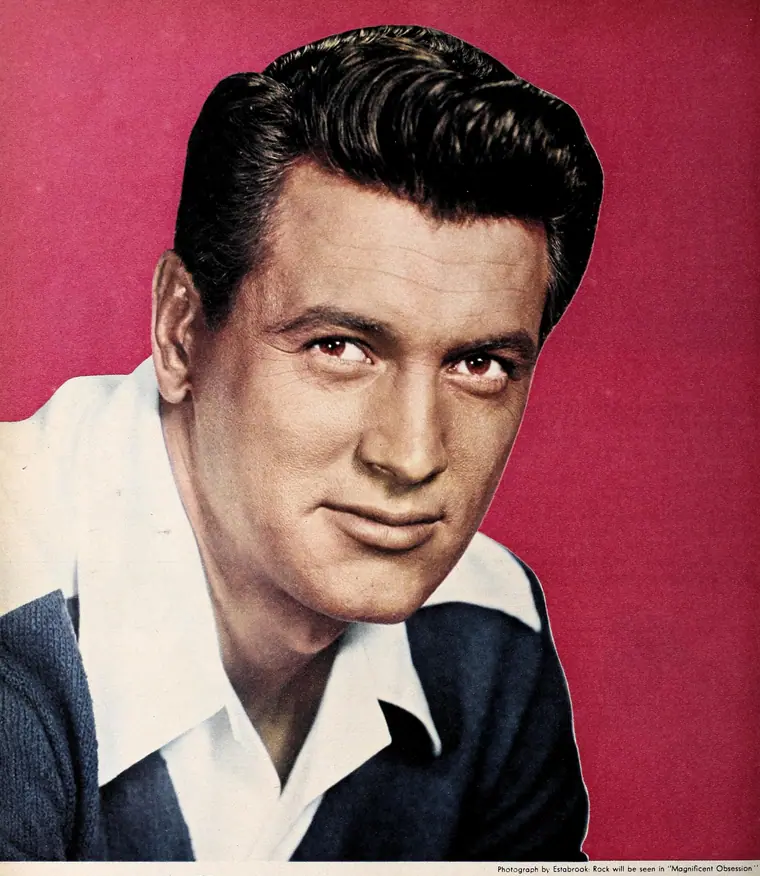
Rock Hudson died at his home in Beverly Hills on October 2, 1985, of AIDS-related complications. He was 59, and he was the first major American public figure to acknowledge the diagnosis — his publicist confirmed it on July 25, 1985, ten weeks before his death. Per his instructions there was no funeral, and he was cremated within hours.
His estate plan was, by the standards of this archive, well built. The will filed in Los Angeles was a pour-over will: it directed everything into a trust he had created in 1974, eleven years before he died. Wallace Sheft, his business manager, was approved as executor and trustee. A bond of $8.6 million was set. His only living relatives — twelve cousins — took nothing under it, and the terms of the trust itself never entered the public record and are not public now.
There was one revision worth noting, because it is the same drafting move that runs through half of this section of the archive. His 1981 will had left Tom H. Clark the household furnishings, the cars and the film collection. A 1984 supplement revoked that gift and replaced it with a sentence: “I purposely make no provision for the benefit of Tom H. Clark.” Named, deliberate, no reason. It was not challenged.
None of that is what the case is about. The fight over this estate had nothing to do with the estate plan.
A lawsuit about conduct, filed against an estate
In November 1985, a month after Hudson's death, Marc Christian filed a $10 million suit in Los Angeles Superior Court against the estate and against Hudson's secretary, Mark Miller.
The claim was intentional infliction of emotional distress. Christian's case was that Hudson had been diagnosed on June 5, 1984, had told him he did not have the disease, and had continued a sexual relationship into February 1985 without disclosing it — and that Miller had also denied the illness when asked. Christian said he learned of the diagnosis from a television broadcast. He was tested repeatedly and never tested positive.
The defence disputed the account. The case went to trial in 1989 and the jury believed the plaintiff.
- February 1989. A Los Angeles Superior Court jury found that Hudson had engaged in “outrageous conduct” and awarded $14.5 million in compensatory damages, later bringing the total with punitive damages to $21.75 million.
- Post-trial. The trial judge reduced the award to $5.5 million.
- On appeal. A California appellate court affirmed the reduced figure, describing it as compensation for “the ultimate in personal horror, the fear of slow, agonizing death.” The California Supreme Court declined review.
- Settlement. The matter resolved for a sum Christian later said was less than $6 million. He died in 2009, at 56.
The number that matters to an estate lawyer is not $21.75 million or $5.5 million. It is 1985 to 1991 — six years in which an estate could not close, could not distribute with certainty, and had to reserve against a contingent liability nobody could size.
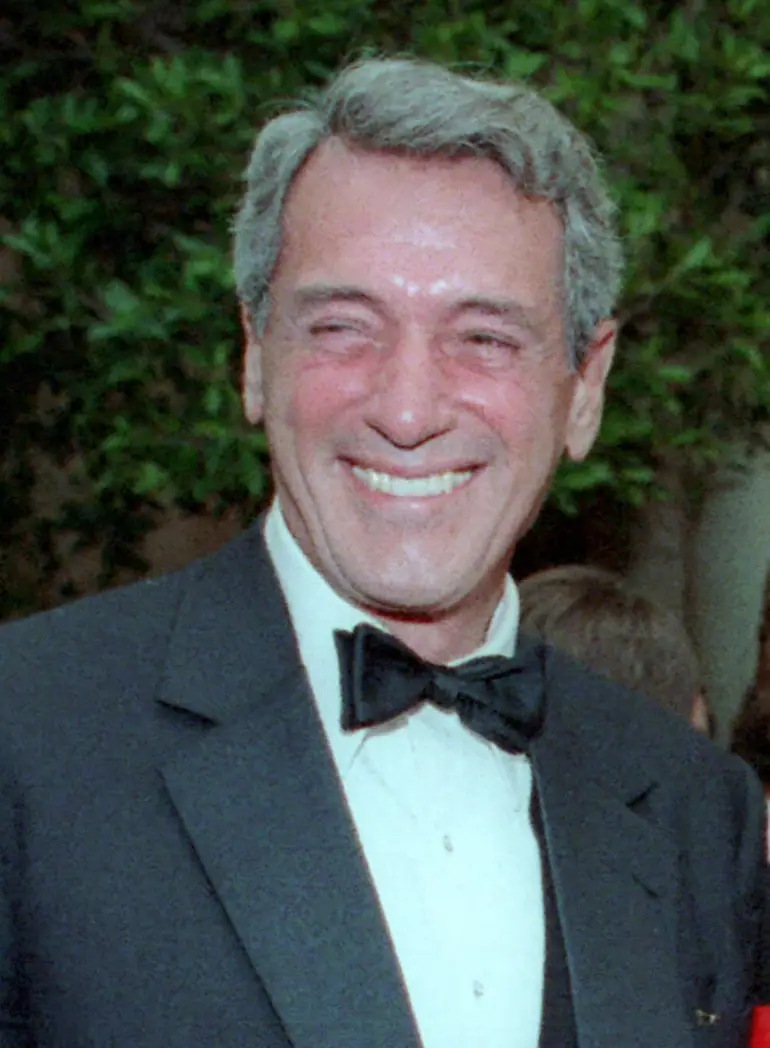
Why a claim like this outranks every plan
Estate planning is almost entirely about the right-hand side of the ledger: who gets what. Cases like this one are about the left-hand side, and the left-hand side gets paid first.
Three consequences follow, and every one of them showed up here.
- Death does not extinguish the claim. Personal tort claims survive against the estate in every American jurisdiction. The defendant changes; the exposure does not.
- The best witness is unavailable. Hudson could not be deposed, could not testify, could not explain. Everything the jury heard about what he knew and when came from other people's accounts. That asymmetry generally favours the claimant.
- The estate cannot safely distribute. A personal representative who pays out beneficiaries while a serious claim is pending can end up personally liable if the claim succeeds. So the estate sits, accruing fees, for as long as the litigation runs.
The 1974 trust did its job perfectly. It kept the dispositive terms private, kept the twelve cousins out, and never generated a single line of reporting. It simply had no bearing on the only fight that happened.
Timeline
- 1974Hudson creates the trust that will eventually receive his entire estate. Its terms never become public.
- 1981He executes a will leaving Tom H. Clark the household furnishings, cars and film collection.
- Jun 5, 1984Hudson is diagnosed. He keeps the diagnosis private and continues working. Later that year a supplement to the will revokes the gift to Tom H. Clark: “I purposely make no provision for the benefit of Tom H. Clark.”
- Jul 25, 1985His publicist publicly confirms the diagnosis — the first such acknowledgment by a major American public figure.
- Oct 2, 1985Hudson dies at home in Beverly Hills at 59. Per his instructions there is no funeral and he is cremated within hours.
- Nov 1985Marc Christian sues the estate and Hudson's secretary Mark Miller for $10 million, alleging intentional infliction of emotional distress.
- Dec 6, 1985The will is admitted to probate in Los Angeles. Wallace Sheft is approved as executor and trustee; an $8.6 million bond is set.
- Feb 1989A Los Angeles jury finds outrageous conduct and awards $14.5 million compensatory, with the total reaching $21.75 million.
- 1989–1991The trial judge reduces the award to $5.5 million; an appellate court affirms and the California Supreme Court declines review. The matter settles for a reported sum under $6 million.
What actually went wrong
- The plan addressed distribution and not exposure. A carefully drafted 1974 trust said nothing about the only liability that ever materialised. Estate planning that ignores potential claims plans for half the problem.
- No liability insurance sat behind the risk. Personal umbrella coverage exists precisely to fund a defence and a settlement of an intentional-tort-adjacent claim without touching estate assets. Most people who could benefit from it do not carry it.
- A six-year hold on an estate nobody could close. The trust was designed for privacy and speed. A pending tort claim overrides both. Reserves have to be set, distributions delayed, and administration fees accrue the entire time.
- Nothing in writing from the person who could explain it. With the principal witness gone, the record was built entirely from other people's testimony. A contemporaneous written record — of what was disclosed, when, and to whom — is the only defence a decedent can leave behind.
Would it have gone that way in Florida?
The claim survives in Florida too — but the punitive damages would not, and a missed probate deadline would have ended it outright.
Start with the survival question, because it is not close. Fla. Stat. §46.021 is one sentence: “No cause of action dies with the person. All causes of action survive and may be commenced, prosecuted, and defended in the name of the person prescribed by law.” A tort claim against a Florida decedent is brought against the personal representative and proceeds like any other.
Next, the deadline — and this is where Florida claimants lose cases they would otherwise win. A tort plaintiff suing an estate is a creditor, and must file a statement of claim in the probate proceeding, not merely a lawsuit in circuit court. §733.702 requires it within 3 months of the first publication of the notice to creditors, or within 30 days of service if the claimant was reasonably ascertainable. §733.710 imposes an absolute 2-year bar from the date of death regardless of notice. Marc Christian filed within a month, so he would have cleared both. Plenty of claimants do not, and a perfectly meritorious tort claim dies on a probate technicality.
Then the damages, and here Florida changes the number substantially. In Lohr v. Byrd, 522 So. 2d 845 (Fla. 1988), the Florida Supreme Court held that punitive damages may not be recovered against the estate of a deceased tortfeasor. The reasoning is that punishment lands on innocent heirs rather than the wrongdoer, and deterrence depends on the wrongdoer perceiving it. Compensatory damages survive in full; the punitive component simply does not exist. A Florida version of this verdict is compensatory-only.
Where the judgment sits in line is set by §733.707. A tort judgment is a Class 8 claim — the last class, behind administration costs, funeral expenses up to $6,000, federal taxes, last-illness medical bills, family allowance, child-support arrears and post-death business debts. In a solvent estate that is academic. In a thin one, a Class 8 claimant with a large judgment can collect very little.
One Florida-specific wrinkle on the underlying duty. §384.24(2) makes it unlawful for a person who knows they have HIV, and who has been informed they may transmit it through sexual intercourse, to have sexual intercourse with another person unless that person has been informed and has consented. That is a criminal statute, and this archive states no view about anyone's conduct. Its relevance is narrow and structural: in Florida, the disclosure obligation this case turned on is written into the statute books rather than left to a jury's sense of what is outrageous.
The instruction: two things. If you may have exposure — professional, personal, financial — carry an umbrella liability policy and keep it in force; it funds a defence after your death without touching what you left anyone. And if you are on the other side, a person with a claim against someone who has died: open or monitor the probate and file a statement of claim immediately. The three-month window is short, the two-year bar is absolute, and neither one cares how strong your case is.
What people ask us about this.
Further reading
Third-party sites. Not ours, not endorsed, not kept current by us — just the places worth going next.
Sources
- Rock Hudson — diagnosis, death, and the Marc Christian litigation — Wikipedia
- Marc Christian, 56; sued Rock Hudson estate over AIDS risk — The Washington Post, Dec 2009
- Marc Christian; won AIDS suit vs. Hudson estate — The Boston Globe, Dec 2009
- Rock Hudson's male lover is awarded $14.5 million — The Washington Post, Feb 16, 1989
- Actor Rock Hudson's will was admitted to probate Friday — UPI Archives, Dec 6, 1985
- Actor Rock Hudson left his entire estate to a trust — UPI Archives, Nov 7, 1985
- Lohr v. Byrd, 522 So. 2d 845 (Fla. 1988) — Justia — Florida Supreme Court
- Fla. Stat. §384.24 — Unlawful acts — The Florida Senate
If this is your situation
Free 30-minute consult. Plain English. No pressure.
Nearly every case in this archive turned on something ordinary — an unwitnessed page, a stale beneficiary line, a document nobody could find. Those are cheap to fix while you're alive and expensive to fix afterward.