Diana, Princess of Wales
She signed a will, and the next day a letter of wishes: her jewellery and three quarters of her possessions to her sons, one quarter divided among her seventeen godchildren. Four months after she died, the executors obtained a court order changing it. Nobody outside the process knew for years.
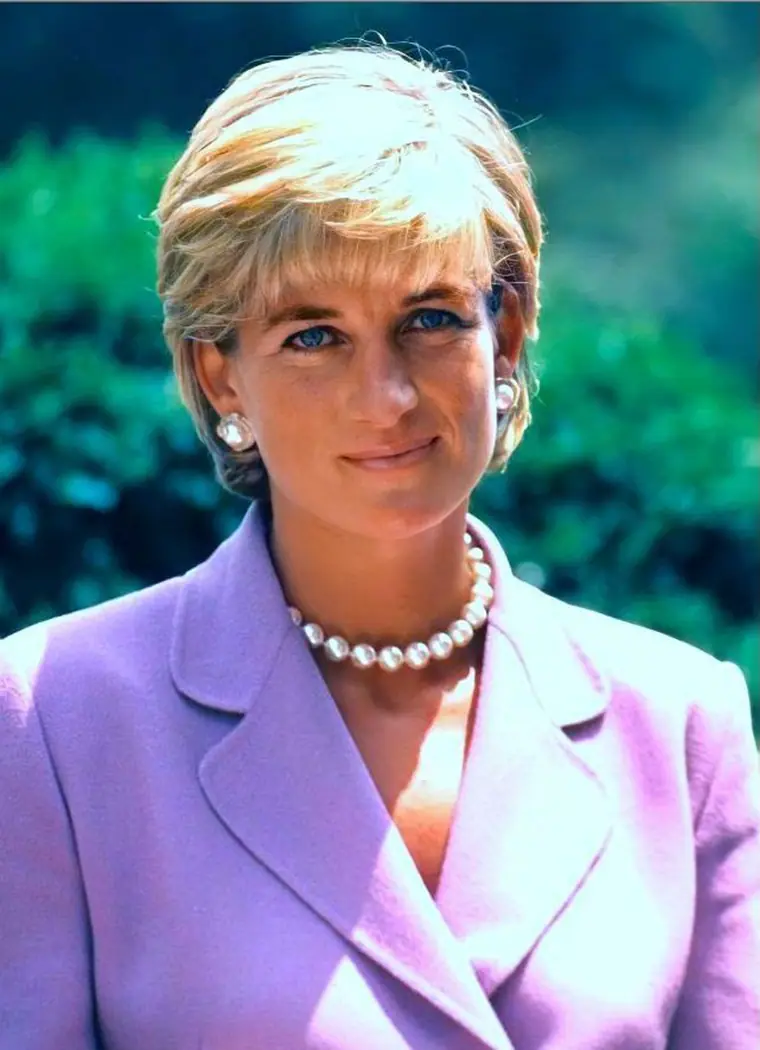
Diana, Princess of Wales died in Paris on August 31, 1997, at 36. Her will had been signed four years earlier, on June 1, 1993, and amended by a codicil in 1996. Probate valued the estate at roughly £21 million gross; published net figures after inheritance tax vary between accounts.
The will left the residue in trust for Prince William and Prince Harry, to vest when they reached 25. Her mother, Frances Shand Kydd, and her sister, Lady Sarah McCorquodale, acted as executors.
The day after signing the will, on June 2, 1993, she signed a separate document — a letter of wishes. It asked that her jewellery and three quarters of her personal chattels go to her sons, and that the remaining quarter be divided among her seventeen godchildren. The will itself instructed the executors to give effect to any such written memorandum of wishes within two years of her death.
In December 1997, four months after the death, the executors applied to the court and obtained a variation order.
A wish is not a devise
The distinction between a binding gift and a precatory request is the oldest one in will drafting, and it is invisible to almost everyone who is not a lawyer.
I give one quarter of my personal chattels to my godchildren in equal shares is a devise. It creates an entitlement. If the executors do not perform it, the godchildren have a claim and a court to take it to.
I wish my executors to divide one quarter of my personal chattels among my godchildren is a wish. It informs a discretion. If the executors exercise that discretion differently, there is generally nothing to enforce, because there was never an entitlement in the first place.
Diana's chattels came through the second route. The document that expressed her intentions most specifically was the one with the least legal force — and it was, by design, a private letter rather than a public testamentary instrument.

Two executors, one court order, and years of silence
English law permits a deed or order of variation: within two years of a death, the arrangements can be rewritten, and for tax and succession purposes the rewrite is treated as though the deceased had made it. There is no direct American equivalent.
The variation obtained in December 1997 did two things. It moved the vesting age for the princes from 25 to 30 — they would receive income from 25, but capital only at 30. And it replaced the godchildren's quarter share of the chattels with a single memento each, selected by the executors.
Neither change was hidden from the court. Both were essentially unknown outside it. The terms of the variation surfaced years later through separate legal proceedings, at which point several of the godchildren and their families were reported to be unhappy about it, having believed for years that they had received what Diana intended.
Two observations, and neither is an accusation. The first: a variation that a court approves is lawful, and delaying a large inheritance from 25 to 30 is a conventional, defensible piece of trust practice that many careful parents specify themselves. The second: the people whose gift changed were minors and had no seat at the table, and the reason there was a table at all is that the gift had been framed as a wish rather than a devise. Both things are true at once.
The charity that sued in California and paid $25 million
There is a second, entirely separate legal story, and it is the one estate lawyers actually cite.
The Diana, Princess of Wales Memorial Fund was established after her death and raised very large sums. In 1998 it sued The Franklin Mint in federal court in California over unauthorised Diana merchandise — plates, dolls, jewellery — advancing a claim under California's post-mortem right of publicity statute and a Lanham Act false-endorsement claim.
It lost both. In Cairns v. Franklin Mint Co., 292 F.3d 1139 (9th Cir. 2002), the Ninth Circuit held that the publicity claim was governed by the law of the decedent's domicile — Great Britain — and that British law recognises no post-mortem right of publicity at all. The false-endorsement claim failed separately because the use did not serve a source-identifying function and there was no likelihood of confusion about origin. The district judge described the case in stark terms and awarded the Mint $2.3 million in fees.
Then it got worse. Franklin Mint and its principals brought a malicious prosecution action. In 2004 the Fund settled it by paying $25 million into escrow — $1 million to a foundation controlled by the plaintiffs and $24 million in grants to jointly approved charities. A related malicious prosecution case against the Fund's law firm settled in January 2011, also for $25 million.
A charity founded to give money away spent six years and twenty-five million dollars establishing that the asset it thought it was protecting did not legally exist. The controlling fact was domicile — the same fact that decided the Marilyn Monroe publicity fight ten years later.
Timeline
- Jun 1, 1993Diana signs her will. Residue in trust for her two sons, vesting at 25.
- Jun 2, 1993She signs a letter of wishes: jewellery and three quarters of chattels to her sons, one quarter among her seventeen godchildren.
- Aug 31, 1997After a codicil in 1996, Diana dies in Paris at 36. Frances Shand Kydd and Lady Sarah McCorquodale act as executors.
- Dec 1997The executors obtain a court variation order: vesting age moved from 25 to 30, and the godchildren's quarter share replaced with one memento each.
- 1998The Diana, Princess of Wales Memorial Fund sues The Franklin Mint in California over unauthorised merchandise.
- 2000The district court dismisses the Fund's claims and later awards the Mint $2.3 million in fees.
- Jun 2002Cairns v. Franklin Mint Co., 292 F.3d 1139: the Ninth Circuit holds the publicity claim is governed by the law of Diana's domicile, which recognises no post-mortem publicity right.
- 2004The Fund settles the resulting malicious prosecution claim by paying $25 million into escrow for distribution to charities.
- Jan 2011A related malicious prosecution case against the Fund's former law firm settles, also for $25 million.
What actually went wrong
- The most specific document had the least force. The letter of wishes said exactly what she wanted. Because it was precatory, it created no entitlement in anyone, and the discretion it informed could be exercised another way.
- Beneficiaries who could not participate. The godchildren were children. Nobody in the room was arguing their corner as of right, and they learned what had happened years afterwards.
- No successor instruction for the chattels. Personal effects are where the real fights live — the jewellery, the letters, the dresses. A quarter share of an undefined pool of chattels is an invitation to interpret, and interpretation is discretion by another name.
- A charity litigating an asset nobody had verified. The Fund spent six years and $25 million on a post-mortem publicity right that the governing law simply did not create. The choice-of-law question should have been the first memo, not the last ruling.
- Privacy purchased at the price of enforceability. A letter of wishes stays out of the public probate file. So does the reason anyone would have to comply with it.
Would it have gone that way in Florida?
Florida has no deed of variation — but it has three other doors to the same room, and it would have treated that letter exactly the same way: as a wish.
Three separate Florida questions here, and they come out in three different directions.
First, the letter of wishes. Florida would reach the same result England did. Under Fla. Stat. §732.6005, the testator's intent as expressed in the will controls its construction — and the courts read wish, request, desire, and hope as precatory: language that expresses a preference without imposing a duty. A quarter share described as something the testator wishes the executors would do is not a devise, and the people named in it are not devisees. If you want the godchildren to take, write “I give.” Two words, and the entire case disappears.
Second, the variation — and here Florida genuinely differs. There is no Florida instrument that lets a family retroactively rewrite a will as though the decedent had signed it that way. What Florida has instead is a set of narrower tools. Ch. 739, the Uniform Disclaimer of Property Interests Act, lets a beneficiary refuse a gift in whole or in part, in writing, with the property then passing as if the disclaimant had predeceased — a disclaimer under §739.104 works even against a spendthrift clause. §736.0412 allows nonjudicial modification of a trust after the settlor's death upon the unanimous agreement of the trustee and all qualified beneficiaries, notwithstanding a spendthrift clause or a no-amendment provision — though it does not reach trusts created before January 1, 2001, or charitable trusts while charitable interests remain. And §736.04113 and §736.04115 permit judicial modification, which is the route an executor in the Diana position would actually take.
Third, the catch that matters most, and it is the same one that mattered in 1997. Every one of those routes requires the beneficiaries to agree or to be represented. Minor beneficiaries cannot consent for themselves. Florida handles that through the virtual-representation rules in Ch. 731 and, where interests conflict, the appointment of a guardian ad litem. So the Florida version of this case is not that the change could not be made — it is that a Florida court modifying a minor's interest would have had someone in the room whose only job was that minor.
Fourth, the publicity right, which is where Florida is simply better. Cairns turned on domicile: British law gave the Fund nothing to sue on. Fla. Stat. §540.08 prohibits unauthorised commercial use of a person's name, portrait, photograph, or likeness and extends the right for forty years after death, enforceable by a surviving spouse, surviving children, or a licensee or assignee. A Florida-domiciled decedent's estate walks into that court with a statute in hand. Neither Diana's estate nor Marilyn Monroe's could.
The instruction: decide, for each thing you care about, whether you are giving it or hoping about it — and then use the matching verb. Letters of wishes are excellent for explaining why, for guiding a trustee's judgment on things that cannot be predicted, and for saying the parts that do not belong in a public file. They are the wrong place for any gift you would be upset to see go elsewhere. That gift belongs in the will, by name, in the imperative.
What people ask us about this.

Further reading
Third-party sites. Not ours, not endorsed, not kept current by us — just the places worth going next.
Sources
- As remainder of Princess Diana's estate passes to Harry, troubling questions remain — Forbes, Sep 2014
- Lesson from Princess Di: the right will is critical to carry out your wishes — InvestmentNews
- The secret changes to Princess Diana's will — Reader's Digest
- Cairns v. Franklin Mint Co., 292 F.3d 1139 (9th Cir. 2002) — United States Court of Appeals for the Ninth Circuit
- Cairns v. Franklin Mint Co., 24 F. Supp. 2d 1013 (C.D. Cal. 1998) — US District Court, Central District of California, via Justia
- U.S. firm wins right to sue Princess Diana memorial fund — NBC News / AP, 2004
- Manatt, Phelps & Phillips settles 9-year malicious prosecution case involving Princess Diana fund — PR Newswire, Jan 2011
- Fla. Stat. §736.0412 — Nonjudicial modification of irrevocable trust — The Florida Senate
If this is your situation
Free 30-minute consult. Plain English. No pressure.
Nearly every case in this archive turned on something ordinary — an unwitnessed page, a stale beneficiary line, a document nobody could find. Those are cheap to fix while you're alive and expensive to fix afterward.