Robert Maxwell
He went overboard from his yacht in November 1991. Within weeks the administrators found that hundreds of millions of pounds were missing from his companies' pension schemes. The empire was insolvent, the pensioners were unsecured, and in the end nobody was convicted of anything.
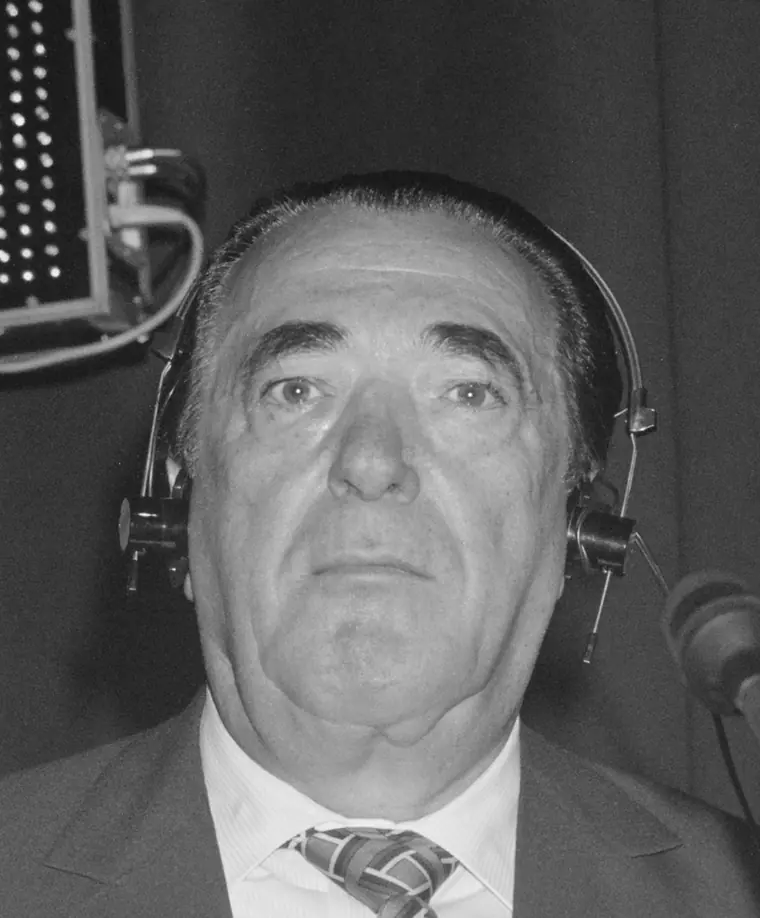
Robert Maxwell was born Ján Ludvík Hoch in Czechoslovakia in 1923, escaped the Nazi occupation, won a Military Cross with the British Army, sat as a Labour MP, and built a publishing group that by 1991 owned the Mirror titles, Macmillan, and the New York Daily News.
On November 5, 1991, he went overboard from his yacht, the Lady Ghislaine, off the Canary Islands. His body was recovered from the Atlantic the same day. The Spanish authorities recorded a heart attack and drowning; the circumstances have been argued about ever since. He was buried on the Mount of Olives in Jerusalem five days later.
Then the accountants arrived.
By December 1991 it was public that money was missing from the pension schemes of Mirror Group Newspapers, Maxwell Communication Corporation, and the market-research group AGB — a figure generally reported at about £426 million, within a wider group indebtedness of roughly £2 billion. Pension scheme assets had been pledged as collateral to support borrowing elsewhere in the group.
This is the archive's clearest example of a fact that estate lawyers state flatly and clients find hard to believe: death ends criminal liability and changes nothing about civil liability. Robert Maxwell could never be prosecuted. His estate, and everyone else's, could still be sued.
Not a suitcase of cash. A stock lending desk.
The looting, such as it was, did not look like theft while it was happening. Pension scheme investments were moved into and out of private Maxwell entities and used as security for group borrowing. When the share price of the listed companies fell, the collateral was called, and the assets were gone.
Maxwell had floated Mirror Group Newspapers on the London Stock Exchange in 1991, months before his death, and the flotation prospectus became one of the central documents in the litigation that followed. The auditors, Coopers & Lybrand, were later fined a then-record £3.3 million by the accountancy profession's own disciplinary body over their work on the Maxwell companies.
The pensioners themselves had no security at all. A defined-benefit pension promise is a claim against a fund, and if the fund is empty, it is a claim against an insolvent company. In 1991 there was no compensation scheme standing behind that promise. There is now, and there is because of this case.
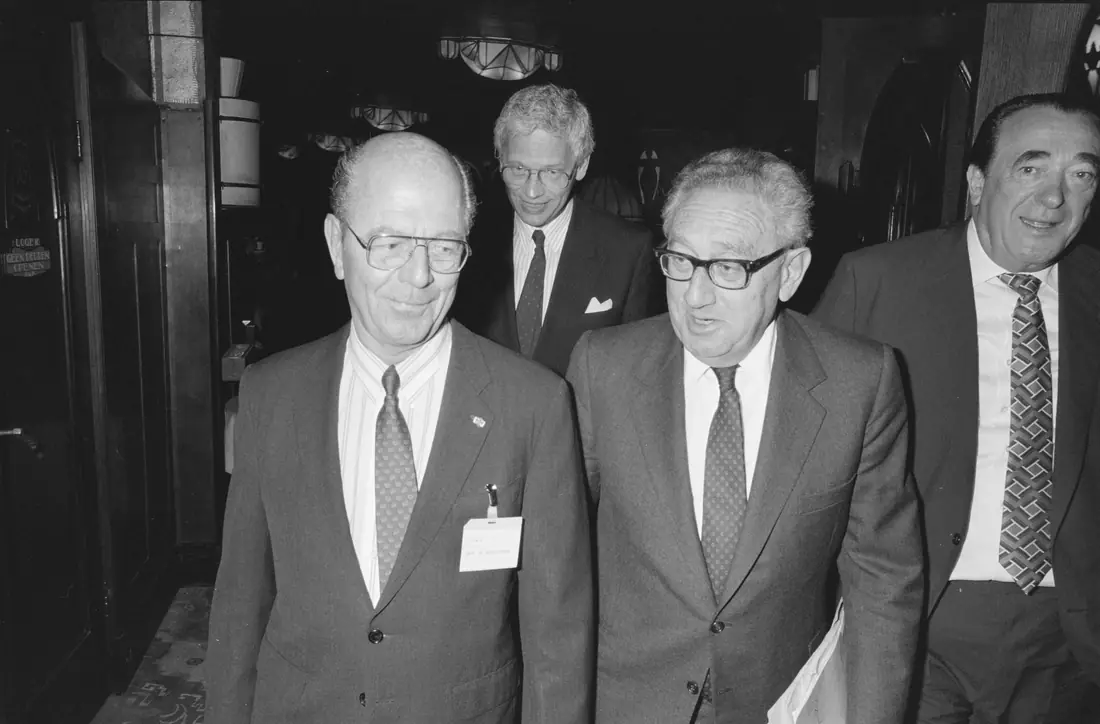
Nobody was convicted. State that carefully.
The Serious Fraud Office prosecuted Kevin Maxwell, Ian Maxwell, and Larry Trachtenberg at the Old Bailey. Kevin Maxwell faced a charge of conspiracy to defraud concerning pension-fund holdings of Scitex Corporation shares; all three faced a charge of conspiracy to defraud concerning Teva Pharmaceutical shares.
The trial ran 121 sitting days across roughly eight months and was, at the time, the largest fraud trial in British history — more than 75 witnesses, and a jury of seven women and five men that deliberated for over 48 hours.
On January 19, 1996, the jury acquitted all three defendants on all charges.
The SFO sought a second trial against Kevin Maxwell, Trachtenberg, and two former Maxwell executives, Albert Fuller and Michael Stoney. On September 19, 1996, Mr Justice Rodger Buckley stopped it, ruling that the volume of publicity meant a further prosecution “would be unfair, so unfair, as to amount to an abuse of the power of the court.”
So the record is this, and it should not be softened in either direction. Money left the pension schemes. No person was ever convicted in connection with it. Kevin Maxwell was separately declared bankrupt in 1992 with debts of £406.5 million, then the largest personal bankruptcy in British history, and was discharged years later; a wholly separate Insolvency Service investigation into an unrelated Manchester construction company led to an eight-year directors' disqualification in 2011.
£276 million from the City, £100 million from the taxpayer
With the estate and the companies insolvent, the money had to come from somewhere else. Sir John Cuckney was appointed to lead the recovery effort, and it took roughly three years of negotiation with the financial institutions that had handled the assets.
In March 1995 a settlement provided about £276 million to the affected schemes, with a further £100 million contributed by the government. Most members' pension rights were ultimately protected. Some scheme members outside the Mirror Group died before any payment reached them.
The legislative answer arrived the same year. The Pensions Act 1995 created an occupational pensions regulator, imposed a minimum funding requirement, restricted self-investment by schemes in the sponsoring employer, required member-nominated trustees, and established a compensation board. The Pension Protection Fund, created by the Pensions Act 2004, completed the structure.
That is the closing observation, and it is not a cheerful one. The pensioners were made largely whole by a rescue, not by a remedy. The estate could not pay. The companies could not pay. What paid was a negotiated contribution from the institutions and the state, arranged by a committee, three and a half years after the money went.
The case is also the clearest available demonstration of something people find genuinely surprising about estate law: the death of the person responsible is usually the worst thing that can happen to the people he owed. A living defendant can be sued, examined under oath, compelled to disclose, made bankrupt, and prosecuted. A dead one leaves an administrator who has never seen the documents, an estate that is often insolvent, and a set of survivors who are not liable for what he did.
That asymmetry is why estate lawyers care so much about records — accountings, minutes, valuations, signed agreements, and dated correspondence. Not because paperwork prevents wrongdoing, but because it is the only thing that can be examined after the only witness has gone. In an estate with good records, an administrator can answer a claim. In an estate without them, the administrator can only settle, or litigate blind.
Timeline
- 1984Maxwell acquires Mirror Group Newspapers.
- 1991Mirror Group Newspapers is floated on the London Stock Exchange.
- Nov 5, 1991Maxwell goes overboard from the yacht Lady Ghislaine off the Canary Islands. His body is recovered the same day; Spanish authorities record a heart attack and drowning.
- Nov 10, 1991He is buried on the Mount of Olives in Jerusalem.
- Dec 1991The scale of the losses becomes public. Roughly £426 million is missing from the MGN, MCC and AGB pension schemes; group debts approach £2 billion. Maxwell Communication Corporation collapses.
- 1992Kevin Maxwell is declared bankrupt with debts of £406.5 million — then the largest personal bankruptcy in British history.
- Mar 1995A settlement provides about £276 million to the affected pension schemes, with a further £100 million from the government.
- 1995The Pensions Act 1995 creates a regulator, a minimum funding requirement, limits on self-investment, member-nominated trustees, and a compensation board.
- Jan 19, 1996After a 121-day trial at the Old Bailey, a jury acquits Kevin Maxwell, Ian Maxwell and Larry Trachtenberg of conspiracy to defraud.
- Sep 19, 1996Mr Justice Rodger Buckley halts a proposed second prosecution as an abuse of process, citing the publicity.
What actually went wrong
- The fiduciary and the beneficiary shared an office. Pension trustees drawn from company management have a structural conflict, and in 1991 nothing in English law prevented it. Member-nominated trustees became compulsory four years later.
- Scheme assets could be lent to the sponsor. Self-investment turns a pension fund into a credit facility for the employer, which means the members' security is the employer's solvency — exactly the risk a pension is supposed to be insulated from.
- Everything depended on one man being alive. A group financed on rolling collateral against a rising share price has no independent existence. When Maxwell died, the structure did not slow down; it stopped.
- The estate was insolvent, so the estate was irrelevant. Civil claims survive death, but they survive against whatever assets there are. Suing an empty estate is an expensive way to establish a moral point.
- No compensation scheme stood behind the promise. The single most consequential gap, and the one Parliament closed. Everything the pensioners eventually received came from a negotiation, not an entitlement.
Would it have gone that way in Florida?
Different in almost every particular — and the one place Florida is *more* generous to a debtor is the place that surprises people most.
Two threads run through this case, and Florida answers them separately: what happens to an insolvent estate, and what a creditor can actually reach.
On the first, Florida is prescriptive. Fla. Stat. §733.707 sets a statutory order of payment when an estate cannot pay everyone, in eight classes: (1) costs and expenses of administration, including the personal representative's compensation and attorney fees; (2) reasonable funeral and burial expenses, capped at $6,000 as a class; (3) debts and taxes with federal preference, and certain court costs; (4) reasonable and necessary medical and hospital expenses of the last 60 days of the last illness; (5) family allowance; (6) arrearages of court-ordered child support; (7) debts acquired after death by continuing the decedent's business; and (8) everything else, including judgments. Each class is paid in full before the next receives anything, and within a class claims abate rateably. Defrauded creditors sit in Class 8 with everybody else. Notice which class is first.
Subsection (3) closes the obvious escape route: where the probate estate is insufficient, the portion of a revocable trust over which the decedent held a right of revocation at death is liable for the estate's expenses and enforceable claims. A revocable trust is not, and has never been, a creditor shield.
On the second thread, Florida diverges sharply from most of the world. Fla. Const. Art. X, §4 exempts homestead property from forced sale by creditors with no dollar cap at all — up to half an acre within a municipality, 160 acres outside one — subject to only three exceptions: taxes and assessments on the property, obligations for its purchase, and liens for labour or materials used to improve it. The protection passes to the surviving spouse and heirs on death. In Havoco of America, Ltd. v. Hill, 790 So. 2d 1018 (Fla. 2001), the Florida Supreme Court held that a homestead acquired with the specific intent to hinder, delay, or defraud creditors is still protected, while recognising a narrow equitable-lien exception where the very funds used to buy or improve the home were themselves obtained by fraud or egregious conduct.
Fla. Stat. §222.21 then exempts qualified retirement plans and IRAs from legal process — including, after the participant's death, inherited accounts — with express carve-outs for qualified domestic relations orders and a surviving spouse's elective-share claim. Florida shelters retirement money from creditors about as thoroughly as any state in the union. That is the deep irony of running the Maxwell facts through Florida law: the state's strongest protections would have applied to the pension money and to the mansion, and the pension scheme's members would still have been unsecured creditors of an insolvent employer.
One honest caveat. None of this operates as a licence. A transfer made to hinder, delay, or defraud creditors is voidable under Florida's Uniform Fraudulent Transfer Act, Ch. 726, and a personal representative can and should pursue those claims for the estate. Havoco protects the homestead itself; it does not immunise the conduct that filled it.
The practical instruction, which applies to anyone who owns a business rather than merely to media barons. Keep other people's money separate from yours, in accounts you cannot reach, with a fiduciary who does not work for you. If you are a trustee of anything — a pension, a client trust account, a family trust — take the annual accounting obligation seriously, because it is the mechanism that catches this early. And if you are owed money by someone who has died, file your claim inside the §733.702 window and read §733.707 first, so you know which of the eight classes you are actually in.
What people ask us about this.

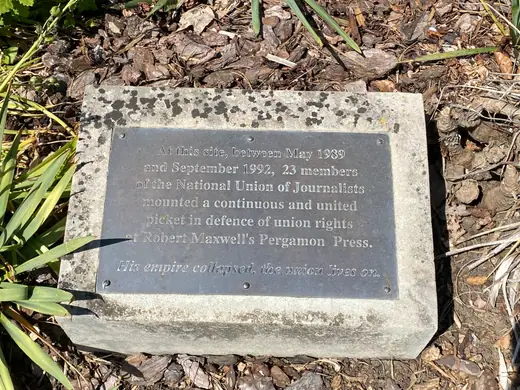
Further reading
Third-party sites. Not ours, not endorsed, not kept current by us — just the places worth going next.
Sources
- Maxwell brothers acquitted in pension-fund fraud case — The Seattle Times, Jan 19 1996
- UK fraud trial clears Maxwell brothers — UPI Archives, Jan 19 1996
- Maxwell's son won't be tried again — UPI Archives, Sep 19 1996
- Maxwell — the fallout — Association of Mirror Pensioners
- Great frauds in history: Robert Maxwell — MoneyWeek
- The Maxwells: scandal and conspiracy — France 24 / AFP, Dec 2021
- Havoco of America, Ltd. v. Hill, 790 So. 2d 1018 (Fla. 2001) — CourtListener
- Fla. Stat. §733.707 — Order of payment of expenses and obligations — The Florida Senate
If this is your situation
Free 30-minute consult. Plain English. No pressure.
Nearly every case in this archive turned on something ordinary — an unwitnessed page, a stale beneficiary line, a document nobody could find. Those are cheap to fix while you're alive and expensive to fix afterward.