Bernie Madoff
Bernie Madoff's criminal case took 199 days from arrest to a 150-year sentence. The civil unwinding is still running eighteen years later — $15.485 billion recovered, and estates on both sides of it: one that paid $7.2 billion, one that was left with $1.75 million of $18.6 million.
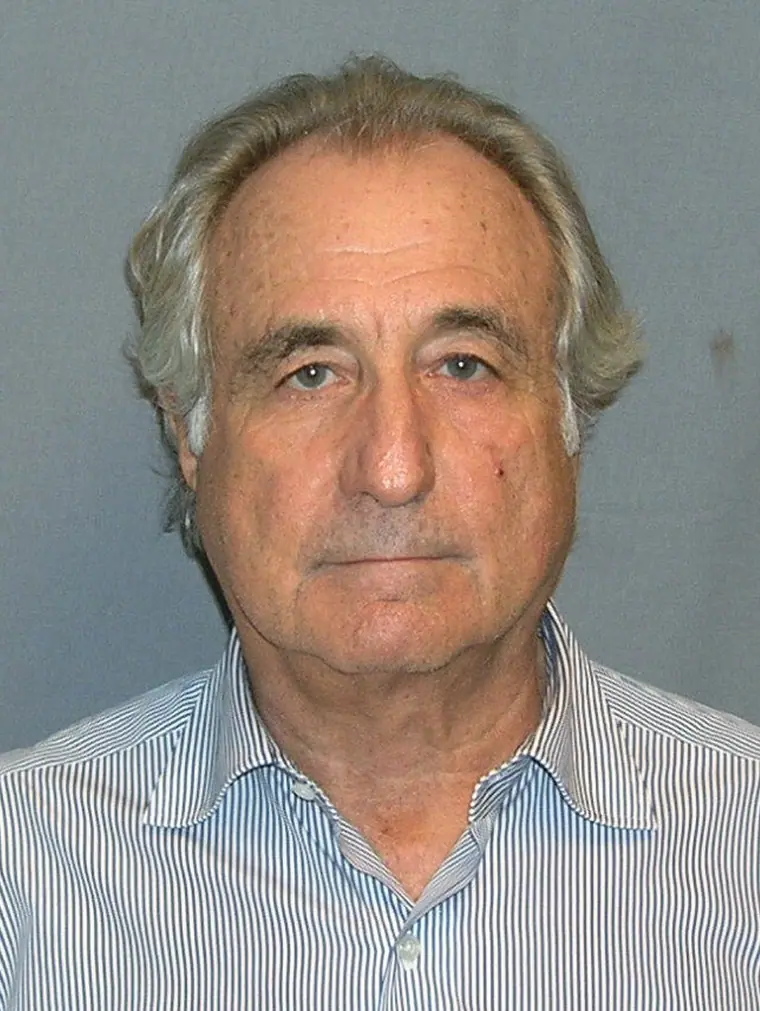
The criminal half of this took 199 days. Bernard L. Madoff was arrested on December 11, 2008, pleaded guilty on March 12, 2009 to eleven federal felonies including securities fraud, wire fraud, mail fraud, and money laundering, and was sentenced on June 29, 2009 to 150 years. That is the part everyone remembers.
The civil half is still going. On the day of the arrest, Bernard L. Madoff Investment Securities LLC went into liquidation under the Securities Investor Protection Act, and Irving H. Picard was appointed trustee. As of August 2026, that liquidation has produced $15.485 billion in recoveries and settlement agreements and paid out $14.799 billion across seventeen interim pro-rata distributions — roughly 73.4% of allowed claims, against an industry norm for Ponzi recoveries in the single digits and low twenties. About $566.2 million is still held in reserve against unresolved matters.
It is the most successful fraud recovery in American history, and the reason it is in a probate archive is that a startling amount of it came out of dead people's estates.
Profit that never existed is not yours to keep
The engine of the recovery is the avoidance action, known universally as the clawback, and it is the part non-lawyers find hardest to accept.
In a Ponzi scheme there are no profits. There are only other people's deposits. So the trustee treats each customer account by the net investment method: add up what you put in, subtract what you took out. If you took out less than you put in, you are a victim with a claim. If you took out more than you put in — even if you had no idea, even if you were retired and living on it, even if your statements showed a balance for decades — the excess was never yours, and the trustee sues to get it back and share it out among the people who are still short.
Customers challenged that method. The Second Circuit upheld it, and the Supreme Court declined to take the question. The arithmetic stood.
Which brings us to the single largest recovery in the case, and to a swimming pool in Palm Beach.
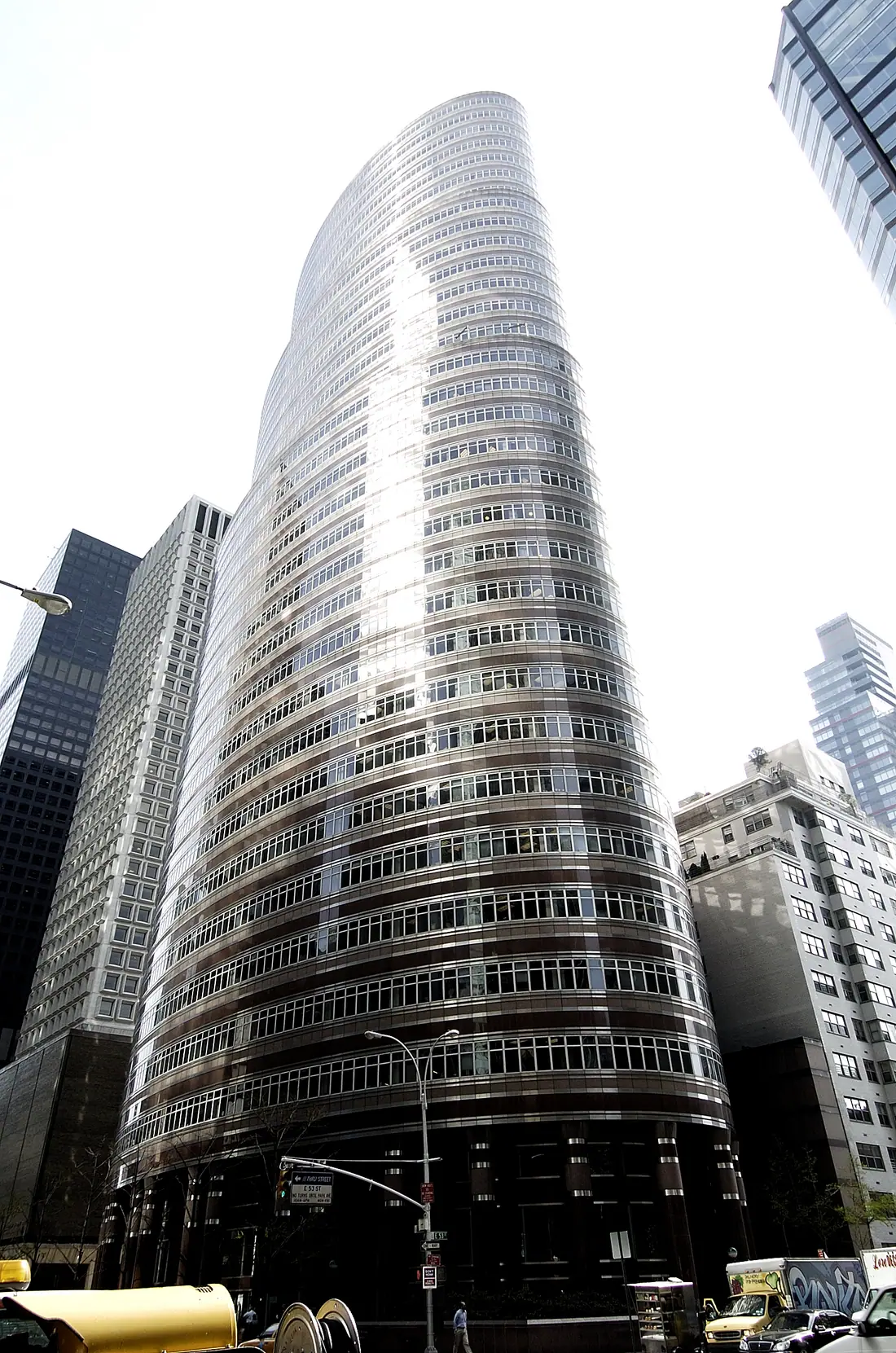
The Picower estate
Jeffry Picower was the largest net beneficiary of the scheme. Between December 1995 and December 2008 the Picower accounts withdrew $5.1 billion more than they put in. In June 2009 Picard sued to recover $7.2 billion, alleging that the returns booked to those accounts — reported at 120% to 550% a year in the late 1990s, and 950% in 1999 — could not have been believed.
Picower died on October 25, 2009, at 67. He was found at the bottom of his swimming pool at his home in Palm Beach, Florida; the medical examiner determined he had suffered a heart attack and drowned. He never answered the complaint.
That did not end the case. It changed the caption. On December 17, 2010, Barbara Picower, as executor of his estate, settled with the trustee and the United States for the full $7.2 billion — described at the time as the largest single forfeiture in American judicial history.
Read that sequence again, because it is the whole lesson of this page. A man died fourteen months into a lawsuit. His estate paid seven point two billion dollars. Death is not a defence; it is a substitution of parties.
The estate of Mark Madoff
Mark Madoff died on December 11, 2010, at 46, in his Manhattan apartment. The medical examiner ruled it a suicide. It was the second anniversary of his father's arrest.
His estate was valued at $18.6 million. It did not stay that way. In 2012 the trustee brought proceedings involving Mark's widow, Stephanie Mack, and his former wife, Susan Elkin, on the theory that the family's wealth had come from the firm. The litigation resolved in 2017, and the estate was left with $1.75 million.
Andrew Madoff, his brother, died of mantle cell lymphoma on September 3, 2014, at 48.
In 2019, Ruth Madoff settled with the trustee for $594,000 — $250,000 in cash and $344,000 from trusts held for two grandchildren. She had earlier agreed with prosecutors, in June 2009, to give up her other assets and keep $2.5 million. The 2019 settlement contains the clause worth noticing here: she also agreed to surrender her remaining assets on her death.
A settlement that reaches forward into an estate that does not exist yet is unusual, and entirely enforceable. Estate planning does not stop at the grave, and neither does estate liability.
What a restitution order does when the defendant dies
Madoff died on April 14, 2021, at the Federal Medical Center in Butner, North Carolina, aged 82, of cardiovascular and kidney disease. He was cremated in Durham; as of 2023 the ashes were unclaimed.
The obligations did not go with him, and there is a federal statute that says so in one plain sentence. 18 U.S.C. §3613(b) provides that liability to pay restitution runs for the later of 20 years from the entry of judgment or 20 years after release from imprisonment, and then: “In the event of the death of the person ordered to pay restitution, the individual's estate will be held responsible for any unpaid balance of the restitution amount, and the lien provided in subsection (c) of this section shall continue until the estate receives a written release of that liability.”
There is also a second, entirely separate compensation channel that people routinely confuse with the trustee's. The Madoff Victim Fund, run by the Department of Justice out of forfeited assets rather than the liquidation estate, began paying on November 9, 2017, with an initial distribution of $772.5 million to more than 24,000 victims. Two funds, two sources of money, two claim processes, and a great many people who filed with one and assumed they had filed with both.
As of August 2026 the SIPA liquidation remains open. Reserves are held, matters are unresolved, and the distributions continue.
Timeline
- Dec 11, 2008Madoff is arrested. BLMIS goes into SIPA liquidation and Irving H. Picard is appointed trustee.
- Mar 12 – Jun 29, 2009Madoff pleads guilty to eleven federal felonies and is sentenced to 150 years.
- Jun 2009The trustee sues Jeffry Picower for $7.2 billion. Ruth Madoff separately agrees with prosecutors to give up other assets and keep $2.5 million.
- Oct 25, 2009Picower dies at 67 at his home in Palm Beach, Florida, of a heart attack and drowning. The suit continues against his estate.
- Dec 11, 2010Mark Madoff dies at 46 in New York. The medical examiner rules it a suicide.
- Dec 17, 2010Barbara Picower, as executor, settles for $7.2 billion — the largest single forfeiture in American judicial history.
- Nov 9, 2017The Department of Justice's separate Madoff Victim Fund begins paying $772.5 million to more than 24,000 victims from forfeited assets.
- 2017The trustee's litigation touching Mark Madoff's estate resolves. The $18.6 million estate is left with $1.75 million.
- 2019Ruth Madoff settles with the trustee for $594,000 and agrees to surrender her remaining assets on her death.
- Apr 14, 2021Madoff dies at FMC Butner at 82. Under 18 U.S.C. §3613(b) the unpaid restitution balance remains the responsibility of his estate.
What actually went wrong
- Money that was never yours is not protected by having spent it. The net investment method does not ask whether you knew. It asks what went in and what came out.
- Death substitutes a party; it does not end a case. Picower died four months after being sued and his estate paid the full $7.2 billion fourteen months later.
- An estate can be the defendant. Mark Madoff's estate went from $18.6 million to $1.75 million through litigation that began after he died.
- Settlements can bind an estate that does not exist yet. Ruth Madoff's 2019 agreement commits her remaining assets at death — a live claim against a future probate.
- Restitution is statutory and it outlives the defendant. 18 U.S.C. §3613(b) puts the unpaid balance on the estate and keeps the federal lien in place until the estate is released in writing.
Would it have gone that way in Florida?
Florida changes the deadlines, not the outcome — and Florida is where the biggest recovery in the entire case came from.
Start with the fact that gets left out of every retelling: Jeffry Picower died a Florida resident, at his home in Palm Beach. The $7.2 billion was paid by a Florida estate, by its executor, in a settlement signed fourteen months after the death. Anyone who thinks Florida is a place estates go to be safe should sit with that number for a moment.
If a clawback claimant comes after a Florida estate, the first question is the calendar. Fla. Stat. §733.702 bars a claim not filed by the later of 3 months after the first publication of the notice to creditors or 30 days after service on a creditor entitled to be served. §733.710 then imposes an absolute 2-year bar running from the date of death, and it cannot be extended. Picower died in October 2009 and settled in December 2010 — comfortably inside both. A trustee who moves slowly does not get that.
Note what those statutes do and do not reach. They bar claims against the decedent. A claim that the recipient of a transfer must give it back is generally pleaded against whoever holds the property, and §733.710(3) expressly preserves liens and security interests from the two-year bar. A federal restitution lien under 18 U.S.C. §3613(b) and (c) is precisely that kind of encumbrance, and it stays until the estate is released in writing.
If the estate cannot pay everyone, §733.707 decides who goes short. Administration costs and fees are Class 1, funeral expenses to $6,000 are Class 2, debts and taxes with preference under federal law are Class 3, and ordinary judgments sit in Class 8 at the back. Layered on top, 31 U.S.C. §3713(b) makes the personal representative personally liable for paying anything else before a claim of the United States out of an estate that cannot cover its debts.
Homestead, and the honest caveat. Fla. Const. Art. X §4 exempts a Florida homestead from forced sale by creditors with no dollar cap — only an acreage limit of half an acre inside a municipality or 160 acres outside — and it passes to the heirs still exempt. The express exceptions are narrow: property taxes and assessments, obligations contracted for the purchase or improvement of the property, and labour performed on it. It is genuinely one of the strongest debtor protections in the country and people have relied on it deliberately for generations. It is not a universal shield: it does not bind the federal government, whose tax liens attach under federal law notwithstanding a state exemption, and it does not answer for assets that were never the homestead.
What to actually do. If you are the personal representative of someone who withdrew money from an investment that later collapsed, the instruction is short and unwelcome: do not distribute. Open the estate, publish the notice, and hold a reserve until the avoidance-action window is closed. A beneficiary who has already been paid is not protected by §733.710 from an action to recover the distribution, and a personal representative who paid it out is the person who will be explaining why.
What people ask us about this.
Further reading
Third-party sites. Not ours, not endorsed, not kept current by us — just the places worth going next.
Sources
- Madoff investment scandal — Wikipedia
- Bernie Madoff — Wikipedia
- Jeffry Picower — Wikipedia
- Mark Madoff — Wikipedia
- Participants in the Madoff investment scandal — Wikipedia
- The Madoff Recovery Initiative — recoveries and distributions — Irving H. Picard, SIPA Trustee, Aug 2026
- 18 U.S.C. §3613 — Civil remedies for satisfaction of an unpaid fine — Cornell Legal Information Institute
- 31 U.S.C. §3713 — Priority of Government claims — Cornell Legal Information Institute
If this is your situation
Free 30-minute consult. Plain English. No pressure.
Nearly every case in this archive turned on something ordinary — an unwitnessed page, a stale beneficiary line, a document nobody could find. Those are cheap to fix while you're alive and expensive to fix afterward.