Humphrey Bogart
He died in 1957 leaving a trust for his wife and two small children. It was still being administered when Lauren Bacall died fifty-seven years later. By then the family's real asset was not the money — it was the surname, licensed more than a hundred times and defended in federal court against a sofa.
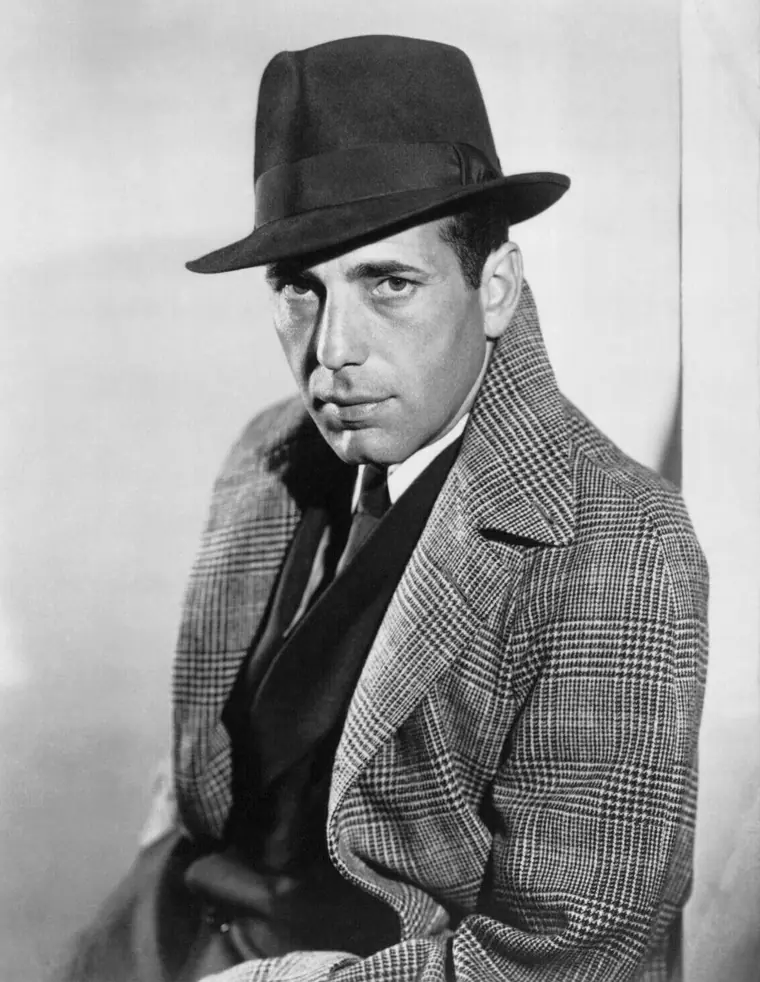
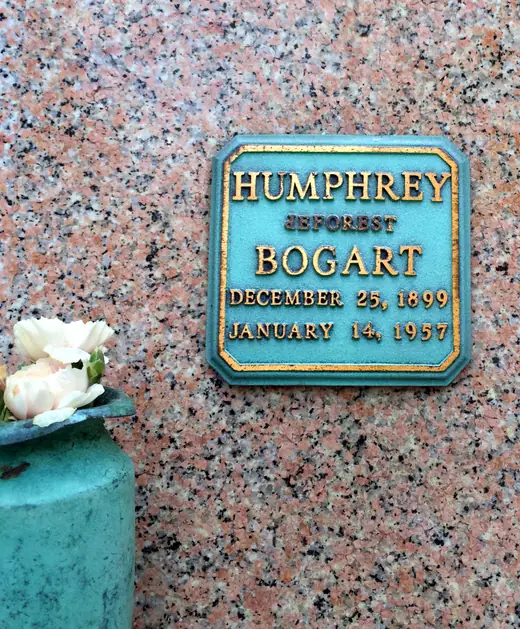
Humphrey Bogart died of esophageal cancer in Los Angeles on January 14, 1957, at 57. He left a wife of eleven years, Lauren Bacall, and two children — Stephen, then seven, and Leslie, then four.
What he left them was not a pile of cash. It was a trust structured to provide for his wife and children — the ordinary, unglamorous, correct answer for a man dying young with a widow in her early thirties and two children in primary school.
The point of a structure like that is duration, and the duration here is the number that should stop you. Bacall died on August 12, 2014. The trust Bogart created was still in place. Her own will directed that the remaining funds in it pass to her children. One document, drafted by a dying man in the Eisenhower administration, governed money continuously through fifty-seven years, a moon landing, and the invention of the internet.
The asset nobody in 1957 knew how to value
Bogart's will disposed of property. It could not have disposed of the thing his children eventually made most of their money from, because in 1957 that thing was not legally property anywhere in the United States.
The right of publicity — the right to control commercial use of your name, likeness and persona, and to have that right survive your death — was a post-war judicial invention that most states did not codify until the 1970s and 1980s. California's post-mortem statute, which the Bogart estate would later sue under, was not enacted until 1984. Bogart had been dead for twenty-seven years.
By the 2000s that asset was the estate. The name was held in an intellectual property company, Bogart, LLC, jointly owned by a Los Angeles private equity fund, Orange Equity, and by Stephen Humphrey Bogart and Leslie Bogart. It holds federal trademark registrations for “Humphrey Bogart” across categories including clothing and furniture, and it has licensed the name and publicity rights more than a hundred times. A single licensed furniture line, through Thomasville, produced more than $5 million in royalties between 2003 and 2011.
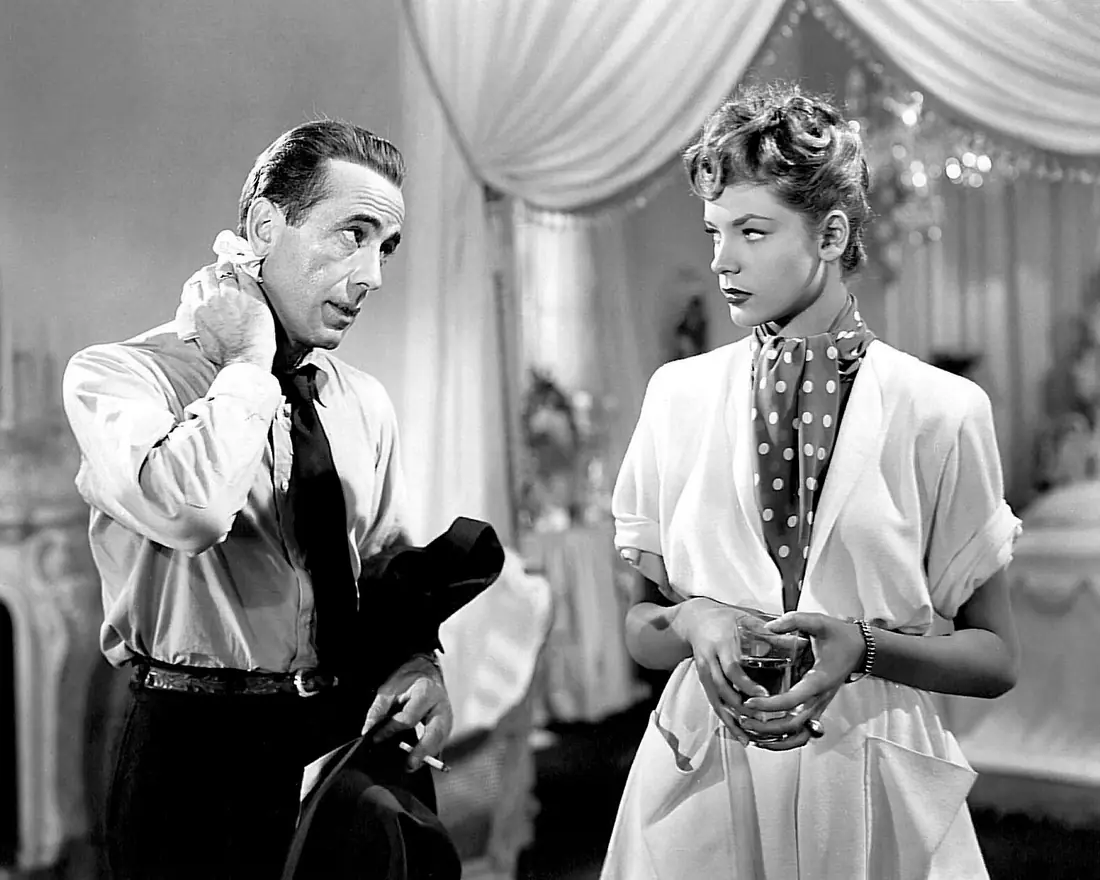
The estate, the sofa, and the town of Bogart, Georgia
Owning a name means defending it, and in 2010 the estate went to federal court twice over the same word.
In May 2010 Bogart, LLC sued the furniture retailers Plummers, Scandinavian Designs and Dania in the Central District of California, before Judge Gary A. Feess, alleging trademark infringement and violation of California's post-mortem right of publicity statute over a furniture line called “Bogart.” The case settled confidentially in May 2011.
The larger action was Bogart, LLC v. Ashley Furniture Industries, Inc., No. 3:10-cv-00039, in the Middle District of Georgia before Judge Clay D. Land. Ashley had introduced a “Bogart Ocean” collection in 2008. Its defence was that the name referred to Bogart, Georgia — a real town of about a thousand people in Oconee and Clarke counties — and that it does not use celebrity endorsements.
The estate's answer was a list. Ashley's other collections included Gable-Mocha, Brando-Cocoa, Newman-Oyster and Presley-Café.
In 2012 Judge Land denied Ashley's motion for summary judgment in a lengthy opinion, finding that genuine disputes of material fact existed on consumer confusion, dilution, the publicity-rights claim, deceptive trade practices, and Ashley's intent — all of it for a jury. He also noted the estate had produced no evidence of actual confusion. The Bogart Ocean line had been discontinued in 2009. The reported record of the case ends with that ruling.
What Bacall's own estate showed
When Lauren Bacall died in 2014 her estate was reported at $26.6 million, and its structure is a good tell about what fifty-seven years of the Bogart trust had actually produced.
She left specific bequests — $15,000 to her maid, $20,000 to her assistant, $250,000 to each grandson earmarked for college with the balance available at thirty, and $10,000 for the care of her dog Sophie. The residue went to her three children, and it expressly included the rights to her likeness, her film royalties and her book royalties. She also asked her children to keep personal letters and diary entries out of public view.
Two things in that document are worth pointing at. She named the intangible rights explicitly — the mistake her husband's era could not have avoided and her era had no excuse for. And her request about the letters was a request, not a trust term: a wish addressed to her children rather than an enforceable direction to a trustee. Those are very different instruments, and the difference only matters once you are not there to explain what you meant.
Timeline
- May 1945Bogart marries Lauren Bacall. Stephen is born in 1949 and Leslie in 1952.
- Jan 14, 1957Bogart dies of esophageal cancer in Los Angeles at 57, leaving a trust to provide for his wife and children, then aged seven and four.
- 1984California enacts a post-mortem right of publicity statute — twenty-seven years after Bogart's death, and the statute his estate will later sue under.
- 2003–2011A Bogart-branded furniture line licensed through Thomasville generates more than $5 million in royalties.
- May 2010Bogart, LLC sues furniture retailers Plummers, Scandinavian Designs and Dania in the Central District of California over a “Bogart” furniture line.
- May 2011That case settles on confidential terms.
- 2012In Bogart, LLC v. Ashley Furniture Industries (M.D. Ga.), Judge Clay D. Land denies summary judgment, holding that confusion, dilution, publicity rights and intent are all questions for a jury.
- Aug 12, 2014Lauren Bacall dies at 89. Bogart's 1957 trust is still in place; her will directs the remaining funds in it to her children.
- 2014Bacall's estate is reported at $26.6 million, with the residue — expressly including her likeness rights and royalties — passing to her three children.
What actually went wrong
- Nothing, in 1957 — and that is the honest answer. A trust for a young widow and two small children was the right instrument, and it worked for fifty-seven years. The problems in this file are the ones nobody in 1957 could have written about.
- The most valuable asset did not legally exist yet. The publicity right that funded the family for decades was not property in 1957 and was not codified in California until 1984. No 1957 document could have named it; every document written today should.
- A famous name is a business with running costs. Trademarks must be policed, renewed, licensed and litigated. The estate plan that hands a surname to the next generation should also hand them a funded entity to defend it, and a decision about who runs it.
- Private equity ended up owning half of it. Bogart, LLC is jointly owned by an outside fund and the two children. That is a legitimate and common way to professionalise a legacy asset — and it is also a decision the person whose name it is never got to make.
- A wish is not a trust term. Bacall asked her children to keep letters and diaries private. A request in a will binds nobody. A restriction in a trust, enforceable by a trustee, does.
Would it have gone that way in Florida?
The trust would work identically. The publicity right would not — Florida's runs 40 years after death, and Bogart's would have expired in 1997.
Take the two halves of this estate separately, because Florida treats them very differently.
The trust. A Florida version of Bogart's plan would function exactly as his did. Chapter 736 permits a trust for a surviving spouse for life with the remainder to children, and Florida's rule against perpetuities is now essentially irrelevant — §689.225 allows a trust created on or after July 1, 2022 to run for 1,000 years. What Florida adds is accountability: §736.0813 requires the trustee to keep qualified beneficiaries reasonably informed and to deliver an annual accounting, and §736.0706 allows removal of a trustee for breach, unfitness, or persistent failure to administer effectively. Over a fifty-seven-year trust, the accounting duty is the provision that matters most, because it is the one that catches a problem while there is still money left.
One Florida wrinkle a young widow should know about. A surviving spouse's elective share under §732.2035 is 30% of the elective estate, and property in a revocable trust counts toward it. But a trust that gives the spouse income for life can be applied against the elective share rather than being additional to it, and a §732.702 waiver signed before marriage disposes of the question entirely. The right sequence is to decide this before the documents are signed, not after somebody dies.
The name — and here Florida is materially worse than California. Fla. Stat. §540.08 protects a person's name, portrait, photograph or likeness against unauthorised commercial use, and it extends that right for 40 years after death, enforceable by a surviving spouse, surviving children, or a licensee or assignee. California's statute runs for 70 years. Bogart died in 1957. A Florida-domiciled Bogart's statutory publicity right would have expired on its own in 1997 — thirteen years before Bogart, LLC filed suit.
That does not mean a Florida family loses the asset. It means the asset has to be held in a different form. Federal trademark registration does not expire so long as the mark is used in commerce and the renewals are filed, which is exactly why the Ashley Furniture case was fundamentally a trademark case with a publicity claim attached. A Florida estate planning around a famous name should register the marks, license them continuously so the use requirement is satisfied, and treat §540.08 as a bonus that runs out rather than as the foundation.
The instruction: if your name, image, writing, catalogue, recipes, patents or social accounts have commercial value, name them in the document as assets, say who owns them, and say who decides how they are exploited. Then hold them in an entity with a manager and a succession plan, and fund that entity well enough to pay a lawyer. A trust that carefully divides bank accounts and says nothing about the family's most valuable asset is a half-finished plan.
What people ask us about this.
Further reading
Third-party sites. Not ours, not endorsed, not kept current by us — just the places worth going next.
Sources
- Bogart LLC v. Ashley Furniture Industries Inc, No. 3:10-cv-00039 (M.D. Ga. 2012), Doc. 55 — Justia — U.S. District Courts
- Humphrey Bogart estate's sofa lawsuit survives key challenge — The Hollywood Reporter
- Furniture company's Bogart trademark infringement liability remains in play — Mandour & Associates
- Humphrey Bogart estate settles federal lawsuit against major furniture retailers — PR Newswire, May 2011
- Lauren Bacall's estate documents show how estate planning helps you provide for your loved ones — Pasadena Law Office
- Humphrey Bogart — Wikipedia
- Lauren Bacall — Wikipedia
- Fla. Stat. §540.08 — Unauthorized publication of name or likeness — The Florida Senate
If this is your situation
Free 30-minute consult. Plain English. No pressure.
Nearly every case in this archive turned on something ordinary — an unwitnessed page, a stale beneficiary line, a document nobody could find. Those are cheap to fix while you're alive and expensive to fix afterward.