Sylvia Plath
Plath and Ted Hughes separated in October 1962. She died the following February with no will, still legally his wife — so he inherited everything, including her copyrights and her journals. He edited the poems, published the diaries, and destroyed the last volume. Intestacy decided fifty years of literary history.
Sylvia Plath married Ted Hughes in London on June 16, 1956. They separated in October 1962. She died by suicide on February 11, 1963, in London, at 30.
They had not divorced. There was no will.
Those two sentences are the entire legal content of this case, and they determined what happened to Ariel, to the journals, to the letters, to the royalties, and to the shape of Plath's reputation for the next half-century. Because they were still legally married when she died, Hughes inherited her estate — including every copyright in every word she had written.
What copyright actually is
People think of a writer's estate as the money. It is not. It is the control.
Copyright is property. It passes at death like a house or a bank account, and whoever holds it decides what gets published, in what order, with what cuts, with what introduction, and what does not get published at all. Hughes became Plath's literary executor and the owner of her work.
Ariel, published in 1965, is the clearest example. Plath had left a manuscript in a particular order. Hughes rearranged it, dropped poems — including “The Jailer” and “The Rabbit Catcher” — and added others. He later said the omitted pieces were personally aggressive. A restored edition returning the poems to Plath's own arrangement was not published until 2004, forty-one years after her death and six after his.
The journals went further. In his 1982 foreword to The Journals of Sylvia Plath, Hughes wrote that he had destroyed the final volume, covering the last months of her life, because he did not want their children to read it. He also said another journal and an unfinished novel had disappeared. Other journals were sealed for decades; the unabridged edition did not appear until after his death.
None of that was improper. It was all perfectly lawful. He owned the material. That is what the word “inherit” means.
Sixty years of arguing with a legal fact
The Plath–Hughes literature is enormous and mostly furious, and almost all of it is arguing with an outcome that was fixed by a rule of intestacy in 1963.
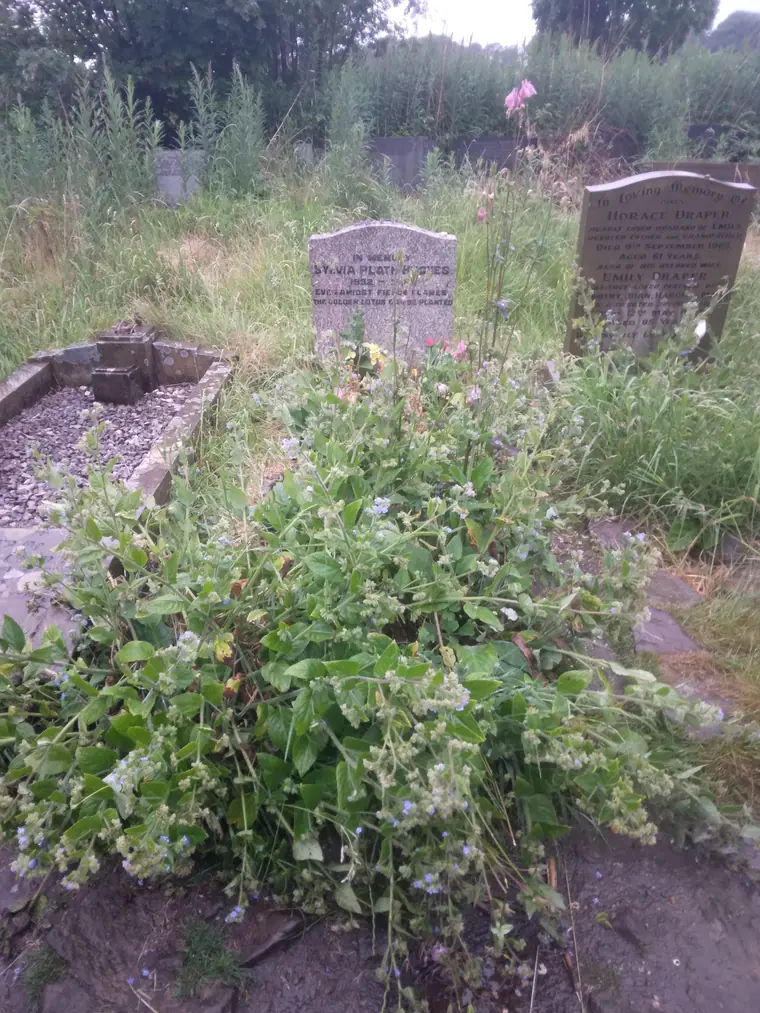
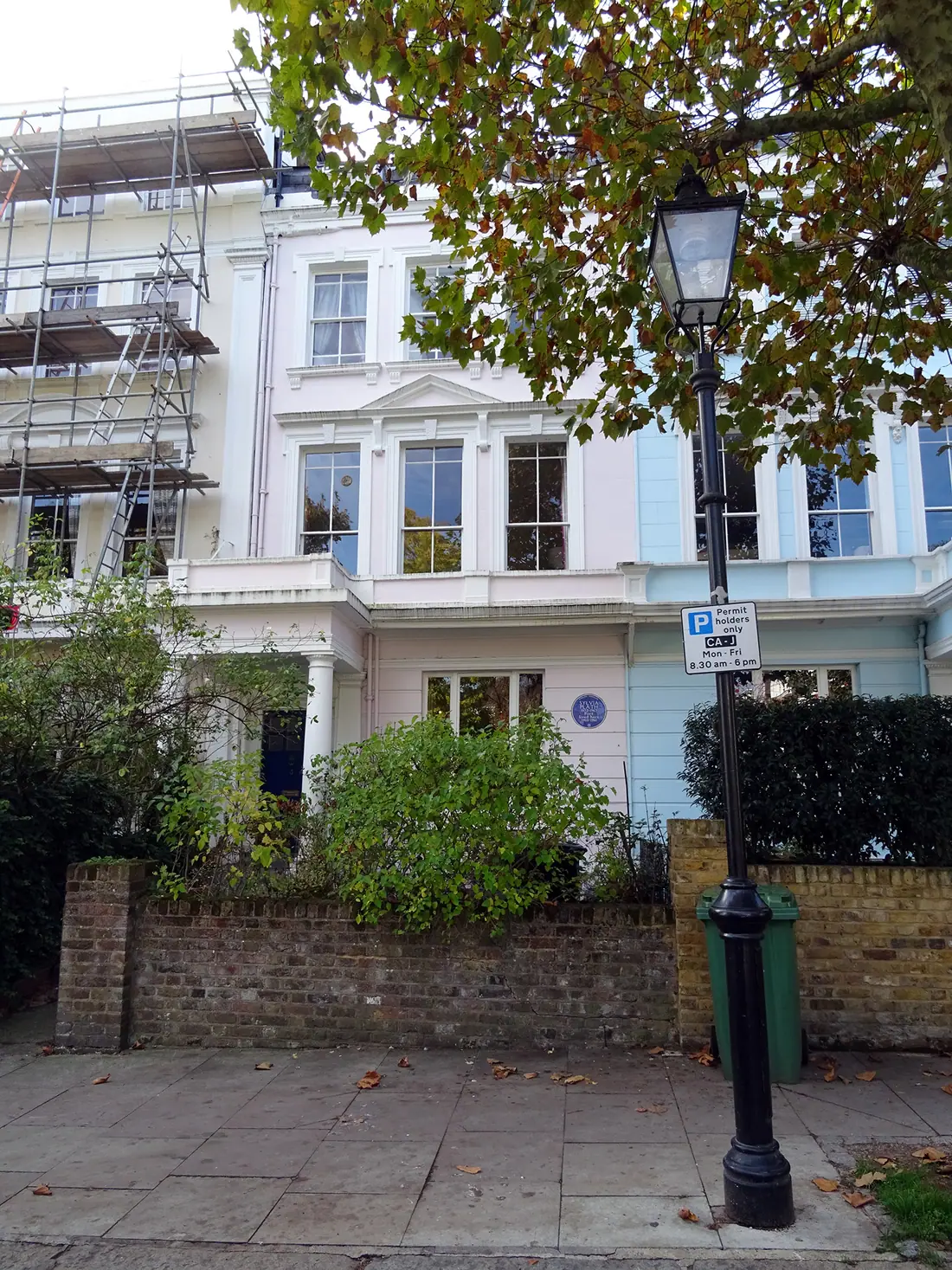
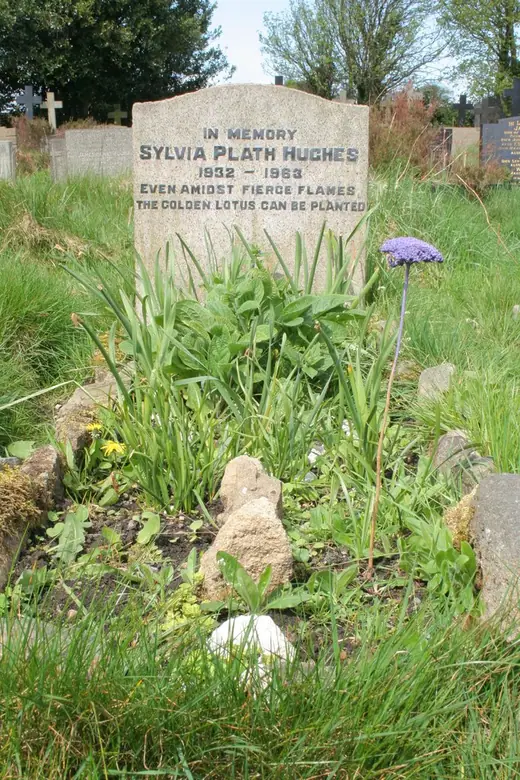
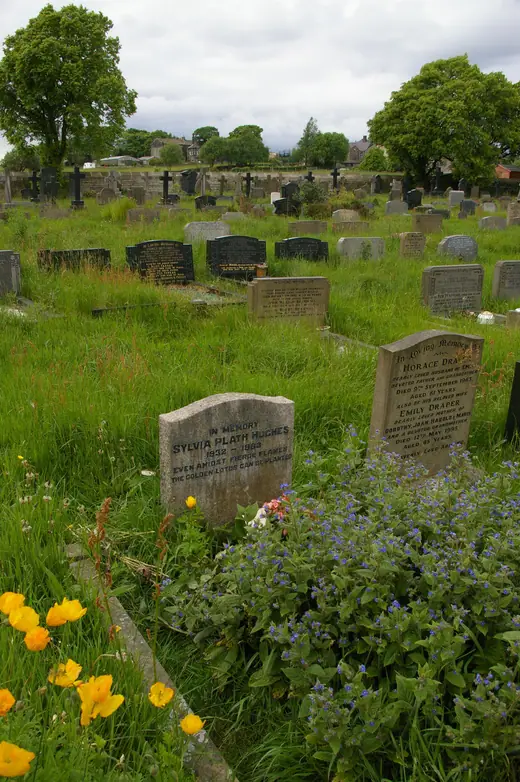
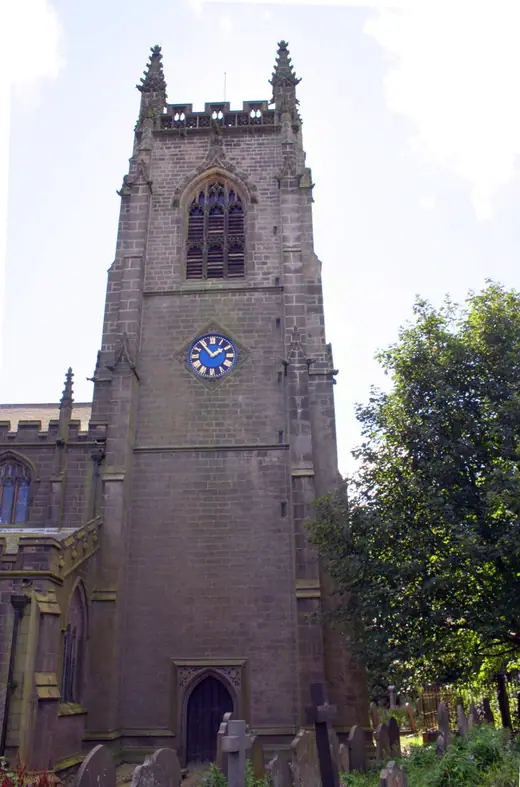
Plath is buried at St Thomas' churchyard, Heptonstall, in West Yorkshire, under the name Sylvia Plath Hughes — chosen by the person who, in law, had the right to choose it. The stone has been repeatedly defaced by people chiselling out the surname.
Hughes's sister Olwyn Hughes managed the literary estate's permissions for years, and biographers who wanted to quote Plath needed her agreement. Hughes published Birthday Letters, his own account of the marriage, in 1998. He died on October 28, 1998.
The estate then passed to their two children. Royalties from Plath's work had been held for them.
There is no villain in the legal story, which is the uncomfortable part. A grieving 32-year-old inherited a body of work he was inside of, and made decisions about it that no rule required him to justify to anyone. The only document that could have changed any of it would have taken twenty minutes to sign.
Timeline
- Jun 16, 1956Plath and Hughes marry in London.
- Oct 1962They separate. No divorce proceedings are completed.
- Feb 11, 1963Plath dies in London at 30. She leaves no will; as her surviving spouse, Hughes inherits her estate and all copyrights in her work.
- 1965Ariel is published in an order Hughes selected, with poems dropped and others added.
- 1982In his foreword to The Journals of Sylvia Plath, Hughes writes that he destroyed the final volume of her journals and that another journal and an unfinished novel had disappeared.
- 1998Hughes publishes Birthday Letters. He dies on October 28. The estate passes to the couple's two children.
- 2000The unabridged journals are published, including material previously sealed.
- 2004A restored edition of Ariel is published, in Plath's own arrangement, forty-one years after her death.
What actually went wrong
- No will, at 30. The single most common estate-planning error there is, and the one that produces the most irreversible outcomes. Youth is not a plan.
- Separated but not divorced. In most legal systems, including Florida's, that means nothing has changed. The estranged spouse is still first in line under the intestacy statute.
- No literary executor and no instructions. Copyrights need a named owner and a stated policy — what may be published, what may be edited, what must be preserved. Silence hands all three decisions to whoever inherits.
- Nothing said about the private papers. Journals, letters, and drafts are property. If you have not directed what happens to them, the owner may destroy them, and lawfully.
Would it have gone that way in Florida?
Identical result. Florida has no legal separation, and only a completed divorce cuts a spouse out.
This case would have come out the same way in Florida, and it is worth being blunt about why, because the misconception is close to universal.
Florida does not recognise legal separation. There is no status a couple can enter, short of dissolution of marriage, that changes their rights on death. You are married or you are divorced. Living apart, filing for divorce, or even reaching a settlement agreement does not finish the job — the judgment does.
So the intestacy statute applies in full. Fla. Stat. §732.102 gives the surviving spouse the entire intestate estate where there are no descendants, or where all of the decedent's descendants are also descendants of that spouse and the spouse has no others. Plath and Hughes had two children together and neither had children by anyone else. In Florida, Hughes would have taken 100%. The half-share rules in §732.102(3) and (4) only appear where somebody has a child from another relationship — one of the quiet reasons blended families need documents most.
Fla. Stat. §732.507(2) is the provision people are actually thinking of when they assume separation is enough. It says that if a marriage is dissolved or declared invalid after a will is executed, the will is read as though the spouse died at the time of the dissolution. Note the two limits: it takes a court judgment, not a separation, and it operates on wills. It does nothing for someone who never made one.
The pieces of this estate that were fought over for fifty years — the manuscripts, the journals, the letters — would be handled in Florida by three ordinary provisions. A will or revocable trust naming who takes the copyrights, which are property like anything else. A specific devise of the tangible papers, so the journals and letters do not simply follow the residue. And a stated instruction: publish, preserve, or destroy, decided by the person who wrote them rather than by the person who inherits them.
The honest caveat runs the other way here. A Florida spouse cannot be written out entirely without agreement. §732.201 and §732.2035 give a surviving spouse an elective share of 30% of the elective estate, which reaches revocable trusts, pay-on-death accounts, and joint property — so a will leaving an estranged spouse nothing is not the end of the matter unless there is a valid waiver under §732.702 or a completed divorce. The election has a deadline: §732.2135, six months after service of the notice of administration or two years after death, whichever is earlier.
The practical instruction: if you are separated, treat the paperwork as urgent, not as something to handle after the divorce. Sign a new will, retitle the accounts, change every beneficiary designation you control, and get a written spousal waiver if your settlement contemplates one. Until the dissolution judgment is entered, the person you have left is still your heir.
What people ask us about this.
Further reading
Third-party sites. Not ours, not endorsed, not kept current by us — just the places worth going next.
Sources
- Sylvia Plath — Wikipedia
- Ted Hughes — Wikipedia
- Sylvia Plath — Poetry Foundation
- Ariel (poetry collection) — Wikipedia
- Fla. Stat. §732.102 — Spouse's share of intestate estate — The Florida Senate
- Fla. Stat. §732.507 — Effect of dissolution of marriage on a will — The Florida Senate
- Fla. Stat. §732.2035 — Property entering into elective estate — The Florida Senate
If this is your situation
Free 30-minute consult. Plain English. No pressure.
Nearly every case in this archive turned on something ordinary — an unwitnessed page, a stale beneficiary line, a document nobody could find. Those are cheap to fix while you're alive and expensive to fix afterward.