Stieg Larsson
He died months before the first book was published. His partner of thirty-two years found a will in a drawer that turned out to be worthless, and Swedish law gave the whole Millennium trilogy to a father and a brother. The best cautionary tale in the archive for anyone who never married.
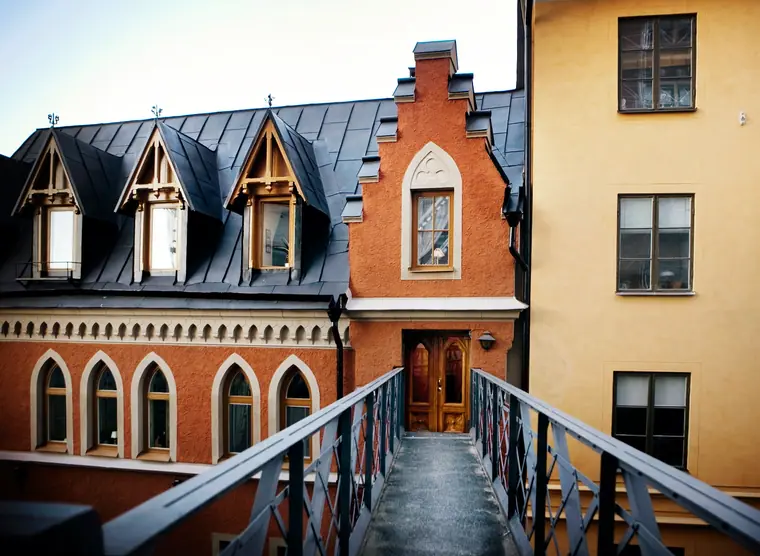
Stieg Larsson died on November 9, 2004, of a heart attack, at 50. He had delivered three novels to a Swedish publisher. None of them had been published yet. He never saw a copy, a review, a sales figure, or a film.
The Millennium trilogy — The Girl with the Dragon Tattoo and its two sequels — went on to sell more than 80 million copies worldwide by 2015, plus Swedish and American films, television, and a continuation series written by another author.
Eva Gabrielsson had been his partner since the early 1970s. They shared a home for three decades. She was an architect; he was a journalist who ran Expo, a magazine that investigated the Swedish far right, and who lived with the security precautions that came with that work. Reporting on the couple consistently gives the reason they never married: marrying in Sweden puts your address on a public record, and a public address was a thing he had spent his career avoiding.
That decision, made for a reason that had nothing to do with money, decided who owned the most valuable literary estate in modern Scandinavian publishing.
A document from 1977, in a drawer
There was a will. Gabrielsson found it. Larsson had written it in 1977, when he was 22 and about to leave for Africa, and it left his assets to the Umeå branch of the Communist Workers League — a political commitment of a specific young man in a specific year, and not remotely a plan for a global publishing estate that did not yet exist.
It did not matter, because the document was not witnessed. Swedish law, like Florida's and like most of the world's, requires a will to be witnessed to be valid. An unwitnessed sheet of paper expressing a clear intention is evidence of what someone wanted and nothing more.
So Larsson died intestate as a matter of law. The estate — including all future royalties — passed to his father Erland and his brother Joakim.
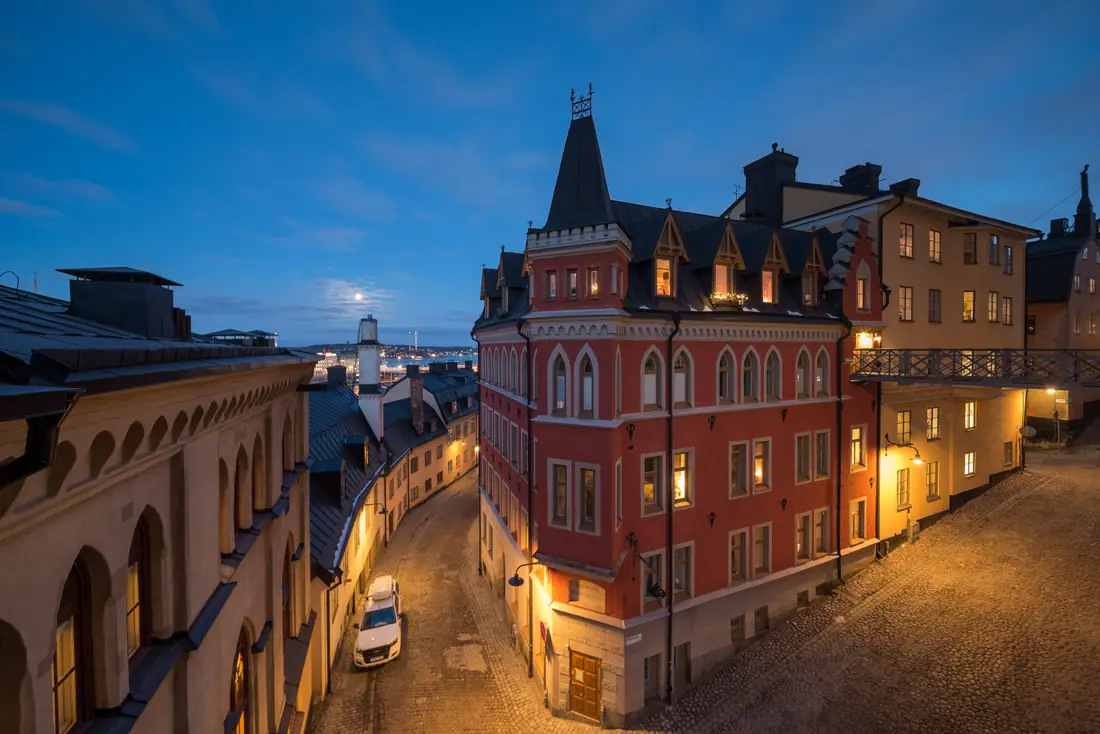
An offer, a refusal, and a laptop
The books were published in Sweden beginning in 2005 and the money arrived in a rush nobody had planned for.
In June 2010 talks between Gabrielsson and Larsson's father and brother broke down publicly. Reporting at the time put the offer on the table at 20 million kronor — around $2.5 million — together with a seat on the board of the company managing the Millennium rights. She declined it. Her stated position, given repeatedly in interviews and in her 2011 memoir, was that what she wanted was control of the work, not a payment.
The estate has been reported since as having settled title to the home she shared with Larsson and his personal effects on her, with the literary rights remaining with the family. The family, for its part, has publicly defended its management of the estate and its decision to continue the series.
One asset sits outside all of it. Larsson left roughly 200 pages of a fourth Millennium novel on a laptop that is in Gabrielsson's possession. Copyright in the manuscript is part of the estate. The physical machine is not with the estate. Neither side can do anything with it alone, which is a stalemate no court order has resolved.
Long relationships that the statute cannot see
This is not an unusual case. It is the most famous instance of the single most common estate-planning failure among unmarried couples, and the pattern is always the same: two people build a life on the assumption that duration equals status, and the intestacy statute, which has no way to measure a relationship, hands everything to a bloodline.
The statute is not being cruel. It is being mechanical. An intestacy code is a default for people who left no instructions, and every default has to be drawn from something the state can verify. Marriage is verifiable. A registered partnership is verifiable. Thirty-two years of shared address, shared work and shared life is not a legal category anywhere in the Nordic countries or the United States.
The remedy is a document, and the document is not expensive. That is the entire lesson of this file.
Timeline
- 1972–1974Larsson and Eva Gabrielsson meet and begin living together. They never marry; reporting attributes the decision to the public-record requirement and the risks of his work on the far right.
- 1977Larsson writes a will leaving his assets to the Umeå branch of the Communist Workers League. It is not witnessed.
- 1995Larsson co-founds the Expo Foundation and later edits its magazine, investigating far-right movements in Sweden.
- 2004He delivers three completed novels to the publisher Norstedts.
- Nov 9, 2004Larsson dies of a heart attack at 50. The 1977 will fails for want of witnesses; the estate passes to his father Erland and his brother Joakim.
- 2005–2007The Millennium trilogy is published in Sweden and then internationally. The estate becomes one of the most valuable in European publishing.
- Jun 2010Negotiations between Gabrielsson and the family collapse publicly. Reports put the declined offer at 20 million kronor plus a board seat.
- 2011Gabrielsson publishes a memoir setting out her account. Her stated aim throughout is control of the work rather than a payment.
- 2015The series has sold more than 80 million copies worldwide. A continuation novel by another author is published with the estate's authority.
What actually went wrong
- No valid will. A 1977 unwitnessed page is not a will in Sweden, in Florida, or almost anywhere. Formalities are not a technicality; they are the entire mechanism by which a document becomes enforceable.
- No marriage, and no substitute for one. Sweden's sambo regime divides a shared home. It does not create an heir. The couple appear to have understood the security reasoning perfectly and never addressed the inheritance consequence that came with it.
- A stale document nobody revisited. Even if the 1977 will had been witnessed, it would have given the Millennium trilogy to a political organisation he had left decades earlier. Wills that are never reviewed produce results the writer would not recognise.
- Value that arrived after death. The estate was worth very little on November 9, 2004. It was worth an enormous amount two years later. Planning that is skipped because 'there's nothing to leave' fails exactly in the cases where it matters most.
- Assets split from the rights to them. The manuscript on the laptop is a perfect illustration: the estate owns the copyright, someone else holds the machine. Neither can act. Nothing in the file resolves it.
Would it have gone that way in Florida?
Identical, and Florida is if anything harsher. Florida abolished common-law marriage in 1968. An unmarried partner is a legal stranger to the estate.
Start with the rule that surprises people. Fla. Stat. §741.211 provides that no common-law marriage entered into after January 1, 1968 is valid in Florida. There is no length of cohabitation, no number of shared children, no jointly filed tax return and no amount of holding out as a couple that converts a relationship into a marriage here. A common-law marriage validly formed in a state that still recognises them, before moving to Florida, is a different question — Florida generally recognises marriages valid where contracted — but a Florida couple cannot create one.
If you are not a spouse, the Probate Code does not see you. §732.102 gives a share to a surviving spouse. §732.201 gives the elective share to a surviving spouse. §732.301 protects a pretermitted spouse. §732.402 exempt property and §732.403 family allowance run to a surviving spouse and children. A partner of thirty-two years appears in none of them.
So Florida would produce the same result Sweden did, by the same route. Under §732.103 an intestate estate with no spouse and no descendants passes to the decedent's parents, and if none survive, to siblings and their descendants. Erland and Joakim, in the Florida version, are exactly who inherits.
The will would fail here too. §732.502 requires the testator to sign at the end and two attesting witnesses to sign in the testator's presence and in each other's presence. Florida does not recognise a holographic will — an unwitnessed handwritten one — no matter how clearly it states an intention and no matter where it was written; §732.502(2) honours out-of-state wills but expressly carves holographic and nuncupative wills out. A 1977 unwitnessed page is not a will in Florida on any theory.
It reaches past money. With no will and no marriage, an unmarried partner in Florida has no default authority to make health-care decisions under Chapter 765 and no standing under §497.005 to direct the disposition of remains, where the statutory order of legally authorized persons runs to spouse, adult children, parents, and siblings — the decedent's own written directions rank ahead of all of them, which is why they matter so much here. Some Florida counties and cities maintain domestic-partnership registries that can carry visitation and similar rights; none of them creates a right to inherit under the Probate Code.
The honest caveat. There are real Florida remedies at the edges. Jointly titled property with survivorship rights passes outside probate. Pay-on-death and transfer-on-death designations control regardless of marital status. An unmarried partner who contributed to property may have equitable claims, and Florida recognises tortious interference with an expectancy in narrow circumstances under Schilling v. Herrera, 952 So. 2d 1231 (Fla. 3d DCA 2007). But these are salvage operations. None of them is a plan.
The practical instruction. If you are not married and you intend your partner to receive anything, five documents do all of the work, and a competent lawyer can execute them in one appointment: a will signed under §732.502, or better, a revocable trust so nothing has to be probated at all; a durable power of attorney; a health care surrogate designation under Chapter 765; a written direction for disposition of remains under §497.005; and updated beneficiary designations on every account, retirement plan and policy, because those override the will. Do it now, while the estate is small. That is precisely when it is cheapest and when it is most likely to matter.
What people ask us about this.
Further reading
Third-party sites. Not ours, not endorsed, not kept current by us — just the places worth going next.
Sources
- Stieg Larsson — Wikipedia
- Eva Gabrielsson — Wikipedia
- Eva Gabrielsson refuses Larsson family offer — The Local (Sweden), Jun 2010
- Talks over Millennium millions collapse — ABC News (Australia), Jun 2010
- Stieg Larsson's family defends estate's management — CBC News
- The difference between sambo and marriage in Sweden — The Local (Sweden), Jan 2019
- Fla. Stat. §741.211 — Common-law marriages void — The Florida Senate
- Fla. Stat. §732.103 — Share of other heirs — The Florida Senate
- Fla. Stat. §732.502 — Execution of wills — The Florida Senate
If this is your situation
Free 30-minute consult. Plain English. No pressure.
Nearly every case in this archive turned on something ordinary — an unwitnessed page, a stale beneficiary line, a document nobody could find. Those are cheap to fix while you're alive and expensive to fix afterward.