James Brown
He signed a will. It said his money should educate poor children in South Carolina and Georgia. It took a state attorney general, two removed trustees, more than a dozen lawsuits, and two trips to the South Carolina Supreme Court before a single scholarship was paid.
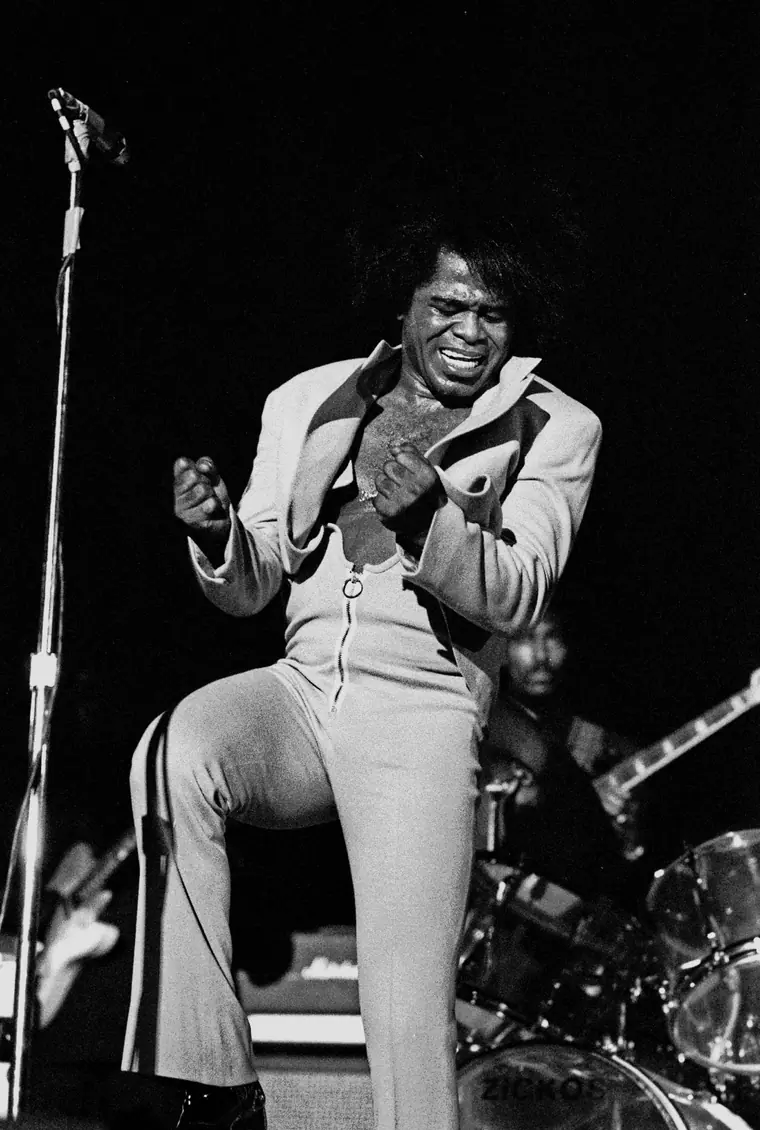
James Brown died on Christmas Day 2006 in Atlanta. He was 73.
He had a will. It was signed August 1, 2000, and it was not vague. His personal and household effects went to six named adult children. $2 million was set aside in a trust for his grandchildren's education. Everything else — the catalogue, the royalties, the name — went into an irrevocable trust with a single purpose: scholarships for financially needy students in South Carolina and Georgia. He called it the I Feel Good Trust.
It is one of the clearest charitable estate plans ever written by an American entertainer. It took fifteen years and roughly a dozen lawsuits to carry out.
The reason is not that the will was badly drafted. The reason is that a will is a set of instructions, and instructions require someone willing to follow them.
Everyone against the trust
Two fights opened almost immediately and ran in parallel for a decade.
The children sued to set aside the will and the trust, alleging undue influence, and asking that the estate pass by intestacy instead — which would have delivered to them what the charitable trust was taking away. Both documents contained no-contest clauses, which did not deter anyone.
Tommie Rae Hynie, a former backup singer who had gone through a marriage ceremony with Brown in 2001, claimed to be his surviving spouse and sought a spouse's share of the estate. The complication was documented and stubborn: she had married a man named Javed Ahmed in 1997, and that marriage was not annulled by a court until 2004 — three years after the ceremony with Brown.
Meanwhile the fiduciaries changed hands. Robert L. Buchanan Jr. and Adele J. Pope, the personal representatives and trustees Brown's plan had installed, were removed by circuit court order, and Russell L. Bauknight was appointed in their place. Buchanan and Pope appealed their removal. That appeal became its own strand of litigation.
When the state rewrote the will
In 2008 the South Carolina Attorney General's office intervened — on behalf of the charity, which under charitable-trust law has no voice of its own — and negotiated a global settlement with the family.
The deal divided the estate into a settlement entity and split it:
- 47.5% to fund a new charitable trust.
- 23.7% to Hynie, including a share for Brown's youngest son.
- 4.79% each to the six adult children — roughly 28.7% in total.
Brown's plan had given the family personal effects and a $2 million education fund. The settlement gave them slightly more than half the estate. The personal representatives were ordered by the court to sign it over their objections.
On February 27, 2013, the South Carolina Supreme Court threw it out. In Wilson v. Dallas, 403 S.C. 411, 743 S.E.2d 746, the court held the settlement could not stand: it did not resolve a good-faith controversy so much as dismember Brown's estate plan, and it failed the statutory requirement that such an agreement be just and reasonable to the interests of those represented by fiduciaries. The court reversed in part and remanded.
Six and a half years after the death, everything went back to the beginning.
June 17, 2020
The spousal claim took another seven years to resolve, and it resolved on a point of statutory grammar.
South Carolina Code §20-1-80 prohibits a marriage while a prior marriage is undissolved, unless the first marriage has been declared void by the sentence of a competent court. On June 17, 2020, the South Carolina Supreme Court read that clause literally: Hynie's 1997 marriage to Ahmed had not been annulled by any court when she and Brown went through their 2001 ceremony. The annulment came in 2004. The order of events was the whole case.
The court also held that the 2004 annulment did not bind Brown's children, who had not been parties to it and had never had the chance to contest its findings. It reversed the lower courts, held that Tommie Rae Brown was not James Brown's surviving spouse, and rejected her claim to an elective or omitted-spouse share.
Then it did the thing every probate lawyer in the country was waiting for: it remanded with instructions to promptly proceed with probate of Brown's estate in accordance with his estate plan.
$90 million, and then the scholarships
The family and the estate went to mediation. On July 9, 2021, after roughly two months of talks, Brown's children and personal representative Russell Bauknight announced a settlement resolving substantially all the remaining litigation. Terms were not disclosed.
In December 2021, the estate sold Brown's music assets — publishing interests, master recording income, and name and likeness rights — to Primary Wave Music in a deal reported at approximately $90 million.
That is the money that finally funded the trust. Fifteen years after the Godfather of Soul died with a clear will directing his fortune to educate poor children, the scholarship fund had cash in it.
Courts across the fifteen years put the estate's value anywhere from $5 million to more than $100 million, which tells you something about how hard it is to price a catalogue while nine parties are litigating who owns it. What is not in dispute is the arithmetic on the other side of the ledger: a decade and a half of fees, appeals, appraisals, mediations, and two Supreme Court opinions, all paid before the first tuition check.
Timeline
- Aug 1, 2000Brown signs a will and an irrevocable trust: personal effects to six children, $2M for grandchildren's education, the residue to a scholarship trust for needy students in South Carolina and Georgia.
- 2001Brown and Tommie Rae Hynie go through a marriage ceremony. Her 1997 marriage to Javed Ahmed has not been annulled by any court.
- Dec 25, 2006Brown dies in Atlanta at 73. Litigation begins within weeks.
- 2007–2008Children sue to set aside the will and trust for undue influence. Hynie claims a spouse's share. Trustees Robert Buchanan and Adele Pope are removed; Russell Bauknight is appointed.
- 2008The South Carolina Attorney General intervenes for the charity and negotiates a settlement: 47.5% to a new charitable trust, 23.7% to Hynie, 4.79% to each of the six adult children.
- Feb 27, 2013In Wilson v. Dallas the South Carolina Supreme Court voids the settlement, holding it dismembered Brown's estate plan rather than resolving a good-faith controversy.
- Jun 17, 2020The South Carolina Supreme Court holds Tommie Rae Brown was not Brown's surviving spouse, and orders the estate probated according to his plan.
- Jul 9, 2021After two months of mediation, Brown's children and the personal representative announce a settlement resolving substantially all remaining litigation.
- Dec 2021The estate sells Brown's music assets to Primary Wave Music in a deal reported at about $90 million, funding the scholarship trust.
What actually went wrong
- A charitable plan with no allies. Every living person named in the will had a financial reason to prefer a different outcome, and the beneficiary — future students — could not appear in court. That imbalance is structural, and it has to be designed against.
- No-contest clauses that did nothing. Both documents had them. Nobody was deterred, because a clause only bites a beneficiary with something to lose, and the contestants had been given comparatively little to lose.
- A marriage nobody documented. A 2001 ceremony, a 1997 marriage undissolved until 2004, and no annulment, no prenuptial agreement, and no written waiver of spousal rights. Fourteen years of litigation grew out of a records problem.
- Fiduciaries who became the case. Removing the personal representatives created a second lawsuit that ran alongside the first for years, litigated with estate money on both sides.
- Fifteen years of carrying costs. An estate valued somewhere between $5 million and $100 million paid appellate counsel for a decade and a half. Every dollar of that came out of the scholarships.
Would it have gone that way in Florida?
The spousal claim fails the same way. The Attorney General's settlement would have been flatly unavailable — Florida forbids privately rewriting a charitable trust.
Start with the marriage, because it is the shortest answer. Florida's elective share under Fla. Stat. §732.201 belongs to a surviving spouse — 30% of the elective estate under §732.2065, reaching revocable trusts, pay-on-death accounts, and joint property, and elected within the window in §732.2135. It is one of the most powerful spousal rights in the country. It is also worth exactly nothing to someone who is not a spouse. Florida makes marrying while a husband or wife is living a third-degree felony under §826.01, and a marriage entered that way is void. Same order of events, same result: no spouse, no elective share.
Now the part where Florida diverges sharply, and it is the heart of this case.
The 2008 settlement redirected roughly half of a charitable trust to private beneficiaries by agreement. Fla. Stat. §736.0412 permits an irrevocable trust to be modified after the settlor's death by unanimous agreement of the trustee and all qualified beneficiaries — a genuinely useful tool. And then subsection (4)(c) shuts the door: the section does not apply to any trust for which a charitable deduction is allowed or allowable under the Internal Revenue Code, until the termination of all charitable interests in the trust. In Florida you cannot hand a charitable trust around a conference table. Modifying one requires a judge, under §736.04113 or the cy pres doctrine in §736.0413, on the record, with the charitable purpose in front of the court.
Florida also gives the charity a formal voice rather than an improvised one. §736.0110 provides that a charitable organization designated to receive distributions has the rights of a qualified beneficiary, and that the Attorney General may assert the rights of a qualified beneficiary as to a charitable trust administered in Florida. The office is a party with standing, not a broker.
On the contest itself, Florida is blunter than South Carolina. §732.517 makes a no-contest clause in a Florida will unenforceable, and §736.1108 does the same for trusts. Brown's clauses were, in practical terms, decorative in South Carolina too — but in Florida they would have been legally void from the day he signed them. If you are planning a Florida estate that leaves most of the money to charity, a penalty clause is not your protection. Structure is.
What is: fund the charitable vehicle during your lifetime so it exists, has a board, files returns, and is a real party before anyone can argue about it; name a corporate or professional trustee with no stake in the family outcome; document any marriage with a prenuptial agreement or a written waiver of spousal rights under §732.702; and tell your children, in writing and in advance, what they are getting and why. James Brown wrote down what he wanted with unusual clarity. He did not build anything that could defend it.
What people ask us about this.
Further reading
Third-party sites. Not ours, not endorsed, not kept current by us — just the places worth going next.
Sources
- Wilson v. Dallas, 403 S.C. 411, 743 S.E.2d 746 (2013) — South Carolina Supreme Court via Justia
- In re Estate of James Brown, Appellate Case No. 2018-001990 — South Carolina Supreme Court, Jun 17 2020, via FindLaw
- Denying marriage claim, justices OK James Brown's dying wish — WLTX, Jun 2020
- Dispute over estate of James Brown settles after nearly fifteen years of litigation — Lord & Lindley, Jul 2021
- James Brown's heirs reach agreement over estate, ending 15-year legal battle — Rolling Stone, Jul 2021
- James Brown estate sells massive rights bundle to Primary Wave for $90 million — Billboard, Dec 2021
- James Brown's estate sold to Primary Wave Music in deal estimated at $90 million — Forbes, Dec 13 2021
- Court scolds SC Attorney General for hijacking James Brown estate — Forbes, Feb 2013
- Fla. Stat. §736.0412 — Nonjudicial modification of irrevocable trust — The Florida Senate
If this is your situation
Free 30-minute consult. Plain English. No pressure.
Nearly every case in this archive turned on something ordinary — an unwitnessed page, a stale beneficiary line, a document nobody could find. Those are cheap to fix while you're alive and expensive to fix afterward.