The Murdoch Family Trust
A divorce settlement in 1999 locked four children into equal control of a media empire, and made the trust irrevocable. Twenty-four years later the settlor asked a Nevada court for permission to change it. The commissioner said no, in ninety-six pages, using the word “charade.”

This is the most consequential trust case of the decade, and almost none of it happened in public. It was heard in a sealed courtroom in Reno, Nevada, under the caption In the Matter of the Doe 1 Trust — a placeholder name chosen so that the file would not say Murdoch. Six news organisations petitioned to open it. In September 2024 the court declined, describing the matter as essentially a private legal arrangement.
The instrument at the centre of it was created in 1999, as part of Rupert Murdoch's divorce settlement with Anna Murdoch Mann. It carried eight votes over the family's controlling stake in what became News Corp and Fox Corporation. Four of those votes belonged to Rupert during his lifetime. The other four went one apiece to his four eldest children — Prudence MacLeod, Elisabeth Murdoch, Lachlan Murdoch, and James Murdoch. On his death, his four votes disappear, leaving four equal votes and no majority.
His two youngest daughters, Grace and Chloe Murdoch, were made beneficiaries with an economic interest and no votes.
And the trust was irrevocable. That was the point of it. A divorce settlement that the settlor can undo is not a settlement.
One clause, and the words “sole benefit”
An irrevocable trust is not immovable. Most well-drafted ones contain a narrow amendment power, and this one did: the trust could be amended in good faith and for the sole benefit of its beneficiaries.
That is a real power and a genuinely narrow one. It exists so a trustee or settlor can fix a drafting error, respond to a tax change, or adapt to circumstances nobody foresaw in 1999. It is not a general licence to reallocate control.
In December 2023, Rupert Murdoch petitioned the Nevada court to amend the trust so that Lachlan Murdoch would hold sole voting control after his death. The stated rationale, as reported, was that a single controlling voice would preserve the commercial value of the assets — specifically, that it would retain the editorial character of the News Corp properties, which the petition treated as the source of their worth.
The internal planning process that produced the petition was, according to reporting on the proceedings, called Project Family Harmony. That name did a great deal of work in the eventual opinion.
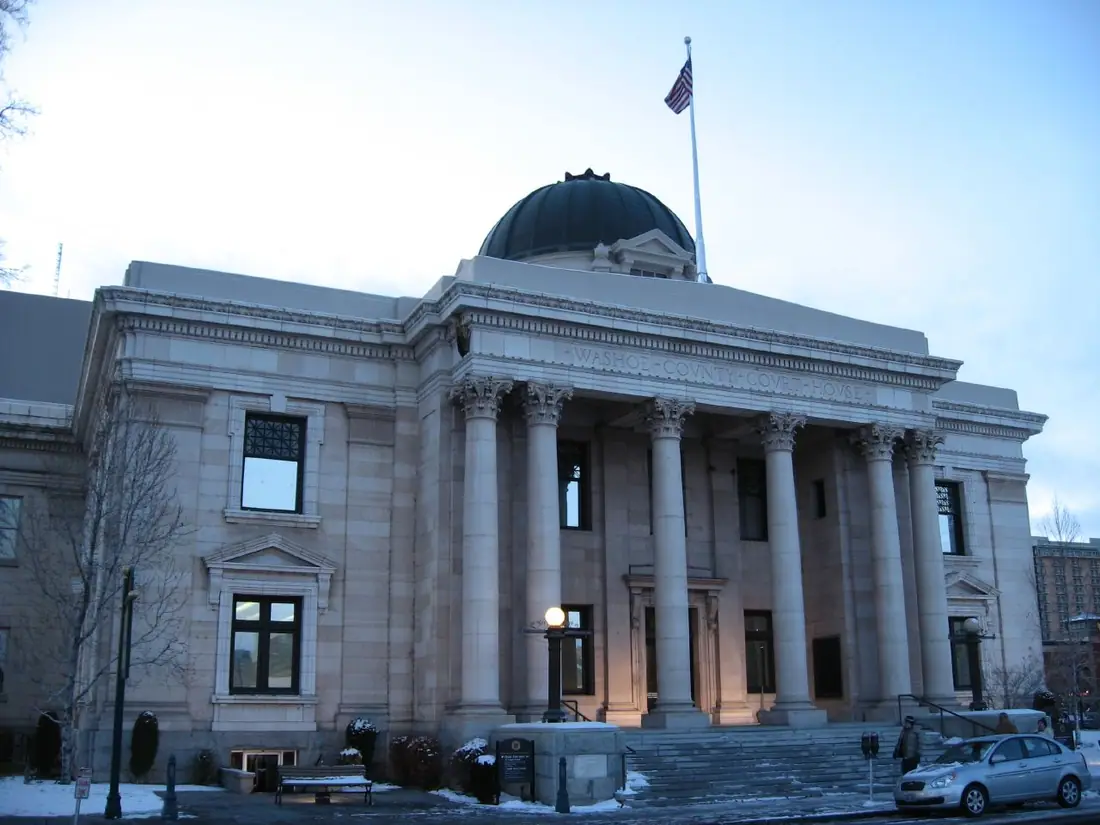
A sealed trial and a 96-page opinion
The trial ran from September 16 to 23, 2024 in the Second Judicial District Court in Washoe County. Rupert Murdoch was represented by Adam Streisand of Sheppard Mullin; Lachlan Murdoch by Alexander LeVeque; and Prudence, Elisabeth, and James jointly by Gary Bornstein of Cravath.
On December 9, 2024, Probate Commissioner Edmund J. Gorman Jr. issued a 96-page opinion rejecting the amendment. He found that Rupert and Lachlan Murdoch had not acted in good faith, describing the plan as “a carefully crafted charade” intended to “permanently cement Lachlan Murdoch's executive roles” at the companies “regardless of the impacts such control would have over the companies or the beneficiaries.”
The finding was not that the amendment was unwise. It was that the good-faith condition written into the trust had not been met — which is a different and much harder thing to fix on appeal.
Rupert Murdoch's counsel said the next day that his clients were disappointed and would appeal. A commissioner's decision in Nevada is a recommendation subject to review by the district judge, so the appeal was the expected next step rather than a long shot.
September 2025: everyone takes the money
Oral argument on the objections was heard in late May 2025. Reporting afterward suggested the reviewing judge might give the petitioners more room than the commissioner had. Whatever the parties read into that, they went back to negotiating.
On September 8, 2025, Fox Corporation announced that the family had “reached a mutual resolution of the legal proceeding in Nevada … resulting in the termination of all litigation.” The reported terms:
- The 1999 trust is dissolved. A new trust holds the controlling stakes, with Lachlan Murdoch and his half-sisters Grace and Chloe as its members. It runs to 2050.
- Prudence, Elisabeth, and James exit entirely, each into a separate new trust funded by the sale of roughly 14.2 million News Corp Class B shares and 16.9 million Fox Class B shares.
- Each of the three was reported by the New York Times to receive more than $1 billion; the total package has been reported at roughly $3.3 billion.
- The three agreed they may never buy back in to either company.
So the outcome the petition sought in 2023 — Lachlan in control, the others out — arrived in 2025 anyway. It simply cost about $3.3 billion and a published finding of bad faith to get there by contract instead of by amendment.
There is a version of this story where that is a defeat and a version where it is a purchase. Both are defensible. What is not arguable is the price of the drafting.
Timeline
- 1999The Murdoch Family Trust is created in the divorce settlement with Anna Murdoch Mann. Eight votes: four to Rupert for life, one each to Prudence, Elisabeth, Lachlan, and James. The trust is irrevocable, amendable only in good faith and for the sole benefit of the beneficiaries.
- Mid 2023Internal planning, reported as “Project Family Harmony,” prepares a proposed amendment consolidating voting control in Lachlan Murdoch.
- Dec 2023Rupert Murdoch petitions the Nevada court to amend the irrevocable trust. The matter is filed under the placeholder caption In re Doe 1 Trust, Washoe County.
- Sep 12, 2024The court denies petitions by six news organisations to unseal the proceedings.
- Sep 16–23, 2024Sealed trial in Reno before Probate Commissioner Edmund J. Gorman Jr.
- Dec 9, 2024Gorman issues a 96-page opinion rejecting the amendment, finding Rupert and Lachlan Murdoch did not act in good faith and calling the plan “a carefully crafted charade.” Counsel announces an appeal the next day.
- May 2025Oral argument on review before the district judge. Buyout negotiations resume afterward.
- Sep 8, 2025Fox Corporation announces a mutual resolution terminating all litigation. The 1999 trust is dissolved; a new trust to 2050 holds control with Lachlan, Grace, and Chloe; Prudence, Elisabeth, and James exit for a reported total of roughly $3.3 billion.
What actually went wrong
- The settlor bargained away flexibility and then needed it. An irrevocable trust created in a divorce is deliberately hard to change — that is what the other side was buying. Twenty-four years is a long time to be bound by a document drafted for a family that has since doubled in size.
- “Sole benefit” is a much narrower key than it looks. A reserved amendment power conditioned on good faith and sole benefit invites a court to examine motive. Once the process itself is in evidence — including what the project was called internally — the drafting battle becomes a credibility battle.
- Equal votes among four people is a deadlock waiting for a trigger. Four votes with no tiebreaker guarantees that control passes to whoever can assemble three, and guarantees litigation if nobody can.
- Two classes of beneficiary in one instrument. Four children with votes, two without, and no mechanism to revisit that as the younger two reached adulthood. Structural asymmetry with no adjustment valve ages badly.
- Sealing bought privacy, not quiet. The file was closed and the caption anonymised, and the opinion's most damaging phrases were in every major outlet within a day. Confidentiality in a contested trust matter is a hope, not a plan.
Would it have gone that way in Florida?
Florida would have been a friendlier forum for the petition — its judicial-modification statutes are among the most permissive in the country — but the good-faith condition inside the instrument would still have been the problem.
Take the two questions separately: can a Florida court modify an irrevocable trust, and would that have helped here?
On the first, Florida is unusually generous. Fla. Stat. §736.04113 lets a trustee or any qualified beneficiary petition to modify an irrevocable trust where its purposes have been fulfilled or become impossible, wasteful, or impracticable; where unanticipated circumstances would defeat or substantially impair a material purpose; or where a material purpose no longer exists. Fla. Stat. §736.04115 goes further, allowing modification simply because it is in the best interests of the beneficiaries — a standard most states do not offer at all — with the court directed to conform as closely as possible to the settlor's intent. That statute does not reach trusts created before January 1, 2001, or trusts whose terms expressly forbid judicial modification, which is a caveat worth reading twice: a 1999 trust would fall outside §736.04115 on its face.
Florida also offers two routes that avoid a judge entirely. §736.0412 permits nonjudicial modification after the settlor's death by unanimous written agreement of the trustee and all qualified beneficiaries — useless where the beneficiaries are the ones objecting, but the cheapest fix in every case where they are not. And §736.04117 authorises decanting: an authorised trustee with absolute power over distributions may pour the assets into a second trust with different terms, subject to statutory limits that protect vested beneficial interests. Decanting cannot be used to strip a beneficiary of what the first trust already gave them, which is precisely the move at issue here.
On the second question, none of that would have saved the petition. The Nevada ruling did not turn on whether an irrevocable trust can be amended. It turned on a condition the settlor himself had written into the instrument: amendment in good faith and for the sole benefit of the beneficiaries. Florida applies the same discipline. A settlor or trustee exercising a reserved power is exercising a fiduciary or quasi-fiduciary power, and §736.0802 imposes a duty of loyalty requiring administration solely in the interests of the beneficiaries. A Florida court asked to bless an amendment that takes control from three beneficiaries and gives it to a fourth would ask the same question Commissioner Gorman asked, and would look at the same internal record.
One Florida advantage is real and often overlooked. §689.225 now permits a trust created on or after July 1, 2022 to run for 1,000 years — longer than Nevada's 365-year rule and vastly longer than the common-law perpetuities period. If the objective is dynastic control of a voting block, Florida can hold it longer than almost anywhere. The replacement Murdoch trust runs to 2050. Florida would have let it run to 3025.
The practical instruction is unglamorous and applies at every asset level. If control of a family business is the thing you actually care about, write the control mechanism, not just the ownership. Name a decision-maker or a tiebreaker rather than an even number of equal votes. Give a trust protector under §736.1406 the power to adjust trustees and, where you want it, to modify administrative terms without a courtroom. Reserve amendment powers in terms you would be content to have a judge read aloud, because one day a judge will. And revisit the document when the family changes — a plan drafted for four children does not automatically make sense for six.
What people ask us about this.


Further reading
Third-party sites. Not ours, not endorsed, not kept current by us — just the places worth going next.
Sources
- Rupert Murdoch loses courtroom attempt to change the family trust — NPR, Dec 10 2024
- Probate commissioner rejects Rupert Murdoch's attempt to change family trust — PBS NewsHour, Dec 2024
- Nevada probate commissioner rules against Rupert Murdoch's change to family trust — UBC Allard Business Organizations Law, Dec 2024
- Murdoch fails to amend family trust in court succession saga — Al Jazeera, Dec 9 2024
- Murdoch family settles court fight over media empire's future — ABC News (Australia), Sep 9 2025
- Murdoch family reaches settlement in succession battle — WealthManagement.com, Sep 2025
- Murdoch settlement: Lachlan's status reaffirmed as James, Elisabeth and Prudence cut ties — Deadline, Sep 8 2025
- Fla. Stat. §736.04115 — Judicial modification of irrevocable trust — The Florida Senate
If this is your situation
Free 30-minute consult. Plain English. No pressure.
Nearly every case in this archive turned on something ordinary — an unwitnessed page, a stale beneficiary line, a document nobody could find. Those are cheap to fix while you're alive and expensive to fix afterward.