Hetty Green
Before she became the richest woman in America, Hetty Green sued her aunt's estate over a disputed page said to leave her everything. The defence hired a Harvard mathematician, who calculated the odds that the signature was genuine at roughly one in 2.666 sextillion. It is the first great use of statistics as evidence in an American courtroom.
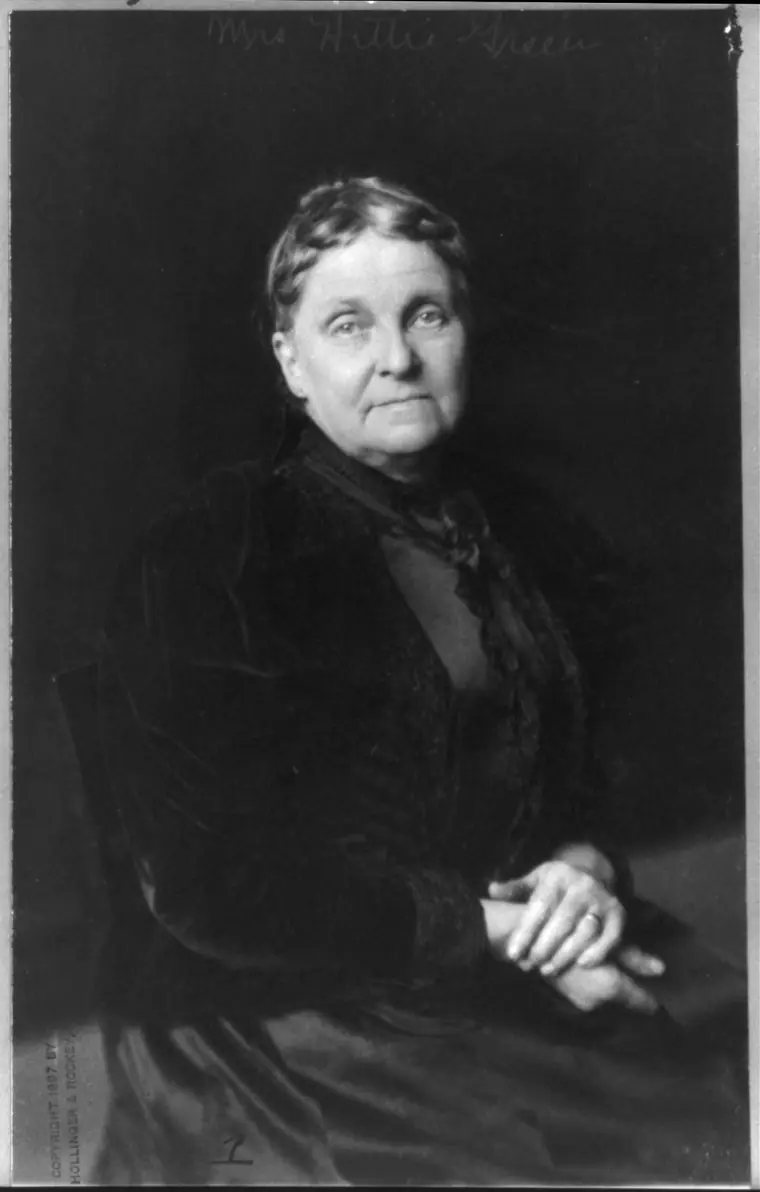
Sylvia Ann Howland died in New Bedford, Massachusetts, in 1865, leaving about $2 million from the Howland whaling fortune — well over $40 million in today's terms. Her will gave roughly half to charities and institutions and left the remainder in trust for her niece, Henrietta Howland Robinson.
Robinson did not want a trust. She wanted the money.
So she produced an earlier will leaving her the entire estate outright — and, attached to it, a separate page stating that any later will her aunt might sign should be disregarded. In substance: a document promising that no future document would count.
The executor, Thomas Mandell, said the page was a forgery. Robinson sued. The case is Robinson v. Mandell, 20 F. Cas. 1027 (C.C.D. Mass. 1868), and it is the reason a whaling-family probate dispute appears in statistics textbooks.
Two Peirces and forty-two signatures
The signatures on the disputed page were, to the naked eye, too good. They matched the genuine signature on the earlier will almost exactly, and matching too exactly is itself suspicious: nobody signs their name twice the same way.
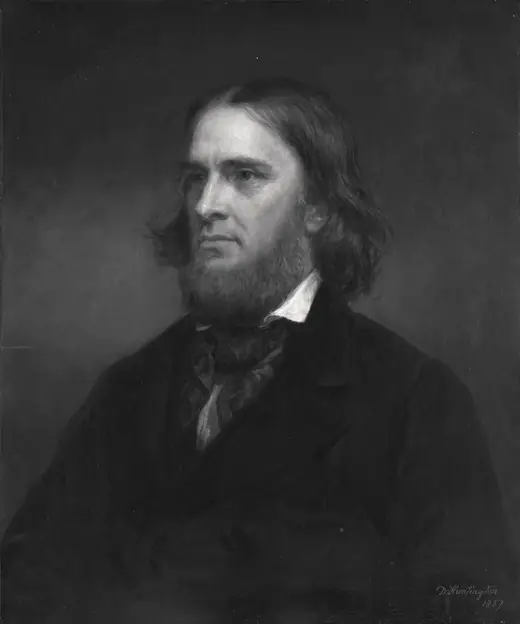
The defence retained Benjamin Peirce, the Harvard mathematician and astronomer, and his son Charles Sanders Peirce, later one of the most important American logicians.
Charles did the empirical work. He gathered 42 genuine Howland signatures, overlaid them in every possible pairing, and counted how often the 30 downstrokes in the name coincided. The answer: on average about 6 of 30 — roughly one downstroke in five.
Benjamin then supplied the model. Treat each downstroke coincidence as an independent trial with probability about one in five, and the number of coincidences between two genuine signatures follows a binomial distribution. On the disputed page, all 30 downstrokes coincided with the signature on the earlier will.
He testified that the probability of that happening naturally was about one in 2.666 × 10²¹ — one in 2.666 sextillion. His inference was straightforward: the signature had not been written by hand a second time. It had been traced.
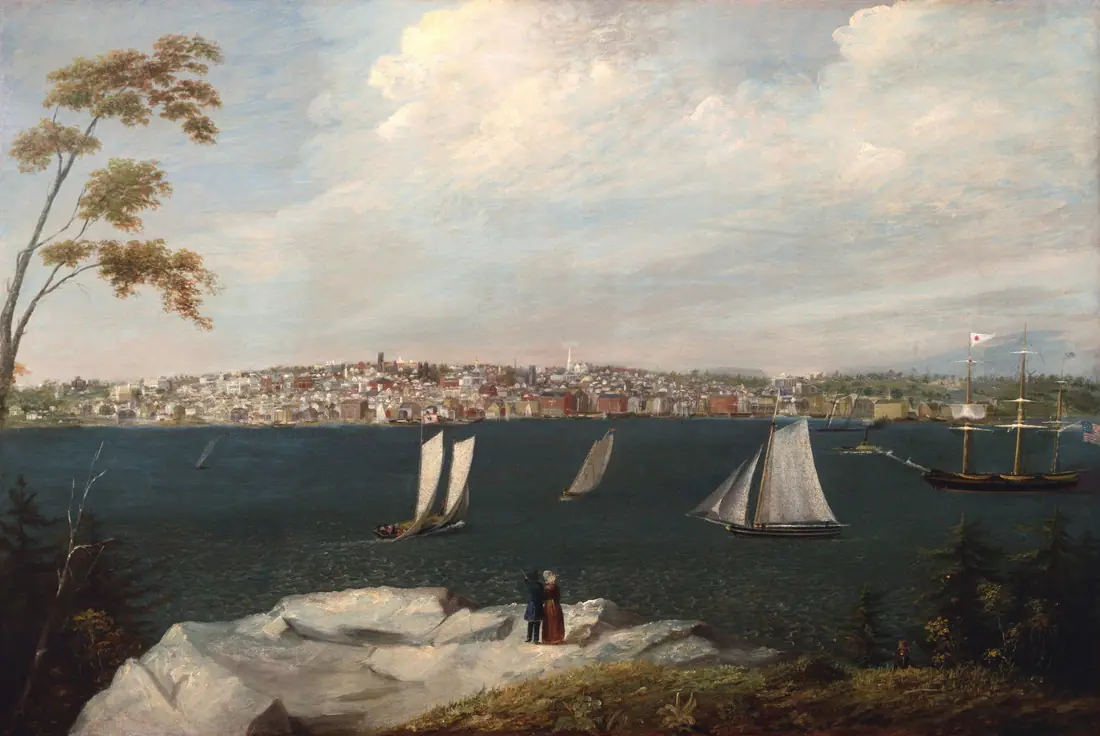
The court decided it on something else entirely
Robinson lost. The court found that the invalidating clause and the signature on the second page were not genuine.
But here is the part that gets left out of the textbook version: the statistical evidence was not what decided the case. The court disposed of it on a different ground — Robinson's own testimony supporting the authenticity of the signature was held inadmissible because of her interest in the outcome. Under the rules of the day, a party with a financial stake could not testify to a transaction with a dead person. Without her testimony, her case failed on the ordinary evidence.
So the most famous piece of mathematical evidence in nineteenth-century American law was, strictly speaking, not called upon in judgment. It made the reputation of the technique without ever having to carry the verdict.
Robinson settled for a trust of roughly $600,000 — considerably less than the $2 million she had claimed, and considerably more than nothing.
The Witch of Wall Street
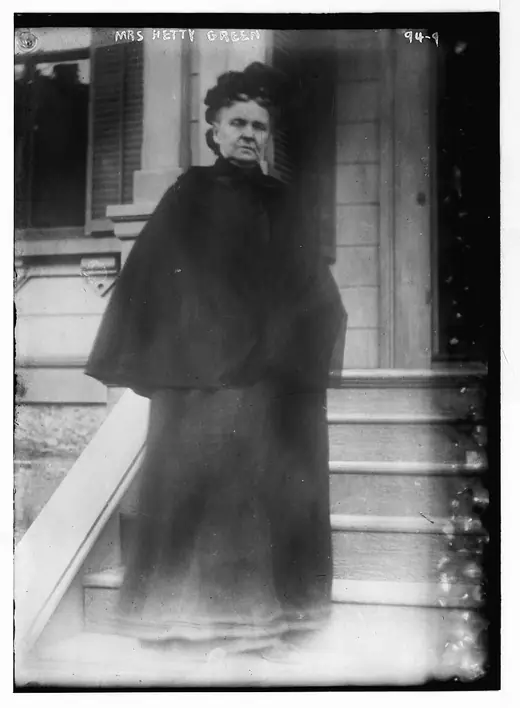
Henrietta Howland Robinson married Edward Green and became Hetty Green. Over the next fifty years she turned her inheritance into the largest fortune held by any woman in America — variously estimated between $100 million and $200 million when she died on July 3, 1916.
Her method was unglamorous and she stated it plainly: “I buy when things are low and nobody wants them. I keep them until they go up and people are crazy to get them.” She lent money to the City of New York when it needed cash, and to a great many railroads that did.
Her frugality was famous to the point of caricature — one black dress worn until it wore out, a nickname she never shook — and it extended to tax planning. She moved repeatedly between small apartments in Brooklyn Heights and, after 1898, in Hoboken, New Jersey, principally to avoid New York property tax, while keeping her family plot and her eventual burial in Bellows Falls, Vermont.
She left the estate to her two children, with a ten-year trust for her daughter Sylvia administered by her son Ned. Sylvia died in 1951 and gave away almost all of it — an estimated $200 million, to 64 colleges, churches, hospitals, and charities.
So the fortune that began with a contested page in 1865 ended, eighty-six years later, distributed to institutions — which is roughly what Sylvia Ann Howland's actual will had said to do in the first place.
Timeline
- 1865Sylvia Ann Howland dies in New Bedford leaving about $2 million; her will gives roughly half to charity and the rest in trust for her niece, Henrietta Howland Robinson.
- 1865Robinson produces an earlier will leaving her the whole estate, with an attached page purporting to invalidate any later will. Executor Thomas Mandell calls it a forgery.
- 1867–1868Robinson v. Mandell is tried in the United States Circuit Court for the District of Massachusetts. Charles Sanders Peirce compares 42 genuine signatures and 30 downstrokes each; Benjamin Peirce testifies to a binomial model and a probability of about one in 2.666 × 10²¹.
- 1868The court rules against Robinson, finding the clause and signature not genuine — but decides the case on the inadmissibility of her own interested testimony, not on the statistics. She later settles for a trust of roughly $600,000.
- 1867 onwardRobinson, now Hetty Green, begins compounding the inheritance in railroad bonds, mortgages, and municipal lending.
- 1898Green moves her residence to Hoboken, New Jersey, having already moved repeatedly within Brooklyn Heights, principally to avoid New York property tax.
- Jul 3, 1916Hetty Green dies in New York, aged 81, reported to be worth between $100 million and $200 million. Her estate passes to her two children.
- 1951Her daughter Sylvia dies and leaves almost the entire remaining fortune — an estimated $200 million — to 64 colleges, churches, hospitals, and charities.
What actually went wrong
- A “no later will can count” page. No such document exists. A person with capacity can always make a new will; the only way to bind future conduct is a properly executed contract, which is a different instrument with its own formalities.
- Signatures that matched too well. Genuine handwriting varies. A signature that reproduces another one stroke for stroke is evidence of tracing, not of consistency — which is precisely the inference the Peirces quantified.
- A document produced by the person it benefited. The page appeared from the sole beneficiary of the page. That fact does most of the work in any forgery case, before a mathematician is involved.
- A will contest instead of a conversation. The aunt's actual will gave the niece a trust. What the niece wanted was outright ownership. That is a disagreement about structure, and it was capable of being discussed while Sylvia Ann Howland was alive.
- Fifty years of deliberate domicile ambiguity. Green's shuttling between Brooklyn and Hoboken to avoid New York taxation worked for her, but it is the exact fact pattern that produces competing state death-tax claims after a death. Ambiguity that saves money in life costs money in probate.
Would it have gone that way in Florida?
The disputed page fails in Florida twice over — once as a will and once as a contract — and Florida gives Hetty Green's other problem, domicile, an actual filing to solve it.
Two separate Florida answers here, because this case contains two separate problems.
The page, as a will. Fla. Stat. §732.502 requires that a will be signed by the testator at the end, in the presence of two attesting witnesses, who sign in the presence of the testator and of each other. A loose sheet attached to an earlier will, executed without that ceremony, is not a will and not a codicil. Florida is strict about this: §732.502(2) honours wills executed in another state if valid where made, but expressly excludes holographic and nuncupative wills. An unwitnessed handwritten page has no force in Florida no matter whose handwriting it is in.
The page, as a promise. The clause said, in effect, I promise never to make another will. Florida allows that promise, but only in one form. §732.701 requires that an agreement to make a will, or not to revoke a will, be in writing and signed by the agreeing party in the presence of two attesting witnesses. Subsection (2) adds a point people get wrong constantly: executing a joint will or mutual wills creates no presumption of a contract to make or not revoke a will. Couples who sign matching wills after a second marriage often believe they have locked the plan in. They have not, unless they executed the contract with the formalities §732.701 requires.
The evidence. Where authenticity is genuinely contested, Florida decides it the ordinary way. §733.107 puts the initial burden on the proponent to establish prima facie the formal execution and attestation of the will; the contestant then carries the burden of the grounds asserted, with the undue-influence presumption under §733.107(2) shifting the burden of proof back where the Carpenter factors are met. Expert evidence — handwriting, forensic document examination, or statistical analysis — comes in under the Florida Evidence Code's expert standard, which since 2019 is the federal Daubert standard. The Peirces would be admissible today. Whether they would be persuasive is a different question, and the 1868 court's decision to resolve the case without relying on the mathematics is a fair caution about how judges treat a number they cannot check.
And the domicile. Hetty Green spent decades making her residence deliberately unclear, and it is a real risk: two states can each conclude a decedent was domiciled with them, and each can tax accordingly. Florida gives you a clean instrument to prevent that. §222.17 lets a person file a sworn declaration of domicile with the clerk of the circuit court, and expressly contemplates someone who maintains a home in more than one state declaring that the Florida abode is their predominant and principal home. It is not conclusive by itself, but it is contemporaneous written evidence of intent, and intent is what the test turns on.
The rest is behaviour, and it matters more than the form. Register to vote in Florida, get a Florida driver licence, file the homestead exemption, retitle vehicles, change your address on tax returns and bank records, and spend the days. Then, so the paperwork matches, note in your will that you are domiciled in Florida. Fla. Const. Art. VII, §5 means Florida imposes no estate tax — but that saving only works if only one state thinks it has you.
What people ask us about this.
Further reading
Third-party sites. Not ours, not endorsed, not kept current by us — just the places worth going next.
Sources
- Howland will forgery trial — Robinson v. Mandell, 20 F. Cas. 1027 (C.C.D. Mass. 1868) — Wikipedia, with the Peirces' testimony described
- Hetty Green — the Howland case, the fortune, and her residences — Wikipedia
- Fla. Stat. §732.502 — Execution of wills — The Florida Senate
- Fla. Stat. §732.701 — Agreements concerning succession — The Florida Senate
- Fla. Stat. §733.107 — Burden of proof in proceedings contesting validity of will — The Florida Senate
- Fla. Stat. §222.17 — Manifesting and evidencing domicile in Florida — The Florida Senate
If this is your situation
Free 30-minute consult. Plain English. No pressure.
Nearly every case in this archive turned on something ordinary — an unwitnessed page, a stale beneficiary line, a document nobody could find. Those are cheap to fix while you're alive and expensive to fix afterward.