Cornelius Vanderbilt
The Commodore died in 1877 leaving the largest fortune in America — and left roughly ninety-five percent of it to a single son. Three of his other children went to court alleging insanity, spiritualists, and undue influence, and New York read the transcript over breakfast for more than a year.
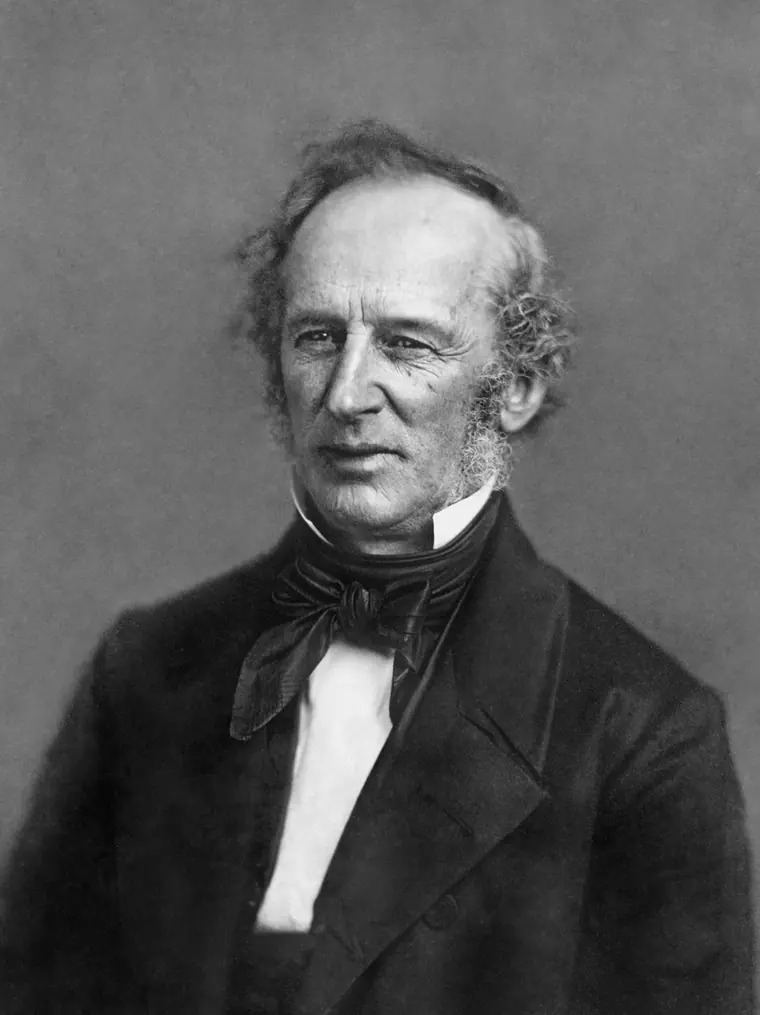
Cornelius Vanderbilt started with a boat and finished with the New York Central Railroad. When he died on January 4, 1877, at 82, he left something in the region of $100 to $105 million — reported at the time as more money than the United States Treasury held, and by any measure the largest fortune anyone in America had yet accumulated.
His will gave roughly 95% of it to one son, William Henry Vanderbilt. Four of William's sons took bequests as well: Cornelius Vanderbilt II received $5 million and his three younger brothers $2 million each.
His only other surviving son, Cornelius Jeremiah Vanderbilt, received the income from a $200,000 trust — not the principal, the income. His nine daughters received between $250,000 and $500,000 each. His second wife received $500,000, the New York house, and railroad shares.
On a $100 million estate, a $250,000 legacy is a quarter of one percent. The children who received those figures did the arithmetic and went to the Surrogate's Court.
Insanity, séances, and a man named Stoddard
Cornelius Jeremiah Vanderbilt, along with his sisters Mary Alicia and Ethelinda, challenged the will. The theory was the standard nineteenth-century combination, and it is the same combination pleaded today under different vocabulary:
- Lack of testamentary capacity — that the Commodore was not of sound mind in his last years and had been behaving strangely when the will was drawn.
- Undue influence by William — that the principal beneficiary had steered the document that made him the principal beneficiary.
- Influence by a spiritualist — that a clairvoyant in the Commodore's employ, identified in accounts as a Mr Stoddard, had been paid by William to relay messages during séances to the effect that William alone could be trusted with the estate and that the other children were waiting for their father to die.
Vanderbilt's documented interest in spiritualism and clairvoyants was real and well known, which is exactly why the allegation had traction. Eccentricity is not incapacity — but it is a very convenient set of facts to put in front of a jury.
The proceedings ran more than a year, in open court, in the most heavily covered probate contest of the American nineteenth century. Everything the family had ever done in private was read aloud.
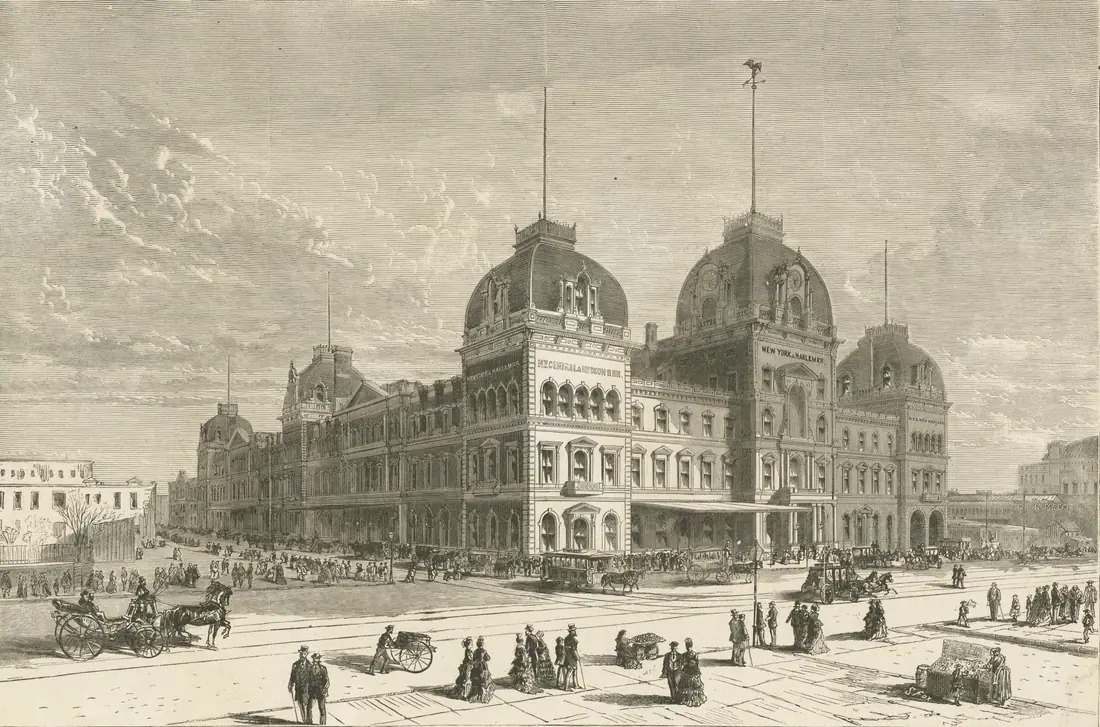
Won in court, settled anyway
The will was upheld. William Henry Vanderbilt won.
And then he paid. Rather than continue exposing the family name to the newspapers, he settled with the challengers: Cornelius Jeremiah received an additional $200,000 in cash and a $400,000 trust fund, with the same terms going to Mary and Ethelinda.
That is one of the most instructive sequences in this archive. A litigant who wins outright and pays anyway is telling you what the litigation itself cost — in time, in reputation, and in the family's ability to function afterward. The money he handed over was not a concession on the merits. It was the price of making it stop.
Cornelius Jeremiah Vanderbilt died by suicide in 1882, five years after his father.
William Henry Vanderbilt then did what his father had done and doubled the fortune in under nine years, dying in 1885 with roughly $200 million. He also, notably, divided it far more evenly among his own children than his father had divided it among his.
Gone within three generations
The Commodore's stated objective was to keep the railroad empire whole by concentrating control in one pair of hands, and on that measure the will worked exactly as designed. William Henry kept the system intact and grew it.
What the will could not do was survive the generations after him. The great Vanderbilt houses on Fifth Avenue were demolished one by one in the twentieth century, and the family's position at the top of American wealth did not last.
Concentration solved the problem the Commodore could see — fragmentation of control in the generation immediately after him. It did nothing about the problem he could not see, which was every generation after that. A will is a snapshot; a trust is a mechanism. He wrote the snapshot.
Timeline
- Jan 4, 1877Cornelius Vanderbilt dies at 82, leaving roughly $100–105 million.
- 1877The will is offered for probate. Roughly 95% of the estate goes to William Henry Vanderbilt; his son Cornelius Jeremiah takes only the income from a $200,000 trust; the nine daughters take $250,000 to $500,000 each.
- 1877–1879Cornelius Jeremiah, Mary Alicia, and Ethelinda contest, alleging lack of capacity, undue influence by William, and manipulation through a spiritualist in the Commodore's employ. The proceedings run more than a year in open court.
- 1879The will is upheld. William Henry Vanderbilt nonetheless settles: an additional $200,000 in cash and a $400,000 trust to Cornelius Jeremiah, and the same to Mary and Ethelinda.
- 1882Cornelius Jeremiah Vanderbilt dies by suicide.
- 1885William Henry Vanderbilt dies, having roughly doubled the fortune to about $200 million — and divides it far more evenly among his own children.
- 20th centuryThe Fifth Avenue Vanderbilt houses are demolished one after another; the family's position among the wealthiest Americans does not survive the generations that followed.
What actually went wrong
- Extreme disparity with no explanation on the page. Ninety-five percent to one child and a quarter of one percent to others is a decision a testator is entitled to make. Making it without a written statement of reasons leaves the family to supply their own explanation, and they will choose the least flattering one available.
- No independent record of capacity. For a will of that size signed by a man in his eighties whose interest in spiritualism was publicly known, a contemporaneous physician's assessment and independent counsel would have removed the strongest claim the challengers had.
- The chief beneficiary was close to the process. Where the person taking nearly everything is also the person around the testator while the document is prepared, the appearance is fixed regardless of the reality.
- Nothing kept the fight out of public view. A probate proceeding is a public docket. A trust funded during life is not. The entire year of testimony existed because the estate passed by will rather than by an instrument that never reached a courtroom.
- Concentration without a continuing structure. The plan solved one generation's problem and provided no mechanism for the ones after it. A dynastic trust does that work; an outright gift to one son does not.
Would it have gone that way in Florida?
Same freedom, same exposure — but Florida hands the challengers a burden shift and takes away the one clause that might have deterred them.
Florida would let you write this will. It is settled that a testator may leave an estate unequally, may prefer one child, and need give no reason. §732.6005 says the testator's intent as expressed in the will controls its construction, and nothing in the Probate Code requires equal treatment of children. Florida has no forced heirship for adult children.
But writing it and defending it are different jobs, and Florida makes the second one harder than most states do.
The substantive rule. §732.5165 makes a will void where its execution was procured by fraud, duress, mistake, or undue influence, and voids the part so procured. Lack of testamentary capacity is a separate ground: the testator must understand, in a general way, the nature and extent of the property, the natural objects of their bounty, and the disposition being made. Note how low that bar is. Eccentricity, spiritualism, unpopular beliefs, and severe physical frailty do not defeat it.
The burden. This is where Florida differs. Under In re Estate of Carpenter, 253 So. 2d 697 (Fla. 1971), a presumption of undue influence arises where a substantial beneficiary who occupied a confidential relationship with the decedent was active in procuring the will — measured by non-exclusive factors including presence at execution, presence when the testator expressed the desire to make a will, recommending the attorney, knowing the contents beforehand, giving instructions to the drafter, securing the witnesses, and keeping the will afterward. And §733.107(2) makes that a presumption that shifts the burden of proof, not merely the burden of production. A son who took ninety-five percent and was close to the drafting would, in Florida, have to prove the absence of undue influence.
And no deterrent. The obvious drafting answer — an in terrorem clause disinheriting anyone who challenges — does not work here. §732.517 makes no-contest clauses in wills unenforceable, and §736.1108 does the same for trusts. A Florida challenger risks nothing by asking the question. That is a deliberate policy choice, and it means Florida wills of this shape must be built to survive a contest rather than to discourage one.
The counterweight is fees. §733.106(4) allows the court to direct from what part of the estate costs and attorney's fees are paid, including charging them against a particular beneficiary's share. A contest that fails can be made to come out of the pocket of the person who brought it. That, rather than a no-contest clause, is Florida's brake.
The practical instruction for anyone leaving unequal shares — and most people do, for perfectly good reasons: say why, in writing, at the time. Not in the will itself, where it becomes a public document and an invitation to argue, but in a contemporaneous memorandum kept with the file. Add independent counsel, a capacity assessment where age or illness is a factor, no beneficiary present at the signing, and — where privacy matters — a funded revocable trust so the disposition never appears on a public docket at all. And tell the children before you die. Nearly every contest in this archive began with a surprise.
What people ask us about this.
Further reading
Third-party sites. Not ours, not endorsed, not kept current by us — just the places worth going next.
Sources
- Cornelius Vanderbilt — death, will, and the contest by his children — Wikipedia, citing T. J. Stiles, The First Tycoon
- William Henry Vanderbilt — the inheritance and its doubling by 1885 — Wikipedia
- Cornelius Jeremiah Vanderbilt — Wikipedia
- Fla. Stat. §732.5165 — Effect of fraud, duress, mistake, and undue influence — The Florida Senate
- Fla. Stat. §733.107 — Burden of proof in proceedings contesting validity of will — The Florida Senate
- Fla. Stat. §732.517 — Penalty clause for contest — The Florida Senate
- Fla. Stat. §733.106 — Costs and attorney fees — The Florida Senate
If this is your situation
Free 30-minute consult. Plain English. No pressure.
Nearly every case in this archive turned on something ordinary — an unwitnessed page, a stale beneficiary line, a document nobody could find. Those are cheap to fix while you're alive and expensive to fix afterward.