The Giving Pledge
Since 2010, more than 250 billionaires have publicly promised to give away most of their wealth. The pledge is explicitly not a contract, and fifteen years of data show most signatories are considerably richer than when they signed. This is what the paperwork behind a philanthropic estate plan actually does.
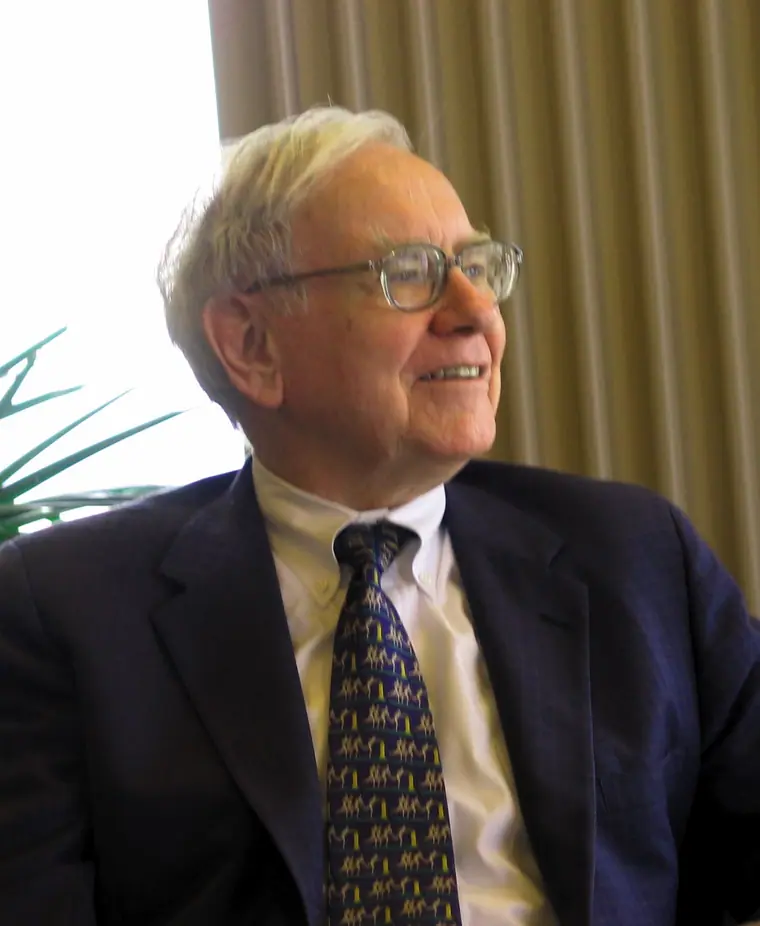
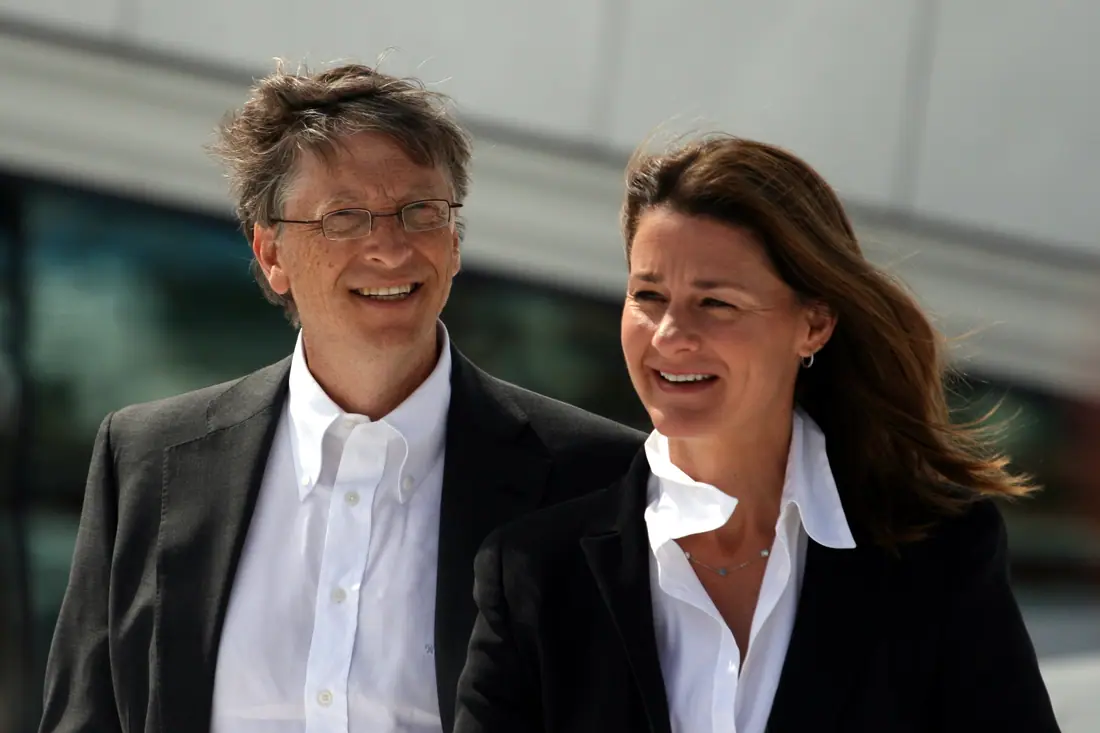
In June 2010, Bill Gates, Melinda French Gates, and Warren Buffett invited the wealthiest people in America to make a public promise: to give the majority of their wealth to charitable causes, during their lifetimes or in their wills.
It worked, as invitations go. As of November 2025 there were more than 250 signatories from 30 countries. The entry criterion is a net worth of at least a billion dollars, or a net worth that would be a billion dollars but for the giving already done.
The Giving Pledge's own materials are candid about what it is. It asks signatories to write a public letter explaining their reasoning. It does not ask them to sign anything enforceable, does not specify recipients, does not set a schedule, and has no mechanism to verify or compel performance.
A pledge is a statement of intent. A will, a trust, a foundation's articles, and a signed gift agreement are instruments. This page is about the difference, and about the machinery that sits between the two.
Foundation, donor-advised fund, or direct gift
Three structures carry almost all large charitable estate money, and they behave very differently.
- The direct gift. Cash or property to an operating charity. Immediate, fully deductible within the applicable limits, and gone. The only one of the three where the money is spent on the mission in the same year it leaves the donor.
- The private foundation. A separate entity the donor or family controls, holding an endowment and making grants. It must distribute roughly 5% of the fair market value of its non-charitable-use assets each year under IRC §4942 or face an excise tax, and it pays an excise tax on net investment income under IRC §4940. It files a public Form 990-PF, so its grants are visible after the fact. The donor takes the deduction when the foundation is funded, not when the grants are made.
- The donor-advised fund. An account at a sponsoring public charity, from which the donor recommends grants. The deduction is taken on contribution. Administration is cheap and privacy is high. And there is no legal payout requirement at all — a DAF may hold assets indefinitely.
The pattern in the data is consistent. DAF assets in the United States grew from about $152 billion in 2020 to roughly $254 billion in 2023 — a 67% increase over four years. Aggregate payout rates from large national sponsors run high (analyses of three-year windows put national sponsors around 25%), but aggregate rates say nothing about any individual account, and inactive accounts are invisible inside the average.
None of this is improper, and the deduction rules are the same for everybody. The point is narrower: the tax event and the charitable event are two different events, and the vehicle decides how far apart they are.
Fifteen years, measured
In July 2025 the Institute for Policy Studies published The Giving Pledge at 15, tracking the original 2010 cohort. Its findings, as reported:
- The combined net worth of the original 2010 pledgers who remain billionaires has grown by about 283% since 2010 — roughly 166% adjusted for inflation.
- The 2010 pledgers have given an estimated $206 billion or more to charity to date.
- Of that, an estimated $164 billion — about 80% — went to their own private foundations rather than to operating charities. A further estimated $5 billion is thought to have gone to donor-advised funds, which the report treats as an undercount because DAF reporting is limited.
- By the report's estimate, of the living original pledgers, only Laura and John Arnold have technically fulfilled the commitment, having given an estimated $4.76 billion — mostly to their own foundation — with about $2.93 billion remaining.
A separate 2025 analysis reported that of 22 pledgers who had died, 8 had given away enough to meet the half-of-wealth commitment by the time of death.
The Institute for Policy Studies is an advocacy organisation with a stated position on wealth concentration, and its figures rest on estimates drawn from public filings. Read them as the best available public accounting rather than as an audit. They are also the only systematic accounting anybody has produced, which is itself part of the story.
Defenders of the structure make a real argument. A perpetual endowment funds a twenty-year research programme that annual giving cannot. Foundations provide stable support through recessions, when operating charities lose donors precisely as demand rises. And giving quickly and giving well are different skills. The counter-argument is equally real: the deduction is taken now and the charity waits, and in a market that compounds faster than the 5% payout, the endowment grows while the promise stays outstanding.
What this means at ordinary numbers
Very few readers will sign the Giving Pledge. A great many will leave something to charity, and the mechanics scale down exactly.
Naming a charity in a will is the cheapest form of philanthropy there is, and it is unusually tax-efficient at death: a bequest to a qualified charity is fully deductible against the federal estate tax without limit. Leaving a traditional IRA or other pre-tax retirement account to charity is more efficient still, because the charity pays no income tax on the withdrawal and your children would.
The intermediate structures also scale. A charitable remainder trust pays an income stream to a person for a term or for life and gives the remainder to charity; a charitable lead trust does the reverse. A donor-advised fund can be opened for a few thousand dollars and named as a residuary beneficiary. A small private foundation rarely makes sense below a few million dollars, because the annual filing, excise tax, and self-dealing rules cost more than they return.
And the failure mode is the same at every scale: a charitable intention with no instrument behind it. A promise made to a development officer, a note in a drawer, an instruction to the children — none of those is a gift. The instrument is what makes the gift.
Timeline
- Jun 2010Bill Gates, Melinda French Gates and Warren Buffett launch the Giving Pledge, inviting billionaires to promise the majority of their wealth to charity in life or by will.
- Aug 2010The first cohort of American signatories is announced.
- 2013The pledge opens beyond the United States; signatories begin to come from Europe, Asia, Africa and Australia.
- 2020US donor-advised fund assets stand at roughly $152 billion.
- 2023US donor-advised fund assets reach roughly $254 billion — a 67% increase in four years.
- Jul 2025The Institute for Policy Studies publishes The Giving Pledge at 15, estimating the original cohort's wealth up 283% nominal since 2010 and about 80% of their giving directed to their own foundations.
- Nov 2025The Giving Pledge reports more than 250 signatories from 30 countries.
- 2026The federal estate and gift tax exemption stands at $15 million per person, indexed. The charitable deduction against estate tax remains unlimited. As of August 2026 the pledge continues to accept signatories.
What actually went wrong
- A promise with no instrument behind it binds nobody. The Giving Pledge says so itself. If the intention matters to you, it belongs in a will, a trust, or a signed gift agreement — the same day you announce it, not later.
- The tax event and the charitable event can be decades apart. Funding a foundation or a donor-advised fund is a completed gift for deduction purposes and an undelivered one from the recipient's point of view. That is lawful and it is also the criticism, and both things are true at once.
- Donor-advised funds have no payout requirement. Private foundations must distribute about 5% a year; DAFs need not distribute at all. If you use one, write your own distribution policy and tell your successor advisers what it is.
- Naming an organisation without naming a purpose. Charities merge, rename, and close. A gift that says what it is for survives that; a gift that only names a payee may fail, and then a court has to guess.
- Assuming the family will carry it out. Successor trustees, foundation directors, and DAF advisers inherit discretion, not instructions. If you want the money to go somewhere specific, restrict it in the document rather than describing it in a letter.
Would it have gone that way in Florida?
Florida is a good state in which to give — and a state where somebody other than your family is watching. The Attorney General has standing over your charitable trust whether you invite her or not.
Start with the tax, because it is simple here. Fla. Const. Art. VII, §5 means there is no Florida estate tax. The only transfer-tax question is federal, where the 2026 exemption is $15 million per person, indexed and portable between spouses, and where the charitable deduction against the estate tax is unlimited. An estate that gives its residue to qualified charities pays no federal estate tax on the amount given, at any size.
Fla. Stat. §736.0405 sets out what a Florida charitable trust may be created for — relief of poverty; advancement of the arts, sciences, education or religion; promotion of health, governmental or municipal purposes — and provides that where the terms do not name a purpose or a beneficiary, the court may select one consistent with the settlor's intention. The settlor may enforce the trust. That last clause matters more than it looks: a charitable trust has no private beneficiary with a financial stake in policing it.
Which is why Florida supplies a substitute. Fla. Stat. §736.0110(4) provides that the Attorney General may assert the rights of a qualified beneficiary with respect to a charitable trust having its principal place of administration in this state, and has standing in judicial proceedings concerning it. §736.1207 separately allows the trustee, the Attorney General, or an affected beneficiary to petition a court to relieve a trustee of restrictions in the governing instrument for cause shown. If you create a charitable trust in Florida, the state can ask your trustee what they are doing with it.
§736.0413 is the safety valve every charitable gift should be drafted with in mind. Where a particular charitable purpose becomes unlawful, impracticable, impossible to achieve, or wasteful, the court may apply cy pres and direct the property to a purpose as near as possible to the settlor's original charitable intention; the proceeding may be brought by a settlor, a trustee, or any qualified beneficiary. This is the statute that rescues a bequest to a hospital that has merged or a disease that has been cured — but only if the document says what the gift was for. A bare payee gives cy pres nothing to aim at.
Two more Florida provisions worth knowing. §736.0414 lets a trustee terminate a trust holding property worth less than $50,000 after notifying qualified beneficiaries, and lets a court modify, terminate, or replace the trustee where the property's value does not justify the cost of administration — the practical answer to the small charitable trust whose fees exceed its grants. And if the charity you create will solicit contributions in Florida, it must register under Ch. 496, the Solicitation of Contributions Act: §496.405 requires an initial registration statement before any solicitation, with annual renewal and tiered fees, and ten days' notice of certain changes.
The honest caveat about vehicles. A private foundation established in Florida is normally a Chapter 617 not-for-profit corporation or a Chapter 736 trust; it carries the federal 5% payout rule, the net-investment-income excise tax, the self-dealing prohibitions, and a public Form 990-PF. A donor-advised fund at a Florida community foundation carries none of those obligations and none of that visibility. Neither is better in the abstract. The foundation buys control and accepts scrutiny; the DAF buys simplicity and gives up control on paper, since the sponsor holds legal title and your recommendations are advisory.
The practical instruction, and it is four sentences. Put the charitable gift in the will or the trust, with a percentage rather than a fixed sum, so it flexes with the estate. Describe the purpose as well as the organisation, so §736.0413 has something to work with if the organisation changes. Leave pre-tax retirement accounts to charity and taxable assets to people, because the charity pays no income tax on the withdrawal and your children will. And tell the charity, in writing, while you are alive — every development office in Florida can name a gift that failed because nobody knew it was coming.
What people ask us about this.

Further reading
Third-party sites. Not ours, not endorsed, not kept current by us — just the places worth going next.
Sources
- The Giving Pledge — frequently asked questions — givingpledge.org, accessed 2026
- The Giving Pledge at 15 — Institute for Policy Studies, Jul 2025
- The Giving Pledge at 15 — full report (PDF) — Institute for Policy Studies, Jul 2025
- The Giving Pledge at 15 — philanthropic catalyst, empty promise, or both? — Nonprofit Quarterly, 2025
- Giving Pledge — overview and criticism — Britannica Money
- Inside the explosive growth of donor-advised funds — Inside Philanthropy — the $152B to $254B figures
- Donor-advised funds: payout trends, inactivity policies, and accessibility — Philanthropy Roundtable
- Fla. Stat. §736.0110 — Others treated as qualified beneficiaries — The Florida Senate
- Fla. Stat. §496.405 — Registration of charitable organizations — The Florida Senate
If this is your situation
Free 30-minute consult. Plain English. No pressure.
Nearly every case in this archive turned on something ordinary — an unwitnessed page, a stale beneficiary line, a document nobody could find. Those are cheap to fix while you're alive and expensive to fix afterward.