The founder with no successor
The owner dies. The estate tax is due in nine months, in cash. The personal representative has four months of statutory authority to keep the business trading. The buyer knows all of this. This is the most common six-figure mistake in Florida estate planning, and it is entirely preventable.

Most of this archive is about famous people. This one is about the reader's neighbour: the person who owns a roofing company, a marina, a dental practice, a citrus grove, three restaurants, or an eight-property rental portfolio held in an LLC.
That business is usually the largest asset the family owns and the only one that produces income. It is also, on the day the owner dies, the single hardest thing in the estate to value, to run, and to sell — and the estate's obligations do not wait for any of those problems to be solved.
The failure mode is not dramatic. Nobody forges a will. What happens is that four ordinary facts collide.
- The federal estate tax is due nine months after death, in cash. The business is not cash.
- A Florida personal representative may continue an unincorporated business for only four months from appointment without a court order — Fla. Stat. §733.612(22) — and only where doing so is a reasonable means of preserving value.
- Nobody agreed what the business is worth. With no formula and no named appraiser, the price is an opinion, and opinions differ by multiples.
- The person who ran it is dead. Customers, lenders, licences, key employees, and often the bonding capacity were attached to that person.
Add them together and you get the outcome this page is named for: a forced sale, at a discount, to whoever is ready with the money.
Reported cases, not hypotheticals
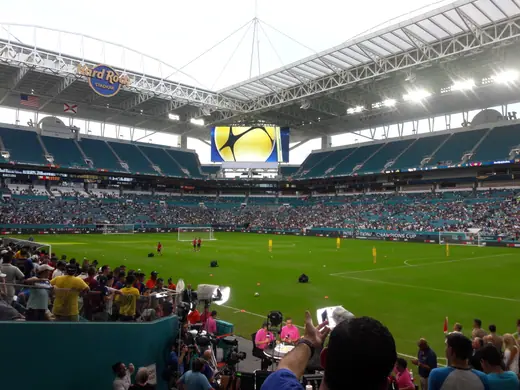
Joe Robbie, founder of the Miami Dolphins, died in Coral Gables on January 7, 1990, at 73, leaving an estate of roughly $70 million composed almost entirely of a football team and the stadium he had built with private money. The reported federal estate tax bill was $43 million to $47 million. There was no liquidity to pay it. Within four years the family had sold the team, the stadium, and the name on the building. H. Wayne Huizenga was the sole owner by 1994.
Jack Kent Cooke died on April 6, 1997, with an estate reported at about $825 million. His will left the Washington NFL franchise and its new stadium to his own charitable foundation with instructions to sell. In 1999 the team went to a 34-year-old outsider for $800 million. A charitable foundation cannot operate a football club; a bequest of an operating business to an entity that needs cash liquidates itself.
The counter-example is the one that matters most for ordinary companies. In Blechman v. Estate of Blechman, 160 So. 3d 152 (Fla. 4th DCA 2015), a member of a family LLC had signed an operating agreement providing that his membership interest would pass to his children on his death. He later amended his revocable trust to give half the LLC income to his partner. Florida's Fourth District held that the operating agreement got there first: the provision was contractual rather than testamentary, the interest vested at the instant of death, and it was never a probate asset at all. The later trust amendment could not redirect something he no longer owned.
That case is the whole lesson in one holding. The document that decides what happens to a business is the entity's own agreement, not the will.

How many owners actually have a plan
The most-quoted statistic in this field says that about 30% of family businesses survive into the second generation, 12% into the third, and 3% into the fourth. It is worth knowing where that comes from, because it is repeated everywhere and sourced almost nowhere.
It traces to research by John Ward at Northwestern's Kellogg School, published in 1987, based on 200 Illinois manufacturers listed between 1924 and 1984. Family Business Magazine's own critique of the figures notes that Ward's finding described businesses surviving through three generations rather than to the third, excluded firms that were successfully sold or merged, and drew on a narrow sample of Midwestern manufacturers that had survived the Depression. Treat the numbers as directional, not precise.
The cleaner figure is about behaviour rather than outcomes. PwC's 2023 family business survey found that 72% of respondents wanted the business to stay in the family and 34% had a robust, documented succession plan. The gap between those two numbers is what this page is about.
A buy-sell agreement, funded
A buy-sell agreement is a contract among the owners — or between the owners and the company — that answers four questions in advance.
- What triggers it. Death, disability, retirement, divorce, bankruptcy, loss of a licence, deadlock, or a voluntary exit. Each can have different terms.
- Who buys. A cross-purchase (the surviving owners buy individually), a redemption or entity purchase (the company buys), or a hybrid that lets the parties choose at the time. The choice has real income-tax consequences on basis, so it is not a formality.
- At what price. A fixed formula, a stated value updated annually, or an appraisal process — ideally naming the appraiser or the method for selecting one, and a tie-break where two appraisals diverge.
- With what money. This is the question that gets skipped, and it is the one that decides whether the agreement works. Life insurance on each owner, owned by the buyer under the agreement, is the standard answer because it delivers cash at exactly the moment the obligation arises. Disability buy-out coverage does the same for the other common trigger.
An unfunded buy-sell agreement is a promise to find several hundred thousand dollars during the worst month of somebody's life. A funded one is a transaction that completes itself.
Two further pieces sit alongside it. Key-person life insurance owned by the company replaces the earnings and stabilises the lender while a successor is found — a different policy doing a different job from the buy-sell coverage. And a written continuity plan naming who signs cheques, who holds the passwords, who talks to the bank, and who can operate the licence on day two is worth more in the first fortnight than any document in the folder.
Timeline
- Day 0The owner dies. Bank accounts in the individual's name freeze. Signature authority lapses unless someone else already has it.
- Days 1–14Payroll, suppliers, insurance renewals, and the lender all need a decision-maker. Without a named successor manager or trustee, there is nobody with authority yet.
- Weeks 2–8A petition for administration is filed and letters of administration issue. Only then does the personal representative have power to act — and under §733.612(22) only four months to continue an unincorporated business without a court order.
- Month 3The creditor claim window opens under §733.702: three months from first publication of the notice to creditors.
- Months 3–6Valuation. A qualified appraisal is commissioned. Competing appraisals appear if any beneficiary disagrees with the number.
- Month 9The federal estate return is due, and any tax with it, in cash. IRC §6166 deferral must be elected on a timely return.
- Months 9–24Where there is no liquidity, the asset is marketed. Buyers price the deadline into their offers. This is where the discount is taken.
- Years 2–5Where beneficiaries disagree, the residual dispute is usually about the price achieved rather than the decision to sell.
What actually went wrong
- No buy-sell agreement. No trigger, no buyer, no price, no funding. Every other item on this list is a symptom of this one.
- No liquidity for the tax and the transition. The estate tax is a cash obligation on a non-cash asset. Life insurance owned outside the estate is the standard cure and is almost always cheaper than the discount taken on a forced sale.
- No named successor with authority on day one. A revocable trust holding the membership interest, with a successor trustee, keeps a signature on the account from the first morning. A will does not — nobody has authority until the court issues letters.
- No agreed valuation method. Where the document is silent, the number becomes expert testimony, and expert testimony is the most expensive way to divide an estate.
- The estate plan and the entity documents contradict each other. Blechman is the reported example: the operating agreement and the trust said different things and the contract won. Every will, trust, operating agreement, shareholders' agreement, and beneficiary designation should be read together, in one sitting, by one person.
Would it have gone that way in Florida?
This IS the Florida rule. Florida's LLC statute gives an owner unusually broad power to decide these questions in advance — and unusually little help if they don't.
Florida law puts the governing document in the owner's hands. Fla. Stat. §605.0105 provides that an LLC operating agreement governs relations among the members, the rights and duties of managers, and the activities and affairs of the company, subject to a list of things it may not do: it cannot eliminate the duty of loyalty or the duty of care, relieve a person of liability for bad faith or intentional misconduct or a knowing violation of law, or unreasonably restrict a member's information rights, and it may alter fiduciary duties only where doing so is not manifestly unreasonable. Everything outside that list — including what happens to a membership interest at death — is yours to write.
Fla. Stat. §605.0502 is the enforcement half. A transferee of a membership interest receives the right to distributions and nothing more: no participation in management, no company records, and no automatic membership. And a restriction on transfer contained in the operating agreement is enforceable against a transferee with knowledge of it. That is the provision that keeps a member's interest from landing with a spouse's second husband, a judgment creditor, or a beneficiary the other owners have never met. It is also, in substance, what decided Blechman.
For a corporation, the parallel tools are §607.0730 voting trusts and §607.0731 voting agreements — the latter expressly specifically enforceable and binding on transferees with notice. For a limited partnership, §620.1702 limits a transferee to distributions and §620.1703 makes the charging order the exclusive remedy of a partner's judgment creditor.
Then the timing rules, which are the ones that produce the discount. §733.612(22) permits a personal representative to continue an unincorporated business in which the decedent was engaged at death for four months from the date of appointment, and longer only by court order, and only where continuation is a reasonable means of preserving value including goodwill. §733.702 opens the creditor window at three months from first publication, and §733.710 bars any claim more than two years after death. §733.707 sets the order in which the estate's obligations are paid — administration costs and fees first, ordinary creditors last — and §733.617 fixes the personal representative's compensation, presumptively 3% of the first $1 million of inventory value plus income, sliding thereafter, with extra allowed for extraordinary services such as running or selling a business.
If the owners are still alive and no longer agree, §605.0702 allows a member or manager to petition for judicial dissolution where the managers or members are deadlocked and irreparable injury to the company is threatened or being suffered — with an important qualifier: where the operating agreement contains a deadlock-sale provision that is initiated and effectuated before the court determines that grounds for dissolution exist, the contractual mechanism controls. Write the deadlock clause and you keep the outcome out of a courtroom.
On the tax, two federal provisions are worth naming even though they are not Florida law, because Florida imposes no estate tax of its own under Fla. Const. Art. VII, §5 and the federal exemption in 2026 is $15 million per person, indexed and portable between spouses. IRC §6166 allows an estate to pay the tax attributable to a closely held business interest in instalments — interest only for up to five years, then up to ten annual instalments — where that interest exceeds 35% of the adjusted gross estate, with a reduced interest rate on part of the deferred amount. IRC §303 permits a corporation to redeem stock to pay death taxes and administration expenses without the redemption being treated as a dividend. Both must be planned for; §6166 must be elected on a timely filed return.
The practical instruction, and it is a checklist rather than a sentiment. One: put the business interest in a revocable trust, or name a successor manager in the operating agreement, so somebody has signature authority the morning after. Two: sign a buy-sell agreement with a trigger list, a valuation method, and a named appraiser. Three: fund it with life insurance owned by whoever is obliged to buy, and hold separate key-person coverage for the company. Four: read the will, the trust, the operating agreement, and every beneficiary designation together, in one sitting, and fix the contradictions. Five: review it whenever an owner marries, divorces, retires, or has a child, because the plan is only as current as the last of those events.
What people ask us about this.
Further reading
Third-party sites. Not ours, not endorsed, not kept current by us — just the places worth going next.
Sources
- Blechman v. Estate of Blechman, 160 So. 3d 152 (Fla. 4th DCA 2015) — Florida Fourth District Court of Appeal
- Fla. Stat. §605.0105 — Operating agreement; scope, function, and limitations — The Florida Senate
- Fla. Stat. §605.0502 — Transfer of interest — The Florida Senate
- Fla. Stat. §733.612 — Transactions authorized for the personal representative — The Florida Senate
- Fla. Stat. §605.0702 — Judicial dissolution — The Florida Senate
- A critical look at 'survival' statistics — Family Business Magazine
- Succession planning statistics — Teamshares — compiling the PwC 2023 family business survey figures
- Family business survival: understanding the statistics — The Family Business Consulting Group
If this is your situation
Free 30-minute consult. Plain English. No pressure.
Nearly every case in this archive turned on something ordinary — an unwitnessed page, a stale beneficiary line, a document nobody could find. Those are cheap to fix while you're alive and expensive to fix afterward.