Joe Robbie
He founded the Miami Dolphins and built the first entirely privately financed stadium in America. He died owning almost all of both and almost nothing liquid. Within four years the family had sold the team, the stadium, and the name on the building.
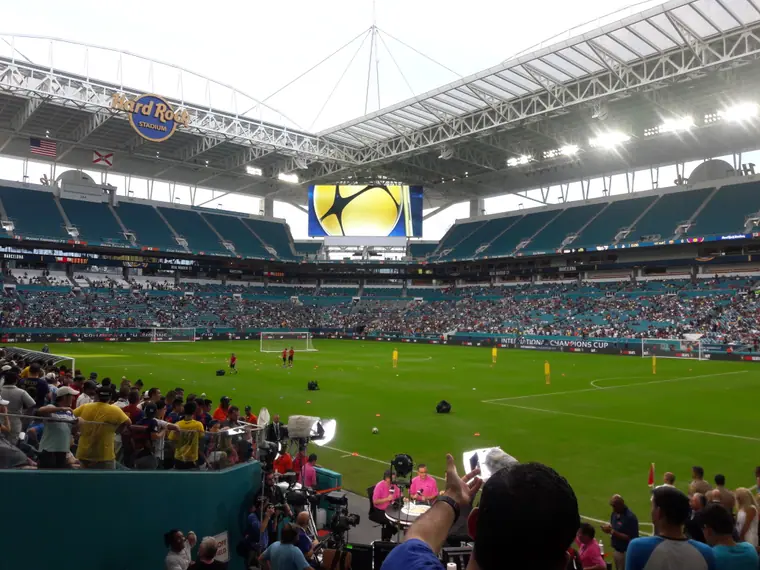
Joe Robbie was a lawyer from Sisseton, South Dakota, who ran unsuccessfully for governor and then, in 1965, put together the money for an AFL expansion franchise in Miami with the comedian Danny Thomas. The buy-in was $7.5 million. The Dolphins started play in 1966 and went undefeated in 1972, which remains the only perfect season in NFL history.
In 1976 the City of Miami moved to raise his rent at the Orange Bowl. Robbie's response was to build his own stadium — and to build it, uniquely, with no public money at all. Joe Robbie Stadium broke ground in December 1985, opened August 16, 1987, and cost $115 million. It was the first multipurpose stadium in the United States financed entirely privately.
It is, on any reading, one of the great American sports business careers. It is also, on any reading, one of the great American estate-planning disasters, and the two facts are the same fact.
Joe Robbie died on January 7, 1990, in Coral Gables, at 73. His estate was valued at roughly $70 million. It consisted, in overwhelming proportion, of a football team and a football stadium.
A pour-over will and a revocable trust
Robbie had done estate planning. That is the part people miss. He had a pour-over will and a revocable living trust — the same architecture that serves most families extremely well, and the architecture we draft constantly.
The trust was built around the marital deduction. His widow, Elizabeth, would receive the income from the trust for life; on her death, the remainder would pass to the named beneficiaries. Structured properly, that defers federal estate tax on the marital portion until the second spouse dies. Robbie's plan was designed to buy time — a full generation of it — for a family that would eventually need to figure out how to pay.
The deferral had one requirement: the surviving spouse actually has to take the arrangement. The estate tax marital deduction is not a gift the government makes to married couples; it is a bargain in which the tax on the marital share is postponed because that share will be taxed in the survivor's estate instead. Break the bargain and the tax comes due immediately.
And the income the trust would generate depended on assets that produced very little of it. A football franchise's value sits in the franchise, not in a dividend stream. A stadium carrying construction debt does not throw off cash to a life beneficiary.
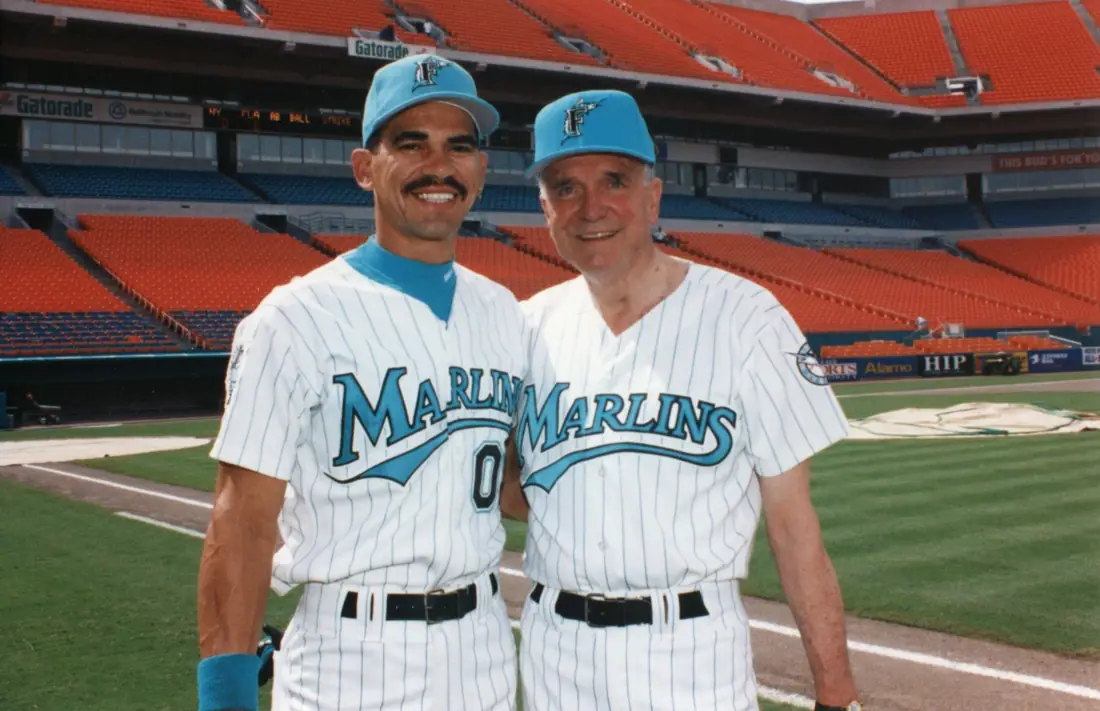
March 1991: the widow elects against the trust
In March 1991, Elizabeth Robbie petitioned for her elective share — the portion of a deceased spouse's estate that Florida law guarantees a surviving spouse regardless of what the will and trust say. At the time it was 30% of the estate. On a $70 million estate, that is roughly $21 million, and she wanted it in cash rather than in shares of a football team.
She was entitled to do it. That is the point. The elective share exists precisely so that a surviving spouse cannot be handed an illiquid life interest and told to be grateful.
But the election detonated the tax plan. Once the surviving spouse steps out of the marital trust, the deferral supporting it goes with her. Reporting at the time put the accelerated liability in excess of $25 million plus interest, against total estate taxes ultimately reported between $43 million and $47 million. Figures in the coverage vary; the direction does not.
Elizabeth Robbie died in November 1991, eight months after filing. Her claim did not die with her — a perfected elective share is a property right, and it stayed with her estate. Which meant the money still had to be found, and now the person who might have compromised was gone.
Three trustees, and the rest of the children
Robbie's plan put control of the Dolphins in the hands of three of his children as trustees: sons Tim and Dan, and daughter Janet. The other children were beneficiaries without control.
That structure produced exactly what such structures produce. The trustees dismissed their brother Mike from the team's front office, where he had been general manager from 1978 to 1989. In 1990 they approved the sale of 50% of Joe Robbie Stadium and 15% of the Dolphins to H. Wayne Huizenga. Three of the siblings filed suit against the three trustees, alleging that the sale breached a family agreement signed the year before that had been intended to prevent precisely this conflict.
Elizabeth Robbie's own will, executed before her death, reflected which side of the family fight she had been on. The estate litigation settled in July 1992.
By January 1994, Huizenga had acquired sole ownership of the team and the stadium. NFL reporting puts his total outlay at $168 million; other accounts of the 1994 transaction alone report lower figures. Each of Joe Robbie's children was reported to have been left with about $6 million after taxes.
In 1996 the naming rights were sold and the building became Pro Player Stadium. In 2009 Huizenga sold the franchise and the stadium in a transaction valued at roughly $1.1 billion.
- 1990 — Huizenga buys 50% of the stadium and 15% of the team.
- Jul 1992 — the family litigation settles.
- Jan 1994 — Huizenga becomes sole owner; NFL accounts put the total at $168 million.
- 1996 — the name comes off the building.
- 2009 — the same team and stadium sell for about $1.1 billion.
The last two lines are the ones that sting. The asset was not a bad asset. It was a spectacular asset that had to be sold on a nine-month clock, and the buyer who could write the check in 1994 captured the difference.
What actually caused it
It has become a talking point to describe this as a case of the estate tax destroying a family business, and that is a highly selective reading. The estate tax supplied the deadline. It did not supply the rest.
The rest was a plan whose entire tax deferral depended on a surviving spouse's cooperation, held assets that could not fund her income interest, gave control to three of the children and not the others, and included no liquidity source of any kind — no life insurance, no funded buy-sell agreement, no sinking fund.
Robbie also had a business that was still carrying stadium debt and had seen cash flow tighten after construction. The estate that owed $43 million or more had, functionally, no way to produce $43 million except by selling the thing the whole plan was built to keep.
Timeline
- 1965Robbie and Danny Thomas raise $7.5 million for an AFL expansion franchise in Miami.
- Aug 16, 1987Joe Robbie Stadium opens — $115 million, the first entirely privately financed multipurpose stadium in the United States.
- Jan 7, 1990Joe Robbie dies in Coral Gables at 73, leaving an estate of roughly $70 million consisting almost entirely of the team and the stadium.
- 1990Three of his children, serving as trustees, sell 50% of the stadium and 15% of the team to H. Wayne Huizenga. Other siblings sue, alleging breach of a family agreement.
- Mar 1991Elizabeth Robbie petitions for her elective share — 30% of the estate under Florida law — collapsing the marital deferral and accelerating an estate tax liability reported in excess of $25 million plus interest.
- Nov 1991Elizabeth Robbie dies. The elective share claim survives in her estate.
- Jul 1992The family estate litigation settles.
- Jan 1994Huizenga becomes sole owner of the Dolphins and the stadium. NFL accounts put his total outlay at $168 million. Each Robbie child is reported to have received roughly $6 million after taxes.
- 1996Naming rights are sold and Joe Robbie Stadium becomes Pro Player Stadium.
What actually went wrong
- No liquidity. An estate of roughly $70 million with a tax bill in the forties and no cash, no insurance, and no funded buy-sell. An irrevocable life insurance trust funded during his lifetime would have paid the tax with dollars that were never in his taxable estate.
- A deferral that required someone else's cooperation. The marital trust postponed the tax only for as long as the surviving spouse stayed inside it. She had a statutory right to leave, and she used it.
- A life interest funded with assets that produce no income. A football franchise appreciates; it does not pay a widow monthly. The trust promised income from things that did not generate any.
- Control split from benefit. Three children as trustees, the rest as beneficiaries, no independent trustee or trust protector to break a tie. The family agreement meant to prevent the fight became the subject of the fight.
- No spousal waiver. Florida allows a spouse to waive elective-share rights by written agreement under §732.702. Without one, the 30% claim was always available, and the entire tax plan was built on top of it.
Would it have gone that way in Florida?
This is Florida law — and the elective share that broke the plan is broader today than it was in 1990.
Florida has no state estate tax. Art. VII, §5 of the Florida Constitution forbids one, and the 2004 repeal of the federal state-death-tax credit finished off the old pick-up tax. Nothing in the Robbie bill was Florida's. It was all federal.
What was Florida's was the elective share, and it has grown teeth since. In 1990, a surviving spouse's 30% was measured against the probate estate, which is why a great deal of 1980s planning consisted of moving assets out of probate. Florida closed that door. Under §732.2035, the modern elective estate reaches the probate estate, protected homestead, revocable trusts, pay-on-death and transfer-on-death accounts, jointly held property, certain life insurance and retirement benefits, and even some gifts made in the year before death. §732.2065 fixes the share at 30% of that elective estate.
Translation: the plan that failed the Robbies would fail harder now. Putting the team into a revocable trust would not put it out of the surviving spouse's reach. There is no structure that quietly defeats a Florida elective share.
There is one clean way to change the answer, and it is a document, not a structure. §732.702 permits a spouse to waive elective-share rights, homestead rights, and more, by a written contract signed by the waiving party. Signed before the marriage, no financial disclosure is required. Signed after, fair disclosure of the other spouse's estate is required. This is the prenuptial or postnuptial agreement doing the one job it is genuinely irreplaceable at.
The deadline matters too. Under §732.2135, the election must be filed by the earlier of six months after service of the notice of administration or two years after death. Miss it and the right is gone.
One more Florida rule this case makes vivid: §733.817 apportions estate taxes among the interests that generated them, unless the governing instrument directs otherwise. Who bears the tax is a drafting decision. If your will is silent, the statute answers, and the answer may not be the one you would have chosen.
The practical instruction, for anyone in Florida holding a business, a farm, a marina, or a rental portfolio: run the liquidity number, not the value number. Ask what cash your estate could produce in nine months without selling the asset. If the answer is less than the projected tax and administration cost, the fix is usually life insurance owned by an irrevocable trust, a funded buy-sell agreement among the owners, or an election to pay the tax in installments under IRC §6166 — and, if you are married, a signed waiver or a marital plan that does not depend on a spouse choosing not to exercise a right the legislature gave her.
What people ask us about this.
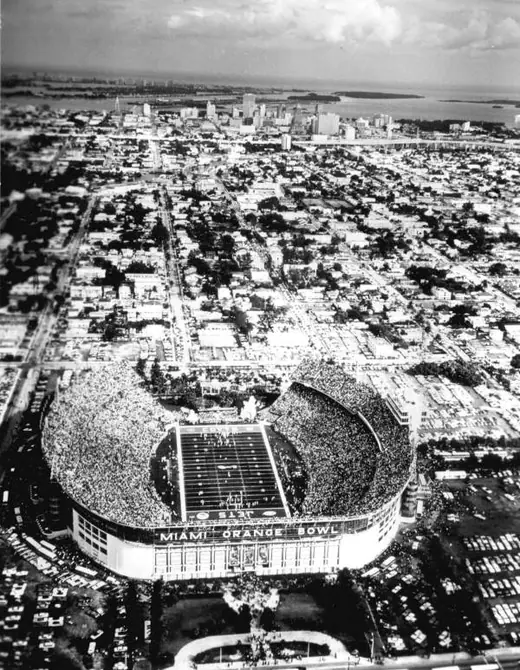
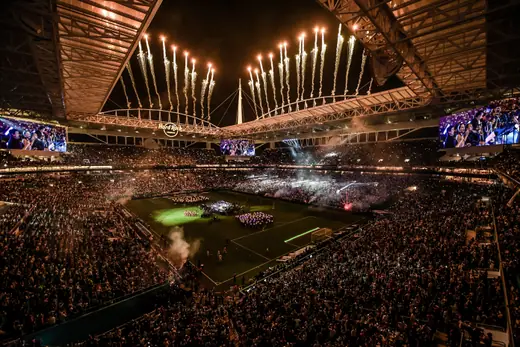
Further reading
Third-party sites. Not ours, not endorsed, not kept current by us — just the places worth going next.
Sources
- Limbaugh misleads on Joe Robbie and the Dolphins to bash estate tax — Media Matters for America
- The Robbies' family feud reaches epic proportions — The Baltimore Sun, Nov 17 1991
- Remember the “Joe Robbie” Stadium? — TrustCounsel, Apr 2015
- We still call it the “Joe Robbie” Stadium! — TrustCounsel, Feb 2020
- A nifty profit but no NFL titles for exiting Dolphins owner Huizenga — NFL.com
- Joe Robbie — Wikipedia
- Hard Rock Stadium — Wikipedia
- Fla. Stat. §732.2035 — Property entering into elective estate — The Florida Senate
- Fla. Stat. §733.817 — Apportionment of estate taxes — The Florida Senate
If this is your situation
Free 30-minute consult. Plain English. No pressure.
Nearly every case in this archive turned on something ordinary — an unwitnessed page, a stale beneficiary line, a document nobody could find. Those are cheap to fix while you're alive and expensive to fix afterward.