Gifts to religious organisations
A relative discovers that most of an estate went to a congregation. The instinct is to argue about the organisation. Florida courts do not. They ask three questions about relationship, benefit, and procurement — and the answers would be identical if the recipient were a university, a caregiver, or a nephew.
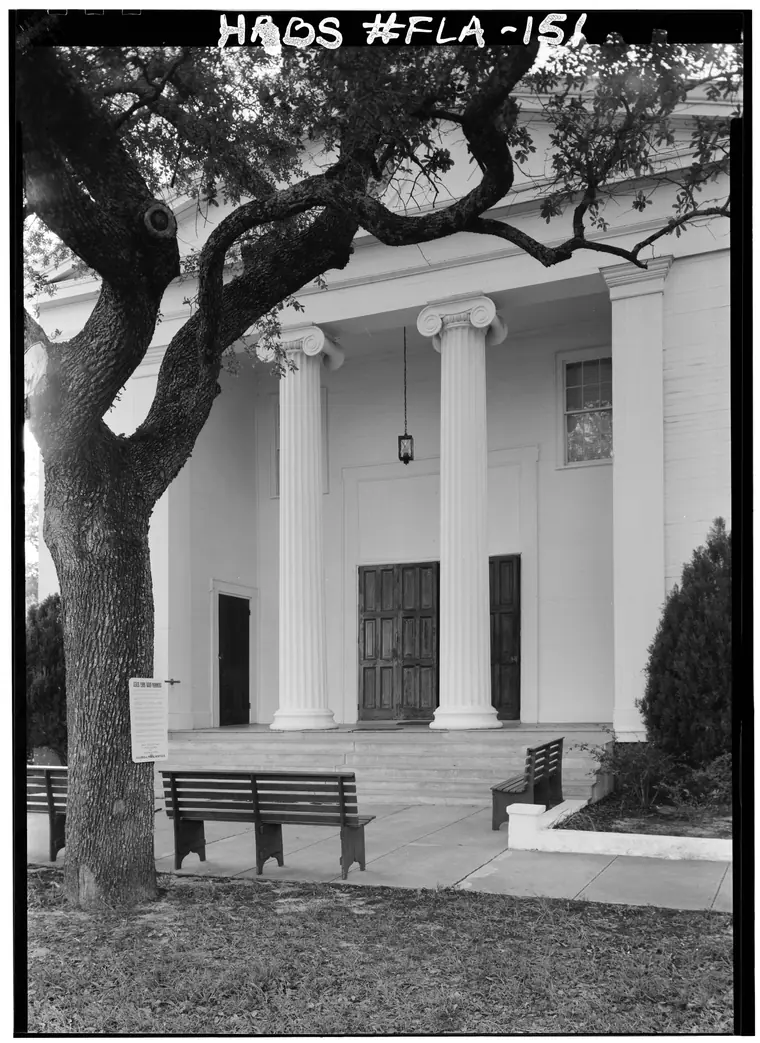
This page describes a legal test. It takes no position on any religion or on anyone's beliefs, and nothing in the analysis below changes if the recipient of a gift is a congregation, a university, a hospital, a charity, a business partner, or a niece. That neutrality is not politeness. It is the law's actual design, and a Florida court that departed from it would be reversed.
The fact pattern arrives in probate offices constantly. Someone dies. The will or the trust leaves a large share — sometimes nearly everything — to a religious organisation. Family members who expected to inherit are surprised, then angry, and their first sentence is almost always about the organisation.
It is the wrong first sentence. A person is entitled to give their property to anyone they choose, for any reason, including a religious one. Testamentary freedom is the default rule, and disapproval of the choice is not a cause of action. What is a cause of action is proof that the document does not express the decedent's own intention because somebody else's will was substituted for theirs.
Carpenter's three elements
Florida's framework comes from In re Estate of Carpenter, 253 So. 2d 697 (Fla. 1971). A presumption of undue influence arises when a challenger establishes three things:
- A substantial beneficiary. The recipient takes a substantial benefit under the instrument. Size matters relative to the estate, not in absolute dollars.
- A confidential relationship. The recipient occupied a relationship of trust and confidence with the decedent. This is the pivot, and it is the element most often misunderstood — see below.
- Active procurement. The recipient was active in procuring the instrument. Carpenter lists non-exclusive indicators, and they are all about process.
The active-procurement indicators from Carpenter are worth memorising, because they are the checklist that both sides work from: presence at the execution of the will; presence on the occasion when the testator expressed a desire to make a will; recommending an attorney; knowledge of the contents before execution; giving instructions to the attorney on preparation; securing witnesses; and keeping the will after execution.
Read that list against any real situation and notice what it does not contain. It does not ask what the decedent believed. It does not ask whether the organisation asked for money, or how often, or how insistently. It asks who arranged the paperwork.
Why the confidential relationship is the hard element
The confidential-relationship element is where these cases are usually won or lost, and it is genuinely difficult in a religious context — for reasons that apply identically to a family accountant or a treating physician.
A confidential relationship exists where one person reposes trust and confidence in another and the second person accepts a corresponding position of influence. It is not limited to formal fiduciaries. A person who handles someone's banking, drives them to appointments, holds a power of attorney, or is their principal source of counsel and companionship is very often in one.
Clergy frequently occupy exactly that position, as do social workers, home health aides, adult children who moved in, longtime bookkeepers, and the neighbour who took over the mail. The finding is about function, not title. Courts look at who the person depended on, who had access to the financial information, who was present at appointments, and who was in the room when decisions were made.
Two things follow, and they are the whole practical lesson. First: an organisation whose representative held that position toward a donor should assume the presumption will be argued. Second: the way to defuse it is entirely procedural, and it is the same procedure that protects any beneficiary in a confidential relationship — independent counsel, no involvement in drafting, no presence at signing, no custody of the document.
§733.107(2), and why Florida is different
In most states, a presumption of undue influence shifts only the burden of producing evidence. The beneficiary offers a reasonable explanation, the presumption evaporates, and the challenger carries the whole load to the end of the trial.
Florida is different, and this is the single most consequential provision in Florida estate litigation. Fla. Stat. §733.107(2) provides that the presumption of undue influence implements public policy against abuse of fiduciary and confidential relationships, and is therefore a presumption shifting the burden of proof under the Evidence Code.
Translated: once the three Carpenter elements are established, the beneficiary must prove the absence of undue influence — by the greater weight of the evidence, at trial. That is a materially harder position than most defendants anywhere else in the country occupy, and it is why Florida undue-influence claims settle early and often.
The substantive consequence sits in §732.5165: a will is void to the extent its execution was procured by fraud, duress, mistake, or undue influence. §736.0406 does the same for trusts — creation, amendment, or restatement, and revocations too. And §732.517 makes no-contest clauses unenforceable, so a clause disinheriting anyone who challenges the gift buys nothing.
Timeline
- 1971In re Estate of Carpenter, 253 So. 2d 697 (Fla.) — the Florida Supreme Court sets out the presumption of undue influence and the non-exclusive active-procurement indicators.
- 1975Florida enacts the modern Probate Code. §732.5165 voids a will procured by fraud, duress, mistake, or undue influence.
- 1977§733.107 is enacted, allocating the burden of proof in will contests.
- 2002§733.107(2) makes the presumption of undue influence a burden-shifting presumption under the Evidence Code — burden of proof, not merely production.
- 2006The Florida Trust Code takes effect. §736.0406 voids a trust, amendment, restatement, or revocation procured by fraud, duress, mistake, or undue influence.
- 2013§732.806 takes effect, voiding gifts to a lawyer who prepared, supervised, or solicited the instrument, with an exception for relatives.
- Ongoing§825.103 makes exploitation of an elderly person or disabled adult by someone in a position of trust and confidence a criminal offence — a parallel track to the civil contest.
What actually went wrong
- A representative of the recipient arranged the lawyer. Recommending the attorney is the first item on the Carpenter list. Whoever is receiving the gift should have nothing to do with selecting who drafts it.
- Someone from the organisation was present at the signing. Presence at execution is a Carpenter indicator on its own. The room should contain the testator, the drafting lawyer, and the witnesses.
- The recipient kept the original document. Custody after execution is on the list. The original belongs with the testator or the drafting firm.
- No independent capacity assessment for an elderly donor making a large change. A contemporaneous letter from a treating physician costs very little and is often decisive.
- No written record of why. A short letter of wishes, in the donor's own words, explaining the reason for the gift, is the single most useful document in defending one — and almost nobody writes it.
Would it have gone that way in Florida?
This IS the Florida rule, and it is identity-neutral. Prove the three Carpenter elements and the burden of proof shifts to the beneficiary — whoever the beneficiary is.
Florida's answer is a single, well-worn framework that applies the same way to every recipient.
The elements. Under In re Estate of Carpenter, 253 So. 2d 697 (Fla. 1971), a presumption of undue influence arises where the beneficiary (1) takes a substantial benefit, (2) occupied a confidential relationship with the decedent, and (3) was active in procuring the instrument. Carpenter's non-exclusive procurement indicators are: presence at execution; presence when the testator expressed a desire to make a will; recommending an attorney; knowing the contents before execution; giving instructions to the attorney; securing witnesses; and keeping the will afterwards.
The consequence. Fla. Stat. §733.107(2) makes that presumption one that shifts the burden of proof, not merely the burden of production, because it implements public policy against abuse of fiduciary and confidential relationships. Once the elements are shown, the beneficiary must prove the absence of undue influence. §732.5165 voids the procured part of a will; §736.0406 voids a trust, amendment, restatement, or revocation so procured; §733.109 permits revocation of probate even after a will is admitted; and §732.517 and §736.1108 make no-contest clauses unenforceable, so a challenger risks nothing by asking.
Where identity does matter — and it is not where people expect. Florida's only categorical disqualification is §732.806, which voids a gift to a lawyer who prepared or supervised the instrument or solicited the gift, unless the lawyer is related to the donor, and allows costs and fees against a party who unsuccessfully defends such a gift. Florida imposes no equivalent bar on any religious organisation, any charity, any caregiver, or any friend. Every one of them is judged by the same process test.
The criminal parallel. §825.103 makes it exploitation of an elderly person or disabled adult for someone who stands in a position of trust and confidence to knowingly obtain or use their funds, assets, or property with intent to deprive them of it. That is a criminal statute with its own elements and its own burden — beyond a reasonable doubt — and a civil contest is not a prosecution. But the phrase position of trust and confidence appears in both, which tells you how consistently Florida law treats the same underlying concern.
The honest caveat, stated plainly. None of this makes a large religious gift suspect. The overwhelming majority of such gifts are exactly what they appear to be: a person directing their property to something that mattered to them for decades. A contest requires proof of all three elements, and a family's disagreement with the choice is not evidence of any of them. Courts say so regularly, and they say the same thing when the recipient is a university or a dog.
Practical instruction, by role. If you are making the gift: use a lawyer you found yourself, sign it with nobody from the recipient organisation present or informed, keep the original yourself or with the drafting firm, get a contemporaneous capacity letter if you are elderly or ill, and write one page in your own words saying why. Then tell your family, in life, so that the will is not the first they hear of it. If you are the organisation: do not recommend the lawyer, do not attend the signing, do not hold the document, and keep a written record of anything you were told. If you are the family: the questions that matter are who arranged the lawyer, who was in the room, and who kept the paperwork — not what the gift was for.
What people ask us about this.
Further reading
Third-party sites. Not ours, not endorsed, not kept current by us — just the places worth going next.
Sources
- Fla. Stat. §733.107 — Burden of proof in proceedings contesting validity of will — The Florida Senate
- Fla. Stat. §732.5165 — Effect of fraud, duress, mistake, and undue influence — The Florida Senate
- Fla. Stat. §736.0406 — Effect of fraud, duress, mistake, or undue influence — The Florida Senate
- Fla. Stat. §732.806 — Gifts to lawyers and other disqualified persons — The Florida Senate
- Fla. Stat. §825.103 — Exploitation of an elderly person or disabled adult — The Florida Senate
- Fla. Stat. §736.0405 — Charitable purposes; enforcement — The Florida Senate
- Fla. Stat. §732.517 — Penalty clause for contest — The Florida Senate
If this is your situation
Free 30-minute consult. Plain English. No pressure.
Nearly every case in this archive turned on something ordinary — an unwitnessed page, a stale beneficiary line, a document nobody could find. Those are cheap to fix while you're alive and expensive to fix afterward.