Frank Zappa
Zappa did everything the checklist asks. Trust, catalogue, archive, a spouse who knew the business. Twenty-two years later his four children opened the document and found that two of them had been made managers of the other two.
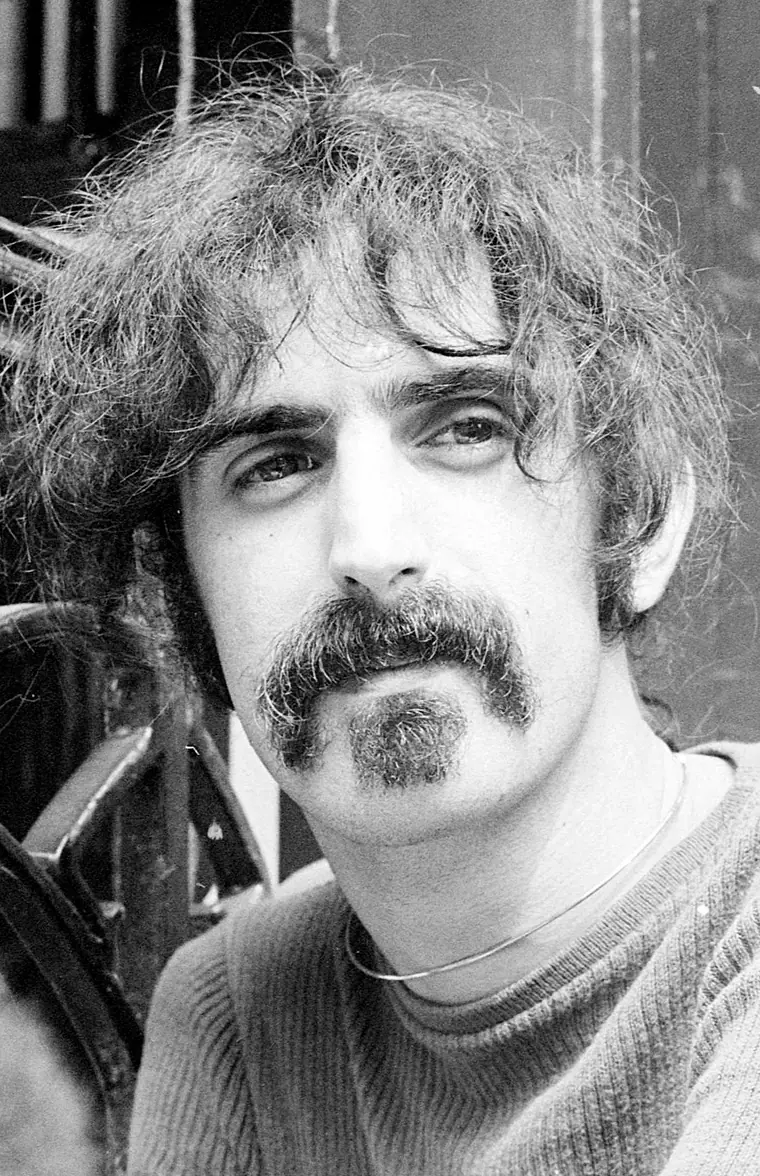
Frank Zappa died on December 4, 1993, in Los Angeles. He was 52, and he had been ill with cancer. He is buried at Pierce Brothers Westwood Village.
By the standard this archive usually applies, he did it right. No couch, no napkin, no missing signature, no line of claimants asserting they were his children. He married Gail Sloatman in 1967 and stayed married to her until he died. He left the work to her, and she ran it. In 2002 she formalised the structure as the Zappa Family Trust, which held title and copyright to the recordings, the compositions, the artwork, the archive he had spent thirty years filling, and his commercial image.
On paper, a model estate: one owner, one manager, one archive, no probate circus.
The failure was not in the drafting. It was that nobody read the document out loud while the person who wrote it was still in the room.
Thirty, thirty, twenty, twenty
Gail Zappa died of lung cancer on October 7, 2015, at 70. Shortly before her death she had settled the succession. Reporting on the terms has been consistent since: Ahmet and Diva each took 30 percent of the trust, Moon and Dweezil each took 20 percent — and Ahmet and Diva became the co-trustees, described in the family's own account as the sole and exclusive managers of the business. One later local report put Moon's interest at 25 percent; the 30/30/20/20 figures are the ones that appear across the national coverage.
So the two smaller shares were also the two silent shares. Moon and Dweezil hold beneficial interests. Ahmet and Diva hold the beneficial interests and the machinery: licensing decisions, the accounting, the trademark, the release schedule, the vault.
None of that is unlawful anywhere in the United States. A settlor may divide an estate in any proportion she likes and appoint whichever beneficiaries she trusts to run it. Unequal is not the same as invalid, and every probate lawyer in the country has drafted an unequal split for a good reason.
But an unequal split disclosed after death has one predictable effect: the people on the short end cannot ask the only person who could explain it.
Moon Zappa said publicly that she had been blindsided, and described a year spent driving her mother to appointments. Dweezil, in Rolling Stone's account of the split, put the structural problem in one line — the smaller beneficiaries were shareholders with no say.
The cease and desist tour
The theory became a business dispute almost immediately, and the vehicle was a band name.
Dweezil had toured for a decade as Zappa Plays Zappa. The mark belonged to the trust. In 2016 the trust and Dweezil went public with incompatible descriptions of the same negotiation:
- Dweezil's account. He said he had received a cease-and-desist and could no longer perform under the name. He renamed the 2016 tour Dweezil Zappa Plays Whatever the F@%k He Wants — the Cease and Desist Tour, which is the single most Zappa response available in the circumstances.
- The trust's account. In a March 2017 petition filed in Los Angeles Superior Court, Ahmet and Diva said the mark was available to any of the children, that Dweezil had been asked for a one-dollar licensing fee plus a share of proceeds, and that the trust also wanted Frank Zappa merchandise sold alongside his own. The petition asked the court's permission to publish a website responding to what it called false and negative publicity, including from beneficiaries of the trust.
Note what that petition actually is. Two trustees asked a judge for authority to argue in public with two beneficiaries, one their sister and one their brother. That is what a fiduciary role does to a sibling relationship when the two are welded together: an ordinary family argument acquires a docket number.
On March 27, 2019, Judge Daniel Juarez approved a settlement. Dweezil agreed to stop the public criticism and remove it from his site and merchandise. In exchange he received recordings, posters and master tapes held by the trust; the trust agreed not to oppose the siblings using their own legal names professionally; and the co-trustees agreed to send monthly business reviews to the beneficiaries and to mediate before litigating.
Read that last term again. The settlement's central operational clause was regular reporting to beneficiaries — a duty a trustee already owes. Three years and a lawsuit produced an agreement to do the thing a trust code assumes you were doing all along.
Moon was not a party to the settlement.
The exit nobody could have taken alone
On June 30, 2022, the family sold. Universal Music Group announced it had acquired the master recordings, the publishing catalogue, the film archive, the entire contents of the Vault — more than a thousand hours of audio and video Zappa had been accumulating since the 1960s — and the name and likeness. Terms were not disclosed.
That transaction required all four of them, and it happened. It is the strongest available evidence that the underlying problem was never money and never competence. Four people who had spent six years in and out of court still agreed, unanimously, on the largest decision in the estate's history.
What did not resolve is the part no instrument can fix. In 2024 the Washington Post reported at length on the estrangement, timed to Moon Zappa's memoir. Three decades after the death, the catalogue is settled and the family is not.
The document did its job. It preserved the archive, kept the copyrights intact through two deaths, and delivered them to a buyer able to maintain them. It also assigned four siblings permanent, unequal, non-negotiable roles in each other's finances, and told them about it afterwards.
Timeline
- Dec 4, 1993Frank Zappa dies in Los Angeles at 52. His widow Gail takes over the catalogue and archive.
- 2002The Zappa Family Trust is formed, holding title and copyright to the music, artwork and commercial image. Gail is trustee.
- Oct 7, 2015Gail Zappa dies of lung cancer at 70. Ahmet and Diva become co-trustees; the reported shares are 30 percent each to Ahmet and Diva, 20 percent each to Moon and Dweezil.
- 2016The dispute over the Zappa Plays Zappa mark becomes public. Dweezil renames the tour the Cease and Desist Tour.
- Mar 2017Ahmet and Diva file a petition in Los Angeles Superior Court seeking permission to publish a website responding to public criticism, and describe a one-dollar licensing fee offer.
- Mar 27, 2019Judge Daniel Juarez approves a settlement binding Ahmet, Diva and Dweezil. Monthly business reviews to beneficiaries are a term. Moon is not a party.
- Jun 30, 2022Universal Music Group acquires the recordings, publishing, film archive, the Vault, and the name and likeness. Terms undisclosed.
- 2024The Washington Post reports that the family estrangement continues, alongside Moon Zappa's memoir.
What actually went wrong
- The allocation was a surprise. Unequal shares are defensible and often correct. Unequal shares first disclosed after the death are not, because the only person who could explain the reasoning is unavailable.
- Beneficiaries were made trustees over other beneficiaries. Every licensing decision was simultaneously a business call and a decision about a sibling's income. There is no version of that arrangement that reads as neutral to the person on the receiving end.
- Money and control were bundled. The larger shares also carried the authority. Splitting those two — bigger economic share to one child, decision-making to an independent trustee — costs nothing at drafting and removes the entire grievance.
- No neutral referee. No independent co-trustee, no trust protector, no named mediator for intra-family licensing. When the siblings deadlocked, the only forum left was a courtroom, and then a press cycle.
- Reporting was an afterthought. A settlement had to impose monthly reports to beneficiaries. Automatic accountings, built in from the start, are the cheapest suspicion-suppressant in trust drafting.
Would it have gone that way in Florida?
Same result. Florida would enforce every word of it — and then give the 20-percent beneficiaries more leverage than the fight suggests they knew they had.
Start with what Florida does not do. Florida does not police fairness between children. A settlor may leave 30 to one, 20 to another, and nothing to a third, for a stated reason or no reason at all. Nothing in Chapter 736 entitles a beneficiary to an equal share, and a Florida court asked to even out the Zappa percentages would decline.
What Florida regulates is the conduct of whoever holds the machinery — and there the code is unusually concrete.
Under Fla. Stat. §736.0802, a trustee administers the trust solely in the interests of the beneficiaries. That obligation does not soften because the trustee is also a beneficiary, and it does not soften because the beneficiary complaining is your brother. Under §736.0813, a Florida trustee has an affirmative duty to inform and account — reasonably informing qualified beneficiaries of the trust and its administration, and delivering an annual accounting. That is not a settlement term anyone has to bargain for. It is the baseline. In Florida, the co-trustees' 2019 promise to send monthly reviews would have been a promise to do slightly better than the law already required.
Under §736.0703, co-trustees act by majority — so two co-trustees who agree with each other are functionally one trustee, which is exactly how the arrangement felt from the outside. And under §736.0706, a Florida court may remove a trustee for serious breach, for unfitness or persistent failure to administer effectively, or where co-trustee hostility substantially impairs administration. Removal is a real remedy here, not a theoretical one.
Two more Florida features matter. §736.1108 makes a no-contest clause in a Florida trust unenforceable — a beneficiary who challenges the trustee cannot be disinherited for it, which is the opposite of the deterrent most families assume they have bought. And §736.1406 authorises granting a third party power to direct the trustee: the statutory basis for a trust protector, the neutral outsider who could have decided the band-name question in an afternoon.
The honest caveat: none of this reaches the actual injury. Florida law can compel an accounting, replace a trustee, and construe an instrument. It cannot make four siblings believe their mother thought the same of all of them.
So the practical instruction is not a statute. If your plan treats your children differently, tell them yourself, while you are alive — and put the reason in the document. Then separate the two currencies: give the larger share to whoever should have it, and give the authority to a professional or independent co-trustee with no share at all. Require written accountings, on a schedule, to everyone. Name a trust protector under §736.1406 to break deadlocks before a court has to.
What people ask us about this.

Further reading
Third-party sites. Not ours, not endorsed, not kept current by us — just the places worth going next.
Sources
- Gail Zappa — biography, the Zappa Family Trust, and the succession — Wikipedia
- Frank Zappa — death, marriage, and children — Wikipedia
- Judge approves settlement between three Zappa children — MyNewsLA, Mar 27 2019
- Frank Zappa family feud heats up as legal papers are filed — TheWrap, Mar 2017
- Frank Zappa's family legacy — American Songwriter
- Inside the Zappa family feud — Rolling Stone
- Frank Zappa's recordings, song catalog and more acquired by Universal Music Group — Variety, Jun 30 2022
- Frank Zappa estate: the feud, and the pain, that dogs his children — Washington Post, 2024
- Fla. Stat. §736.0813 — Duty to inform and account — The Florida Senate
If this is your situation
Free 30-minute consult. Plain English. No pressure.
Nearly every case in this archive turned on something ordinary — an unwitnessed page, a stale beneficiary line, a document nobody could find. Those are cheap to fix while you're alive and expensive to fix afterward.